



For a few weeks now, we have once again been drawn into a historical debate. I am of the opinion that its starting point was not really necessary. But since it has emerged, I felt compelled to say a few words, albeit late.
The Ministry of National Education (MEB) has decided to use the term "National Struggle" (Millî Mücadele) instead of "War of Independence" (Kurtuluş Savaşı) in history education. Why? Because "independence" (kurtuluş) didn't sound good: What were we being liberated from? There was a massive empire. I suppose "struggle" sounds more pleasant and has a tone that won't offend anyone. Or do we sometimes forget that the country remained under occupation after 1918, including its capital?
By the way, let me say this right away: In my own writing, I use the terms "War of Independence," "National Struggle," and "War of Liberation" (İstiklâl Harbi). I have no intention of pitting these concepts against each other. Because, although they have some differences, they all tell us essentially the same thing in their core. In other words, the context in which I use them without much distinction is the nationalist resistance shown against the occupation of the country following the signing of the Armistice of Mudros.
However, the real issue that triggers some discomfort is likely not the concept itself, but the fact that those positioned against this resistance were not composed solely of occupying forces. Let us state it clearly: Within this resistance, alongside the war waged against the occupiers, there was also a struggle waged against the palace during certain periods of the process. So, whether you call it the War of Independence or the National Struggle, can you change the stance Damat Ferit Pasha took against this struggle? Or can you erase the fact that Mustafa Kemal Pasha was sentenced to death in May 1920 with the approval of Sultan Vahdettin? Are you saying that while we talk about the Kuvâ-yı Milliye (National Forces), we should not talk about the Kuvâ-yi İnzibatiye (Forces of Order)? One might say that, but we will talk about it. We will talk about it so that everyone knows the matter was not just about "fleeing" or "leaving the country," but that there was also a "British battleship" involved. They will also understand why Mustafa Kemal Pasha's departure to Samsun was not a palace operation, as some have claimed, and could not have been.
The transition from empire to republic did not happen in a day. But unfortunately, because of these pointless debates, we are forced to discuss the history of the National Struggle, the most important phase of this transition, in a sterile manner with the same questions over and over... The same refrain...
This same refrain is also told to us with a logic that has no real foundation today, such as the republic making peace with the empire and the old Turkish states. If the issue here is scientific, there is likely no historiography left that enters the republican narrative by ignoring the empire. In short, there is no academic estrangement. If the subject is political, the calendar says 2026. For over 20 years, our lives have been spent with a serious imperial nostalgia and indoctrination that manifests in very different methods. In other words, there is no dominant political estrangement either. I think the biggest estrangement today is the one the ruling elite experiences with the history of the republic.
There is one last question I want to ask. As you know, there is a history institution in Turkey established in 1931. While such conceptual debates concerning history education in national education are taking place, in other words, while decisions are being made such as changing "Crusades" to "Crusader Attacks" or calling the "War of Independence" the "National Struggle," is the institution asked to provide an opinion? Or does the institution have a say in these matters? I haven't seen it, and it piqued my curiosity...
I hope that one day, we will also have multifaceted and advanced discussions.
Most Read
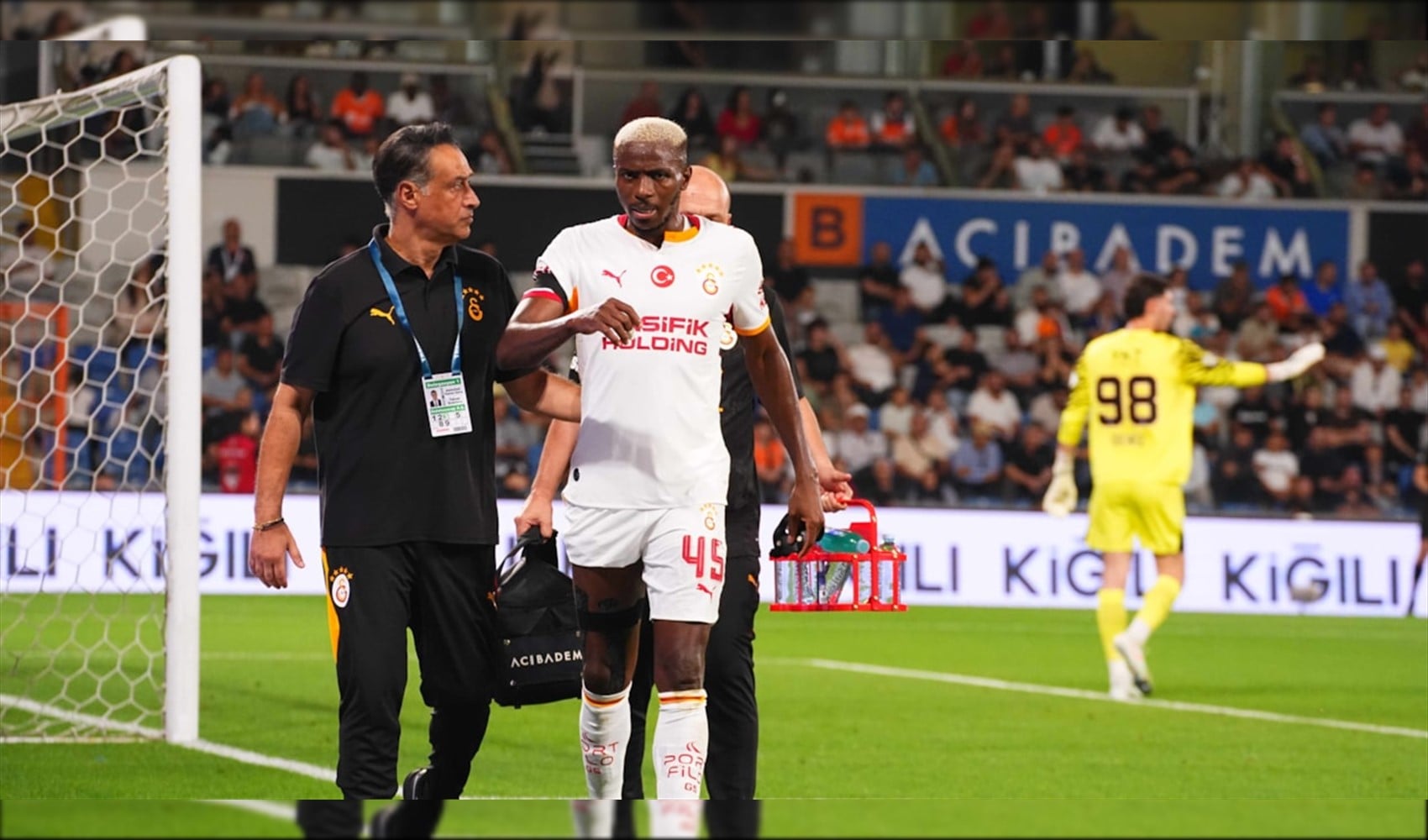
Galatasaray announces injury updates for Osimhen, Lemina, and Singo

Attention online sellers: Tax monitoring expanded
VAR for the Fenerbahçe-Beşiktaş derby has been announced!
Bridges and highways are being privatized: 15 July and FSM are also on the list

Peugeot September 2026 price list is out

New details emerge in 'panel' operation targeting lawyers
Gökçek era detail in ABB investigation
First statement from Osimhen after injury in Başakşehir match

Özlem Şanver: 'He said he would change, I believed him; should I be beaten just because I didn't leave?'
The Süper Lig's new team becomes the transfer champion