


Media bosses, Vuslat and Emanet



The first media boss I ever knew was a retired general appointed by the September 12 military administration to head the Anadolu Agency. With the excitement of a university student, I had grown a mustache for the first time. During his visit to Istanbul, he came up to me among the staff welcoming him and said, "This fellow looks more like a butcher than a journalist." He was unaware that this intern, whom he likened to a butcher, had been assigned the day before to cover the powerful leader of the September 12 coup, Kenan Evren, while the permanent and experienced reporters stood by. His name has long been forgotten.
Then came Dinç Bilgin, who did not know that the Sabah newspaper, which he owned thanks to Rahmi Turan—a man whose appreciation his colleagues always withheld despite his life being spent publishing newspapers—would eventually land him in prison. I heard that after he was released, having lost his fortune, he lamented, "I always kept the wrong men by my side and lost the right ones."
I never met Haldun Simavi, but it was clear he was a very good journalist and a bad boss.
In between, the Asil Nadir storm blew through. In the years when he became a global name and a sterling billionaire, he arrived at Günaydın newspaper in his private jet. When his silk shirt became soaked with sweat in the machine room, he ordered massive air conditioners the next day, but he flew away before ever learning that newspapers could be produced with good journalists even without air conditioning.
Erol Simavi came from a journalistic family; he knew the importance of the profession and was a gentleman. He was humble enough to clink glasses with a young employee who happened to visit his home in casual attire, but he could not manage to institutionalize enough to hold onto the goose that laid the golden eggs.
Aydın Doğan was an Anatolian tiger. He was aware that journalists make newspapers, and he tried to keep those he deemed important by his side on his yacht, during holidays, or at backgammon parties, staying away from the editorial staff as long as his commercial interests were not harmed. When he faced the "kneeling" operations of the AKP government, he sold everything, packed up, and retired to his corner.
We also met Turgay Ciner, a "virtuoso of becoming a millionaire" by his own admission. On the first day he founded Habertürk newspaper, he was blunt enough to surprise everyone by telling the staff, "I am founding it today, but I can close it in a second if necessary." Indeed, he did as he said. However, because he viewed the veteran journalist from the Flagship of the Sublime Porte—who had been driven out of the district village by village for speaking the truth—as a mere "advertising element" and wanted to burn through him in eight months, he never became anything more than a secret rich man whose trucks bearing his name appeared on the Ankara highway, rather than a media boss. Coincidentally, the trucks also have 'Ciner Kazan Soda' written in huge letters, and there is probably no better expression to describe his virtuosity in being a millionaire.
XXX
I met one more media boss, or rather a "boss lady." That was Vuslat Doğan, who, after finishing her education abroad, came to her father's newspaper and took the seat after gaining experience in every department step by step. After taking over the management of Hürriyet newspaper, she brought with her many innovations that the Sublime Porte had not known or cared much about before, such as the declaration of editorial principles as in Western newspapers, accountability, the appointment of an ombudsman, improving the newspaper's perception, and in-house training and development seminars. She had high empathy; she was even looking for solutions to the breastfeeding problems faced by journalists who had become mothers.
Meanwhile, Ali Sabancı, whom she married, was already a "genius." He had prepared the infrastructure to transport trucks loaded in Istanbul to France in 2-3 days on giant ferries with 6 km of loading space, selling fresh daily vegetables to both England and Africa, and then sold his company to the Danes for a billion dollars. He became the only rival to Turkish Airlines with his low prices by finding idle airports in any country that were never used and landing planes there. While growing to the point of ordering hundreds of planes, he also became the only Sabancı who managed to remain as sympathetic as his uncle Sakıp Sabancı.
The Vuslat-Ali couple had a boat accident in the Greek Islands last summer, and both were seriously injured. Their two sons on the boat, however, escaped without injury by chance.
In the 8-10 months that followed, Ali Sabancı recovered and returned to work, while the treatment of his wife, Vuslat Doğan Sabancı, continued.
While everyone was wondering about her, Vuslat Hanım returned with an exhibition she titled "Emanet" (Trust/Entrusted), consisting of sculptures, paintings, poems, sounds, and installations containing the word 'Emanet'.
As you tour the exhibition, which opened under the magnificent domes of the Tophane-i Amire—built by the peerless Ottoman Sultan Mehmed the Conqueror and which produced cannons for the Ottoman Army for five or six centuries—you realize that a great deal of effort was put into it and that a cultural history is sought in every touch with a brilliant intellectual invention.
While explaining the reason for the name 'Emanet' she gave to the exhibition, the artist seems to be using irony against those who harbored prejudices against her father Aydın Doğan for years by calling him a 'provincial.' She explains that to protect the 'Emanet' (Trust), one must first protect the places where one was born, implying that looking down on Kelkit, Bayburt, Şavşat, Ceyhan, Kozan, and Derik is a betrayal of the Trust. In the video at the exhibition, the Baksı Museum, which rises like a cultural monument on a hill in the Anatolian steppe, created with great devotion by artist Hüsamettin Koçan, also catches the eye. As the cameras filming the museum from the air glide like phoenix birds, they give hope that Anatolia, too, will be reborn from its ashes.
Xxx
Unfortunately, most of Turkey's wealthy are unaware that the world's prosperous countries reached these points thanks to art. They do not know that Paris, London, and New York rose through art. The lords of construction, who think of nothing but concrete when they see an empty lot, think it is a skill to smile instead of being ashamed when telling a journalist that there is not a single book in their home.
Few of us know that wealth carries meaning not with boat size, expensive watches, and lobster, but with art, literature, music, design, innovation, polyphony, and the cultural heritage left behind.
Another issue our wealthy people do not understand is that while even they, who have every opportunity, are not aware of how important culture, art, history, and democracy are, they expect leadership on these issues from politicians whose own education is questionable.
XXX
The 'Emanet' exhibition signed by Vuslat is open at the Tophane-i Amire building until June 30. Moreover, as businesswoman Leyla Alaton says, visiting exhibitions is free. Both go and visit the exhibition to see what can come out of Anatolia, and have a tea or coffee at the university cafe full of books in the garden of this historic building, with a magnificent view of Topkapı Palace, at a reasonable price in defiance of the nouveau-riche airport venues.
Rest assured, as you leave the exhibition, looking at the 6-century-old building built by Fatih, you will better understand the importance of Emanet and will be hopeful, saying, 'Turkey does not deserve this state, but it will pass somehow, because this country is entrusted (Emanet) to us.'
Would you like to get notifications about new developments and save news?
- NotificationsNew developments and breaking news
- SaveNews is stored in the app
Most Read

DNA scandal involving 'Danish' donors
Özel's reaction to von der Leyen regarding Turkey-Libya
Political transfer rumors from İsmail Saymaz
First comment from Özgür Özel on the Constitutional Court's name ruling
To be or not to be on the 'right side of history'!..
The Mecca Defense Agreement, the Ottoman Empire, and the facts
Economic and National Development Policy: Agriculture
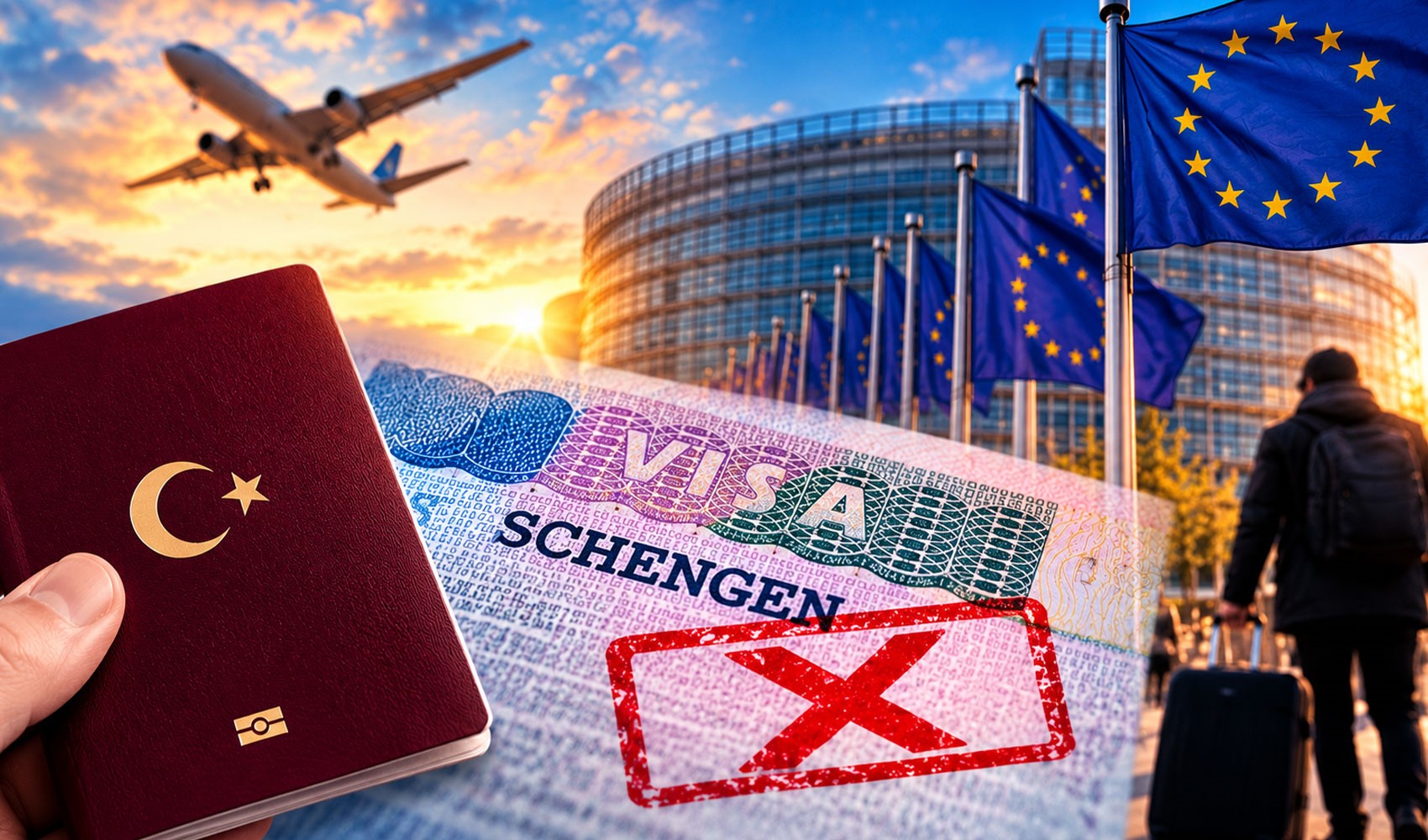
Countries with the highest Schengen visa rejection rates for Turkish citizens revealed
My fellow citizens, this is not the time for shame
New application rules for unclaimed investment funds