


Turkey's inequality map between Adana and Tekirdağ: The deepening divide from Çukurova to Feke, and from Çorlu to Şarköy



In Turkey, evaluating development solely through the question of "how much have we grown?" is no longer sufficient. The true determinants are in which geographies growth is concentrated, which segments of society it reflects upon, and to what extent this production capacity is supported by human capital. Economic indicators may point to an increase; however, it is impossible to understand the quality of development without analyzing the spatial distribution of this growth, its relationship with institutional infrastructure, and its capacity to translate into household welfare.
In this article, I examine the production concentration revealed by the 2024 provincial Gross Domestic Product (GDP) data, the institutional and structural development differences shown by the 2025 Provincial Socio-Economic Development Index (SEGE) results, the intra-provincial spatial divergence made visible by the District SEGE-2022, and the distribution of welfare at the household level reflected by the 2023 Socio-Economic Status (SES) data. Within this multi-layered framework, Adana and Tekirdağ are analyzed as examples representing two different faces of development in Turkey: one reveals the need for structural transformation despite high potential, while the other highlights the necessity of sustainability and social integration despite strong industrial performance.
Development is no longer measured solely by production volume, but by cities' resilience to crises, capacity for innovation, and adaptation to digitalization and green transformation. The fundamental issue facing Turkey is not so much increasing growth rates, but rather implementing a balanced, inclusive, and resilient development model that can bring production, welfare, and human capital together on the same strategic ground. In this context, reading the spatial distribution of growth and its social reflections together constitutes the most critical step in future policy design.
TURKSTAT 2024 PROVINCIAL GDP DATA: Growth Exists, Balance Does Not
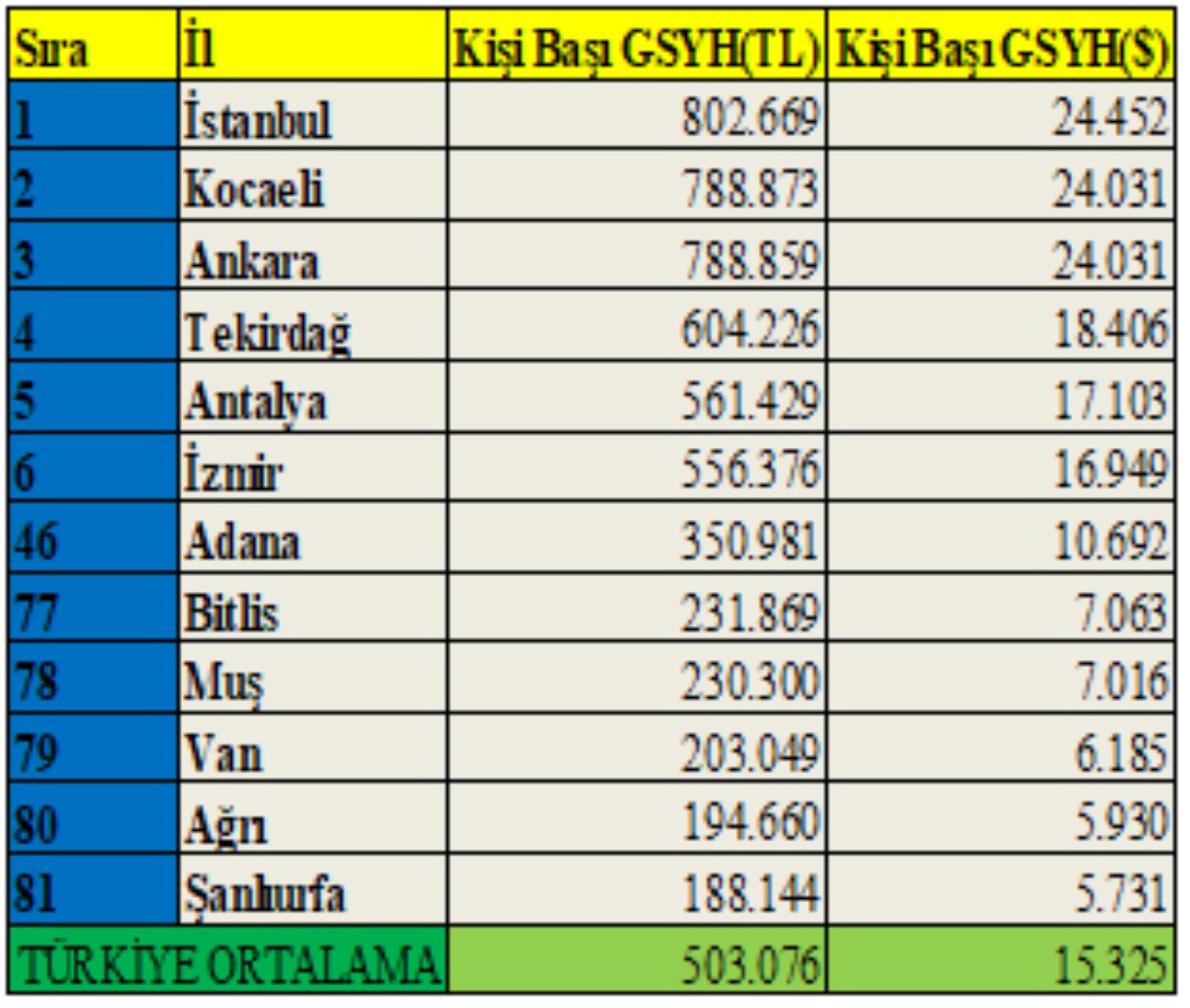
The Turkish economy grew by 3.3 percent in 2024, reaching a volume of 44.6 trillion TL in current prices, or approximately 1.36 trillion dollars. Income per capita stood at 503 thousand TL (15,325 dollars). At first glance, this picture points to stable growth. However, when looking at the geographical distribution of growth, a different reality emerges: economic activities are increasingly concentrated in a narrower area.
Istanbul, with a production volume exceeding 13 trillion TL, alone produces approximately 29 percent of the Turkish economy. Together with Ankara and İzmir, the top three provinces account for nearly half of the total GDP. The share of the top five provinces reaches 53 percent. This situation shows that the center of gravity of the Turkish economy is clearly concentrated in a few major metropolitan areas.
Moreover, this concentration is not only in production volume; it also manifests itself in finance, trade, high value-added services, and decision-making mechanisms. Istanbul's income per capita is 802 thousand TL, well above the national average. This city also provides the highest contribution to Turkey's growth. This picture reveals that growth is centralized and economic dynamism is largely gathered on a single axis.
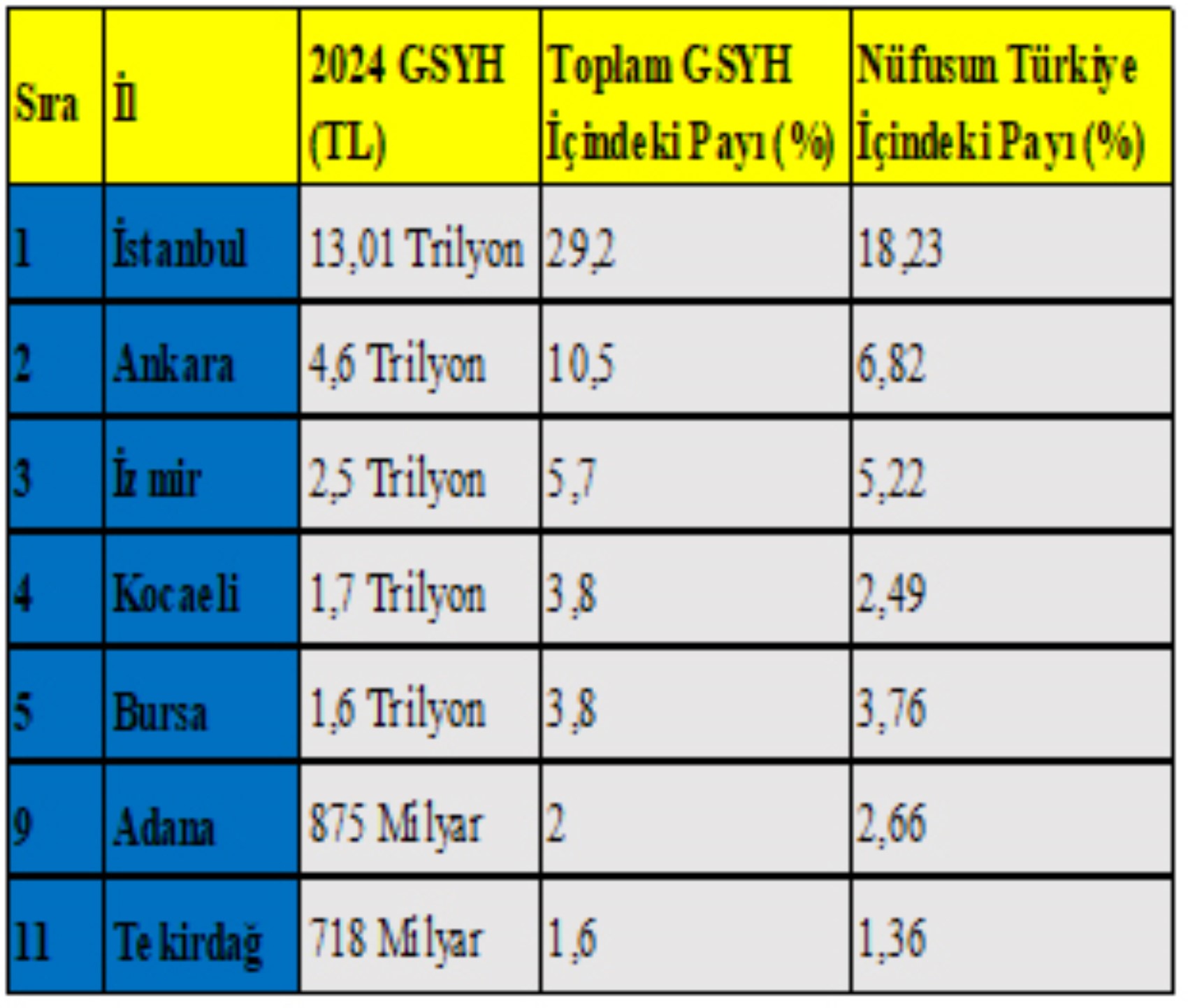
While Ankara plays an important role with its public expenditure and service sector-weighted structure, and İzmir with its industrial and port capacity, neither can create a multiplier effect to balance Istanbul's decisive weight. The Turkish economy is effectively trapped in a single-center growth model.
Income per capita data shows the scale of the welfare gap even more clearly. In 2024, only 11 provinces were able to reach an income level above the Turkish average. While Istanbul, Kocaeli, and Ankara are in the 800 thousand TL band, income per capita in some eastern provinces remains at the 200 thousand TL level. This difference is not just economic; it points to a structural divergence extending from education to health, and from employment to quality of life.
The total production of provinces at the bottom of the GDP ranking does not even approach the economic size of a single district in Istanbul. This comparison strikingly reveals the extent of spatial imbalance. The limited production capacity in Eastern and Northeastern Anatolia increases migration pressure and social vulnerabilities. Within this general picture, Adana and Tekirdağ present two different appearances of the structural problem in Turkey.
Adana: High Potential, Limited Productivity
Adana ranks 9th in the Turkish economy with a production volume of 875 billion TL, accounting for 2 percent of the total GDP. However, this rate remains below the province's share of the population. GDP per capita is 350,981 TL (10,692 $), placing it 46th. This indicates that production size has not fully translated into welfare and productivity growth.
Despite having strong advantages in agriculture, industry, and logistics, a high value-added integration between these areas has not yet been achieved. The processing and branding of agricultural production are limited; technology-intensive investments in industry are insufficient; and the links between logistics and production are weak. The fact that it was among the provinces that made a negative contribution to Turkey's growth in 2024 makes the need for structural transformation even more visible.
Tekirdağ: Strong in Production, Tested in Sustainability
Tekirdağ ranks 11th with a production volume of 718 billion TL, performing above its population weight with a 1.6 percent share. Its GDP per capita of 604,226 TL (18,406 $) places it 4th, indicating that the province is in a strong position in terms of production and productivity.
Industrial production concentrated on the Çorlu–Çerkezköy line, organized industrial zones, and port and railway infrastructure make Tekirdağ one of the important production centers of the Marmara region. However, the critical question here is: Will this production power be able to transform into a model that strengthens human capital and social infrastructure in the long term?
Provincial GDP data also serve as an important warning regarding the financial and institutional capacity of local governments. While municipalities in economically weak provinces try to respond to increasing social needs with limited own-source revenues, local governments in economic centers have a wider financial room for maneuver. This difference leads to a structural inequality among municipalities and directly affects the quality of local services.
TURKEY'S SOCIO-ECONOMIC MAP: What Does the Provincial SEGE-2025 Say?
Economic size alone is not enough to explain development. As much as a province's production capacity, its education level, health infrastructure, employment structure, financial access opportunities, digitalization level, and environmental adaptation capacity are also decisive. The Provincial SEGE-2025 measures exactly this multi-dimensional structure and allows us to see Turkey's socio-economic map more clearly.
The index results show a strong parallel between economic concentration and institutional capacity. Istanbul ranks first by a wide margin, followed by Ankara and İzmir. Provinces with high industrial and export power such as Kocaeli, Antalya, and Bursa are also positioned in the top league. This picture reveals that production centers also stand out in terms of education, finance, infrastructure, and innovation capacity.
However, the most striking aspect of SEGE is the mobility in provinces that can be defined as the "middle league." Provinces such as Yalova (9th) and Tekirdağ (10th) are climbing to the top ranks thanks to their advantages in industry, logistics, and port access. In contrast, some metropolitan cities can be positioned further back due to structural problems despite their economic volume.
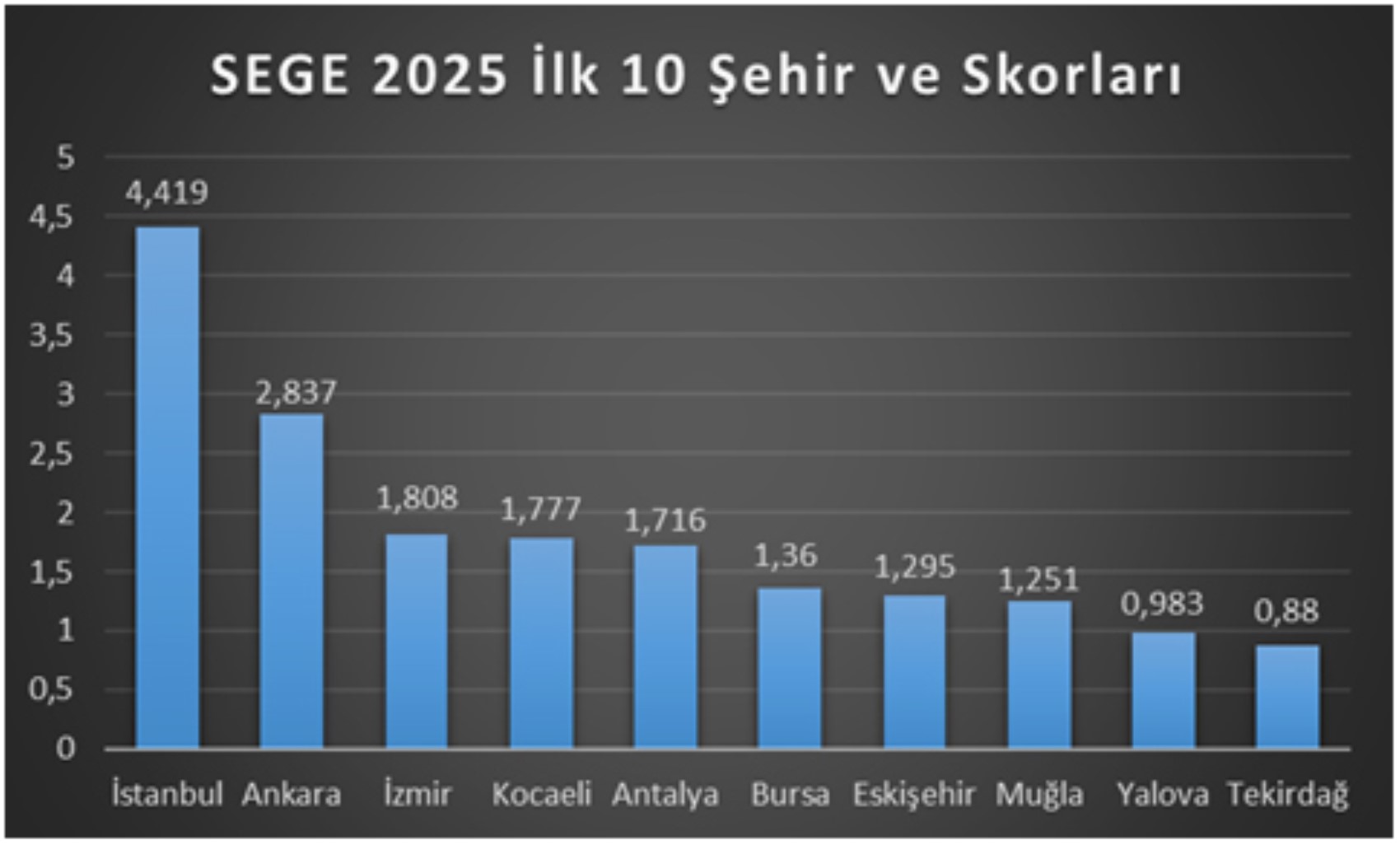
On the other hand, Adana, which is in 22nd place, has a relatively low performance due to structural problems such as income per capita and unemployment, despite having advantages in agriculture, industry, and logistics. The post-earthquake process also shows its effect on SEGE rankings. The decline in provinces such as Kahramanmaraş, Hatay, and Adıyaman shows that disasters leave lasting marks not only on physical destruction but also on human capital, economic activity, and social infrastructure. The fact that some provinces in Eastern and Southeastern Anatolia continue to remain in the lower ranks indicates that the structural development problem persists.
One of the most important contributions of SEGE-2025 is that it includes new-generation indicators. Areas such as digitalization capacity, e-commerce prevalence, environmental sustainability, and innovation potential are now part of the definition of development. This shows that the understanding of development has evolved from a classic industry-production-centered view to a broader framework. Within this general picture, Adana and Tekirdağ tell two different stories.
Adana: Upward Trend, Need for Deepening
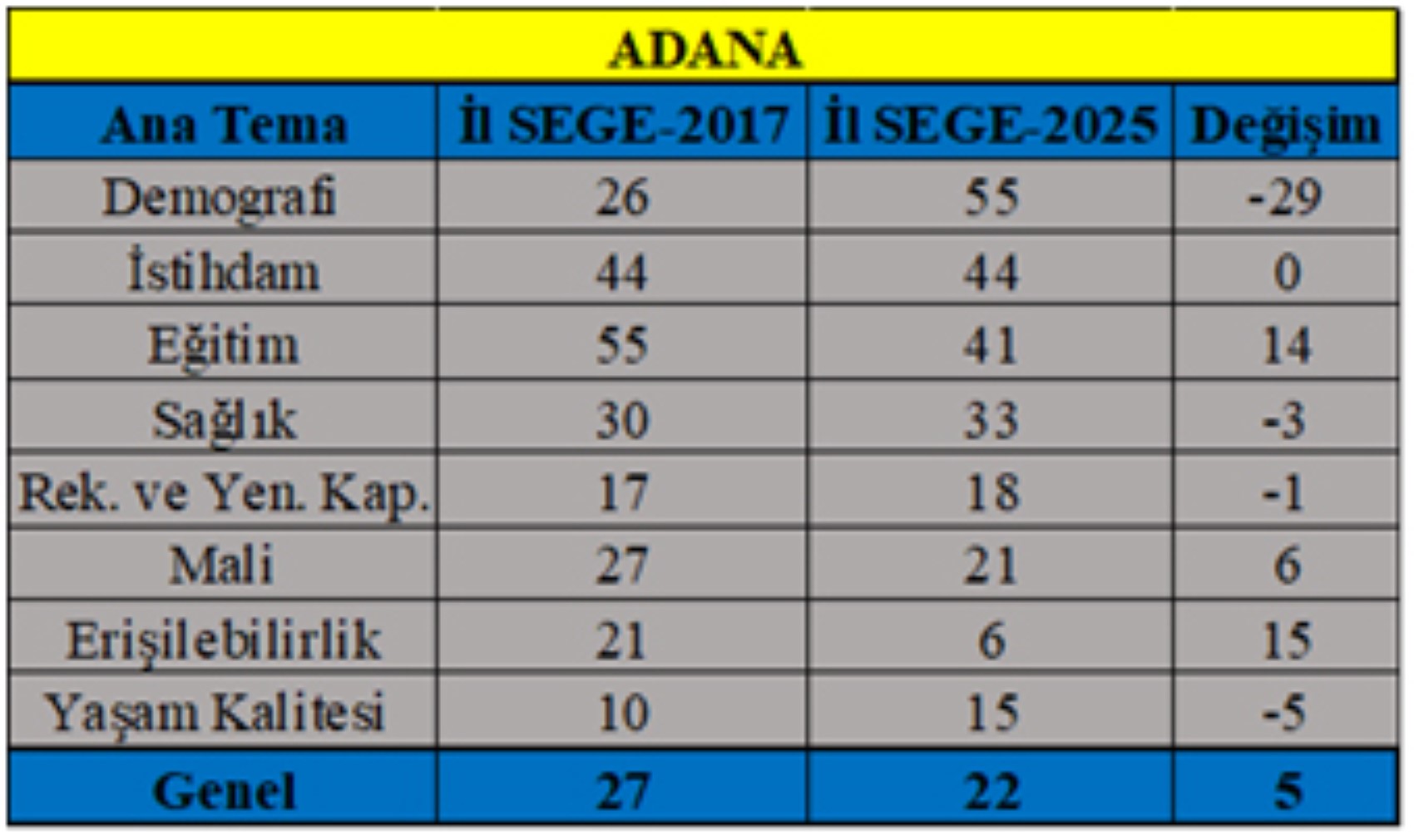
Adana shows an upward movement within the middle league in SEGE-2025. Progress has been made in industrial production, organized industrial zone employment, and financial access indicators. Logistics connections – especially port and airport infrastructure – strengthen the province's role in regional trade.
However, the picture is not entirely balanced. The unemployment rate remains above the national average; weaknesses in youth unemployment and female employment are noteworthy. Although secondary education indicators are relatively strong, the rate of higher education graduates is limited. Access to health services and some social indicators are also not at the desired level.
This situation shows that Adana's potential has not yet fully transformed into institutional depth and sustainable welfare. There is production capacity; however, human capital and employment quality are not strengthening at the same pace.
Tekirdağ: Industry-Based Rise
Tekirdağ stands out by being in the top 10 in SEGE-2025. Production concentrated on the Çorlu–Çerkezköy line, 13 organized industrial zones, the European Free Zone, ports, and railway transportation support the province's economic dynamism. The fact that the unemployment rate is below the national average also points to a relatively robust structure in the labor market.
However, the critical question of the new era comes into play here as well: To what extent is this industrial success supported by environmental sustainability and social infrastructure? Steps to be taken in the areas of green transformation, carbon compliance, and environmental risk management will determine Tekirdağ's position in the coming period.
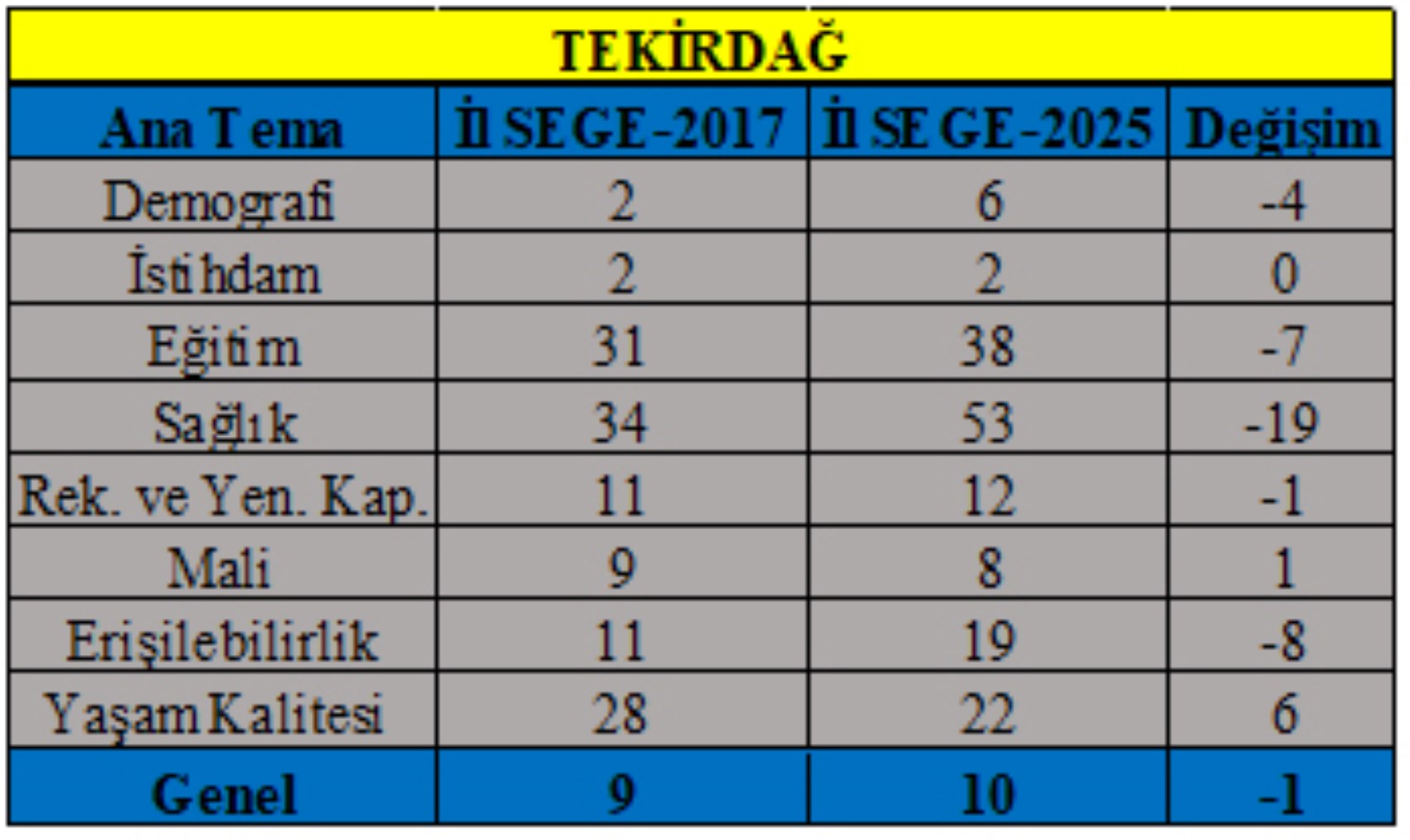
The picture revealed by the Provincial SEGE-2025 is clear: Economic production and institutional capacity in Turkey are largely concentrated in the same centers. However, this concentration does not eliminate inequalities within the province. On the contrary, different levels of development can emerge even within the borders of the same province. For this reason, it is necessary to take the analysis one step further down, to the district scale.
DIFFERENT WORLDS IN THE SAME PROVINCE: Analysis of Adana and Tekirdağ Districts within the Scope of District SEGE-2022
Provincial averages often do not reflect the whole truth. A province appearing developed does not mean that all its districts are developed to the same level. The District Socio-Economic Development Index (SEGE-2022), published by the Ministry of Industry and Technology, provides a critical data set for this very reason: It shows that development differences are deepening not only between regions or provinces but also within the borders of the same province.
The index, prepared by the Ministry of Industry and Technology, which reveals the socio-economic structure of 973 districts in Turkey with a comprehensive and multi-dimensional analysis, analyzes 56 variables under eight main headings such as demography, employment, education, health, finance, competitiveness, innovation, and quality of life. The results reveal how pronounced socio-economic divergence is at the micro-scale in Turkey.
The most developed districts across Turkey are the central districts of metropolitan cities. Districts such as Şişli, Beşiktaş, and Kadıköy in Istanbul; Çankaya in Ankara; and Nilüfer in Bursa are in the top tier with their high income, strong service sector, qualified labor force, and developed social infrastructure. These districts are the centers of the country not only in terms of economic production but also in terms of innovation and service quality.
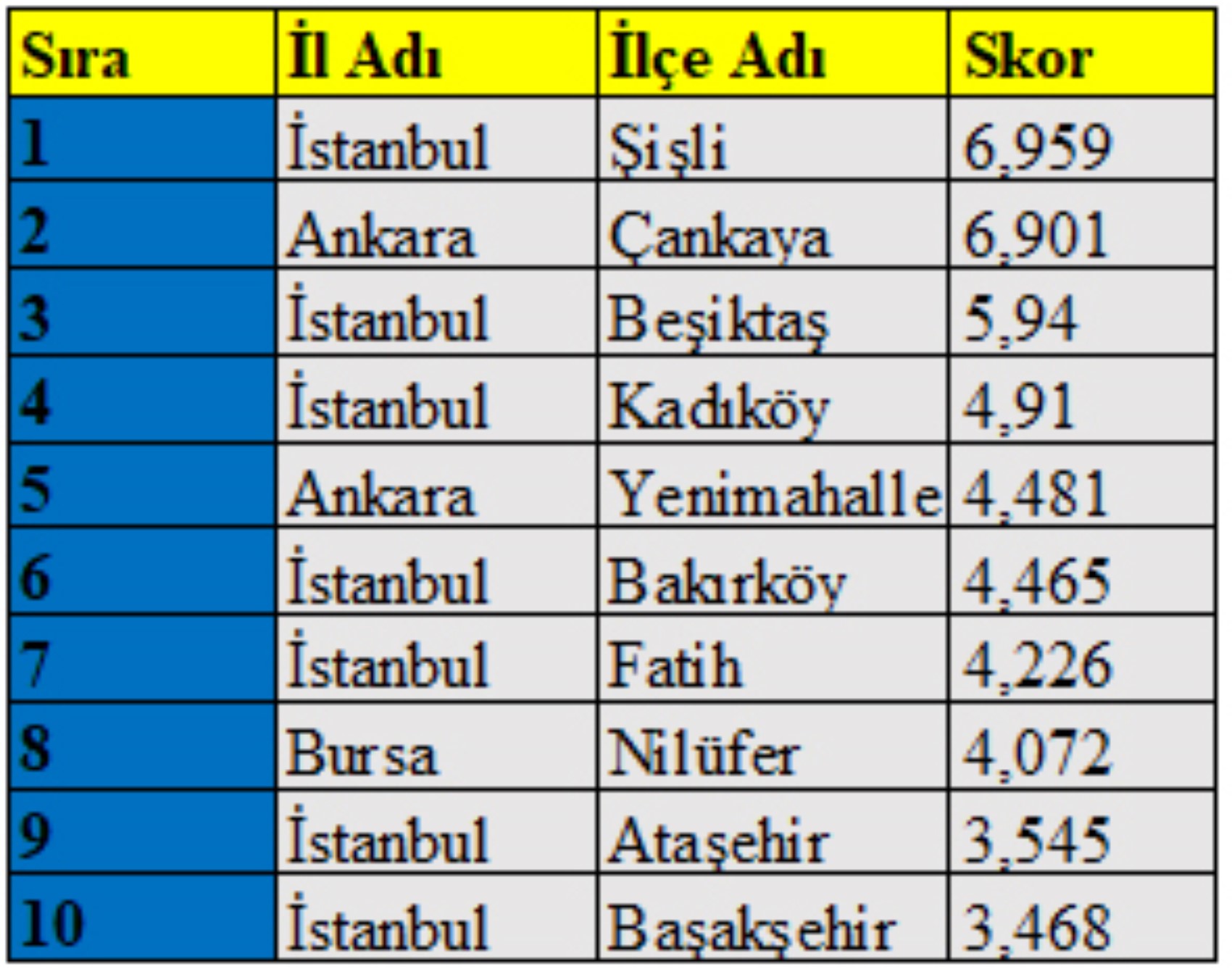
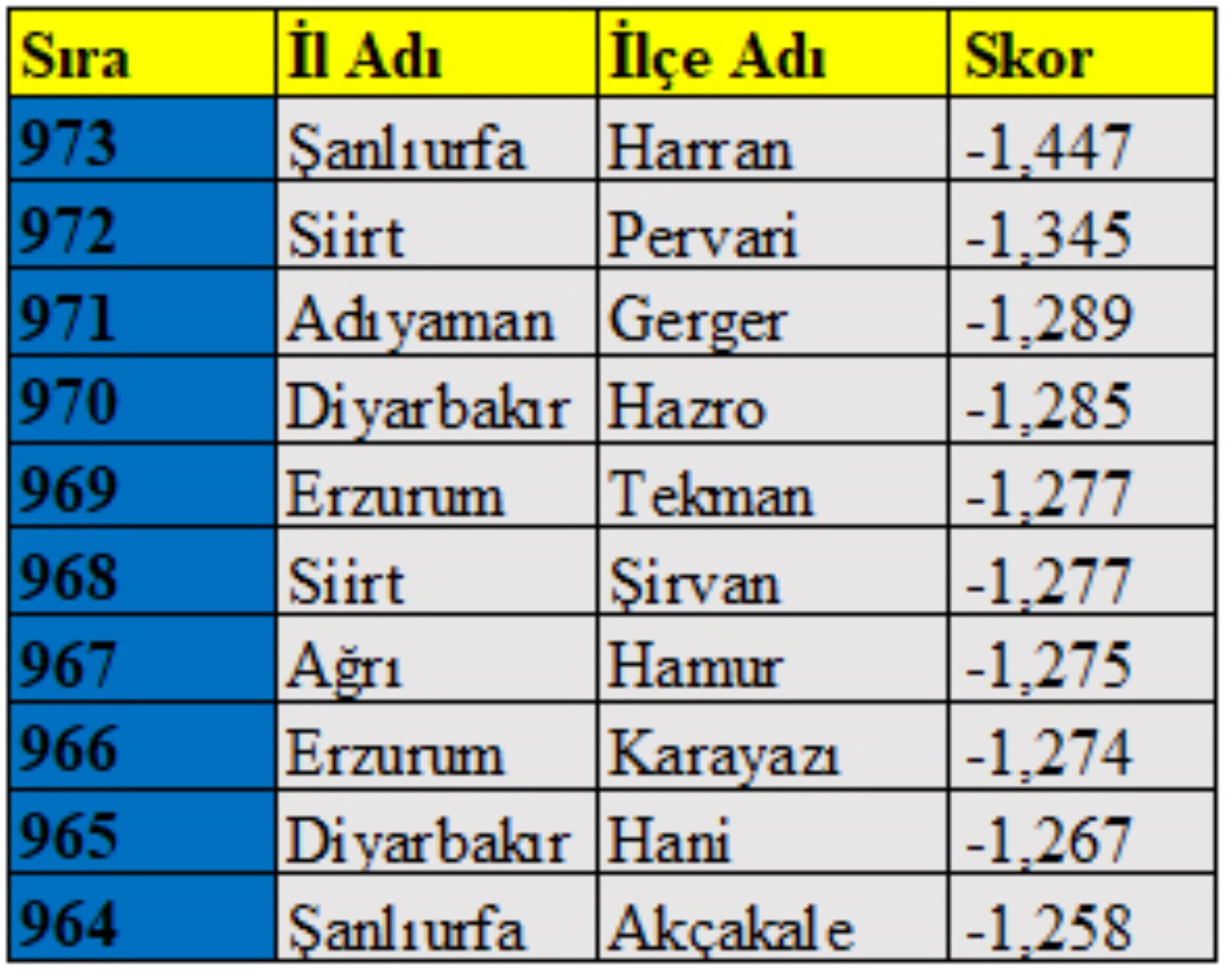
In contrast, some districts in Eastern and Southeastern Anatolia are in the sixth tier of development. The limited economic activities in these regions, inadequacies in education and health infrastructure, and the phenomenon of migration pull down the level of development. This picture shows that inequality is no longer just a "regional" issue, but a "local" one.
Adana: Center Strong, Periphery Fragile
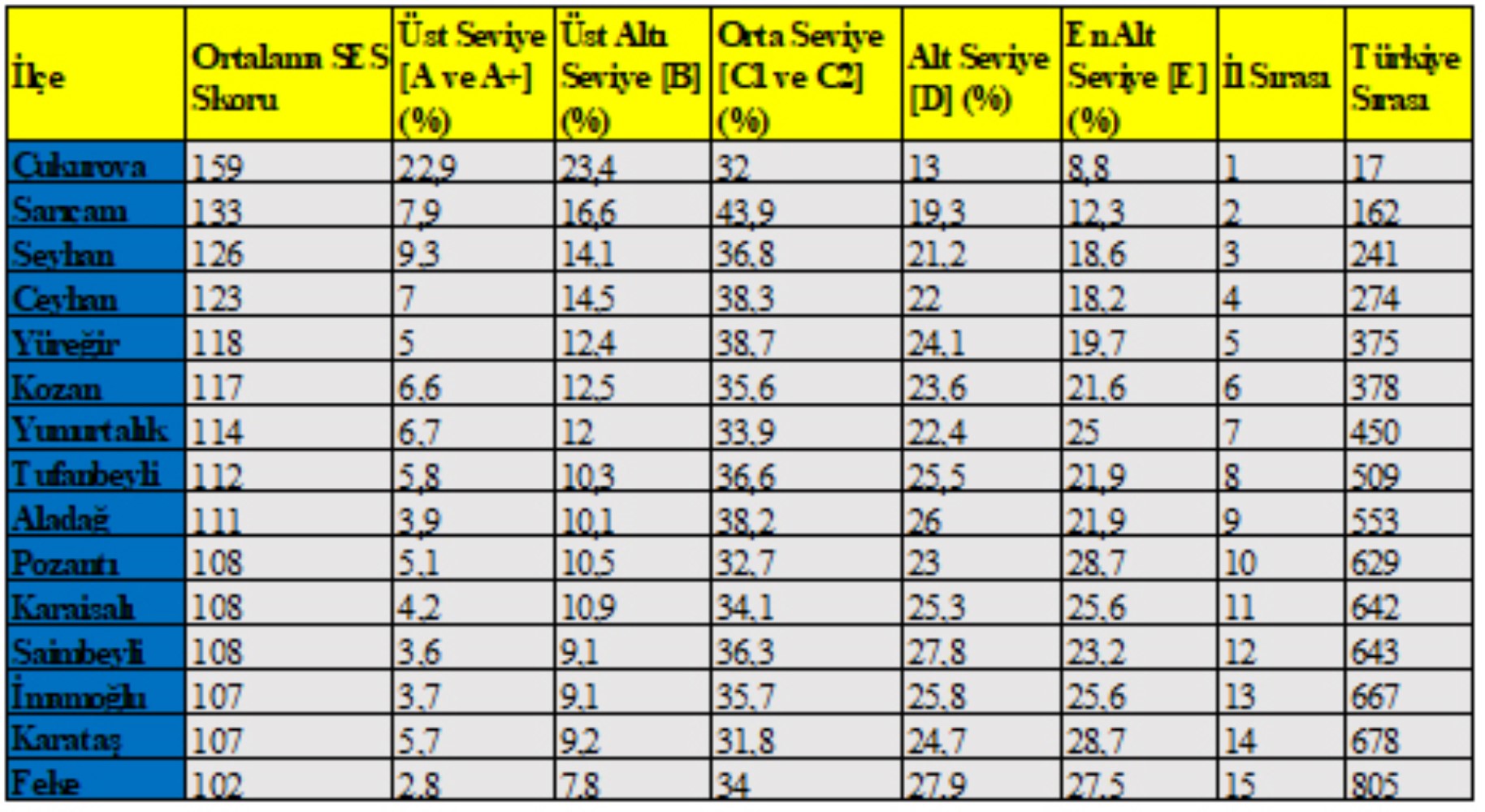
The picture at the district level in Adana is quite striking. Seyhan is in the first tier of development, serving as the economic and social center of the province. Çukurova, Sarıçam, and Yüreğir are in the second tier. Population density, trade volume, and education and health infrastructure are relatively strong in these districts.
While Ceyhan and Kozan are in the third tier, the level of development drops significantly in districts where the rural character is dominant. Pozantı, Yumurtalık, and İmamoğlu are in the fourth tier; Karataş, Karaisalı, Tufanbeyli, and Aladağ are in the fifth tier; and Feke and Saimbeyli are in the sixth tier.
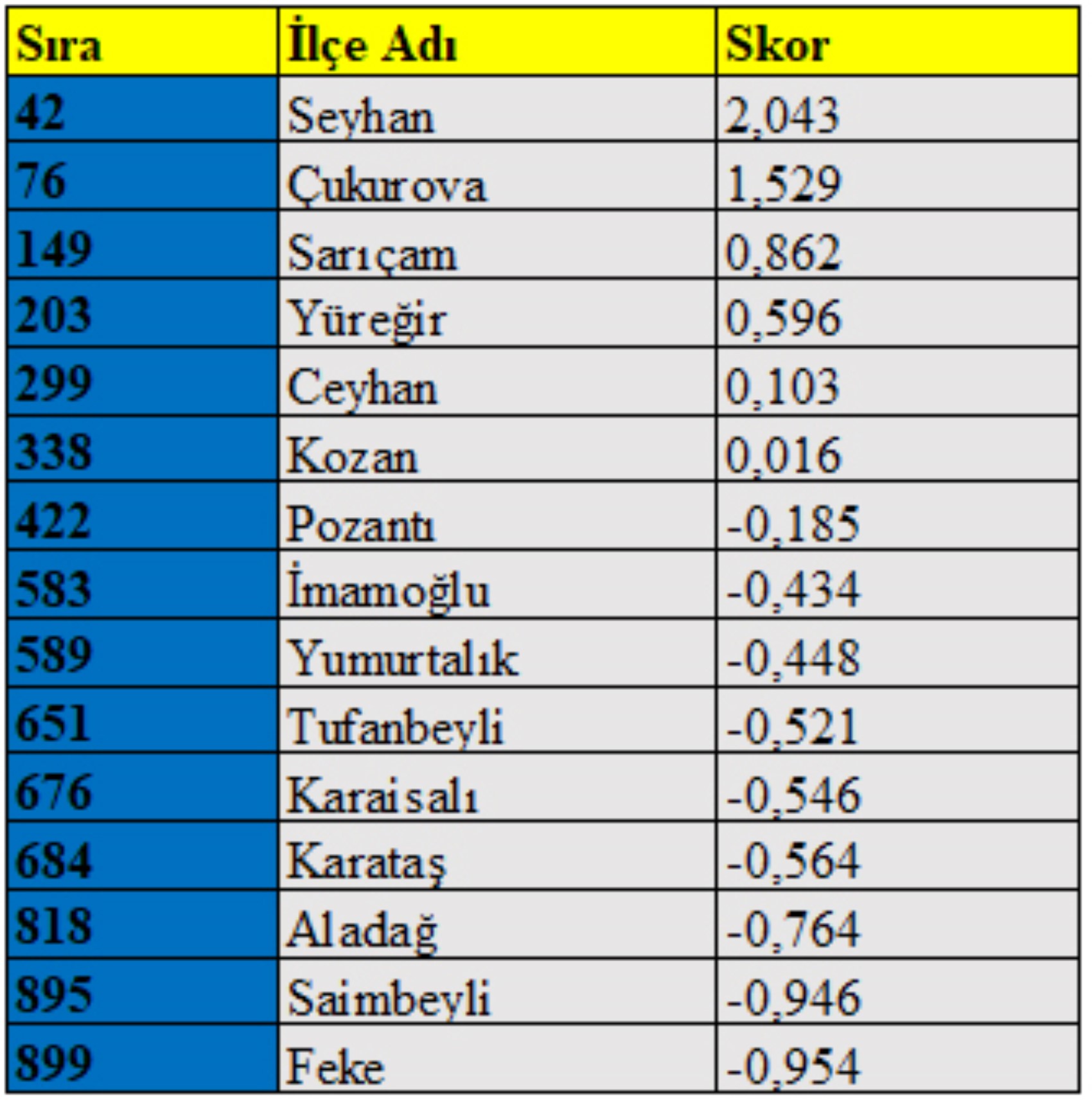
This picture shows that there is a clear development gap between the central districts and the northern and rural districts in Adana. The economic structure based on agriculture and animal husbandry, limited industrial investments, and the phenomenon of migration increase socio-economic vulnerability, especially in mountainous and rural districts. Two different levels of development continue to exist side by side within the borders of the same province.
Tekirdağ: Industrial Corridor and Agricultural Belt
A similar divergence exists in Tekirdağ, but the dynamics are different. Çorlu, Çerkezköy, Süleymanpaşa, and Ergene are in the second tier of development. Organized industrial zones, port connections, and logistics infrastructure make these districts the economic backbone of the province.
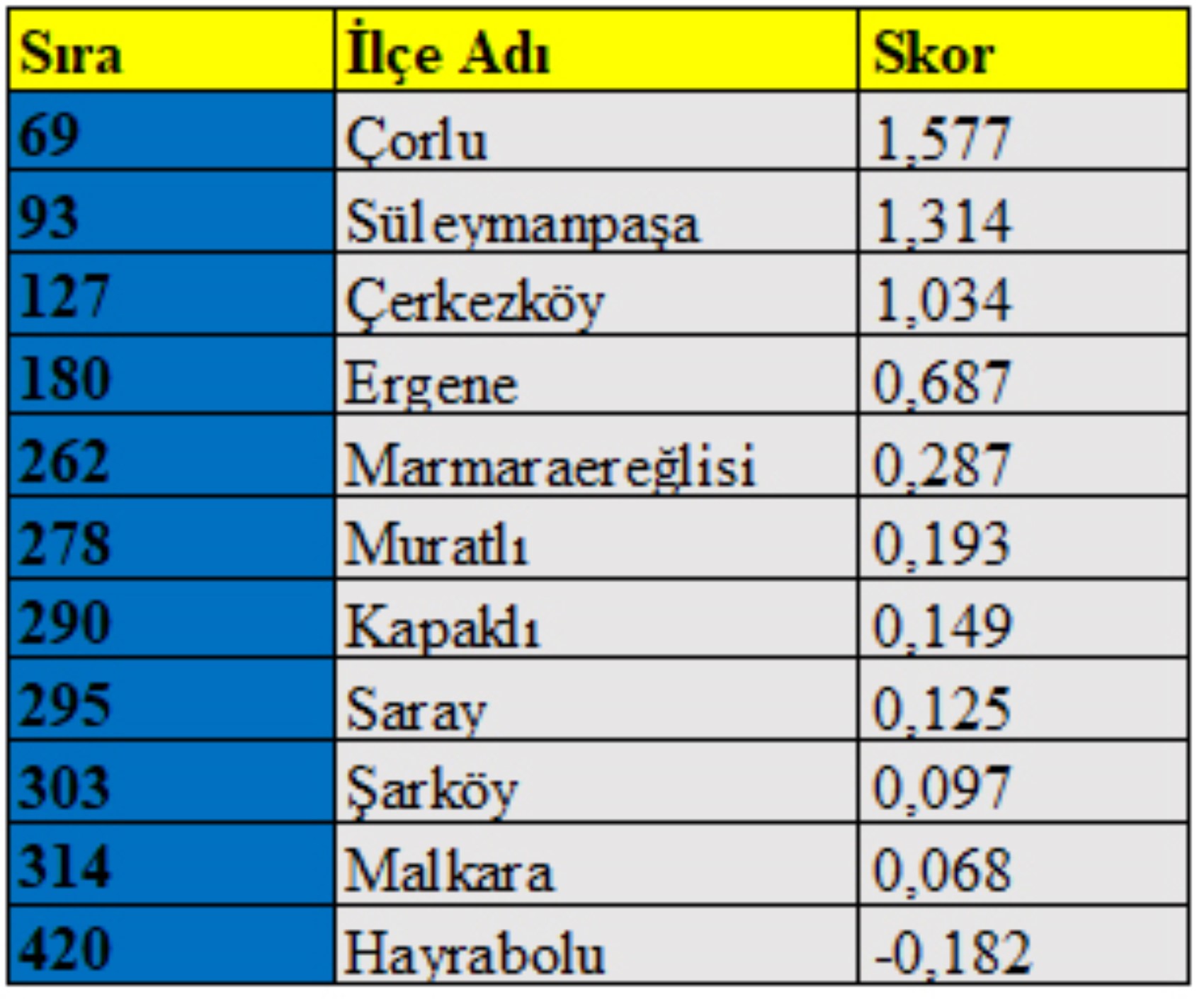
In contrast, Marmaraereğlisi, Muratlı, Kapaklı, Saray, Şarköy, and Malkara are in the third tier; Hayrabolu is in the fourth tier. Industrial density is more limited in these districts, while agricultural production is more dominant. This situation creates a clear development gap between the province's northwestern industrial corridor and the agricultural belt in the interior.
Incentive Mechanisms and the District Reality
The investment incentive system is an important policy tool aimed at reducing these differences. Although Adana and Tekirdağ are generally in the second incentive region, districts with lower levels of development can benefit from sub-region supports. Nine districts in Adana and Hayrabolu in Tekirdağ have more advantageous incentive opportunities.
In addition, investments made within organized industrial zones provide investors with one or two sub-region incentives. This mechanism aims to direct investments from developed centers toward peripheral districts.
However, the critical question here is: Are incentives enough to permanently reduce intra-district development differences? District SEGE data show that the gap between economic capacity and social infrastructure will not close just by attracting investment. Unless education, health, qualified labor force, and institutional capacity are strengthened together, development cannot achieve a balanced structure.
The picture revealed by the District SEGE-2022 is clear: The development problem is no longer just "regional"; it is a matter of spatial divergence that deepens even within provincial borders.
At this point, it is necessary to go one step further and ask the following question: Does the potential possessed by the districts really translate into welfare at the household level?
In this framework, the implementation of selective development policies, the strengthening of infrastructure investments, and the realization of projects aimed at increasing qualified human resources are of great importance for reducing regional development differences. With the effective implementation of these strategies, it will be possible to reduce the socio-economic imbalances between Adana and Tekirdağ districts and to create a more inclusive, sustainable, and balanced development model.
SES 2023: The Map of Welfare and Deepening Inequalities Based on Districts
Economic capacity and social welfare do not always progress at the same pace. A province's production power may be high; however, this power may not translate into widespread welfare at the household level. Turkey's 2023 Socio-Economic Status (SES) report clearly reveals that welfare in the country's socio-economic structure is increasingly concentrated in a narrow segment, while broad segments of society are squeezed into middle and lower income groups.
The study, which covers more than 26 million households, measures socio-economic status based on education, income, and occupation information. The results are striking: Across Turkey, only about 12 percent of households are in the upper and top income groups. The share of the top income group is only around 1 percent. Broad segments of society are concentrated in middle and lower income groups.
This picture clearly shows that growth does not automatically spread to the base.
Double Reality in Metropolitan Cities: The Coexistence of Welfare and Poverty
In metropolises such as Istanbul, Ankara, and İzmir, the proportion of upper income groups is relatively higher. However, the proportion of households in the lower and lowest income groups in the same cities is also at a remarkable level. In other words, metropolitan cities are becoming places where not only welfare but also inequality is concentrated.
While welfare clusters in certain centers, fragile income structures remain dominant in broad surrounding areas. When descending to the district level, this divergence becomes even more pronounced. In the same city, completely different living standards can exist side by side just a few kilometers apart.
Center–Periphery Divergence in Adana: The Welfare of Çukurova, the Poverty of Northern Districts
According to SES 2023 data, Adana is in a position close to the Turkish average. However, this average value hides deep differences within the province. The proportion of upper income groups is limited; the proportion of households in the lower and lowest income groups is quite high.
The Çukurova district represents the province's top socio-economic profile with its high education level and income structure. Sarıçam and partially Seyhan exhibit a relatively more balanced structure. In contrast, the need for social support is more pronounced in Yüreğir.
In the northern and rural districts, the picture is more fragile. Low income levels and limited employment opportunities in districts such as Feke, Saimbeyli, Tufanbeyli, and Karataş increase the risk of structural poverty. This picture shows that welfare is concentrated in urban centers in Adana, while structural poverty is deepening in rural and semi-rural districts. The spatially unbalanced distribution of education, employment, and income opportunities makes the intra-provincial socio-economic gap permanent.
TWO SEPARATE WORLDS IN TEKİRDAĞ: The Welfare of Çorlu and Çerkezköy, the Poverty of Şarköy and Hayrabolu Districts
According to SES 2023 data, Tekirdağ ranks 7th in Turkey with 135 points; it is among the provinces with the highest socio-economic level and stands out as one of the leading industrial centers of the Marmara Region. However, just as in Adana, this relatively high average in Tekirdağ hides inequalities at the district level.
Çorlu and Çerkezköy are the locomotive of the province with their high employment and income structure. Süleymanpaşa similarly exhibits a relatively strong profile. In contrast, income levels are lower in Hayrabolu, Malkara, and especially Şarköy; the economic structure is based more on agricultural activities.
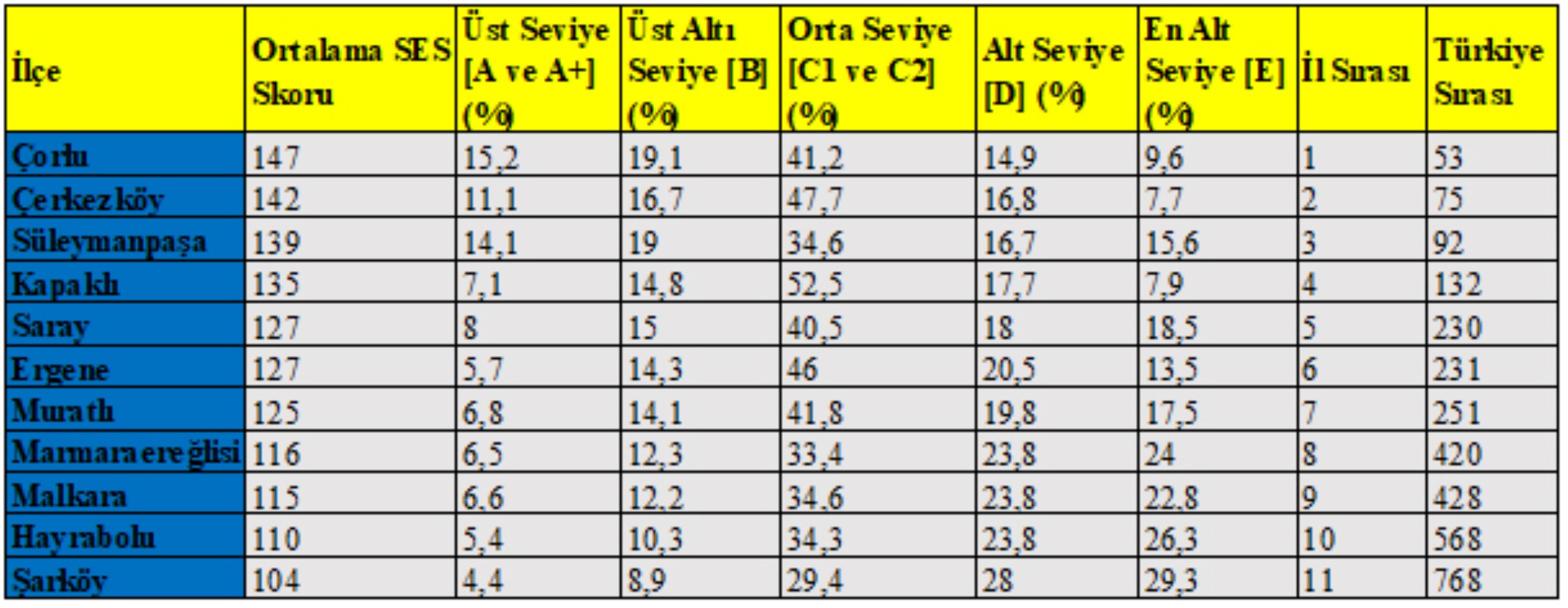
This picture shows that there is a clear welfare gap between districts integrated into industry and agriculture-weighted districts. Two separate economic realities continue to exist side by side in Tekirdağ.
What Do District SEGE 2022 and SES 2023 Say Together?
District SEGE measures potential; SES shows how this potential reflects on households. It is observed that districts with a high level of development across Turkey also have a high socio-economic level. Districts with a low level of development coincide with a low income structure.
This overlap reveals an important truth: Inequality is not temporary, but structural.
The difference between Çukurova and Feke in Adana; the gap between Çorlu and Şarköy in Tekirdağ is not just an economic divergence, but also a matter of equal opportunity. As education quality, employment opportunities, and living standards differ spatially, social mobility is also limited.
SES 2023 data clearly show that the inclusiveness of growth remains weak. While economic capacity increases, welfare does not spread to the same extent.
At this point, the last link of the chain comes into play: Human capital. Because in the long run, the fundamental element that will reduce inequality and increase productivity is the quality of human resources.
CONCLUSION: A MATTER OF BALANCE AND RESILIENCE, NOT GROWTH
GDP shows us where production is concentrated. SEGE reveals the institutional and structural capacity that carries this production. SES measures whether the resulting economic power translates into welfare at the household level. When these indicators are read together, the picture becomes clear: Turkey is growing; however, growth is geographically concentrated in a narrow area, production is gathered in certain centers, and welfare does not spread to the same extent.
While Istanbul's weight in production gathers economic dynamism in a single center, data at the district level show that the development problem is now experienced at the micro-scale. The existence of different levels of development side by side within the borders of the same province is the most concrete proof of this. The difference between Çukurova and Feke in Adana; the divergence between Çorlu and Şarköy in Tekirdağ is not just an income difference, but a difference in access to opportunities. This is as much a matter of social justice as it is economic.
Adana and Tekirdağ represent two different development dynamics. Despite its strong production potential, Adana cannot achieve the desired leap in income per capita, employment, and human capital indicators. Tekirdağ, on the other hand, has increased its production power with its high industrial and logistics capacity; however, this power needs deeper integration with human capital and sustainable social infrastructure. Both examples show that the link between production capacity and human development needs to be strengthened.
The fundamental question of today is no longer "how much have we grown?";
It is the question of "where did growth take place, who did it reflect upon, and how resilient is it in the face of crises?"
New Framework: Resilience Economy
Turkey's development strategy should aim not only to increase growth but to balance and deepen it. Strengthening production centers while supporting cities with potential, activating district-based incentive systems, and establishing real economic ties between organized industrial zones and relatively backward districts are the fundamental steps of this process.
However, investment alone is not enough. Balanced development cannot be achieved without raising education quality, integrating vocational training with industry, increasing youth and female employment, strengthening primary health care services, and expanding digital infrastructure.
Development is no longer measured solely by production volume; it is measured by resilience to disasters, digital transformation capacity, green economy compliance, and the power to produce innovation. Therefore, the new goal is not just "high growth"; it is a resilient, inclusive, and spatially balanced development model.
Final Word
The real test facing Turkey is not to target high growth alone; it is to spatially balance this growth, combine economic capacity with social inclusion, and be able to plan today's production power together with tomorrow's human capital. Only through a holistic approach that brings production, welfare, and human resources together on the same strategic ground can a permanent and sustainable development model be established.
The examples of Adana and Tekirdağ show a clear truth: Production increase alone is not enough. Unless welfare spreads to broad segments, human capital is strengthened, and inequalities at the district level are reduced, growth figures cannot find their social equivalent. Otherwise, as the economy grows, social and spatial fault lines become even more pronounced.
Turkey's future will be strong only to the extent that it can generate opportunities not just in large centers, but in all its cities and all its districts. Real development will gain meaning at the point where we can expand the geography of growth and distribute welfare fairly.
Would you like to get notifications about new developments and save news?
- NotificationsNew developments and breaking news
- SaveNews is stored in the app
Most Read

National Anthem surprise from Japanese Ambassador
Diesel protest in Italy brings roads to a standstill
Kılıçdaroğlu sends formal notice to YENİ Party

Diyanet Foundation, which claimed 'we have no resources,' owns 73 percent of the fund!

Is it time for the Turkish Parliament to revoke its 31-year-old 'Casus Belli' decision?

No to the 'opening' bar masked as change, yes to the Republic's bar

Ezel Akay and his brother's test results came back positive

Why is Paris burning? The crisis of the welfare state and the revolt of social justice

'From a Journalist’s Pen: The Tüfekli File'

The politics of particles and the financing puzzle: 'Calamitous questions'