


Atatürk's automobiles


Two Lincolns and one Cadillac. Three automobiles that defy time, past which those visiting Anıtkabir today walk in silence... They are not merely iron, engines, and leather; they are time machines that have witnessed the most enthusiastic celebrations of the young Republic and the steps of the leader who changed the course of history.
All three of these automobiles are engineering and design marvels in their own right for classic car enthusiasts. However, it is not just their engines or flashy bodies that make them valuable. Each carrying a different story, these automobiles are silent witnesses to the modernization process of the Republic of Turkey.
The magnificent Lincoln of the ceremonies
The 1934 model Lincoln KB Convertible Sedan, which Atatürk used between 1935 and 1938, was one of the most exclusive American automobiles of the period. Lincoln produced only 744 KB chassis in 1934, and only 20 of them were equipped with the convertible sedan body. The four-door, six-passenger automobile represented the high-class automotive engineering of the era with its 12-cylinder engine, leather upholstery, and foldable roof. An interesting detail was its color. The Lincoln, which left the factory in dark navy blue, was painted black because it would be used as the presidential state car.
Atatürk used this automobile especially during national holidays, ceremonies, and the hosting of foreign statesmen. Atatürk was a leader who did not build walls between himself and his people. This convertible Lincoln was also a stage of the Republic where he met his nation eye-to-eye and waved with his famous smile. The Lincoln's journey did not end with Atatürk's passing. Used during the terms of İsmet İnönü and Celal Bayar as well, the automobile remained in presidential service until 1963. In that same year, it was delivered to Anıtkabir in working condition.
Having been put on display again following the restoration carried out between 2014 and 2015, the vehicle holds a very high collection value today. This is because it is one of the very few 1934 Lincoln KB Convertible Sedans that have survived to the present day.
A bulletproof fortress: The armored Lincoln
The second Lincoln used by Atatürk was a 1935 model armored state car.
In the design of this automobile, safety was as much a priority as ostentation. The seven-passenger vehicle featured eight bulletproof windows, leather-covered driver seats, foldable jump seats, and comfort equipment seen in the high-class limousines of the period. Its powerful engine and armored body showed how safety was handled in the transportation of heads of state in the 1930s.
Used by İsmet İnönü and Celal Bayar after Atatürk's passing, the Lincoln was transferred to Anıtkabir in 1958. Its restoration began in 2015 and lasted approximately two years and eight months.
From an orange grove to Anıtkabir: The story of the Cadillac
Perhaps the one with the most interesting story among the three automobiles is the Cadillac.
The 1935 model Cadillac V-12, gifted to Atatürk by Türkiye İş Bankası, was used as a state car between 1936 and 1938. The seven-passenger armored limousine stood out with its 12-cylinder engine, three-speed manual transmission, hydraulic brakes, and advanced suspension system. It featured a movable glass partition separating the driver's section from the passengers and eight bulletproof windows.
However, the Cadillac's story is more intriguing for its journey after Atatürk's passing than for its technical specifications. After Atatürk's death, the automobile passed to his sister, Makbule Atadan. Later, under the supervision of her family, it was kept in a hangar in an orange grove in the Dörtyol district of Hatay. The fact that that magnificent body, which once carried the founder of the Republic of Turkey, was protected for years in a hangar smelling of citrus is a fascinating slice of history in itself.
Fortunately, with the initiatives of Abdürrahim Tunçak, one of Atatürk's adopted children, the transfer of the automobile to the place it deserved, namely a museum, came to the agenda. Thus, the Cadillac took its place in the Anıtkabir collection years later. The comprehensive restoration process that began in 2018 was completed in 2023. Now, it greets its visitors in the 23 Nisan Tower of Anıtkabir with all its lived experiences.
This story is not just an inventory of the vehicles Atatürk rode in. These three automobiles are mirrors of the modern, technological, and visionary face of the young Republic of Turkey that kept pace with the world. Looking at these vehicles standing in Anıtkabir today is not just about commemorating the past, but also about feeling the great philosophy of transformation of those first years once again.
The Republic's first automotive initiatives
In the founding years of the Republic, Turkey was a country that had just emerged from long and grueling wars, with insufficient transportation infrastructure and industrial production that was limited to the point of being non-existent. For the new state to achieve economic independence, there was an urgent need not only for factories but also for strong transportation networks that would connect production centers to each other and the crops in the fields to large markets.
Atatürk had pointed to this vital reality at the 1923 İzmir Economic Congress, which was convened even before the Republic was proclaimed. He emphasized that the country needed to be connected like a spider web with railways and modern highways where motor vehicles could operate. This vision clearly revealed that transportation was seen not just as a means of travel, but as the fundamental engine of total economic development. Efforts to improve transportation infrastructure also laid the groundwork for the first commercial and production initiatives in the automotive field.
We often describe the development of the automotive industry in Turkey starting from the 1960s. However, the young Republic's first initiatives in the automotive field date back much further. Vehbi Koç obtaining the Ford dealership for Ankara and its surroundings in 1928 was one of the important steps in the development of automotive trade in the country.
A more remarkable development occurred in 1929. The Ford Motor Company established an automobile assembly plant in Tophane, Istanbul. In this facility, where approximately 450 people worked, automobile and truck assembly was carried out. By June 1931, daily production had reached 48 vehicles. Moreover, the facility's goals included exports to the Soviet Union, the Balkans, and Middle Eastern countries. However, due to the effects of the 1929 Great Depression, the contraction in international trade, and economic conditions, this initiative lasted only a few years. Although this initiative was left unfinished due to the global crisis, it was an important step taken toward automotive production in the early years of the Republic.
Indeed, in the following years, Turkey's automotive adventure went through much different and deep-rooted stages. The assembly industry, which sprouted again in the 1950s, reached a historic peak when the calendar showed 1961. Turkish engineers designed and produced the "Devrim" (Revolution) automobile with domestic resources, showing the whole world that these lands possessed the technical knowledge and belief to build their own automobile. This accumulation opened the doors to a brand new and modern era in the Turkish automotive industry with the mass production of Anadol in 1966.
The steps taken in those years were the beginning of the journey that leads to Turkey's current automotive industry. Automobiles have changed, technologies have developed, but the Republic's goal of modernization has not changed.
From beyond time to today
When we look at those three automobiles in Anıtkabir again today, we are not just seeing rare examples of classic car history before us. On one side stands the most advanced technology of the period with their powerful 12-cylinder engines, carefully considered leather upholstery, and imposing bulletproof armor; on the other side is a young, faithful, and visionary Republic trying to expand railways, build highways from scratch, and establish a massive industrial infrastructure…
Exactly 103 years have passed. Means of transportation have changed, factories have become digitized, and technology has taken on a completely different face. Atatürk's automobiles, the most precious witnesses of this great march of modernization, remind us of the historical role they undertook in that proud corner reserved for them in Anıtkabir. That great industrial and independence transformation they witnessed is being carried into the future today with the new horizons we have opened.
Happy 103rd anniversary of our Republic.
Long live Atatürk! Long live the Republic!
Would you like to get notifications about new developments and save news?
- NotificationsNew developments and breaking news
- SaveNews is stored in the app
Most Read
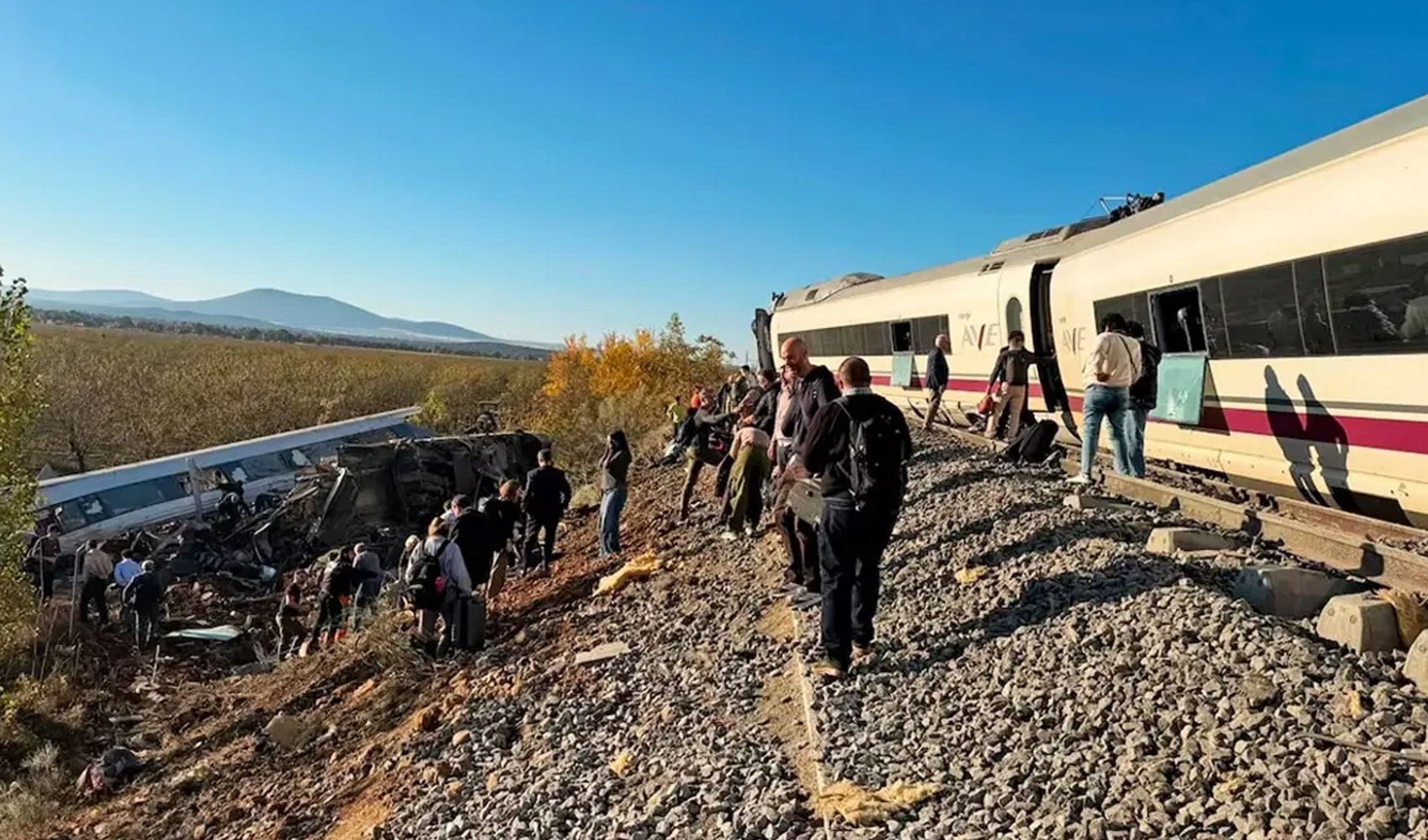
Two high-speed trains collide in Spain!
Surprise results emerge from the ballot box in Israel
Can Yayınları Editor-in-Chief Cem Akaş has passed away

Reflections on the Republicans' victory at the Istanbul Bar Association

Who is it that turns Lausanne into a 'rag'?!

Water: Our existence, our future, our security, and our survival issue

What is the Republic according to Atatürk?

The moment arm of the Republic's acceleration
Striking claim regarding the Erdoğan-Aliyev meeting!
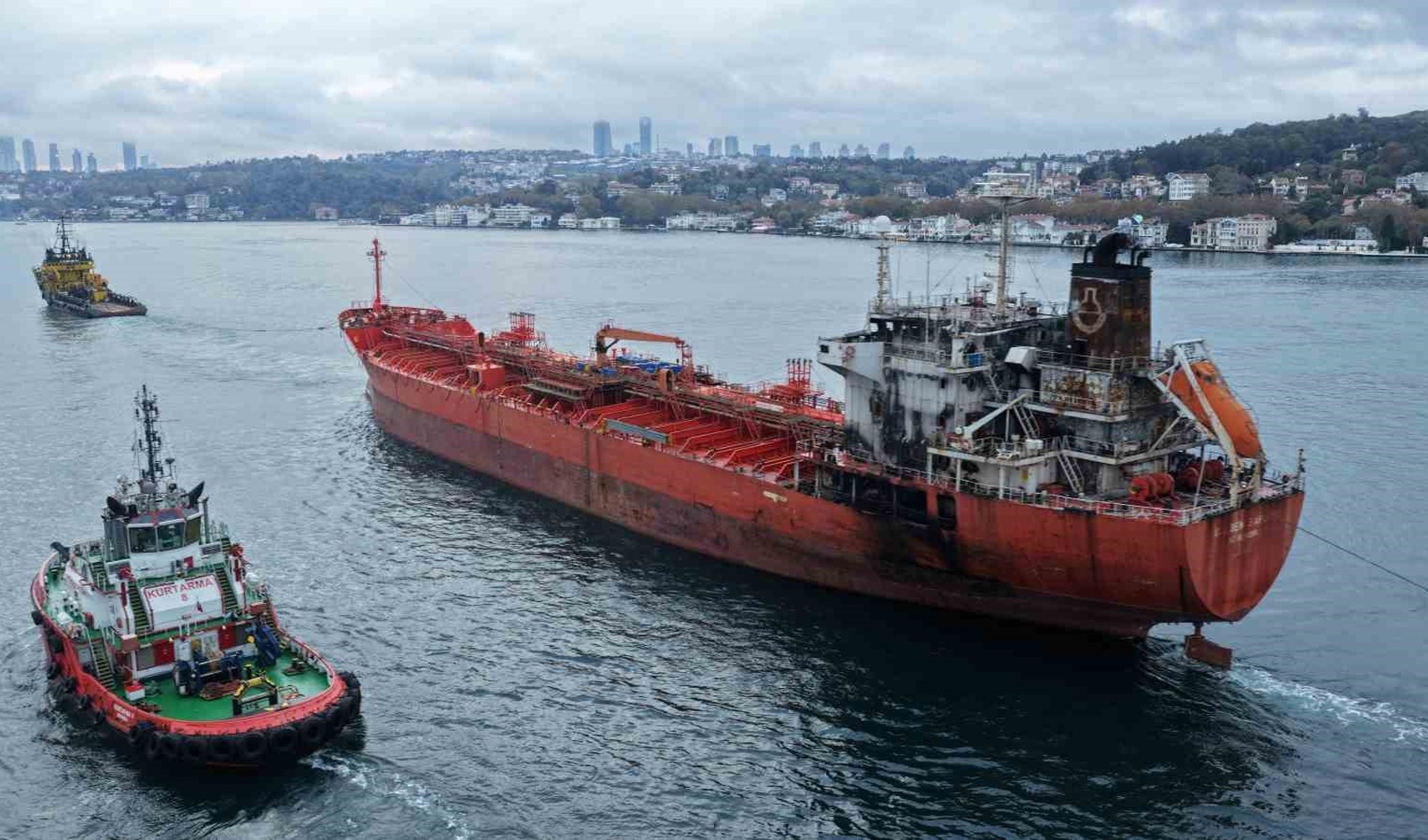
Bosphorus traffic halted for damaged tanker