



ERBAKAN'S TARIQAT CONNECTIONS AND HIS ELECTION AS AN INDEPENDENT MP
We can trace the origins of Erbakan's tariqat connections back to his father, a conservative judge.
These connections continued during his university years with Hasip Efendi and Abdülaziz Bekkine of Kazan. They were further solidified with Mehmet Zahit Kotku, the founder of the İskenderpaşa Community. Kotku was the person who introduced Erbakan to politics.
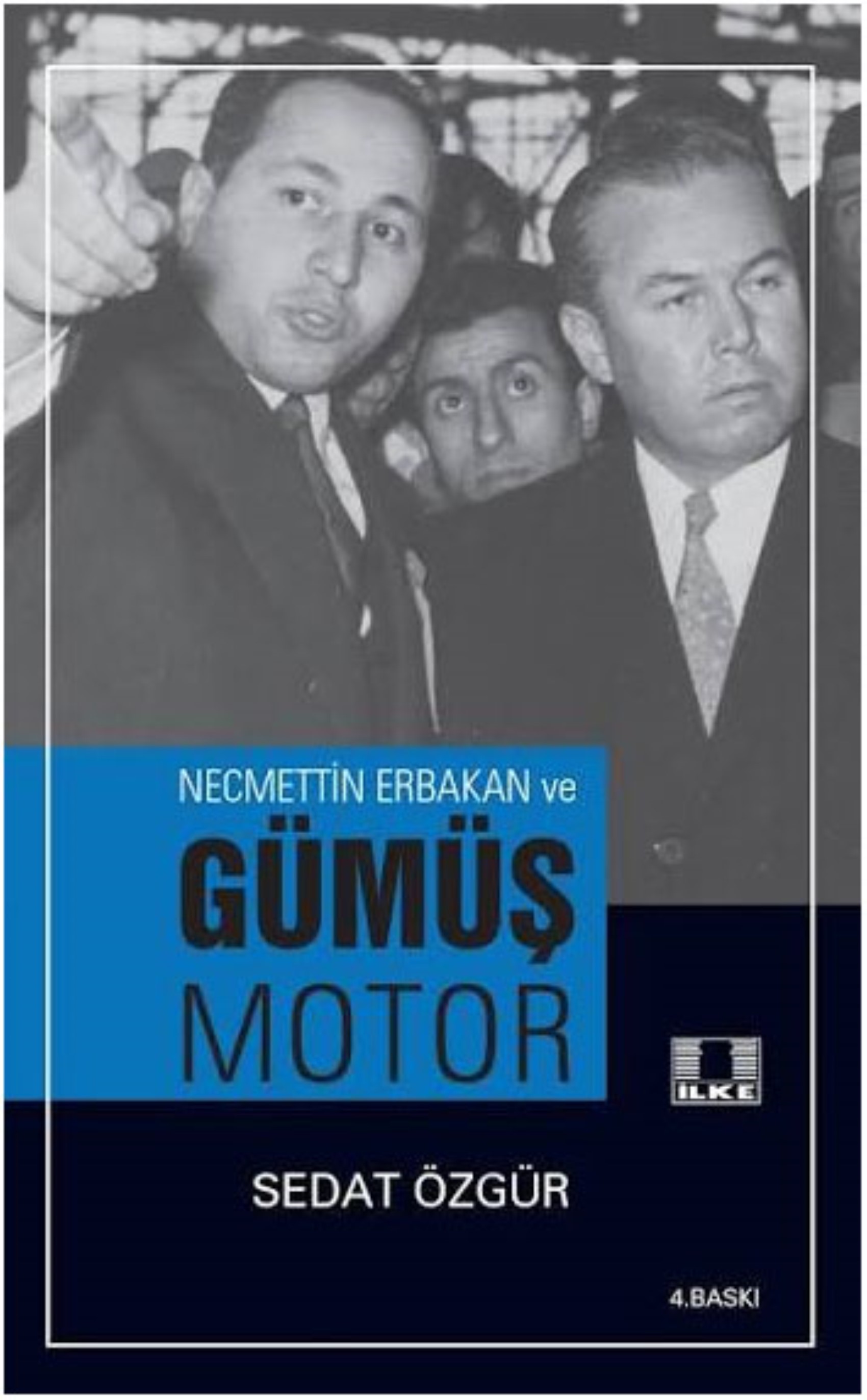
The Islamist ideology that Erbakan put forward under the name "National View" (Milli Görüş) was born from this environment. Erbakan's green capital connections, his election as a Konya deputy, and the Gümüş Motor (1956) company, which bears his name, in reality reflect the capital ties of the Anatolian tradesmen that had been cultivated by the İskenderpaşa Community. Erbakan led these capital groups.
Demirel removed Erbakan from the presidency of the Union of Chambers and Commodity Exchanges of Turkey (TOBB) by police force. He blocked his candidacy for the Justice Party.
This stance by Demirel led Islamist circles to abandon the policy of seeking representation by clinging to the skirts of the urban bourgeoisie (which actually means secular capital) since the Menderes era.
It is possible to interpret this process as a bid for class hegemony. In the 1969 elections, Erbakan was elected as an independent MP from Konya with a very significant number of votes—30,000—through an interaction network that extended to the İskenderpaşa Lodge. This was nearly 10% of the total number of voters in the province of Konya.
ERBAKAN'S INNER CIRCLE
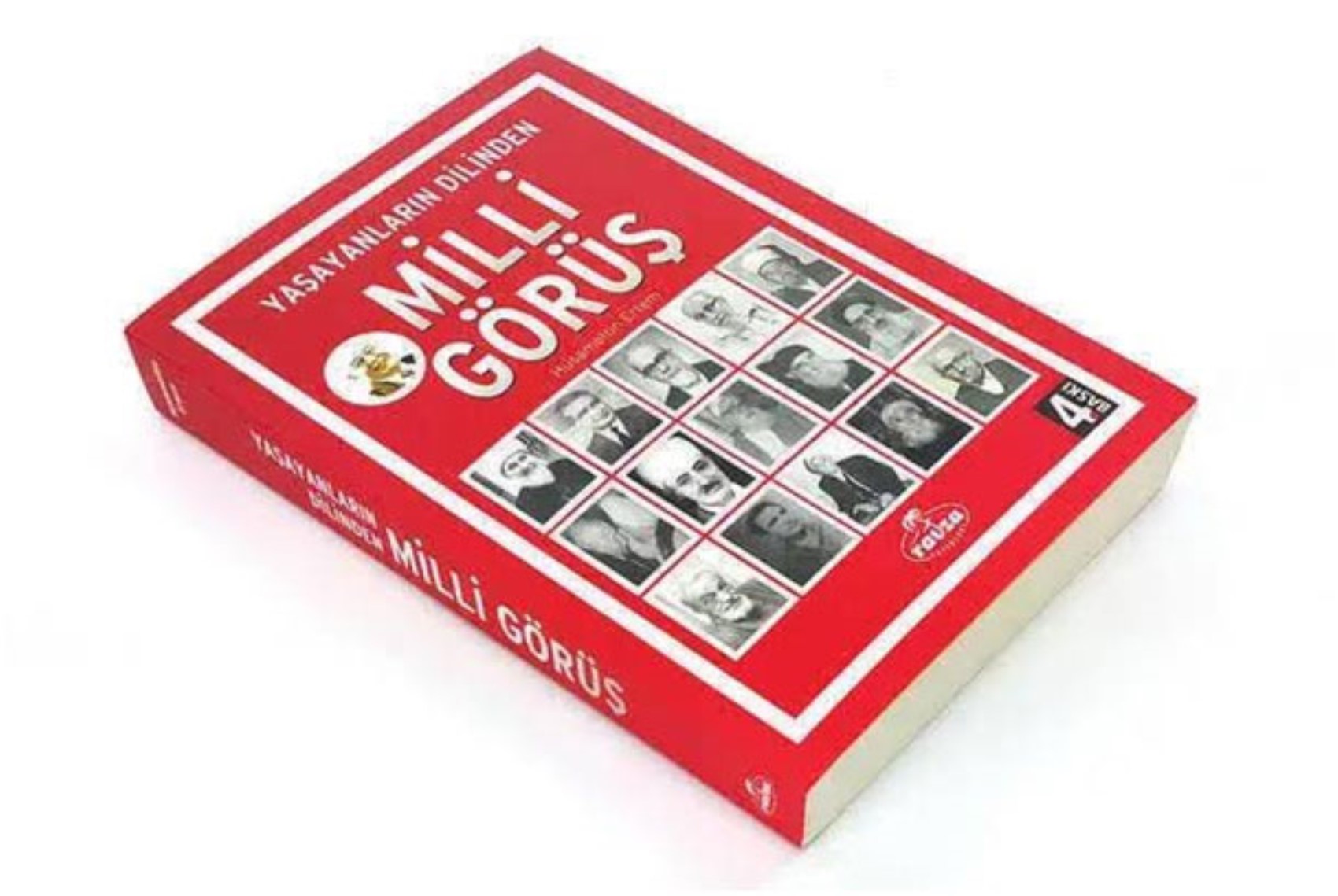
From 1969 until the National Salvation Party (MSP) case, Erbakan's inner circle consisted of friends he had acquired from Istanbul Technical University (İTÜ) and the Mehmet Zahit Kotku (İskenderpaşa Community) circle.
Most of them were engineers. There were a small number of lawyers. These individuals did not abandon Erbakan Hoca with great loyalty from the National Order Party (later the MSP) to the Felicity Party.
To mention a few names: Recai Kutan, Oğuzhan Asiltürk, Fehim Adak, Şevket Kazan, and Ahmet Tekdal.
The prominent figures of the AKP, on the other hand, were young cadres who later joined the "National View." Examples include: Bülent Arınç, Abdullah Gül, Erdoğan, and Abdüllatif Şener.
WHAT WERE THE FACTORS THAT ESTABLISHED AND GREW THE MSP?
I believe it is correct to trace the origins of the MSP back to the Democrat Party years. The DP's new religious policy was in effect with Bayar's tacit approval. It was a principle of mutual benefit. If you like, you can call this turning a blind eye to reactionism. Within the Democrat Party, there were always MPs opposed to the Republican revolution who had tariqat connections: such as Fehmi Ustaoğlu and Kemal Kaçar.
Demirel, however, always kept his distance from such centers. In the anti-CHP bloc, there was always a place for them, but on the condition that it was not exaggerated.
The establishment and growth process of provincial capital was carried out through tariqat connections. The primary goal of these circles was to become a partner in the money and credit circulation held by the urban bourgeoisie for whom they acted as agents.
To put it more accurately, it was about sharing the dominance of capital.
In my opinion, the opposition to secularism, which was presented as the fundamental contradiction at the discourse level, was not the primary issue. The fundamental issue was a class issue.
This was the reason why the Union of Chambers and Commodity Exchanges of Turkey, which has in reality been an organization of agricultural and commercial capital since its establishment, appointed Necmettin Erbakan first as secretary general and then as president. The real reason in the background was class-based.
This was also the reason why Prime Minister Demirel furiously dismissed Erbakan. (1969)
THE ESTABLISHMENT AND CLOSURE OF THE NATIONAL ORDER PARTY
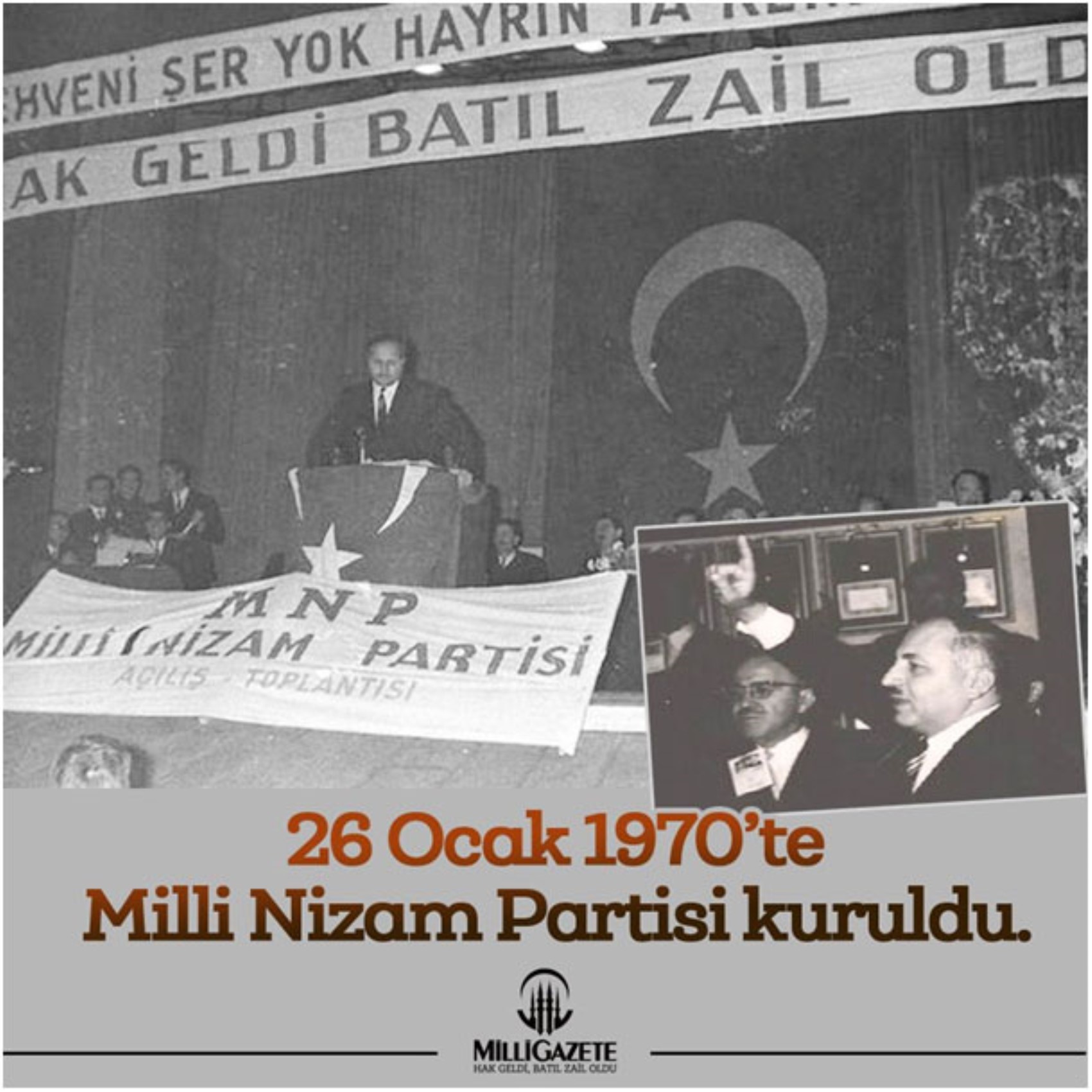
The National Order Party (MNP) was founded under the leadership of Erbakan with deputies who had left the Justice Party and the New Turkey Party. (1970) The MNP, along with the Workers' Party of Turkey, was closed by the Constitutional Court. (May 20, 1971) Among the founders of the MNP were Necip Fazıl, Rıfat Boynukalın, İsmail Müftüoğlu, Fehmi Cumalıoğlu, Ahmet Tevfik Paksu, and Süleyman Arif Emre. Some of these names were former Justice Party members, and some were from the New Turkey Party.
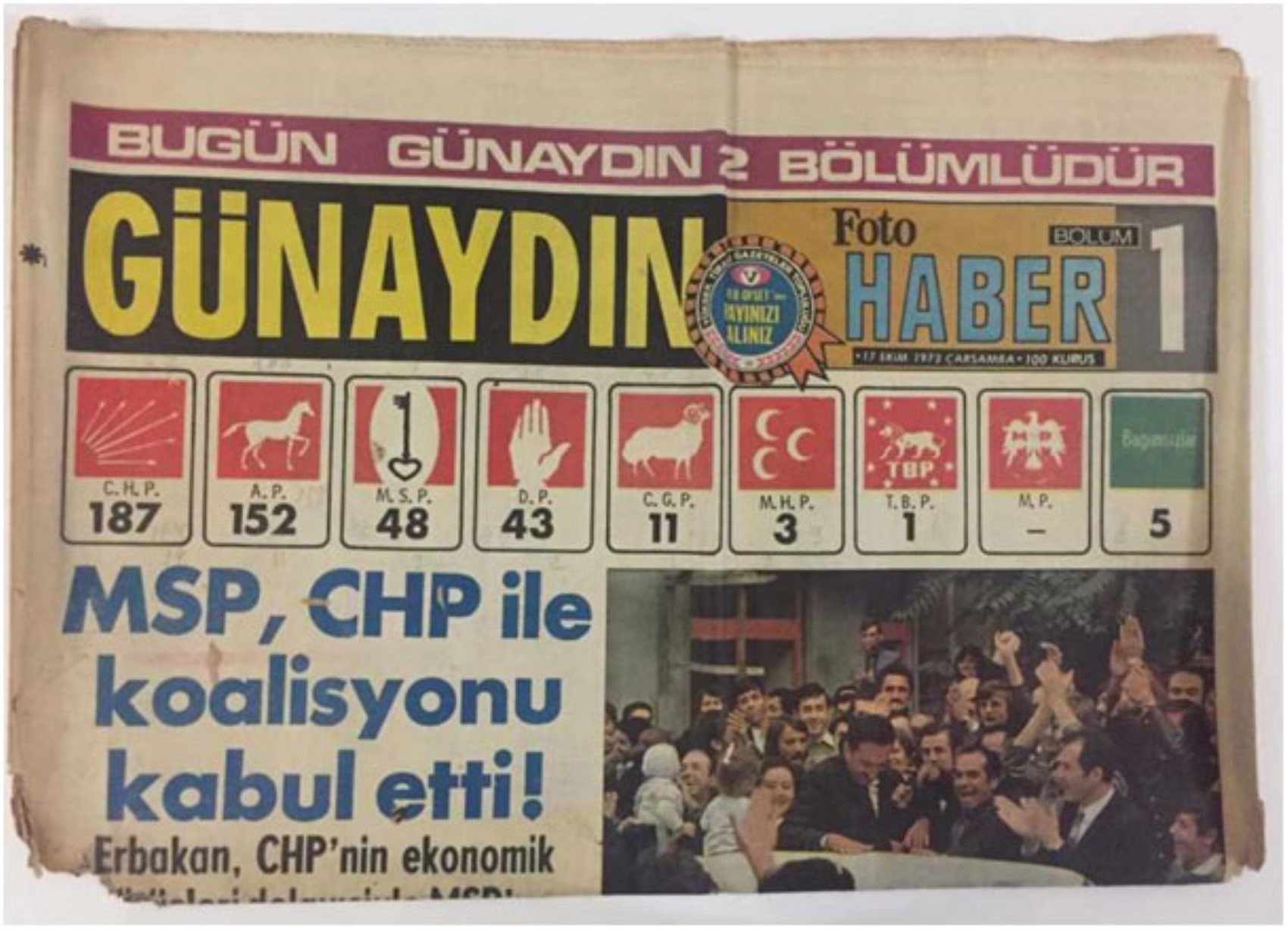
The MNP was closed, but Erbakan's parliamentary career did not end. He spent the March 12 period in Switzerland. He returned at the beginning of 1972. He joined the National Salvation Party, which was founded under the presidency of Süleyman Arif Emre, and became its chairman at the Grand Congress. He took over the leadership of the party before the 1973 elections.
It is said that Erbakan's return was encouraged by the generals of the interim regime. It is highly likely that this is true. Their goal was to prevent Demirel, whom they had removed from office with a memorandum, from becoming Prime Minister again through elections.
In the 1973 elections, the right-wing voter base was divided. A different parliamentary structure emerged.
After the 1972 Congress, Ecevit had created a “Karaoğlan Wind” but this was not the reason why the CHP emerged as the first party.
The real reason was on the right; the Justice Party base had split into three: Demirel, Bozbeyli, and Erbakan.
THE REGIME APPLIED TO ERBAKAN AND OTHER POLITICIANS AFTER SEPTEMBER 12 Prof. Dr. Necmettin Erbakan was taken to Uzun Ada in the Gulf of İzmir immediately after September 12. The island is off the coast of Urla.
Its Greek name is Kösten.
The island was inhabited until the population exchange. It was an island inhabited by Greeks. After the Greeks were sent to Greece, the island was transferred to the Turkish Navy. It was declared a military zone. There were facilities belonging to the Naval Forces on the island.
Türkeş, who surrendered a few days later, was also brought to the island.
As can be understood from subsequent practices, the National Security Council treated Ecevit and Demirel differently. They viewed them as incompetent/short-sighted politicians. In principle, there was to be no policy of punishment directed at them.
Because Demirel knew very well when and what to speak about, he remained silent until the time was right. If Ecevit had waited for the right time like Demirel, no criminal prosecution would have been opened against him. He had some impulsive outbursts, such as trying to give interviews to foreign press members. He was sentenced to short-term imprisonment several times. These attempts seemed somewhat like forward-looking political investments. He seemed to want to send a message to domestic and foreign public opinion that he was a democratic leader resisting the military dictatorship. He had letter envelopes and stationery printed with prison letterheads. He used paper with the Mamak Military Prison letterhead in his correspondence.
These letters also bore the stamps of the "Mamak Military Prison Martial Law Command" of course.
WHERE WERE ERBAKAN AND NSP EXECUTIVES DETAINED? WHERE WERE THEY TRIED?
During the September 12 period, martial law prosecutors filed many lawsuits. The progress of each of these must be evaluated separately.
According to the Council administration, the NSP was a counter-revolutionary party. It had been practicing 'taqiyya' (dissimulation) since 1970.
It was against Atatürk's revolutions and the secular Republic. I am of the same opinion.
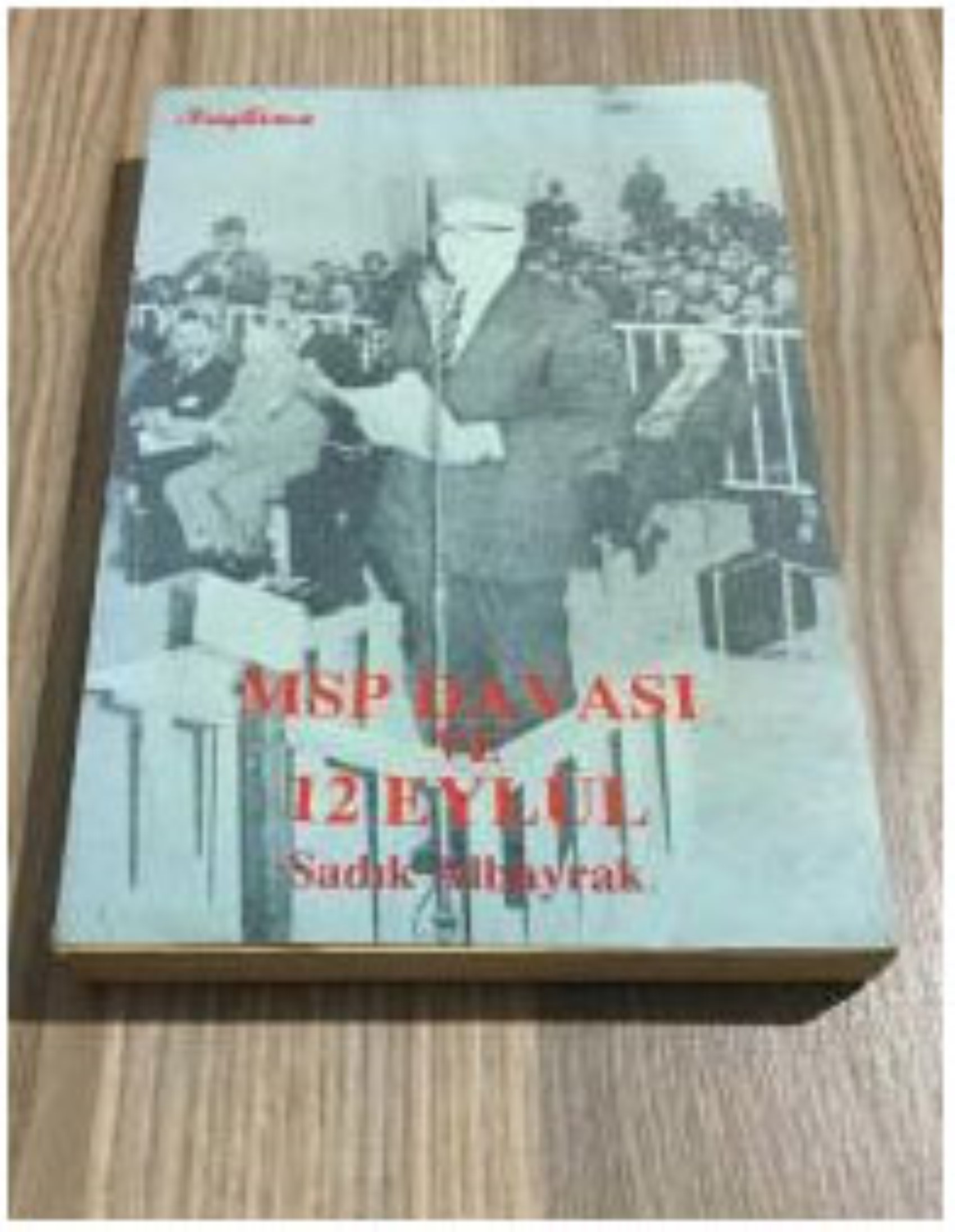
At this point, I will mention two sources regarding the NSP case. I recommend looking at the book titled “The NSP Case and September 12” written by Sadık Albayrak, as well as BBC archive footage.
As a result, Erbakan and party executives were arrested. (October 15, 1980)
According to the indictment, the NSP members had attempted to abolish the secularism principle of the republic by turning the party into an illegal organization.
The MSP was closed down after a while, along with other parties. The trial of its executives continued.
Some of the individuals on trial were: Erbakan, Asiltürk, Kazan, Adak, Kutan, Emre, Karamollaoğlu, Aksu and Lütfi Doğan. Kadir Mısıroğlu, on the other hand, had fled abroad.
It is written in many places that the MSP members were held in Ankara Mamak Prison. However, this is incorrect information. The trials were held in Mamak.
They were not detained in Mamak. The September 12 administration had allocated the Army Language and Intelligence School for political prisoners. If one might say so, the elite prisoners stayed here. These buildings were used as a detention center. Depending on their seniority, some defendants stayed in two-person rooms, while others stayed in a dormitory arrangement.
It was not only the MSP members who were at the Language and Intelligence School. Alparslan Türkeş, Deniz Baykal, Ertuğrul Günay, Celal Doğan, Mustafa Timisi and other CHP members, as well as Doğu Perinçek, who was being tried in the TİKP case, were also detained at this school.
COMPARISON OF THE MSP AND PEACE ASSOCIATION CASES COMPARISON OF THE MSP AND PEACE ASSOCIATION CASES
One of the significant cases of the September 12 period is the Peace Association case. The defendants in this case suffered severe grievances during the trial process.
The defendants in the Peace Association case were being tried under articles 141-142, while the MSP members were being tried under article 163.
The National Security Council must have viewed the Peace Association defendants as more dangerous, as their detention lasted for a very long time.
Of course, in a closed regime, talking about the degrees of victimization of people might be seen as inappropriate. But this is necessary to correctly analyze the period. The regime applied to the MSP case defendants and the treatment faced by the Peace Association executives were completely different.
For example, the Association President, retired Ambassador Mahmut Dikerdem, and Reha İsvan remained detained in prison for over three years. 38 months. Excuse me, but contrary to their rhetoric, the September 12 regime applied a lenient policy toward the MSP members. The MSP members after being detained for an average of 10 months they were released. The trial began on April 24. Erbakan was released on July 24, 1981. released. The defendants were tried without arrest until 1985. The September 12 regime viewed the Peace Association as an organization with the goal of bringing Communism to Turkey. I believe the National Security Council (MGK) administration viewed this case within the framework of the NATO Cold War concept.
In my opinion, September 12 was, in the final analysis, an international capital-Pentagon projection.
Although members of the National Salvation Party (MSP) were considered reactionaries, they must not have been seen as dangerous enough, as the case
resulted in an acquittal. The defendants in the Peace Association case,
however, suffered serious persecution. Their interrogations alone lasted 6 months while in detention. In this case,
intellectuals such as retired Ambassador Mahmut Dikerdem, Orhan Apaydın (President of the Istanbul Bar Association), Dr. Erdal Atabek, Ali Sirmen, Reha İsvan, Ataol Behramoğlu, and Kemal Anadol were tried. Later, names such as Tarık Akan, Genco Erkal,
Aziz Nesin, Sadun Aren, and Jülide Gülizar were also included in the case. During the trial
process, the lawyers for the case were also arrested, including Halit Çelenk and Turgut Kazan. The case had begun on February 27, 1982, with the arrest of 44 executives. The case was seen by the world public as the trial of peace. The defendants were nominated for the Nobel Peace Prize in 1984. Reha İsvan
and Ali Sirmen were still in detention even as of December 25, 1985. However, by that date, Turkey had returned to multi-party political life, a constitution had been adopted, parliament had opened, and Özal had become Prime Minister. But the defendants of the Peace Association case were still in detention. On November 14, 1983, the Istanbul No. 2 Martial Law Court sentenced many defendants, including names like Mahmut Dikerdem, Orhan Apaydın, and Ali Sirmen, to heavy prison terms. The 3rd Chamber and the Assembly of Chambers of the Military Court of Cassation overturned the local court's decisions twice on the grounds of "incomplete investigation."
With the Anti-Terror Law that came into effect on April 12, 1991, the famous articles 141 and 142 of the Turkish Penal Code (TCK), under which the defendants were charged, were repealed.
Following this change, on April 21, 1991, the court decided to drop the case and acquit all defendants who were being tried without arrest. SEPTEMBER 12 ATATÜRKISM AND RELIGION POLICY
The MGK administration wanted to use religion in line with its own ideas. And it did.
This attitude meant more than just the organization of the Presidency of Religious Affairs as a public institution within the "administration."
It carried a deeper meaning. It was a strategic move. was expressing. According to the National Security Council (MGK), Islam was not a problem as long as it remained under the tutelage of “official Atatürkism.” In fact, for those holding the reins of the state, it could even serve useful functions.
The inclusion of compulsory religious education in the curriculum, teaching it in secular state schools, Evren’s use of religious references in every speech, his pilgrimage to Mecca accompanied by the head of the Directorate of Religious Affairs, and events such as Fethullah Gülen being released immediately after being taken into custody in the early days of September 12 “following a prompt from somewhere” show that religion was one of the few pillars of September 12 Atatürkism.
Allow me to explain this view. The relationship of September 12 to Kemalism carries no meaning beyond “wardrobe Atatürkism.” The expression belongs to İlhan Selçuk. The most fundamental characteristic of the MGK paradigm is its intense hostility toward the left. Every variety of the left. I am certain that from the mid-60s onward, most officers did not vote for the CHP, but for Feyzioğlu’s CGP, due to the “Left of Center” discourse and Ecevit. They likely thought Ecevit was a Marxist.
Yet, during the Atatürk and İnönü eras, the CHP was the founding party of the state and the organization of the revolution to which all public officials, especially officers, were also emotionally attached. This situation changed during the Menderes administration in the 50s.
In the 80s, the average officer’s mindset can be defined as anti-communism and formalistic secularism.
Another point is the change in the meaning attributed to religion. On this subject, I recommend my article titled “The Historical Function of the Directorate of Religious Affairs from Past to Present.” September 12 made religious knowledge education compulsory in state schools. The logic was that children should learn their religion in state schools so they would “not fall into the hands of reactionaries.”
This incorrect diagnosis facilitated the transition from a religion under the state's command to a "religious ideology" that had captured the state. A large pool of religious education teachers was created.
Those who lived through those days will agree with my view that the National Security Council (MGK) administration never understood "secularism," which is the foundation of Atatürk's revolutions.
A NAKSHIBENDI FROM THE MSP AS DEPUTY PRIME MINISTER OF THE SEPTEMBER 12 REGIME
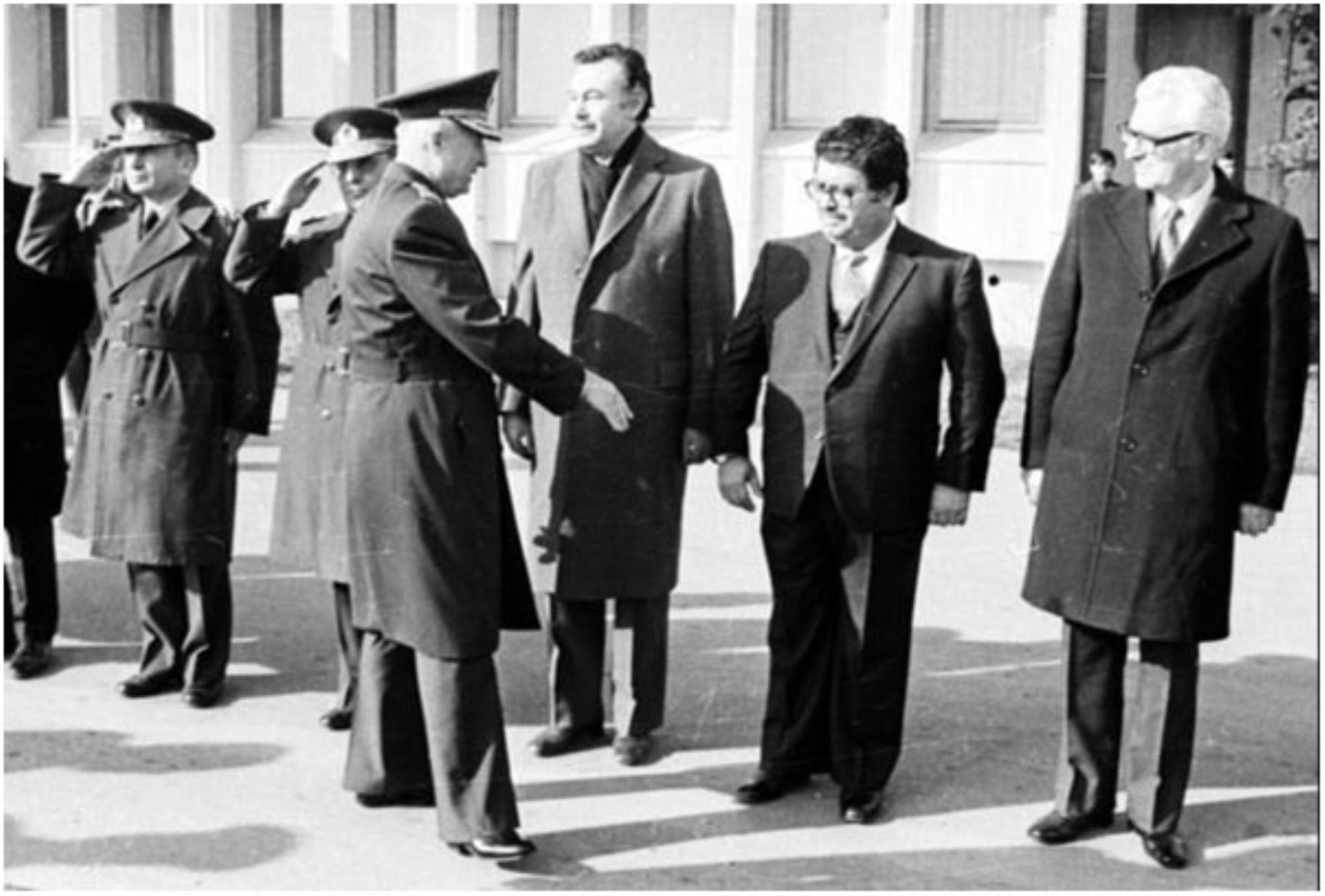
What is strange is that while the MGK appeared to have serious "reservations" about the MSP on one hand, on the other, they appointed a Nakshibendi like Turgut Özal, who had been an MSP parliamentary candidate, to head a very important ministry. As will be remembered, Özal was the deputy prime minister responsible for the economy in the Bülent Ulusu government. In my opinion, he was the de facto
prime minister. Kenan Evren had wanted to make CGP leader Turhan Feyzioğlu prime minister; following Özal's veto, he was forced to appoint a newly retired admiral as prime minister.
In this capacity, Özal, after satisfying all the needs of the Turkish bourgeoisie under the martial law regime, resigned from his post to play the role of the liberal democrat alternative against the military junta and went to the USA. As if he had not been in the government for two years. as if he had not been in the government for two years.
JUST ORDER AND NATIONAL VIEW
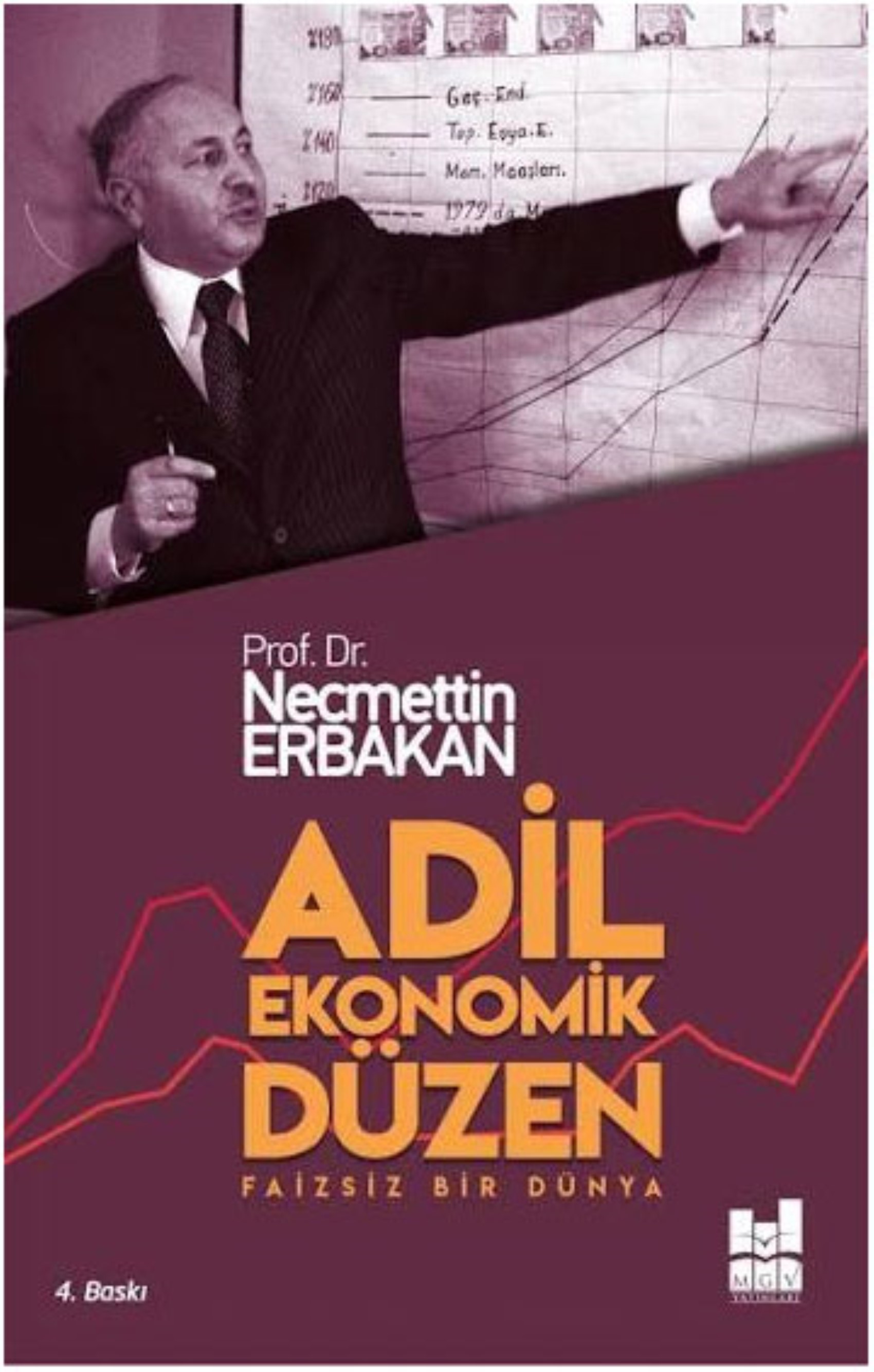
Islamism broke away from the Justice Party with the claim of a "Just Order." According to these circles, Turkey's order was based on Zionism and the hegemony of international capital. The foundation of the order was rent and interest. The MSP promised to eliminate this order and establish an order based on equity.
The principles of the Just Order were hidden in the founding century of Islam (Asr-ı Saadet). This was an abstraction. It was not clear what it corresponded to in concrete terms.
The period we know as Asr-ı Saadet was a period of civil war among Muslims. The assassination of the Caliphs and the massacre of the Prophet's grandchildren. was also included in this. Eventually, during the early years of the revelation, the Umayyads, who most strongly opposed the Prophet of Islam, came to power. They turned the Caliphate into a sultanate.
The Umayyad centuries—from an economic perspective—were based on pre-capitalist production and distribution relations, and the principles of seizing war spoils.
Both wealth and poverty were human trials on earth. The religious and moral obligations of the wealthy consisted of extending a helping hand to their believing brothers through zakat and charity.
Throughout the long centuries under Islamic rule, mercantilism and trade brought Islamic capital closer to primitive capitalism. The Prophet was a successful merchant. He praised trade. However, interest was forbidden.
Trade was one thing, and making money from money was another.
The prohibition of interest is related to the economic practices of the 6th and 7th-century Mecca-Medina. But Muslim merchants were not slow to discover “methods to circumvent” this principle.
It was not possible for Muslims to be successful against capitalism while strictly adhering to Islamic tenets.
A faction from the Just Order cadres broke away from Erbakan and came to power alone in 2002. Islamists rapidly integrated into the capitalist world system. In fact, this was an integration beyond what was anticipated.
The Just Order lost any meaning or function other than keeping a pulse on the crowds with Islamic sensitivities. It had none left.
Islam is a religion very conducive to capitalism. It is not possible for a system close to socialist thought to emerge from Islamism. But capitalism can emerge. And it did.
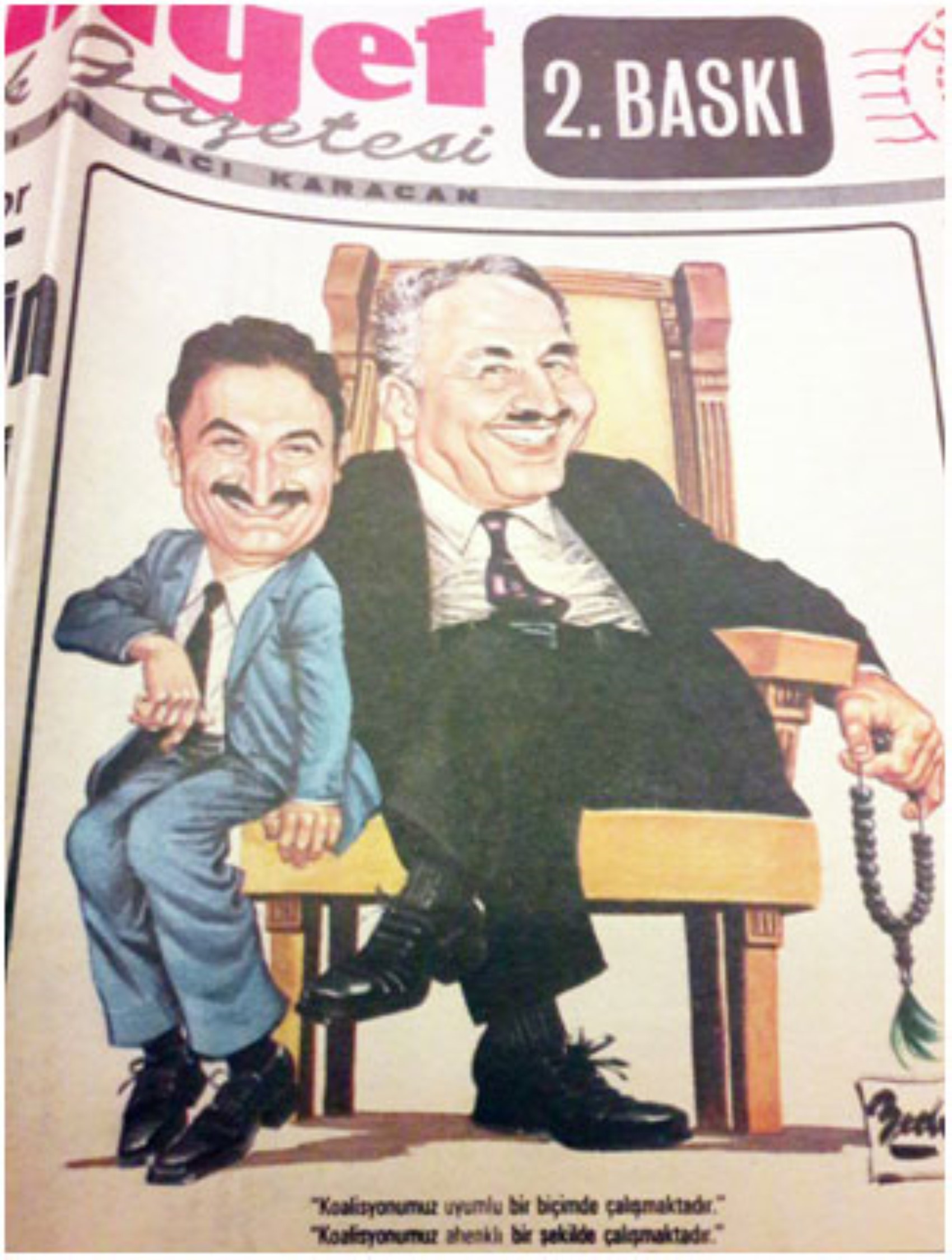
Since Islamism was not the ruling party during the period when Erbakan was the leader, the Just Order remained at the level of rhetoric. However, the teacher's students claimed to have taken off the 'National View' (Milli Görüş) shirt and joined international capitalism. In their mental world, there was no change. The order they established was nothing more than savage capitalism and a charity-based economy, falling short of even the sensitivities of secular capital. The 'shirt' issue was a form of taqiyya. Erbakan's students have drifted Turkey far from the principle of a democratic state of law, transforming it into a plebiscitary authoritarianism.
What can 'National View' (Milli Görüş) mean in today's Turkey? The term 'National View,' which never left Erbakan's lips throughout his political life, is, in my opinion, an empty concept.
By 'National' (Milli), it does not mean nation/people. It means the Ummah. Its reference is revelation. In this
order, the source of legitimacy cannot be the will of the people.
Whatever the Ulema approves is what is correct. It is possible to analyze the National View through the oppositions it takes. As with the concept of the 'Just Order' (Adil Düzen), the reference point for the National View is the Middle Ages.
In the face of the achievements of the age of democratic revolutions and the social dynamics they produced, it can only offer a substitute ideological/psychological contribution to the masses victimized by capitalism. In my opinion, the National View can be nothing more than nostalgia for the past centuries of conquest.
Erbakan's speeches, which make intense references to the imperial Ottoman centuries of conquest
(and spoils of war), form the basis of his irrational political discourse. ERBAKAN'S UNDERSTANDING OF SECULARISM In a video I watched, Erbakan criticizes AKP leader Erdoğan.
In the video, as we all know, Erdoğan speaks about how 'a person cannot be both a Muslim and secular.' Erbakan, adopting a facial expression that belittles his former student, mentions that
'he used to sneak out the back door of the Imam Hatip school to go play soccer,'
and attempts to explain that Islam is a secular religion by citing the decree Fatih Sultan Mehmet gave to the Patriarchate. This is a completely wrong line of thought. Bülent Ecevit had expressed similar thoughts. When saying 'The Ottoman Empire was a secular state,' both of them were terribly mistaken.
Undoubtedly, in the Ottoman Empire,
non-Muslims had 'religious freedoms'
stemming from their dhimmi status. However, this does not mean it was a secular state structure. I would like to touch upon this briefly now. Being a dhimmi means having the guarantees provided by the Caliph of Islam. It means being under the protection (zimmet) of the Commander of the Faithful. This status has nothing to do with secularism. The students who claimed to have taken off the National View shirt joined international capitalism.
There was no change in their mental world. The order they established was behind the sensitivities of secular capital. does not exist. In the Dar al-Islam, dhimmis have guarantees for their “life, property, honor, and economic activity.” As second-class subjects.
As long as they maintain their loyalty to the Caliph and pay the jizya regularly, there is no problem. They are under protection.
Do not forget that Sultan Mahmud II had the Greek Orthodox Patriarch Gregory V executed at the middle gate of the Patriarchate on the grounds that he supported the Morea rebellion and engaged in activities against the state. The gate remains closed as the “gate of grudge.” In the Ottoman Empire, Greeks, Armenians, and Jews could not ride horses or carry swords, and could only go about their daily lives in clothing that identified their religious identity.
These guarantees, provided by imperial edicts, transformed into community regulations after the Tanzimat, such as the Greek Community Regulation or the Armenian Community Regulation. Here, the term 'millet' refers to non-Muslim communities.
In the meantime, it is worth noting an important concept: What is the Millet-i İbrahim?
In Quranic terminology, the Millet-i İbrahim does not refer to a lineage, but rather to the unity of faith of those gathered around the belief in tawhid (the oneness of God). It means the Islamic community.
Returning to the concept of dhimmitude, in the Ottoman Empire that Erbakan venerated, the religion of the state was Islam. At its head was someone from the Ottoman dynasty with the title of Caliph of the Muslims.
For other religions of the book accepted by the system, there was freedom of worship and belief, and internal legal autonomy. Internal law consisted only of family and inheritance law and the election of church administration. Nothing more. As can be seen, these practices have nothing to do with secularism.
Starting with the National Order Party, all National View (Milli Görüş) parties were closed on the grounds that they sought to base the state order on religious principles.
The AKP, however, was found guilty on similar grounds but was not closed because the required qualified majority was not reached. The Constitutional Court determined that the AKP was “a focal point for anti-secular activities.” It changed the sanction by a majority vote. I would like to remind you of this.
When the history of the National View parties is examined, in my opinion, had the MSP, led by Erbakan, come to power, at the most optimistic estimate, a constitutional Islamic practice would have gradually gained validity.
Today's Turkey has effectively reached this state. Although the Constitution specifically emphasizes secularism among the principles of the republic that cannot even be proposed for amendment.
ON THE ACQUITTAL IN THE NSP CASE
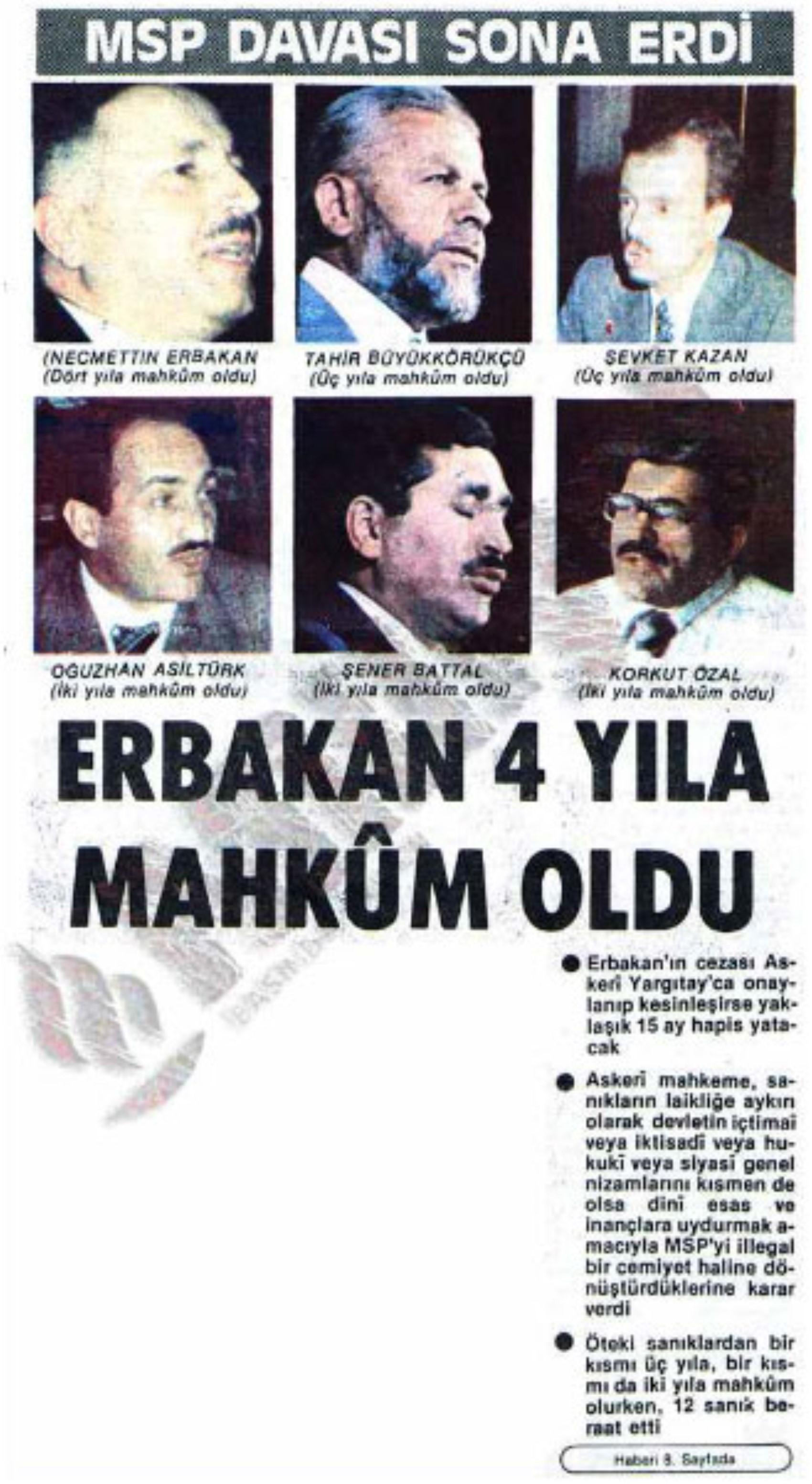
The defendants in the NSP case were tried without arrest for a long time. The case concluded in the court of first instance with the conviction of Erbakan and his associates. The Military Court of Cassation overturned the decision. The court complied with the ruling and acquitted the NSP executives. (February 13, 1985)
By the time this decision was rendered, the 1982 Constitution had come into effect, Evren had become president, elections had been held, and Özal's Motherland Party had come to power.
President Evren had summoned the President of the Military Court of Cassation to Çankaya and expressed his reproach. The President replied that there was no evidence to convict, so they were forced to acquit.
Yet, Evren wanted the NSP members to be convicted and, along with the 10% national threshold they imposed, for moderate centrist parties to remain in Turkey. None of his expectations were met. Moreover, the national threshold they imposed served to bring the Islamists to power alone.
The Military Court of Cassation could not find a 'causal link' between the reactionary demonstrations at the Konya Rally, which was cited as one of the justifications for the September 12 coup, and the NSP executives, and acquitted Erbakan and 23 party executives on the grounds of the principle of personal liability in crime and punishment.
When we examine Evren's speeches during the September 12 period, you can see that the military intervention was based on two reasons.
The right-left conflict, in which 20 citizens lost their lives daily, reaching the dimensions of a civil war, and the inability of the Grand National Assembly of Turkey to elect a President from April to September 1980.
As can be understood from the temporary articles of the Constitution, in general, all political actors were accused of incompetence and were deprived of their right to vote and be elected for various periods.
The segment that the junta saw as the real enemy was the leftists. Groups such as Devrimci Yol and Devrimci Sol were severely punished. If a person arrested was a leftist, they were definitely subjected to torture.
Leftists were sentenced to heavy penalties in martial law military courts, and if they were civil servants, they were dismissed from public office based on Law No. 1402.
The situation was different for the MHP and the MSP.
The MHP was one of the active parties in violent acts. In the indictment of the MHP and Nationalist Organizations Case, the party leadership was accused of straying from the structure of a political party and becoming involved in violent acts. The MHP case resulted in convictions.
As for the MSP, it was the party that the military establishment disliked the most.
The MSP was a party that advocated views completely opposite to those of the average Turkish officer. The members of the MSP were not involved in violent acts. Therefore, the only article under which the MSP leaders could be tried was Article 163 of the Turkish Penal Code (TCK). This meant organizing with the intention of establishing a religious state. .
The MSP members rejected this claim, defining themselves as conservative democrats. They were essentially saying, "Being religious is one thing, wanting to establish a religious state is another."
Ultimately, after being detained for a period that was not very long under the conditions of September 12, they were released. The conviction sentences can also be considered among the lightest penalties handed down during a military dictatorship.
I do not want to be misunderstood with these words.
Of course, it is indefensible for a segment of our citizens to be deprived of their freedom by a junta.
However, when considering the progression of the DISK and Peace Association cases and the treatment the defendants received, the victimization of the MSP members during September 12 remained at a political level. They were the least victimized group.
I would like to look at the issue from another perspective. Islamism was an ideology
excluded by official Atatürkism (September 12-ism). But it was not seen as a threat on the scale of communism/leftism. It was believed that the Islamists (National View supporters) would not dare to dismantle the Atatürk reforms. They thought that, as in the past, their parties could be shut down by the Constitutional Court (if they went too far) in the future as well. The projection was not entirely wrong. This segment received less than 10% of the vote, and if they were part of the ruling bloc, they would try to staff the state with their own people and benefit from the state. This was not an unsolvable problem. This was not an unsolvable problem.
This was not an unsolvable problem.
In other words, the September 12 regime found that it could suppress the environment that the anti-Atatürk stance of Islamist cadres might create.
COULD THERE BE A PLACE FOR THE MSP IN LONG-TERM US PLANS?
I believe that the way the MSP members were treated may have been related to Pentagon plans.
After the Cuban Missile Crisis, the US supported the MHP and Pan-Turkism against Soviet Russia. It even made use of them in certain Gladio operations. Let us not forget that on the first day of the May 27 coup, Türkeş spoke of the CIA Turkey Office in the Prime Ministry building.
Although it might be thought that Islamism could not be considered productive in terms of US plans at that time, I would like to remind you who the members of the National Turkish Student Union (MTTB) were during the Bloody Sunday events (February 16, 1969). It was seen in these events that religious conservatism was at least as useful as marginal nationalism. They just didn't need more than that for the time being.
Erbakan's Islamist discourse was based on opposition to the US and Israel. He identified Israel with Zionism. The terminology he used was very close to antisemitism.
Despite this, in the end, the faction that formed the broadest alliance with the US and Israel was the one that emerged from within his own ranks. This faction, which broke away from the Erbakan movement,
remains on the same path as him today in terms of its “world of thought.” However, after nearly 30 years in power, it has become more subservient to American/Israeli interests than any right-wing government would have dared to be.
The US must have seen “this potential in Islamism” half a century ago. Islamism could very well serve US interests. I think they saw this very early on. They made their plans accordingly.
I believe that the fact that the MSP case resulted in an “acquittal” from the September 12 judiciary should also be viewed from this perspective. The US primarily used marginal nationalism. It benefited from it. It kept Islamism in reserve in the background. The AKP is the product of this long-term plan. The last thirty years are proof of this.
Most Read

Turkish citizen Cansu faces risk of death in Afghanistan

Amine Cansu Çelik has resigned from the CHP
Tera Portföy CEO detained

Illegal gains, impoverished citizens...
Deniz Göktaş to appear before judge for the first time tomorrow

Odysseus's Journey-4. Ithaca: Returning home is not enough!

Property, power, and freedom in the age of artificial intelligence
The sun doesn't melt it, the frost freezes it!

The acquittal in the National Salvation Party case
Fund allegations against Fatma Betül Sayan Kaya infuriate even AKP members