



Why have we been telling his story for three thousand years?
We present the first of a four-part series in which we will examine Homer's epic, the Odyssey—which has recently come to the fore again—with our short narratives and interpretations.
Time has flowed in its own bed.
Approximately three thousand years have passed.
The appearance of the world has changed.
Cities have grown.
Ships have changed.
Humans have learned what lies beyond the seas.
The causes of storms, earthquakes, and the rising and setting of the sun are no longer explained by the will of gods as they were by ancient people.
Machines now know more, interpret problematic situations, and are more capable.
But in the midst of all this change, there is one thing that has not changed:
The human being.
Humans still love today. They fear. They get angry. They are jealous. They are curious. They want to win. They are afraid of losing. They miss their home.
And they tell of what happens to them; stories are formed, spread from ear to ear, and recorded.
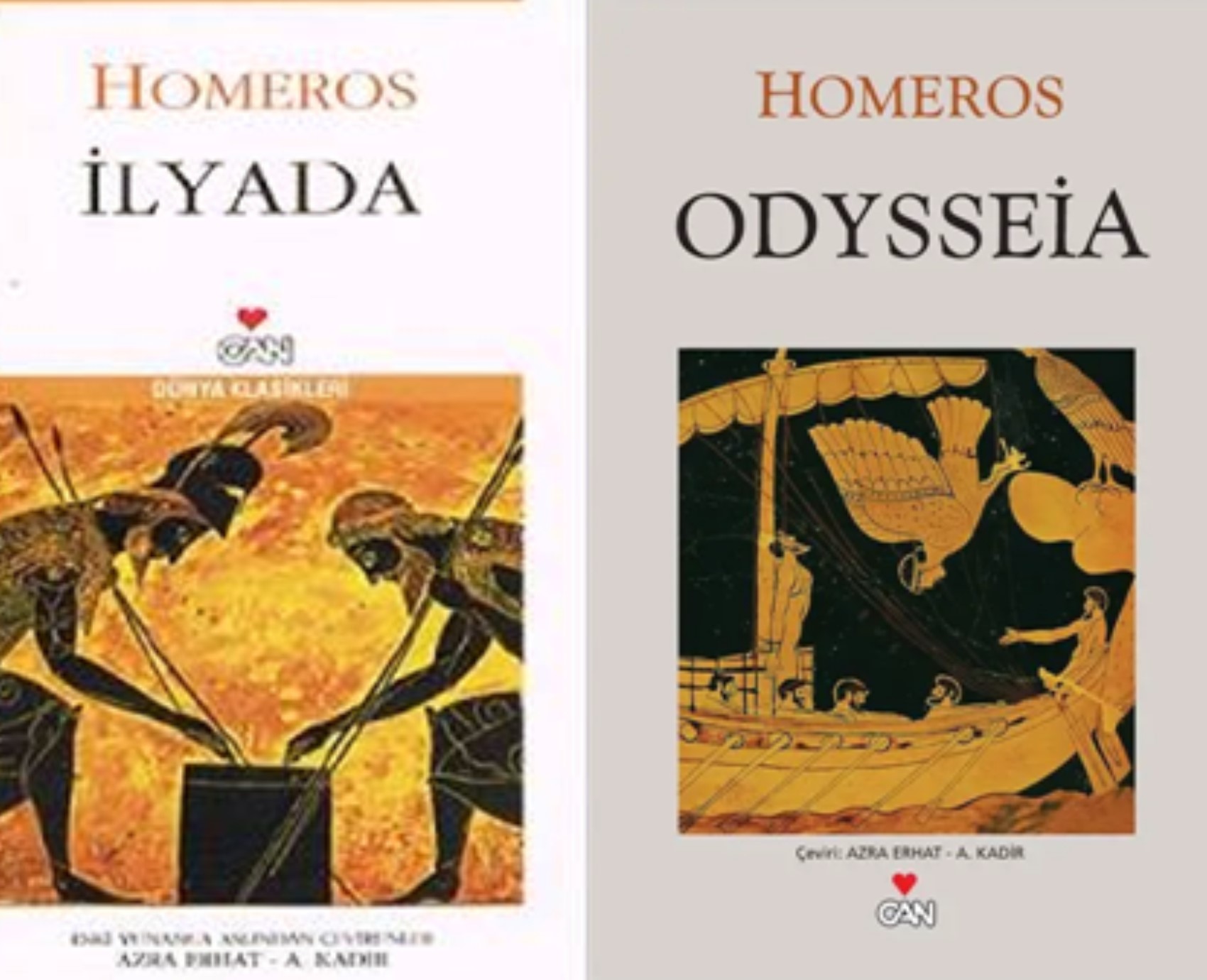
Two of the oldest and greatest literary narratives remaining in the hands of humanity emerged from such a world:
The Iliad and the Odyssey.
***
The creator of these two epics is the same person. His name stands like a monument:
Homer.
We know him from these two works attributed to him and from what is said about him.
What we know about Homer himself is less than what we know about the heroes he describes.
Where was he born?
In Smyrna (İzmir)? In Chios (Sakız Island)? In Colophon (İzmir-Menderes)? In Cyme (İzmir-Aliağa)? In Ios (in the Cyclades)?
Many cities of the ancient world claimed Homer as their own citizen.
Despite all this uncertainty, there is a strong tradition in ancient sources that connects Homer to Smyrna, today's İzmir.
The dominant view is that he was born here, lived on the banks of the Meles River, and recited his poems in this vicinity.
On the banks of a cheerful river, by the shimmering sea!
Perhaps at the head of a small spring or waterfall, perhaps in a cave!
On the slopes of mountains blooming with all kinds of flowers!
For this reason, Homer was also called "Melesigenes" in the ancient world, meaning "born of Meles."
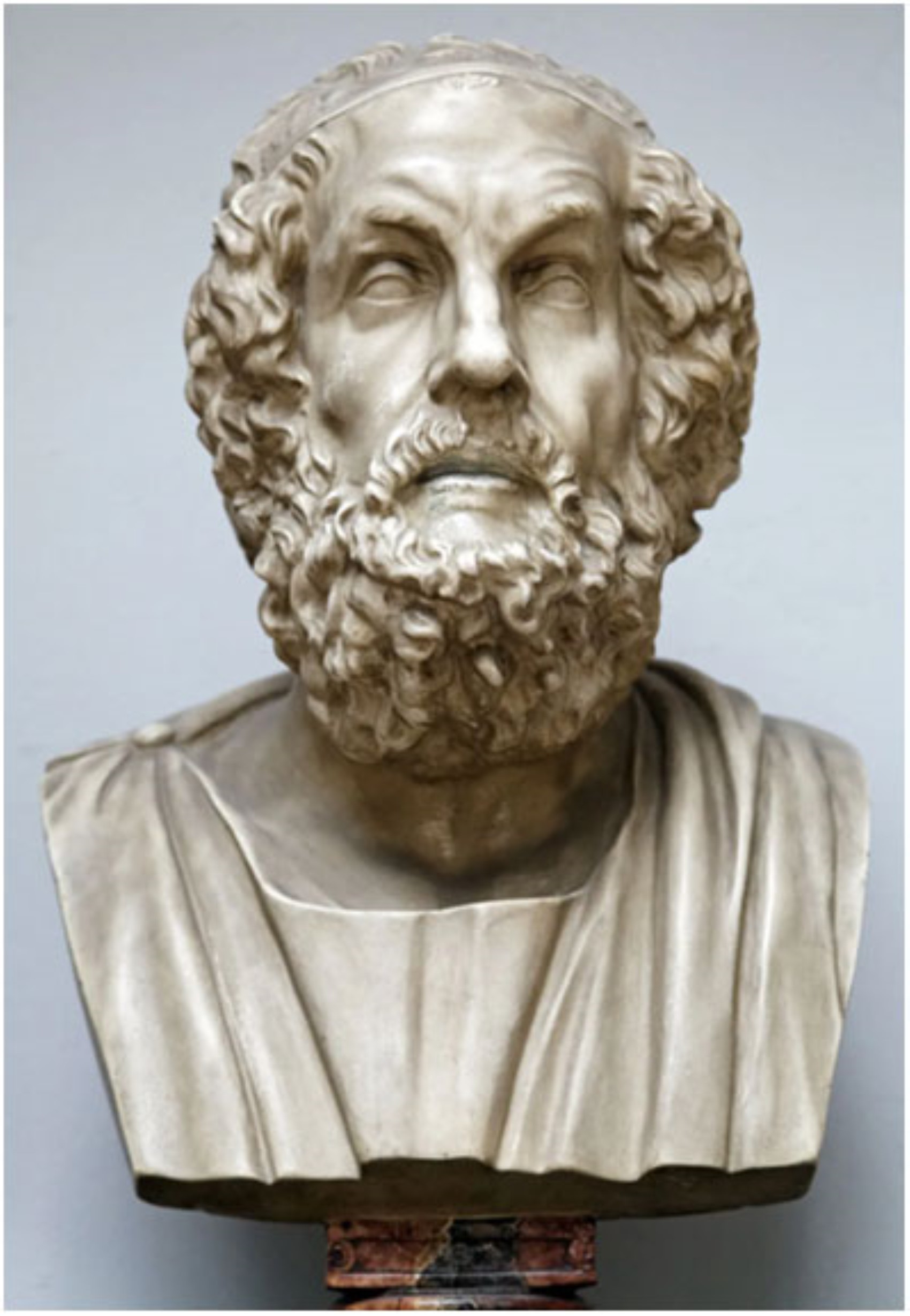
(Bust of Homer—a marble copy made in the 2nd century AD (Roman Period) of a Hellenistic bust from the 2nd century BC. British Museum, London)
There are even reports stating that his first name was Melesigenes and that the name Homer was attributed to him later. (Pseudo-Herodotus, Life of Homer (Vita Homeri), 3 and 13.)
The historical accuracy of these is not proven.
However, the tradition connecting Homer to Smyrna is not merely a product of modern İzmir's desire to claim Homer; its roots extend back to the ancient world.
It is also not certain when Homer lived.
It is generally thought to be the 8th century BC.
Moreover, whether the person we call Homer today was truly a single historical individual has been debated for centuries.
As has whether he was blind in his later years!
Beyond all these uncertainties, there is one unchanging fact:
The Iliad and the Odyssey, which have reached us under the name of Homer, are among the foundational texts of Mediterranean/Aegean culture and human literature.
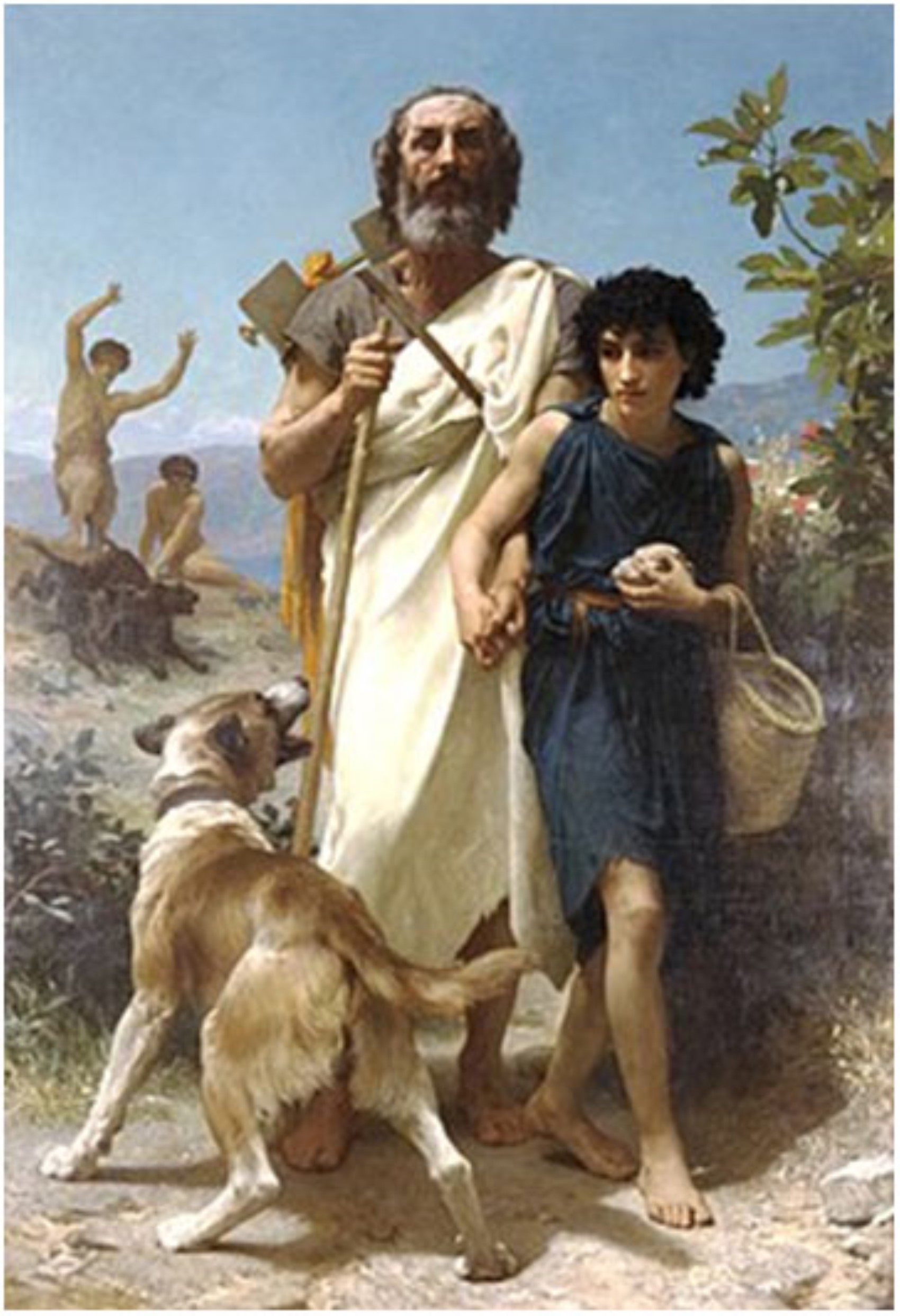
(The blind bard Homer and his guide. Painting by French artist William-Adolphe Bouguereau—1874—Milwaukee Art Museum, USA)
***
The Iliad is a poetic epic of approximately 15,700 lines, and the Odyssey is one of approximately 12,100 lines.
Both were recited in "dactylic hexameter," the traditional meter of Ancient Greek epics; that is, in lines consisting of six metrical feet, each basically composed of one long and two short syllables.
There is no rhyme in the lines. It is certainly impossible to find rhymes for 12,000 lines!
The Iliad does not tell the entire story of the famous Trojan War from beginning to end, as is often thought.
It focuses on a short period in the tenth year of the war, approximately fifty days.
The Odyssey, on the other hand, tells of the ten-year arduous journey home of Odysseus, one of the heroes of the victory, after the fall of Troy.
However, Homer's true mastery lies not only in the stories he tells but in the narrative technique he uses.
Heroes and gods appear with the same poetic epithets almost every time they are mentioned: "Swift-footed Achilles," "Cunning Odysseus," "Cloud-gathering Zeus," "Bright-eyed Athena," "Rosy-fingered Dawn," "Wine-dark sea"...
These repetitions are not coincidental; they are one of the most important tools of the oral tradition that allowed the epics to be memorized and passed down from generation to generation for centuries without being written down.
Homer also uses some of the most impressive long similes in world literature when describing battles and journeys.
An attack by a hero is compared to a lion, an eagle, or a forest fire; the advance of an army is compared to waves, a storm, or a field of ripe wheat.
For this reason, the Iliad and the Odyssey are considered not just two epics, but the greatest monuments of the oral poetry tradition that has formed the foundation of Western literature for nearly three thousand years, with their rhythm, formulaic language, repetitions, and magnificent similes.
***
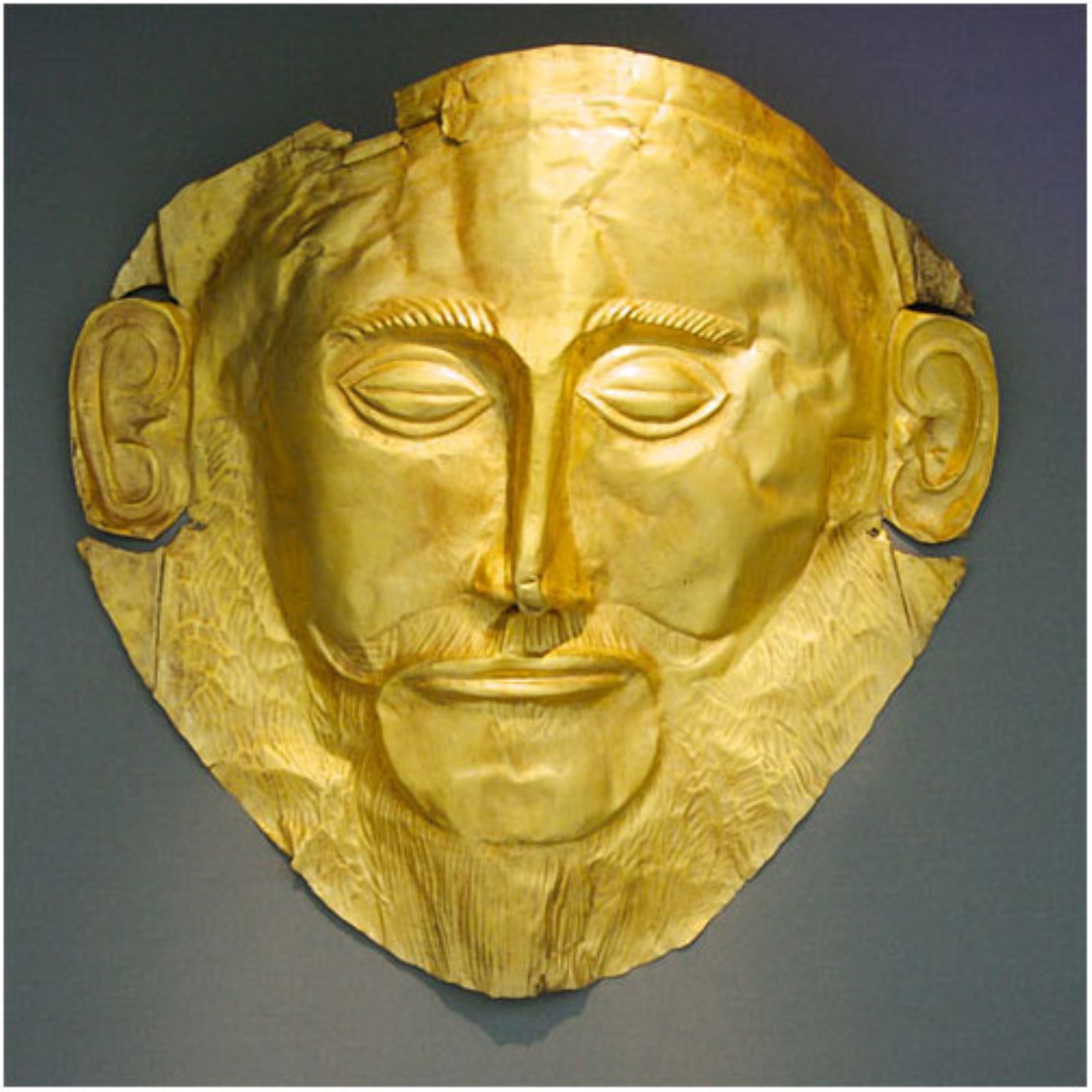
(Mask of Agamemnon. Found in Mycenae, Greece, 1600-1500 BC. National Archaeological Museum of Athens)
So, why did this Trojan War break out; who was fighting whom?
In the world described by Homer, on one side of the war were King Priam of Troy and the Trojans, and on the other were the Achaeans under the leadership of Agamemnon, that is, kings and warriors from various regions of Greece. (Homer, Iliad, trans. Azra Erhat – A. Kadir, Can Yayınları, Istanbul, 2011.)
According to mythology, the cause of the war was Paris, son of King Priam of Troy (in Anatolia), taking Helen, the wife of King Menelaus of Sparta (on the Greek mainland), to Troy.
The Achaeans, united under the leadership of Agamemnon, the brother of Menelaus, marched on Troy to take Helen back.
Homer never tires of praising the incomparable beauty of Helen, who was considered the most beautiful woman in the world by the gods!
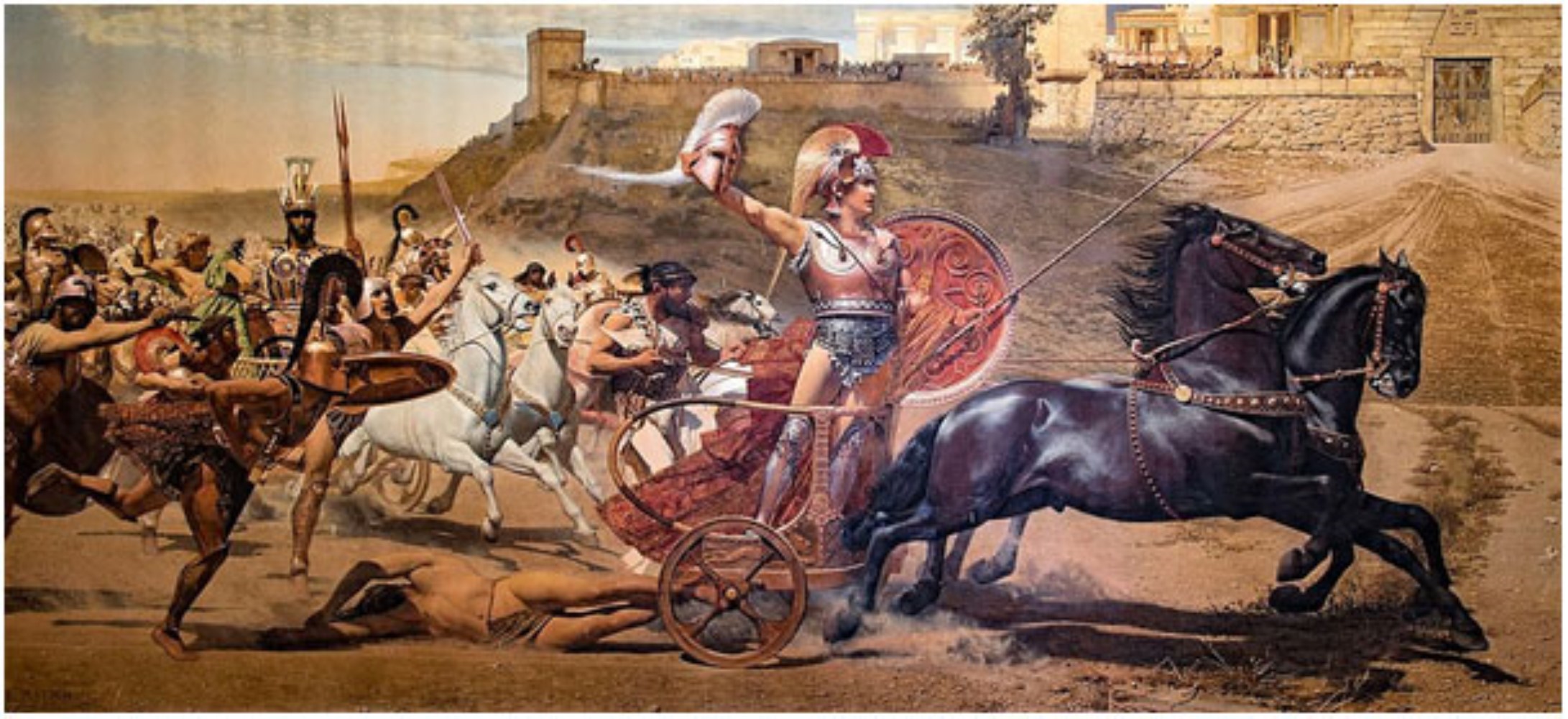
(Trojan War—Victory of Achilles—10*3 fresco painted by Austrian artist Franz Matsch. Achilleion/Palace of Achilles—Corfu Island—Greece)
However, an important point must be noted here.
Did a great ten-year Trojan War, as described by Homer, really happen?
It is not known for certain.
Perhaps such a war never happened; perhaps conflicts that occurred in the region at different times merged over generations in oral narratives to turn into a single great war story.
But there is something else we know for certain:
Troy existed.
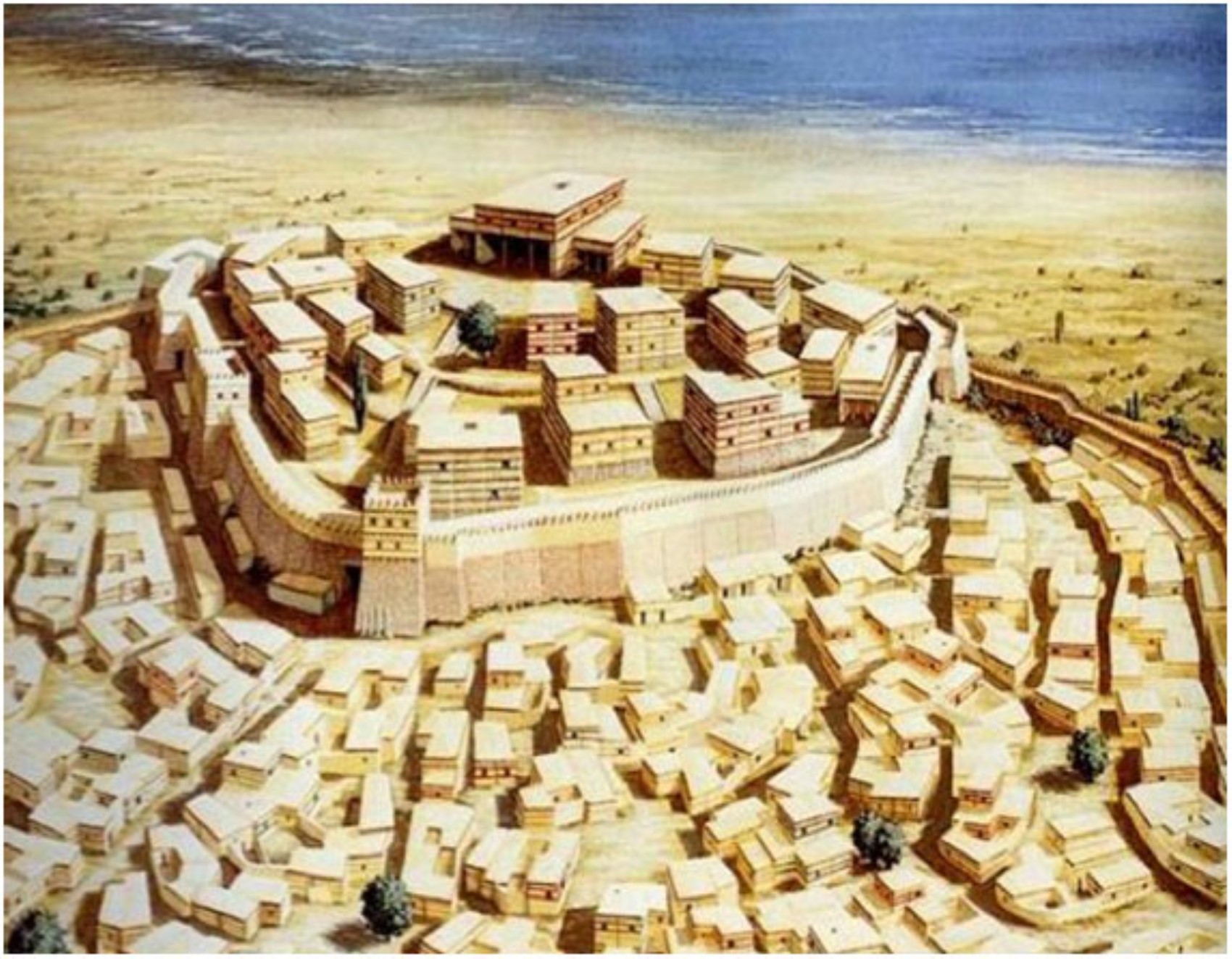
(Troy—2nd millennium BC—representative image)
Excavations carried out in Hisarlık, Çanakkale, revealed the existence of cities built on top of each other here for thousands of years.
What is controversial is not that Troy has been found, but whether the great war described by Homer actually took place.
If a historical Trojan War really did take place, it can also be thought that the reason was not just a struggle fought for the sake of a beautiful woman.
Troy was located in an important position in terms of sea routes between the Aegean and the Black Sea.
In the late 2nd millennium BC, there were struggles for trade, power, and influence between the Aegean and the Western Anatolian world.
The names Wilusa and Ahhiyawa mentioned in Hittite texts are also important parts of this debate.
When viewed from a broader historical framework, the final periods of Troy coincide with a time when the Eastern Mediterranean world was undergoing a great transformation.
Around 1200 BC, many palace centers were destroyed, large political structures collapsed, and migrations and conflicts occurred.
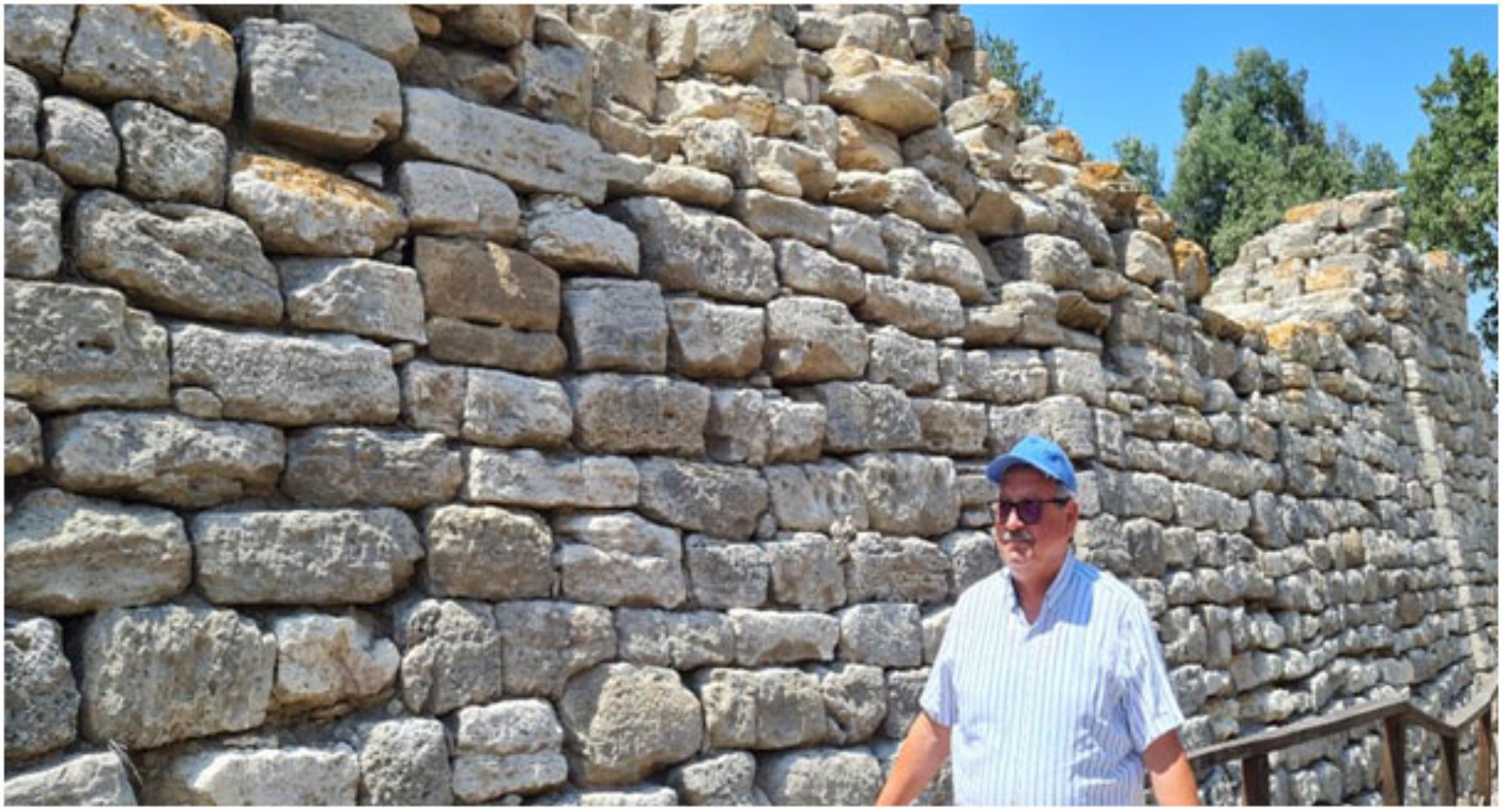
(Walls of Troy from the 2nd millennium BC—Present day—Photo: Macide Taşkın)
The movements of the communities mentioned by Egyptian sources and known today as the "Sea Peoples" or "Those who came from the sea" were also part of this great upheaval.
But the historical picture is more complex than that.
In the final centuries of the 2nd millennium BC, Western Anatolia was not a single political entity. There were local kingdoms such as Mira, the Land of the Seha River, and Wilusa, whose peoples likely spoke Luwian or similar Anatolian languages. (Sefa Taşkın, Luviya-1, Arkeoloji ve Sanat Yayınları, Istanbul, 2016.)
Their relations with the Hittite Empire were not always the same either.
Sometimes they accepted Hittite sovereignty, sometimes they rebelled, and sometimes they fought with Hittite armies.
The Mycenaean/Achaean world on the opposite shore of the Aegean (likely the ancestors of the Hellenes/Greeks) was not entirely outside these struggles either.
For this reason, in some modern interpretations, the Trojan War and the world described by Homer can also be evaluated as a distant echo remaining in memory of the end of the Bronze Age and the new world that took shape as the Iron Age thereafter.
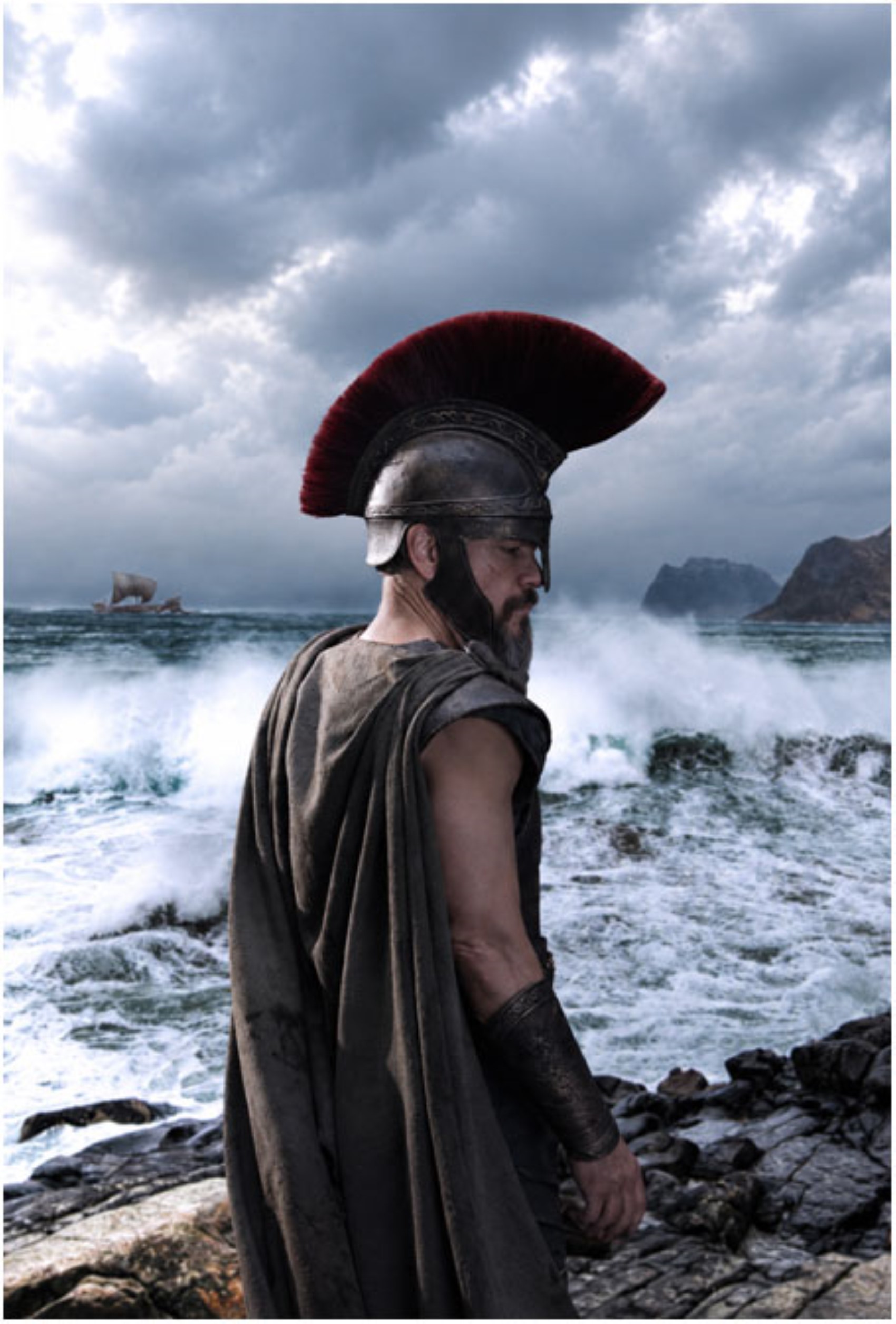
(Odysseus/Matt Damon in Christopher Nolan’s Odyssey film)
Perhaps behind the Trojan War that Homer told of centuries later, there was not a single war, but the traces of many conflicts that occurred throughout the Late Bronze Age in Western Anatolia and the Aegean, remaining in the social memory.
Homer, however, does not say where reality ends and legend begins.
Probably five hundred years have passed.
How would he know?
His concern is not to write history, but to tell of human passions, anger, love, and fate.
At the beginning of the epic, there is the anger of Achilles, the greatest warrior of the Achaeans.
At the end, it is not the destruction of Troy that takes place, but the death of Hector, the greatest hero of the Trojans, and the sorrowful funeral ceremony held for him. (Homer, Iliad, trans. Azra Erhat – A. Kadir, Can Yayınları, Istanbul, 2011.)
Homer does not only tell the tragic story of the war and the heroes.
Among the lines of the Iliad, there are also many traces regarding the geography of Western Anatolia, the peoples living there, the cities, the traditions, and even the daily life of the period.
But it would not be correct to see these epics directly as a narrative of these historical events.
The Iliad is not a history book; it is the state of wars, people, and memory having been kneaded in oral tradition for centuries and turned into poetry.
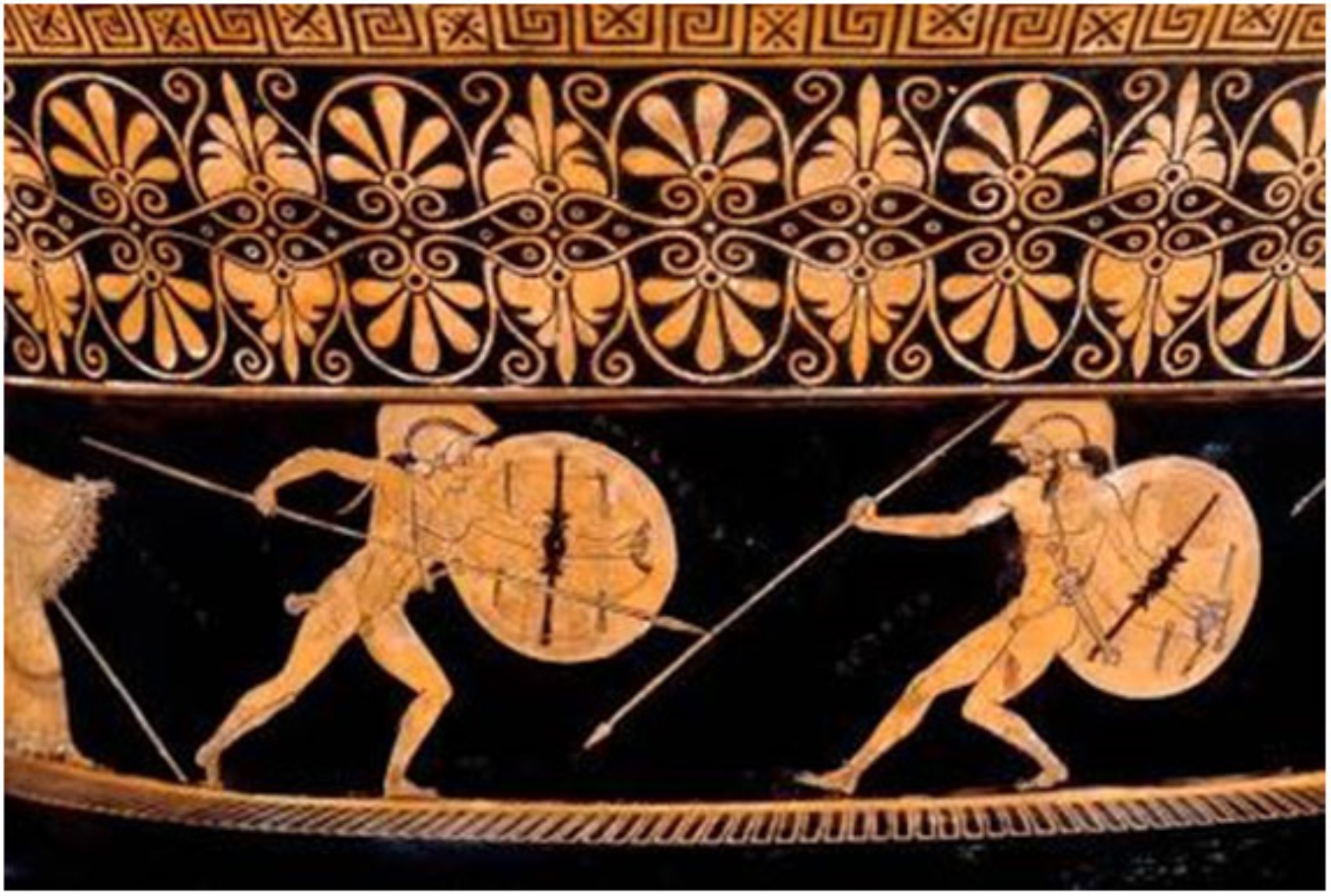
(Duel between Achilles and Hector in the Trojan War. Decoration on a vase—490-460 BC. British Museum, London)
***
The other narrative remaining from Homer, the Odyssey, pursues a completely different question after the war (Homer, Odyssey, trans. Azra Erhat – A. Kadir, Can Yayınları, Istanbul, 2010):
What happens when the war ends?
A person may not die in the war; they may survive. They may win a victory.
But can they return home?
When they return, can they still find the home they left behind?
More importantly...
Is the person who returns home the same person who set out years ago?
The Odyssey is the epic of these very questions.
The main character of the epic is Odysseus, one of the commanders of the Trojan War.
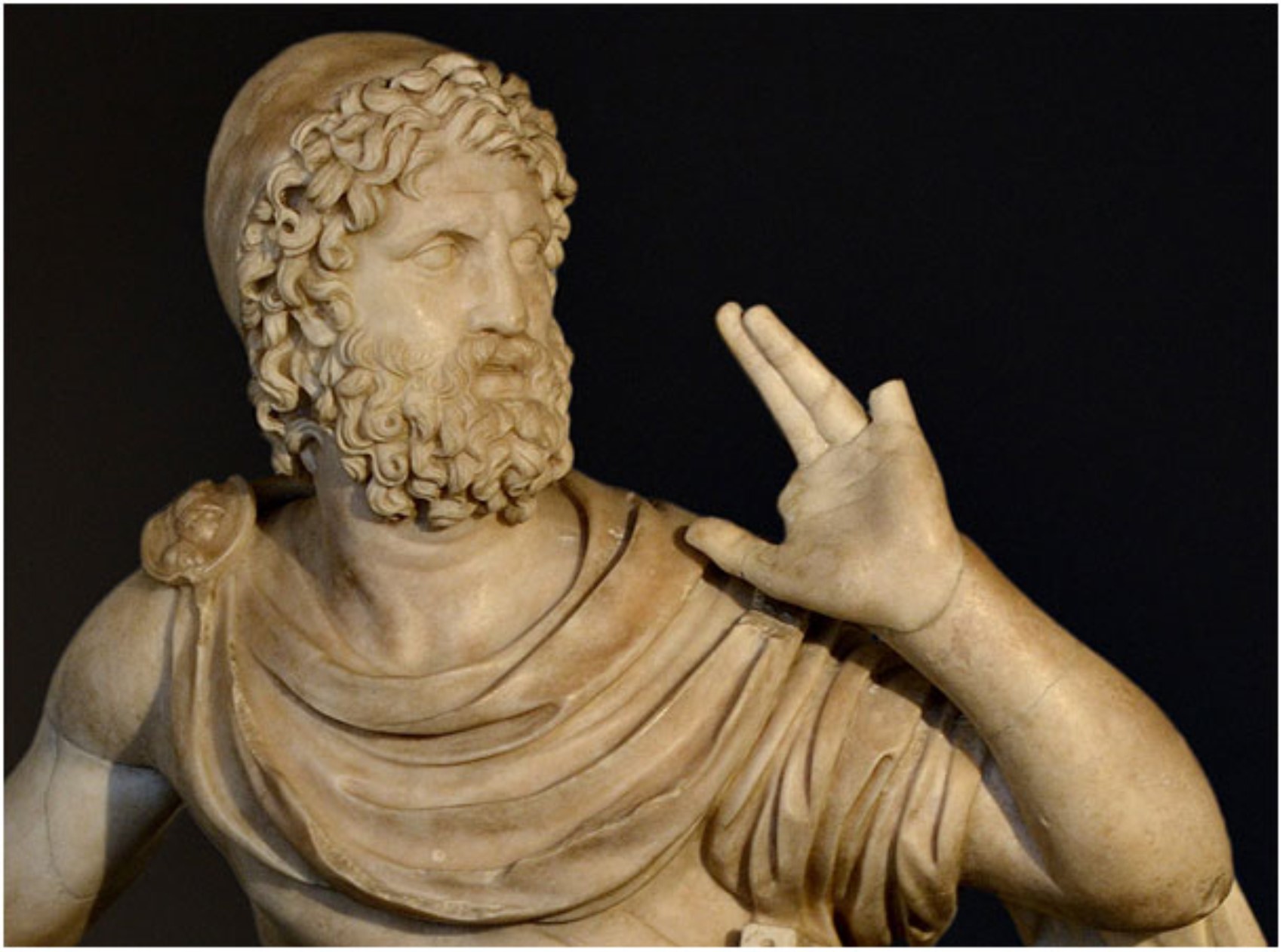
(Odysseus. National Archaeological Museum of Venice)
King of Ithaca... Husband of Penelope... Father of Telemachus...
One of the heroes of the Trojan War whom Homer highlights with his intellect and cunning.
The person who came up with the famous "wooden horse" idea that allowed the Achaeans/Greeks to capture Troy after the ten-year war.
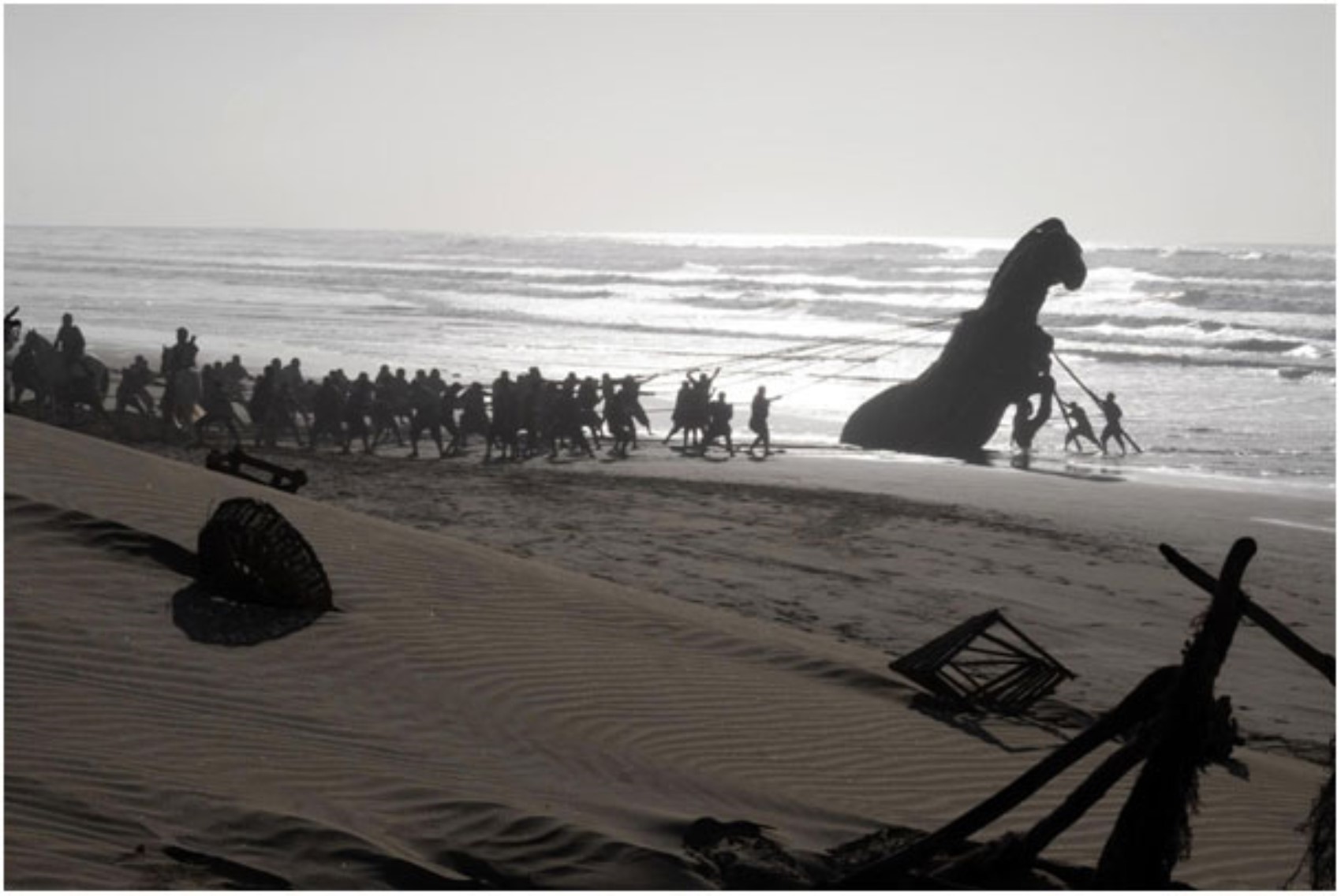
(A scene related to the wooden horse from Christopher Nolan’s Odyssey film)
***
When the war ends, what Odysseus wants is actually very simple:
To return home. From Troy to Ithaca...
A calm sea voyage.
From the shores of Western Anatolia to the western coast of the Greek mainland, which is not very far from the sea.
But this return will unexpectedly take ten years.
What will he not encounter?
Along the way, he will encounter the stubborn Cicones...
He will go to the land of the Lotus Eaters that makes one forget...
He will enter the cave of the one-eyed Polyphemus...
He will suffer the wrath of Poseidon, the god of the seas...
He will struggle with the winds...
He will escape from the giant Laestrygonians...
He will stay on the island of the sorceress Circe...
He will descend to the Land of the Dead...
He will listen to the seductive songs of the Sirens...
He will pass between the monster Scylla and the whirlpool Charybdis...
He will reach the sacred cattle of the Sun God Helios...
He will spend years with the immortal nymph Calypso...
He will arrive at the land of the seafaring Phaeacians...
And finally, he will return to his homeland, Ithaca. (Homer, Odyssey, trans. Azra Erhat – A. Kadir, Can Yayınları, Istanbul, 2010).
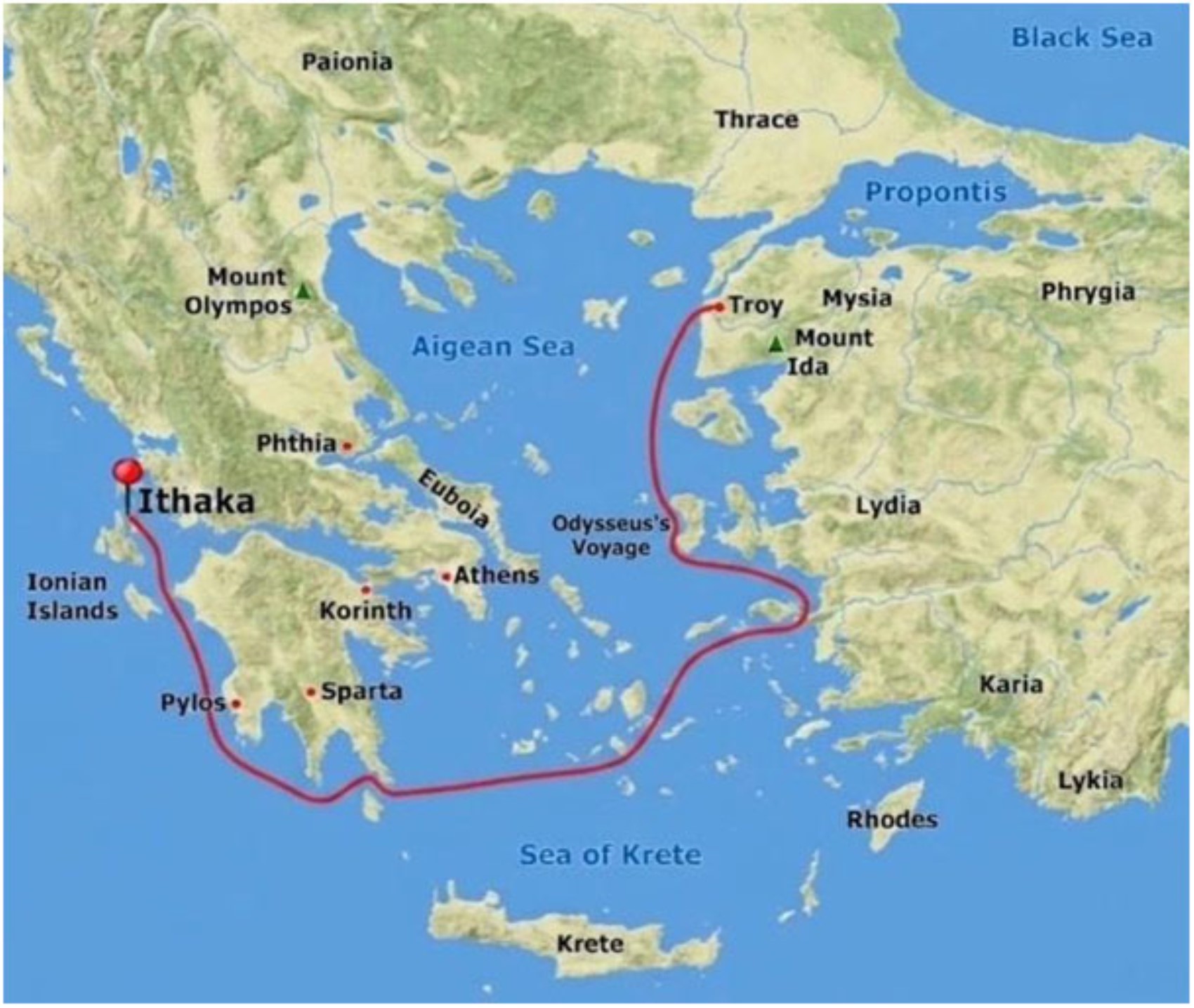
(The path Odysseus wants to take)
***
When these are looked at from afar, an extraordinary adventure full of gods, magic, and monsters is seen.
When approached a little closer, other things begin to appear.
Behind the Cicones is insatiability.
Behind the Lotus Eaters is forgetfulness.
In the cave of Polyphemus are intellect and arrogance.
In the wind bag of Aeolus are suspicion and distrust.
On the island of Circe are desire and comfort.
In the Land of the Dead is death.
In the Sirens are curiosity and the desire to know.
Between Scylla and Charybdis is the inevitable choice.
In the cattle of Helios are hunger, word, and will.
On the island of Calypso, a much greater question confronts the human being:
Immortality, or living as a human?
Here, three thousand years begin to disappear.
Because none of these remained only in Homer's world.
The names of the monsters may have changed.
Our ships may be different.
Our weapons are different...
Our cities are different...
But human fears, desires, passions, and weaknesses have not disappeared.
Perhaps the secret of the Odyssey being read for three thousand years lies here.
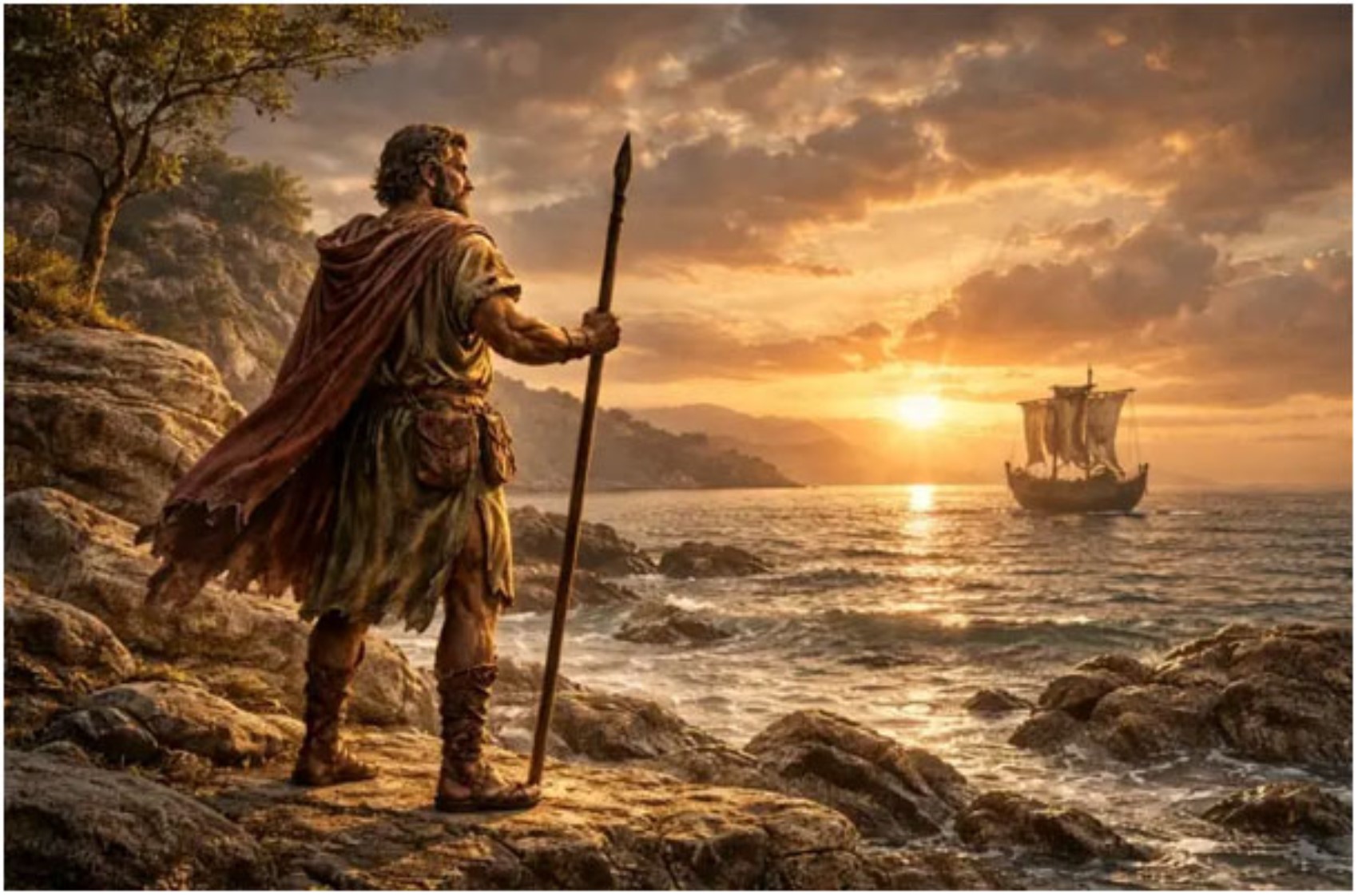
(Odysseus’s longing—Representative image)
***
Homer does not just list what happened to Odysseus.
At every new stop, we see another side of him.
Sometimes he is wise.
Sometimes he is arrogant.
Sometimes he gives in to his curiosity.
Sometimes he is afraid.
Sometimes he is helpless.
Sometimes he makes the wrong decision.
This is what makes Odysseus interesting:
He is not perfect.
There are times he does not listen to his men.
There are times he cannot restrain himself.
He lies.
He becomes arrogant.
He follows his curiosity.
He makes mistakes.
But he changes by going through all of this.
And no matter what, he never forgets one thing:
That he wants to return to his homeland, Ithaca.
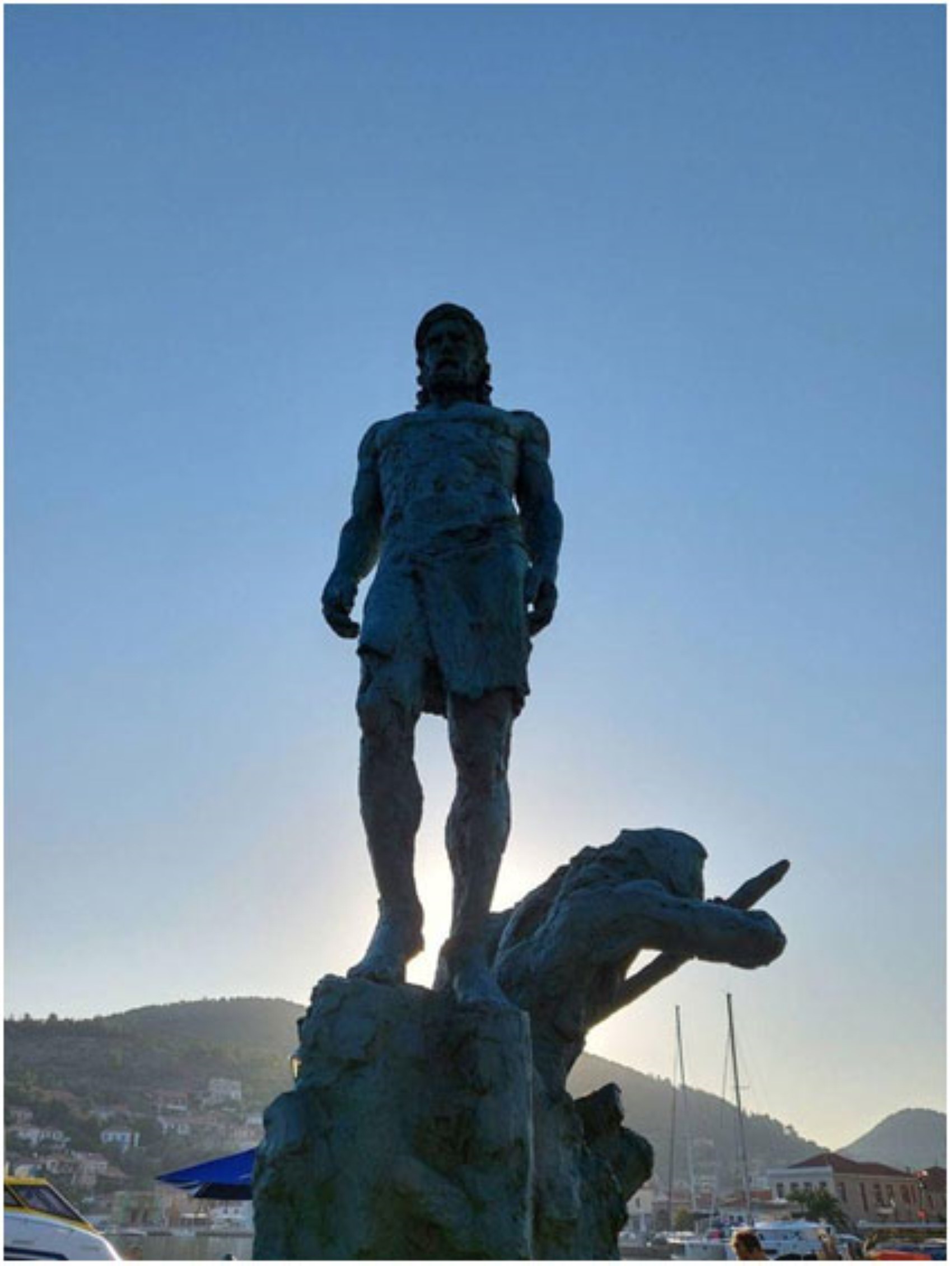
(Statue of Odysseus—Vathi—Ithaca—Greece—Present day)
***
For this reason, in the next three articles, we will not be content with just summarizing the Odyssey.
While following the adventures of Odysseus, we will also search for the human within those adventures.
We will try to think about how much difference there really is between the human living three thousand years ago and the human of today.
We will ask whether the monsters that appear before Odysseus are only creatures living in distant seas...
Or whether some of them still live inside humans in other forms.
When we finally reach Ithaca with him, we will perhaps come to the most important question:
When a person returns home, is the journey really over?
Homer, right at the beginning of the Odyssey, asks the "Mousa" (Muse), the "muse of poetry," to "tell of that man of many ways."
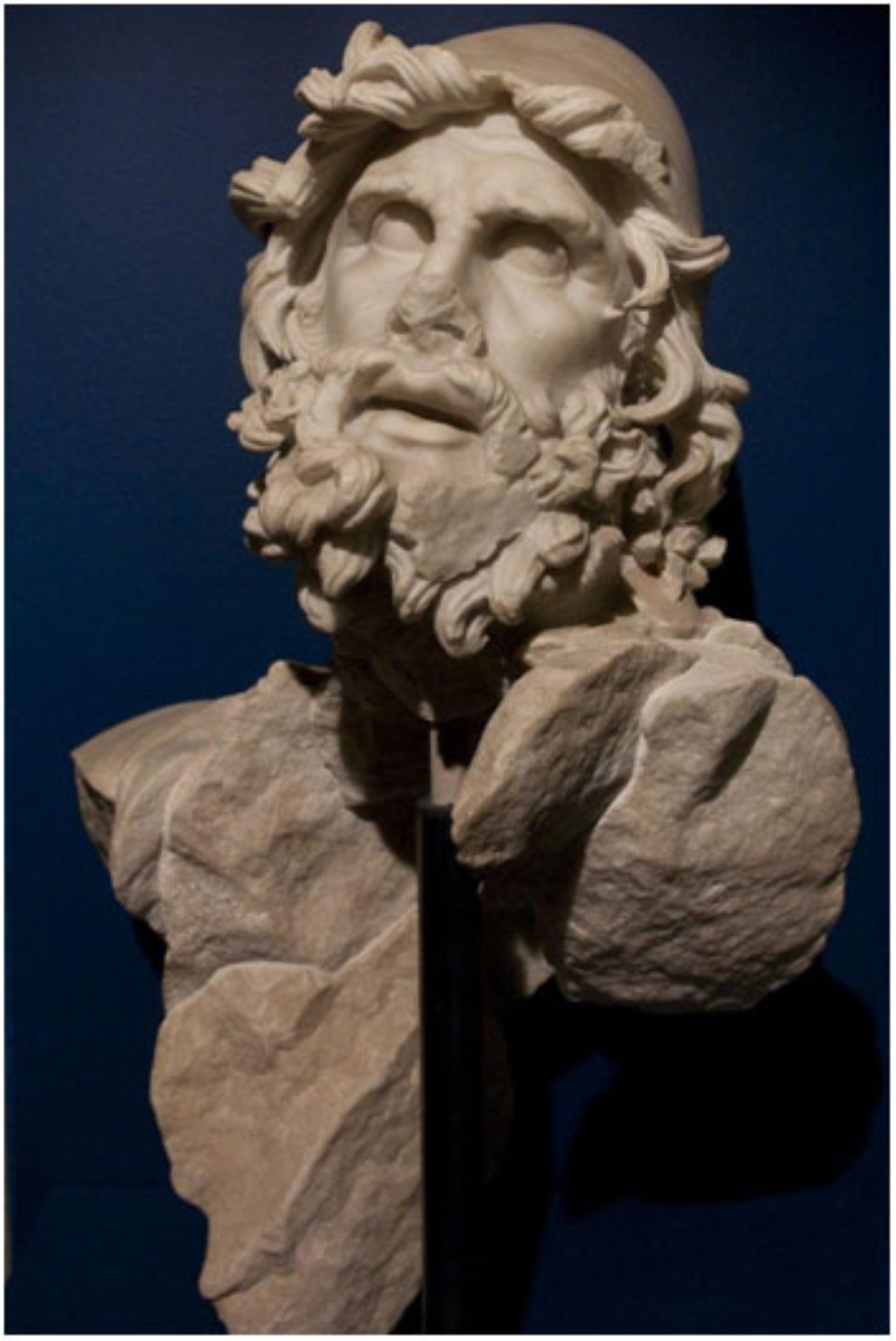
(Statue of Odysseus, Vatican Museum)
Three thousand years later, we too will follow in the footsteps of the same man.
Setting out from the shores of Troy...
Through the seas... The islands...
Through the monsters... The gods...
Through the dead... And the living...
We will arrive at Ithaca.
But throughout this long journey, it will not only be Odysseus we are looking for.
We will also search for the human in his journey.
We will question life.
Perhaps...
Ourselves as well.
(We will continue in the coming weeks)
Sefa Taşkın
06.09.2026
Dikili/İzmir
Most Read

Galatasaray announces injury updates for Osimhen, Lemina, and Singo

VAR for the Fenerbahçe-Beşiktaş derby has been announced!
Rules are changing in Schengen
Eren Vurdem shields Serhat Kılıç's girlfriend

The law of the powerful

The Journey of Odysseus-1

Casino images of Sadullah Güneş on the agenda ahead of MHP Antalya congress

The Süper Lig's new team becomes the transfer champion

The 32-day return on 500,000 TL has been announced
Serhat Mustafa Kılıç found dead in his home