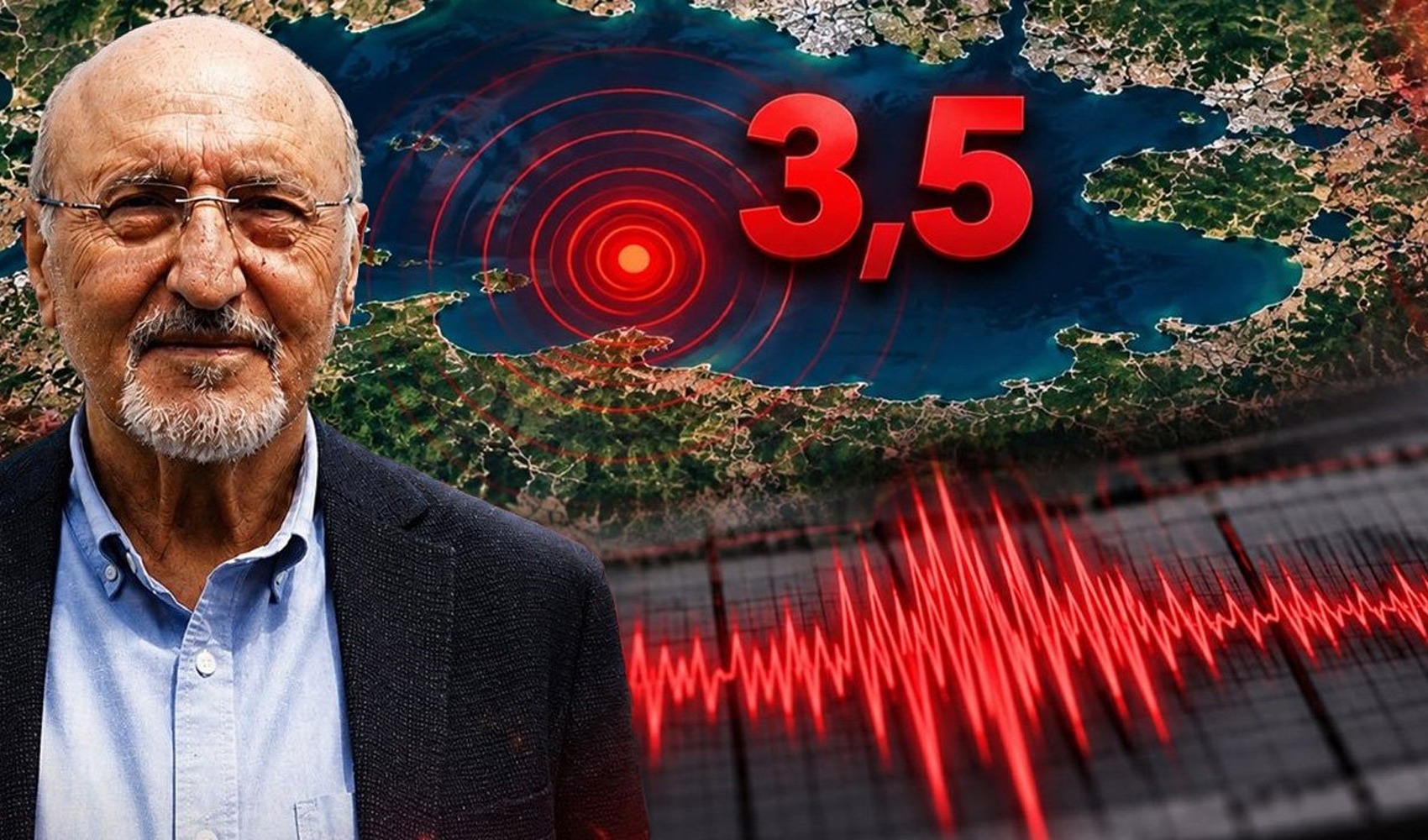
The 3.5 and 2.9 magnitude earthquakes recorded off the coast of Yalova in the Sea of Marmara have brought discussions regarding the behavior of faults in the region back to the agenda. Geology expert Prof. Dr. Osman Bektaş pointed to the potential role of the Çınarcık Basin in particular in his assessments made via social media.
According to Bektaş, when past earthquakes, micro-earthquake sequences, and certain measurements are considered together, the possibility that the Çınarcık Basin could act as a structure that limits major ruptures stands out as one of the topics that needs to be investigated.
WHICH FINDINGS WERE HIGHLIGHTED FOR THE ÇINARCIK BASIN?
In his assessment, Bektaş drew attention to the micro-earthquake sequences that lasted for days on the Adalar and Çınarcık faults, the fact that the rupture of the 1999 İzmit earthquake appears to have ended at the entrance of the Çınarcık Basin, and the 1963 Adalar earthquake with a magnitude of 6.3.
Bektaş also stated that in the 6.2 magnitude Silivri earthquake that occurred in 2025, the rupture progressing eastward stopped at the Adalar segment and the entrance of the Çınarcık Basin. He expressed that these observations raise the possibility that the basin could create a mechanism that might limit earthquakes of M6 and above due to the fault geometry and potential creep movement.
In the geology expert's second assessment, drilling measurements taken in the Esenköy town of Yalova were included. Citing a 2019 study by Martínez-Garzón and his colleagues, Bektaş reported that a strain signal and micro-earthquake activity lasting approximately 50 days were recorded during the 4.4 magnitude Yalova earthquake in 2016.
Stating that the signal in question was associated by researchers with a possible slow slip on the Çınarcık Fault, Bektaş emphasized that both earthquake-generating slips and slip processes that can occur without producing earthquakes should be evaluated together in the region.
Bektaş's assessments open a discussion topic suggesting that current assumptions regarding the probability of an M7 or greater earthquake in the Marmara should be re-examined. However, the view that the Çınarcık Basin could be a mechanism that limits ruptures does not mean that there will be no major earthquake in the region. This approach is considered a scientific possibility aimed at understanding the behavior of the Marmara faults.
News Source: 12punto