Geopolitical risk premiums have become prominent once again in global oil markets. The nearest-term contract for Brent crude, the international benchmark, surpassed the $100 per barrel level on Wednesday morning, while the US reference WTI traded at around $95.
The rise in prices was driven by increasing military tensions between the US and Iran around the Strait of Hormuz. Oil prices have risen by approximately 20 percent since the middle of last week, with Brent crude reaching the $100 threshold for the first time since July 23.
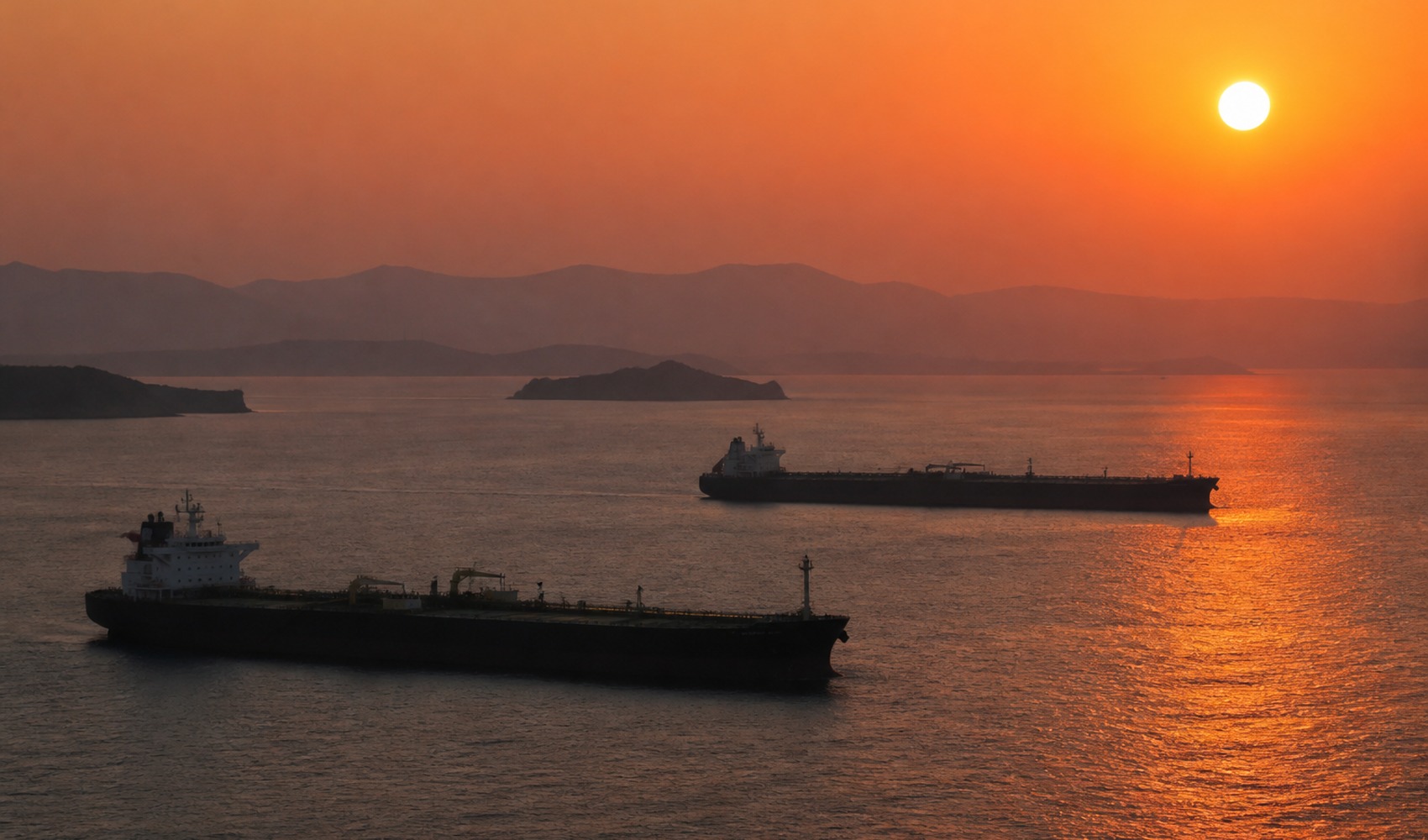
The US Central Command announced that on September 8, five Iranian tankers carrying crude oil were destroyed after the Iranian Revolutionary Guard Corps fired ballistic missiles at a US naval vessel twice within two days. The Command reported that the targeted US ship was not hit and continues its patrol in the region.
Prior to this development, it was announced that Iranian forces had fired ballistic missiles at a US aircraft carrier and a destroyer on September 5, and that both ships escaped the attack without damage. The US side had announced that, in response, three Iranian tankers were neutralized or destroyed.
Tehran, in retaliation, launched a missile attack on a US military base in Jordan. While it was stated that air defense systems shot down most of the missiles, it was reported that Iran reiterated its threats to target tankers in Kuwaiti and Bahraini waters.
HORMUZ FLOW AND PRICE EXPECTATIONS
The flow through the Strait of Hormuz, one of the most critical transit points for global oil transport, remains well below pre-war levels. It is stated that approximately 7 million barrels of oil still pass through the strait daily, compared to approximately 20 million barrels before the conflict began on February 28.
Mohsen Rezaei, Secretary of the Expediency Discernment Council of Iran, said that Tehran would soon declare a no-go zone outside the strait. Rezaei warned that ships entering this zone without coordination with Iran would be placed on a sanctions list.
The tension has also reflected on regional countries. It was reported that Aramco facilities in Jazan, Saudi Arabia, were attacked again on Monday, but the damage remained limited.
Military tension is also accompanied by financial pressure. At the end of August, Washington launched an Economic Exclusion Operation targeting Iran's access to digital assets, technology, gold, aviation, and maritime transport. The US Department of the Treasury placed approximately 60 companies, individuals, and ships on the sanctions list in the first phase; the European Union also supported the campaign this month.
US President Donald Trump shared a message on Truth Social claiming that "Hormuz volumes are BACK," suggesting that daily flow had reached 18 million barrels. However, US Secretary of Energy Chris Wright announced the total crude oil and product flow as 17 million barrels on Monday and acknowledged that the multi-day moving average was significantly below that.
Market expectations are also being revised upwards. Goldman Sachs increased its December Brent and WTI forecasts by $5 each to $85 and $80, respectively. The bank warned that if Gulf production remains 4 million barrels per day below pre-war levels, oil prices could exceed $120 next year; however, it was emphasized that this is not the base-case scenario.
News Source: 12punto