

NATO to face its deferred problems in Ankara
Written by Dr. Hande Orhon Özdağ... NATO will face its deferred problems in Ankara.



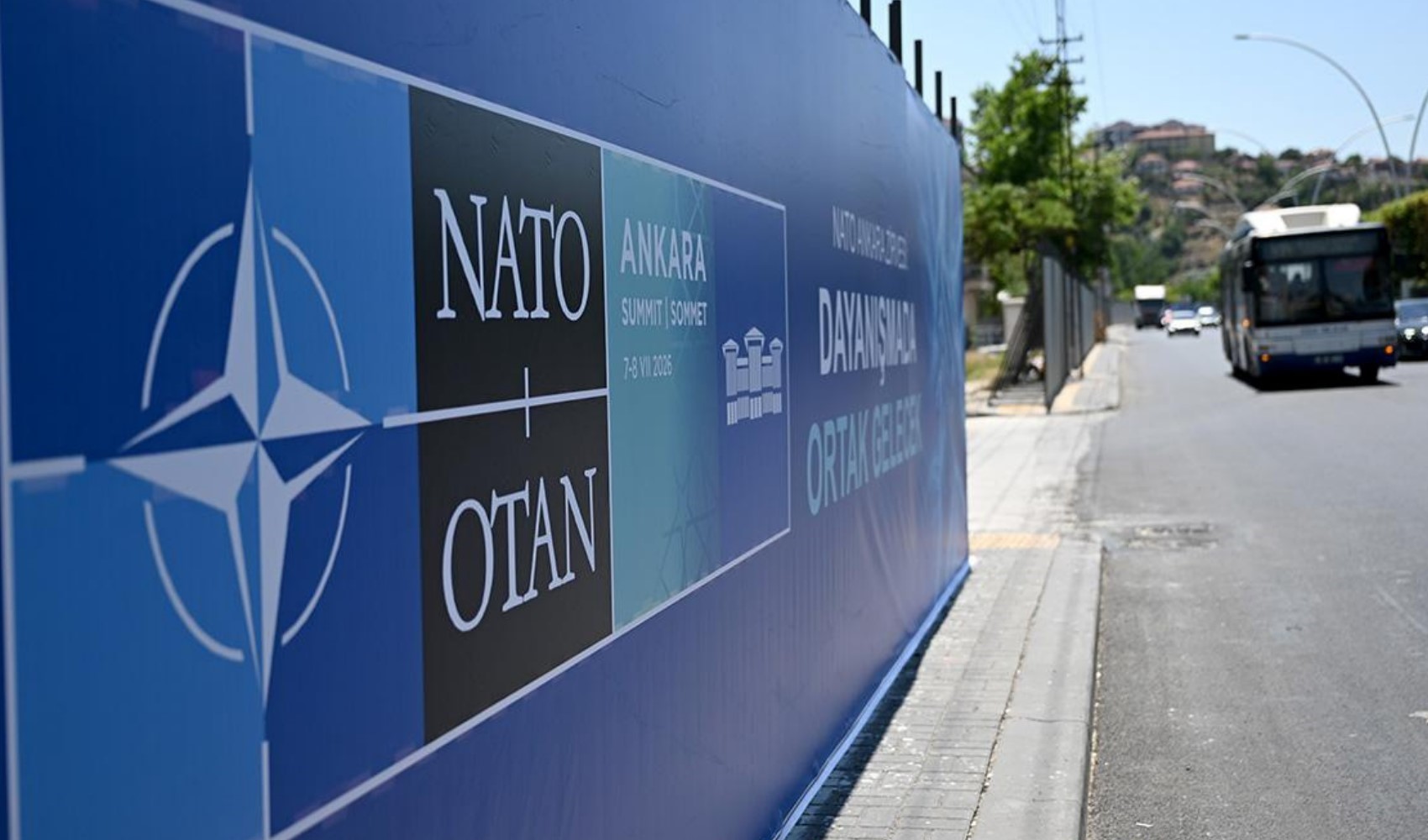
While security measures in Ankara are being tightened to an overwhelming degree, the eyes of the world are also turned toward Ankara. The NATO Summit to be held on July 7-8 will undoubtedly be a critical meeting for the future of the alliance. This is because the summit coincides with a period in which NATO is experiencing significant debates on a historical scale. However, the Ankara Summit is highly important not only for NATO but also for the world.
A SUMMIT IN THE SHADOW OF AN ERODING ORDER
The world is going through a period in which the current international order is being seriously eroded. The extent to which the international order was legal was already controversial. However, today, the erosion in the rules-based international order is being discussed more openly and harshly. Great power competition is deepening. Regional wars are having global consequences. International law has become ineffective even for actors positioned at the top of the international power hierarchy. Institutions continue to exist, but their binding nature and legitimacy are weakening.
For this reason, the image NATO will project in Ankara, the decisions it will take, and the problems it will (or will not) solve will be important not only for the security of Europe or the Atlantic world but also for how the world's security architecture will evolve.
Recently, the most discussed topics regarding the fate of NATO have been the US-Israel/Iran war, the US's inability to find the support it expects from NATO allies, the security of the Strait of Hormuz, and the Greenland issue. Donald Trump's harsh and skeptical rhetoric toward NATO also makes these discussions more visible. However, the debates regarding NATO are by no means new.
THE NEVER-ENDING SEARCH FOR LEGITIMACY AFTER THE COLD WAR
In fact, after the end of the Cold War, NATO had already become a subject of intense debate regarding its reason for existence and its purpose. The Soviet Union had collapsed, and the fundamental argument that tried to legitimize the alliance—namely, the perception of a Soviet threat—had disappeared. Under these conditions, the debate over what NATO would exist against, for what purpose, and within what political framework became inevitable.
The alliance gave different answers to this question over time. It expanded the concept of threat. New topics such as counter-terrorism, crisis management, out-of-area operations, cyber security, hybrid threats, energy security, the 360-degree security approach, and resilience entered NATO's agenda. Thus, NATO tried to redefine itself not only as a classic collective defense organization but as a broader security alliance that adapts to changing security risks. This transformation allowed NATO to survive until today. However, it did not actually end the debates.
I find it useful to remind you: During his first term, Trump had a highly critical stance toward NATO. The Russia-Ukraine war had not yet begun. Even then, Trump found the defense spending of European countries insufficient and questioned the US's burden within the alliance. He sometimes presented NATO as a costly and unbalanced structure for Washington.
Moreover, the skepticism regarding NATO was not limited to Trump. French President Emmanuel Macron's use of the phrase "brain dead" for NATO became a symbol of a deeper discomfort coming from within the alliance. This expression was an indicator that NATO was struggling not only with external threats but also with its own internal strategic disarray.
THE UKRAINE WAR: STRATEGIC MOMENTUM OR DEEPENING CRACKS?
The Ukraine war actually gave NATO a certain "political dynamism." The perception of a Russian threat became concrete again, especially for European countries that are far from being autonomous in terms of security. The memberships of Finland and Sweden showed that the alliance still has the motivation to expand. However, the Ukraine war also brought with it very burning new debates. Issues such as to what extent Europe will take on its own security, the permanence of the US security guarantee, and how to manage the risk of the war spreading while increasing deterrence in relations with Russia have been placed at the center of the NATO agenda.
Therefore, the crisis NATO is facing today is not new. In every period after the Cold War when it had to redefine its legitimacy and function, the alliance managed to overcome these crises in different ways. It did this sometimes by expanding the concept of threat, sometimes by inventing new mission areas, and sometimes by turning emerging crises into new justifications for its own continued existence. However, at the point reached today, the issue is not limited to the limits of NATO's capacity to reproduce itself. There is a deeper political problem: whether the alliance can still produce a consistent strategic direction and ground for legitimacy in the face of changing power balances, eroding common values, and diverging national interests.
WHAT WILL BE TESTED IN ANKARA: COMMON WILL AND STRATEGIC DIRECTION
Because the common foreign policy orientations of the allies are eroding. It is becoming difficult to reach a consensus on a common threat perception. While the eastern flank focuses on the Russian threat, the southern flank prioritizes risks stemming from migration, terrorism, energy, and the Middle East. The US is moving toward a tougher line on burden-sharing. Europe is forced to increase its own defense responsibilities. While NATO continues to define itself as an alliance of democratic values, the rise of authoritarian populism weakens this claim. Principles are becoming blurred. Interests are being discussed more nakedly.
Therefore, the true importance of the Ankara Summit lies not in NATO's ability to produce solutions to all its problems, but in its revelation that these problems have become too visible to be postponed any longer. The alliance has moved forward for a long time by managing crises, opening new threat topics, and softening existing tensions within its institutional language. However, today, the difference between crisis management and strategy production is becoming more pronounced. The message that leaders will give in Ankara will show not only NATO's ability to manage the present but also what it wants to protect, what it wants to transform, and what it wants to leave behind in the face of a changing world.
As a result, the Ankara Summit is convening in such a challenging period where not only NATO's military capacity but also its ability to produce a common political will will be tested. For this reason, the codes of the summit will be solved not only by which expressions will be included in the final declaration, but by whether NATO can produce a common sense of direction in this scattered and uncertain world. The message to be given in Ankara will reveal not only how the alliance will manage its current crises but also on what political and strategic ground it will reposition itself within the uncertainties of the new world order.
News Source: 12punto
Most Read
Historic words from Özgür Özel at the CHP group meeting

Air Force Academy student Veli Bilgin has died
Tuncer Bakırhan calls for a framework law

How did the newspapers view Özgür Özel's farewell to the CHP?

He killed his wife by slitting her throat: Their children witnessed the moments

The PKK opening and Özgür Özel’s path!..
Here are the names that will be in Özgür Özel's new party!
AKP mayor held responsible
Kılıçdaroğlu's 'controlled' shopkeeper visit
Güler leaves questions regarding Özgür Özel unanswered