

Smart window system capable of generating electricity developed
With the integration of a semi-transparent polymer coating—produced for the first time in Turkey through recycling—into smart windows, homes and workplaces will be able to generate their own electricity by utilizing a portion of sunlight.



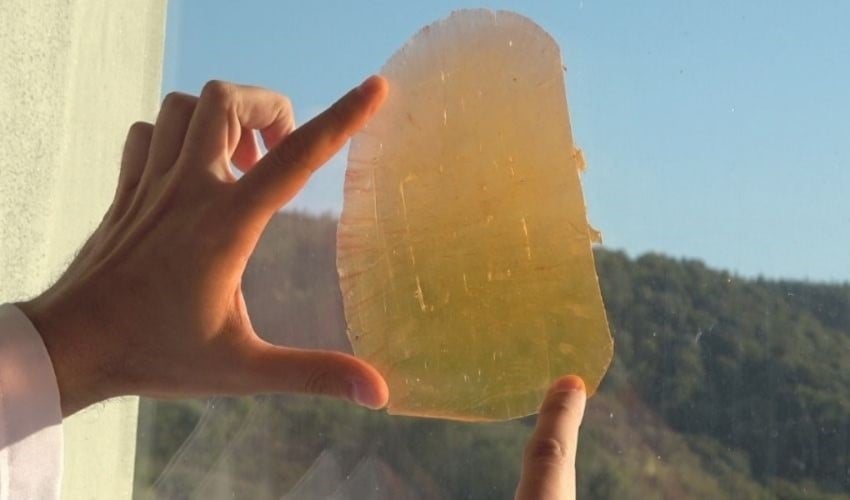
A 'smart' window system capable of generating electricity by facilitating the logistics of solar energy through luminescent films produced from waste polymers has received a patent at Bartın University (BARÜ). With the integration of a semi-transparent polymer coating—produced for the first time in Turkey through recycling—into smart windows, homes and workplaces will be able to generate their own electricity by utilizing a portion of sunlight.
The project at Bartın University (BARÜ), which enables the harvesting of solar energy through smart windows to generate electricity, has been successfully completed. As a result of the long-term efforts of Lecturer Dr. Erkan Aksoy from the BARÜ Project and Technology Office, luminescent films were produced from waste polymers.
By integrating the polymer coating, which was produced for the first time in Turkey through recycling, into 'smart' windows, sunlight is harvested and the absorbed energy is converted into longer wavelengths. This system, which is based on the logistics of concentrated photon energy within the polymer coating, was registered following an application to the Turkish Patent and Trademark Office.
HOMES AND WORKPLACES WILL BE ABLE TO GENERATE THEIR OWN ELECTRICITY
Dr. Aksoy, a chemist who conducts research on energy, provided information about the patented invention titled "Standard Luminescent Film Production Method from Waste Polymers" and stated that this project, once implemented, will take its place in the energy sector as a domestic and national product in Turkey.
Emphasizing the importance of molecular photonic technologies in converting solar energy into utility for a clean and sustainable future, Dr. Aksoy said, "This invention includes a prototype based on harvesting sunlight in smart window systems, converting the absorbed energy into longer wavelengths, and then managing the logistics of this concentrated photon energy within the polymer coating. This study, in which we also focus on the recycling of a type of waste polymer, will function as a tool for energy production."
NO LIGHTING ISSUES WHILE GENERATING ELECTRICITY
Reminding that the polymers that can be applied to homes and workplaces are produced from 99 percent waste materials, Dr. Erkan Aksoy stated, "Our study on the recycling of waste polymers and their use in organic solar concentrators has been registered by the Turkish Patent and Trademark Office. This material is based on the recycling of a 99 percent waste polymer and its transformation in a laboratory environment. It emits its own fluorescent light with the addition of very low amounts of our organic semiconductor dyes. When we coat this onto smart window systems, it absorbs solar energy and generates its own energy. In this way, homes will be able to generate their own electricity."
BOTH FLEXIBLE AND SEMI-TRANSPARENT
Aksoy stated that the produced polymer is semi-transparent, flexible, and durable, and can be applied to any surface exposed to sunlight. Erkan Aksoy said, "It can be applied anywhere that can receive direct sunlight. It is quite flexible and has a robust structure, just as it is semi-transparent. For this reason, it can be used not only on flat surfaces but also in different architectures. Because it is semi-transparent, when integrated into a window, it absorbs a portion of the sun's rays while light at other wavelengths can pass through the glass and be transmitted into the house. In this way, the windows can both generate electricity and the rays can heat and illuminate your home."
Explaining that this project emerged after approximately 1 year of intensive work and effort, Aksoy said, "Our project was completed in about 1 year. First, the organic material with high fluorescence was designed after long research. Then, it was synthesized in laboratory environments, and its photophysical properties were characterized. After the waste polymer process was carried out, it was proven that the combination within each other was perfect. It was transformed into a product."
Explaining that they expect the produced polymer and smart window system to attract great interest in Turkey and the world, Dr. Erkan Aksoy said, "We think that this product of ours, which has been registered by the Turkish Patent and Trademark Office, will attract the attention of both domestic and foreign companies, and we hope it will make a quick entry into the market."
News Source: İHA
Related News


Most Read

Galatasaray announces injury updates for Osimhen, Lemina, and Singo

Attention online sellers: Tax monitoring expanded

VAR for the Fenerbahçe-Beşiktaş derby has been announced!

Bridges and highways are being privatized: 15 July and FSM are also on the list

Peugeot September 2026 price list is out

New details emerge in 'panel' operation targeting lawyers

Another bankruptcy in the construction sector

First statement from Osimhen after injury in Başakşehir match
Özlem Şanver: 'He said he would change, I believed him; should I be beaten just because I didn't leave?'

Mourinho explains why he substituted Arda Güler