

Iranian Foreign Minister Araghchi on 'negotiations with the US': Only an exchange of messages
Iranian Foreign Minister Abbas Araghchi, in a program he attended on state television, made assessments regarding the attacks by the US and Israel on Iran, the course of the war, and the situation in the Strait of Hormuz.



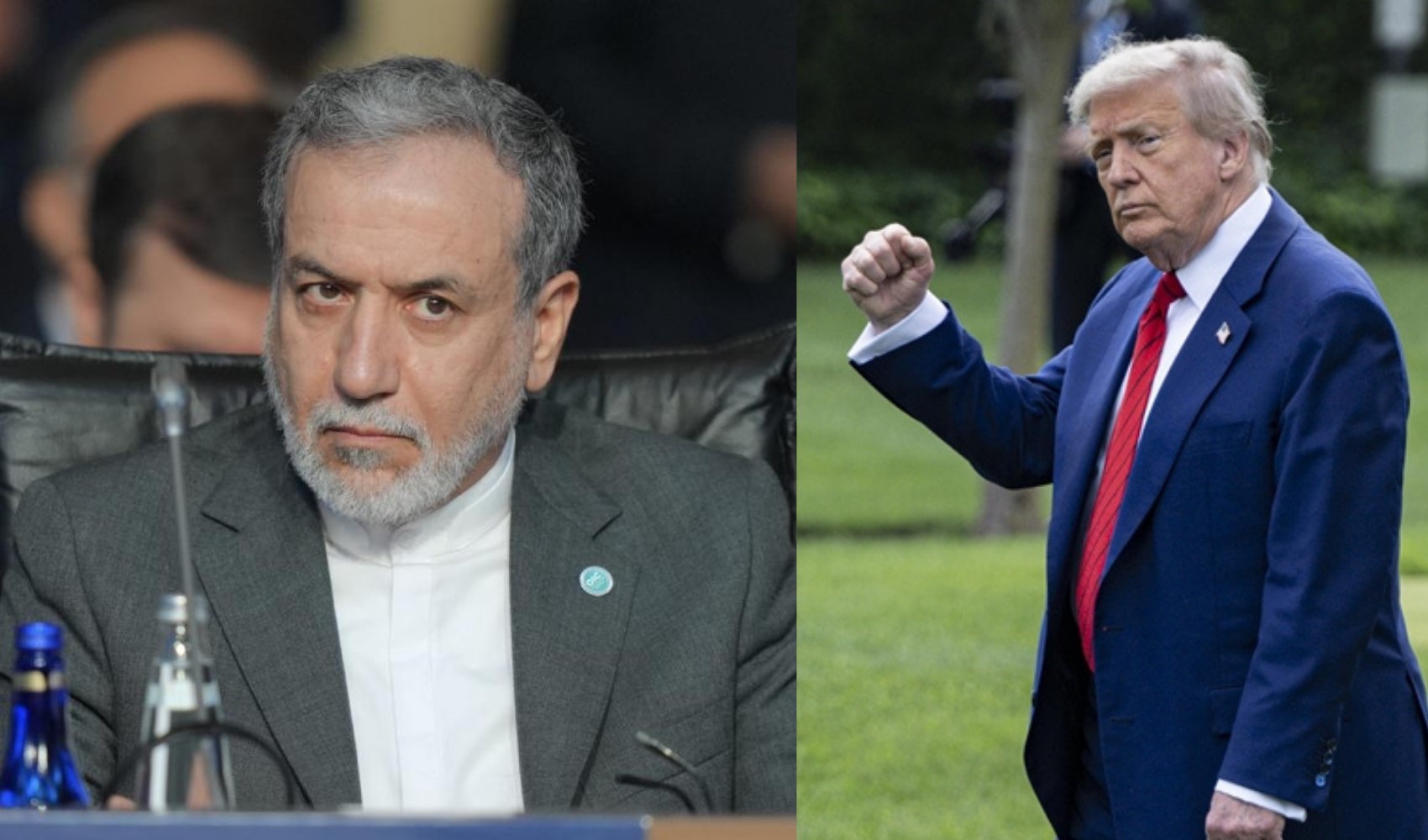
Stating that they did not foresee that the airspace of regional countries would be used against Iran, Araghchi said, "We did not foresee that the airspace of neighboring countries would be used against Iran. However, we saw this happening on the ground. It is not possible to say that this situation occurred without the knowledge or will of the countries in question; on the contrary, there are some findings in this direction. Despite statements that US bases in the region would not be used, they were used in operations against Iran. Various support was provided to US forces both inside and outside the bases, and airspace was opened for use. This situation is also acknowledged in different ways by the countries concerned."
"What were US planes doing in Kuwait?"
Giving an example regarding US warplanes, Araghchi said, "After it was announced that three US F-15 fighter jets were shot down in the skies over Kuwait, the following question comes to mind: What were these planes doing in Kuwait? It is clearly seen that their route was towards Iran. I do not want to go into details, but it seems that the region did not take our warnings seriously and is now facing this situation," he said.
"Regional countries should stay away from the US"
Calling on regional countries, Araghchi said, "Our message is that they must stay away from the US and distance themselves from this attack on the Iranian people. This attack is completely unlawful, unprovoked, and has no legitimacy. Unfortunately, regional countries, especially Gulf countries, did not condemn this act. This situation is extremely noteworthy. Yet, from the very first day, when it was clear that Iran was being attacked while negotiations were ongoing, it was expected that such an unlawful attack would be condemned at least verbally. However, even this was not done," he said.
"Everyone complicit in the attacks is a legitimate target for us"
Touching upon Israel's attacks on Iran, Araghchi said, "The Zionist regime's attack is not an issue that the Islamic world can ignore, but unfortunately these countries ignored it. They should stay away from this process and not allow their lands, airspace, or seas to be used against Iran. In that case, they will see that no steps will be taken against them. We currently have no problems with these countries, and our attacks are not directed at neighboring countries. We see these countries as friends and accept their people as our brothers. Our target is the US and the Zionist regime that is at war with us. We cannot remain silent while the Iranian people are being targeted. Everyone who is a partner in these attacks is a legitimate target for us," he said.
"Targets will not be limited to bases only"
Touching upon the scope of the response to be given if the attacks on Iran continue, Araghchi said, "If the attacks continue, our targets will not be limited to US bases only. Centers, facilities, interests, and gathering areas where US forces are stationed will also be targeted. In this context, various points, including centers that provide fuel to US forces, are among our targets. Furthermore, during the war process, when they targeted infrastructure, we also targeted infrastructure where US shareholders are present or that belongs to US companies," he said.
"There are no negotiations with the US, only an exchange of messages"
Responding to claims that there are talks between Iran and the US, Araghchi said, "So far, no talks or dialogue have taken place with the US side. We have no intention of negotiating. In recent days, the US has conveyed messages through various mediators. However, conveying messages through friendly countries and responding to them is not negotiation or dialogue, it is only an exchange of messages," he said.
"They backed down within the 48-hour period"
Araghchi said, "In the exchange of messages, we reiterated our fundamental position and issued warnings on some points. We made strong warnings regarding attacks on infrastructure, and the side that had to back down within the 48-hour period given was them. Now they have granted a longer-term period. This situation is the result of the determination of our armed forces, the clear stance they have put forward, and the warnings conveyed through media and diplomatic channels. In these warnings, it was emphasized that if a war is entered, the process may have no end and this would lead to a catastrophe for the entire region that is in no one's interest," he said.
"We do not want a ceasefire"
Emphasizing that Iran is not seeking war, Araghchi said, "This war is not our war; we did not start it. We want the war to end in a way that it will never be repeated. For this reason, we do not want a ceasefire. This does not mean we want war. We are against a ceasefire because a ceasefire creates a vicious cycle that can reproduce problems. We want the war to end on our own terms and in a way that it will not be repeated. We also demand that our enemies be taught a lesson so that they do not even think about attacking Iran, and that the damages suffered by the Iranian people be compensated," he said.
"The Strait of Hormuz is closed to enemies"
Assessing the current situation of the Strait of Hormuz, Araghchi said, "The Strait of Hormuz is only closed to enemies. We are in war conditions, and the region is a battlefield. For this reason, it is out of the question for us to allow the passage of our enemies' and their allies' ships. However, the strait is open for other countries. Many countries and ship owners have contacted us for safe passage through the Strait of Hormuz. We have provided safe passage through our armed forces in cases we deemed appropriate, especially for friendly countries. After the war, the Strait of Hormuz remains within the territorial waters of Iran and Oman. Although it is considered an international waterway, sovereignty in this region belongs to Iran and Oman. We are working on new regulations regarding safe passage in the future," he said.
"Europe has started to realize its mistake"
Touching upon the stance of European countries, Araghchi said, "I think the Europeans have started to realize the mistake they made. From the very beginning, they should have condemned these attacks and stood against the war. We hope that some courageous voices rising from Europe will increase in the coming days. Europe defined itself as a defender of international law and values; however, today these claims are being seriously questioned, and they are not admitting their mistakes," he said.
News Source: 12punto
Most Read
The Journey of Odysseus-1

The law of the powerful
Eren Vurdem shields Serhat Kılıç's girlfriend

A jackpot for the West, a consolation prize for the East

Nâzım Hikmet lives in İzmir

Casino images of Sadullah Güneş on the agenda ahead of MHP Antalya congress
Kocaeli Mufti Sönmezoğlu has been dismissed

Serhat Mustafa Kılıç found dead in his home

Fenerbahçe loses, controversial post from Talisca!

What happened to liberal democracy?