



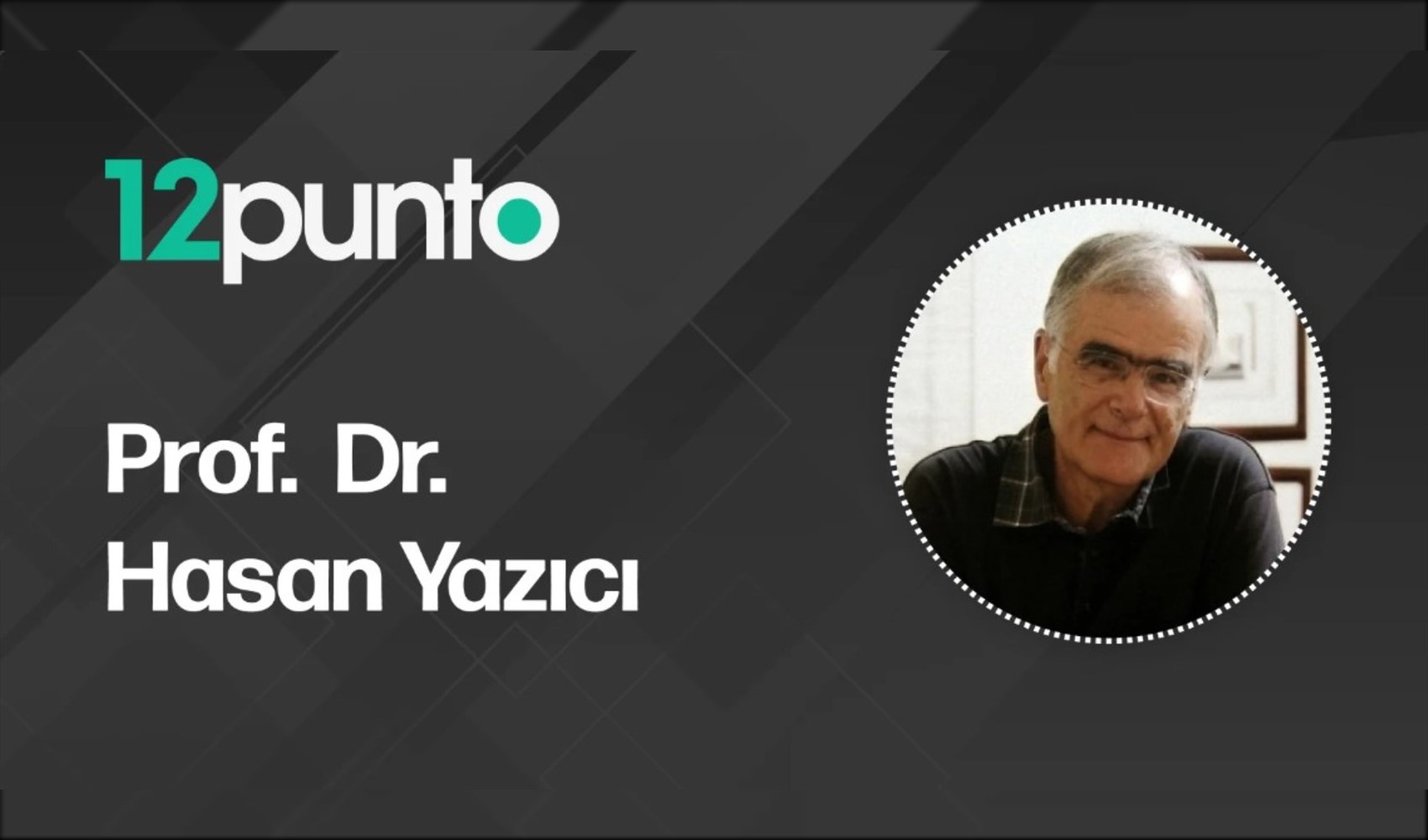
I read Daron Acemoğlu's new book, What Happened to Liberal Democracy?, in one sitting. The author mentions in the introduction that readers can skip certain sections if they wish. I devoured the book without skipping a single chapter or paragraph. I liked it, I learned from it, and I was very happy with what I learned. I don't know about you, but when I learn something new, I feel as happy as I do when the Fenerbahçe match I'm watching ends in a win.
I was also very happy when I read Bertrand Russell's masterpiece, A History of Western Philosophy, during my high school years. A few friends and I even went so far as to naively plan to translate the book into Turkish. In short, this new masterpiece by Acemoğlu brought back that sweet excitement and joy of my high school years.
I have another memory involving A History of Western Philosophy. It was during my youth. At a scientific congress held in London, I had a heated, sometimes personal, argument with a famous British professor much older than me regarding the causes of Behçet's disease. That same evening, there was a dinner reception for the congress. I suddenly saw our famous professor hand me a package and say, "Hasan, a gift from me to you." The gift he brought was the very book by Russell I mentioned. I understood; he was telling me, "Hasan, it would be better if you learned a little history of philosophy before arguing with me." I accepted the gift with thanks without making a scene. However, I still regret not being able to give that arrogant colleague the response he deserved right then and there.
There have been many comments about Acemoğlu's new book in both foreign and domestic media, with negative ones being dominant. In short, I agree with those who praise it and do not really agree with those who criticize it. Besides that, as I underlined, I read the book with great joy, but I kept waiting with great curiosity to see what the author would say about his own country of birth, and then the book just ended. I was saddened both because the book ended and because there was only a 1-2 page commentary on the situation of my country in what I read.
I must confess, I thought this way until I started writing this article. But then it suddenly clicked. Now I understand. The author was essentially telling a story faithful to the title of his book. Democracy—in its simplest sense, the ability of the governed to choose their leaders—has still existed in my country since 1950, despite some pauses. However, the liberal type of that same democracy had visited my country so rarely that the book I read could be a story of what happened to it. In these lands, the individual who asks questions, thinks differently, disagrees—in short, the individual who wants to live their individuality freely in this short life with the effort to be happy—and their rights have always been excluded.
In his book, Mr. Acemoğlu defines one of the fundamental pillars of liberalism as a concern for society, or to elaborate, the obligation to see the rights that the individual considers indispensable for themselves as the indispensable rights of other individuals in the society they live in. In short, he says individualism is not selfishness.
Again, briefly, some of our intellectuals who love to call liberals "liboş" (a derogatory term for liberals in Turkey) understand liberalism as defending an employer who only looks out for their own interests. What they forget is that taxation that respects the fundamental living rights of all individuals in society, laws that prevent monopolization, and labor rights protected by properly functioning collective bargaining are indispensable elements of liberalism. I know that some domestic and foreign writers looked at Acemoğlu's longing for working-class liberalism as if to say, 'what is that?'. There were even those who saw the author as having a Marxist longing. However, this longing evoked something completely different in me. My late father was one of the first businessmen in my country to have a formal education, and he did not really want me to get caught up in leftist tendencies. I remember the year. It was 1959, and the Soviet leader of the time, Khrushchev, was visiting the USA. My father said, "Look son, Khrushchev is giving speeches praising communism to American workers. Do you know who gives him the best answer? The workers themselves. They silence him by saying, 'We already have the education and health rights, cars, houses, and sufficient retirement pensions that you promise us with communism.'"
I am thinking. Indeed, as emphasized in the book, throughout history, starting from Plato, the defenders of liberalism have always been a bit arrogant, and in almost every example in their countries, a meritocracy class has formed. It is clear that such a class cannot easily coexist with a democracy that is equal in every aspect, including merit. As far as I can see, the governance where such a contradiction reaches the most appropriate solution is a liberal democracy with a properly functioning judiciary and universities, alongside a working class and other employees whose individual rights are protected. In this context, I tirelessly remind everyone: that saying we love so much, 'Justice is the Foundation of Property,' should actually be 'Justice is the Foundation of Individual Rights.' Don't get angry, it could also be 'Justice is the Foundation of Individual Rights and the State.'
In summary, as Acemoğlu explains in a very beautiful, fluent, and at least for me, instructive way, the extraordinary evolution that humanity has reached through the Reformation, Renaissance, Enlightenment, and Industrialization has survived great dangers in the last century. A democratic government alone is not enough to prevent the resurgence of the nightmares of the last century, communist or fascist dictatorial regimes. The liberal democracy practice observed primarily in the USA for forty years after World War II, which was very successful in the face of history, is currently in danger, unfortunately, starting with the USA. My fear is the severe damage this danger could cause, especially in countries like mine where the elements of liberal democracy have not developed.
Most Read

The Journey of Odysseus-1

The law of the powerful

Eren Vurdem shields Serhat Kılıç's girlfriend

A jackpot for the West, a consolation prize for the East

Nâzım Hikmet lives in İzmir

Casino images of Sadullah Güneş on the agenda ahead of MHP Antalya congress
Kocaeli Mufti Sönmezoğlu has been dismissed

Fenerbahçe loses, controversial post from Talisca!
Serhat Mustafa Kılıç found dead in his home
What happened to liberal democracy?