NATO has announced its new military concept aimed at neutralizing attacks against alliance member countries right at the border stage. The doctrine, called "Theory of War", was adopted with the approval of 32 members and envisions the use of classic ground elements together with artificial intelligence, autonomous systems, unmanned aerial vehicles, and advanced sensor networks.
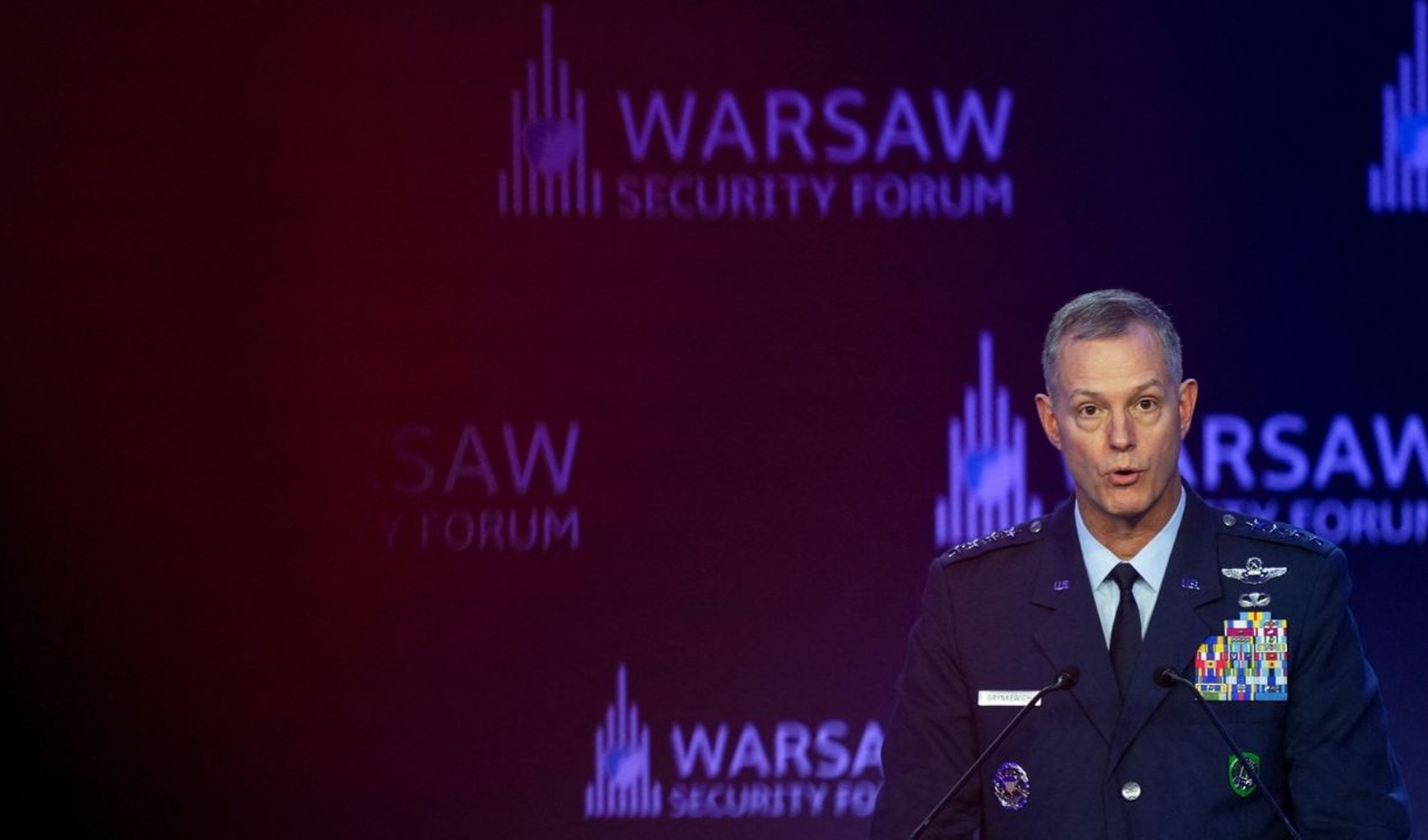
NATO Supreme Allied Commander Europe (SACEUR) Alexus Grynkewich said in his speech at the Warsaw Security Forum that the new approach is aimed at preventing hostile forces from entering NATO territory and conducting combat operations in these regions.
Grynkewich stated that they want to reassure the approximately one billion people living within the alliance's borders, and expressed that they aim to send a message to potential adversaries like Russia that NATO is prepared for a possible invasion. The commander said, "If we are attacked, we are ready to go to war even tonight."
THREE-STAGE PLAN
The new doctrine is based on three main stages. In the first stage, "denial", the goal is to prevent attacking forces from seizing allied territory. In this context, NATO ground troops are planned to make direct contact with attacking elements to halt their advance and neutralize forces attempting to breach the borders.
The second stage is built on the approach of "attrition" or slowing down the attack. In this phase, it is envisioned that threats will be identified instantaneously with autonomous systems and advanced sensor networks that require minimal human intervention, bringing together capabilities across different operational domains.
The final stage is defined as "disruption". In this step, rather than directly targeting the assault troops on the ground, the command centers, supply chains, and logistics lines that sustain these troops are targeted. The aim is to eliminate the adversary's capacity to conduct operations using long-range precision strike systems.
Grynkewich emphasized that the new strategy does not aim to gain territory, stating that NATO's goal is defense. The commander stated, "We have no plan, intention, or ambition beyond protecting our citizens and our territory."
Stating that he considers the possibility of a direct attack on alliance territory to be low, Grynkewich nevertheless expressed that any attempt would be responded to without hesitation. Touching upon the discussions regarding the US commitment to NATO, Grynkewich reminded that Washington reaffirmed its commitment to Article 5, the principle of collective defense, at the summit in July.
News Source: 12punto