



The use of criminal law in Turkey as a tool to purge and intimidate opposing views is the work of FETÖ-affiliated judges and prosecutors who relied on the AKP government. During this period, crimes and evidence were fabricated after individuals had already been detained and arrested. All principles and provisions of criminal law were interpreted and applied as desired without any hesitation.
After the coup attempt, FETÖ-affiliated judges and prosecutors were removed from the judicial system, but incorrect practices in terms of criminal law have continued.
Article 2 of the Turkish Penal Code No. 5237 states, "No one can be punished or subjected to security measures for an act that the law does not explicitly define as a crime. No punishment or security measure other than those written in the law can be imposed."
Today, individuals are detained without it being clear what they are accused of, and the crime is determined later. In other words, like the saying "the caravan is straightened on the road," a person detained for insulting the president begins to be tried for inciting the public to hatred and hostility, defamation, or any other crime.
Although the Turkish Penal Code states that in the application of criminal law, no discrimination can be made between individuals based on race, language, religion, sect, nationality, color, gender, political or other opinions and thoughts, philosophical beliefs, national and social origin, economic and other social status, and no privileges can be granted to anyone, it is observed that discrimination is made between individuals regarding the same or similar acts.
For example, while nothing is done against those who openly insult the President and the founding leader Mustafa Kemal Atatürk, individuals who are stated to have shown disrespect to President Recep Tayyip Erdoğan are immediately arrested.
Similarly, while investigations are conducted into opposition municipalities due to similar allegations, nothing is done regarding municipalities close to the government.
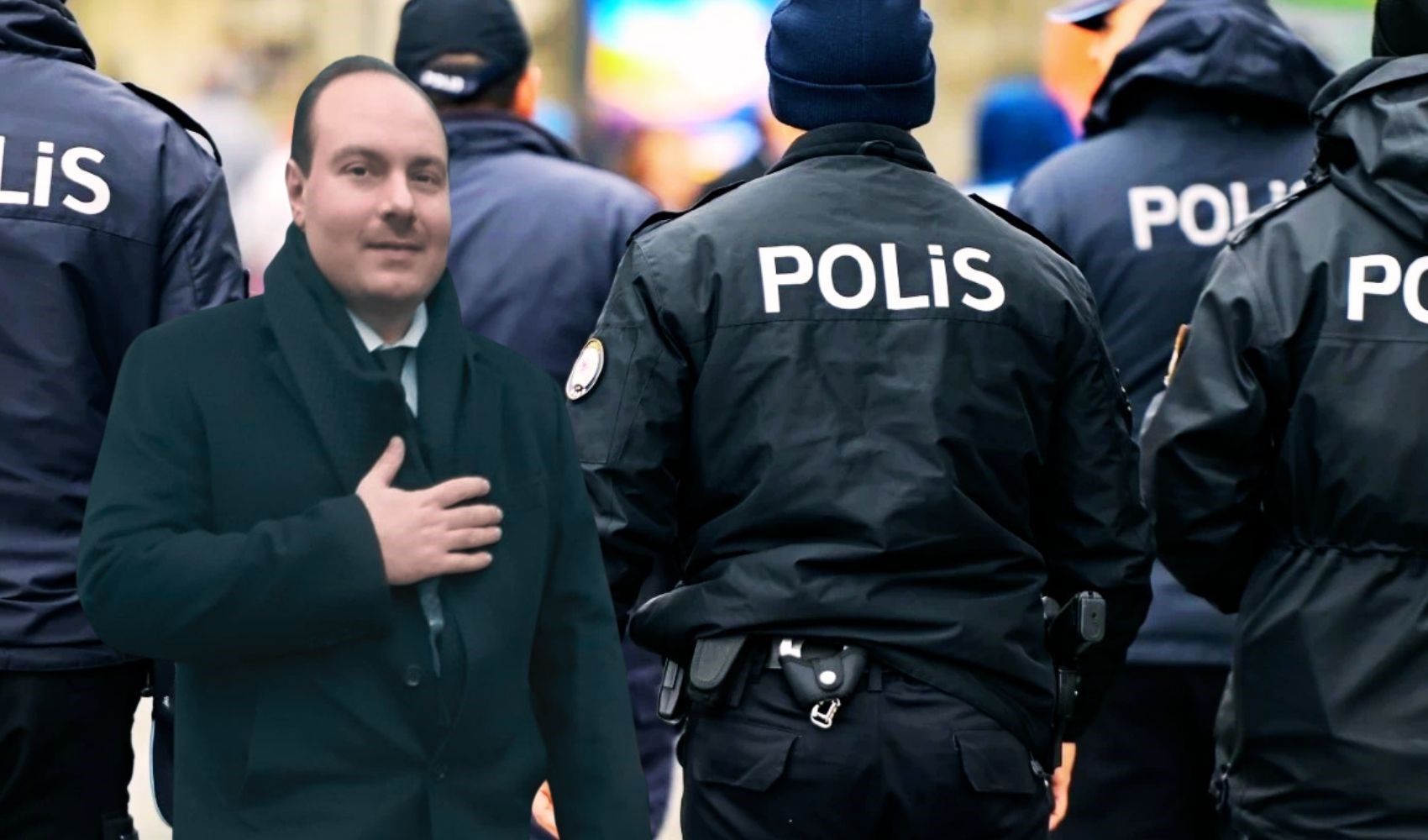
While Article 145 of the Turkish Penal Code states, "The person whose statement is to be taken and who is to be interrogated shall be called by invitation. The reason for the summons shall be clearly stated. It shall be written that they will be brought by force if they do not come," it has become a rule today for the person whose statement is to be taken and who is to be interrogated to be detained by police from their home or location in the early morning hours and handcuffed.
Although Article 3 of the Criminal Procedure Code No. 5271 states, "The duties of the courts are determined by law," and Article 12 states, "The authority to hear a case belongs to the court of the place where the crime was committed," we see in practice that regardless of where the crime is committed, the detained person is taken to Istanbul and their statement is taken by the Istanbul Chief Public Prosecutor's Office.
The initiation of an investigation by the Istanbul Chief Public Prosecutor's Office into the alleged crimes committed by Ümit Özdağ in Antalya and Cemal Enginyurt in Ankara is an example of this situation.
Article 37 of the Constitution contains a mandatory rule stating, "No one can be brought before any authority other than the court to which they are legally subject." The principle of the Natural Judge, which is one of the fundamental elements of the rule of law, prevents judicial authorities from being established after a dispute has arisen or judges from being appointed according to the parties to the case.
Despite this, it is a phenomenon we frequently experience that court presidents, members, and prosecutors are changed and the court is reconstituted while criminal trials are being conducted.
On the other hand, it is not possible to say that the suspect is given the opportunity to exercise the right to defense and proof within the scope of the freedom to seek justice, which is guaranteed by the Constitution today, or that the defense is sufficiently evaluated by the prosecutor or judge.
"The defendant benefits from doubt" is one of the most fundamental principles of Turkish Criminal Law. According to Articles 223/2-e and 5 of the Criminal Procedure Code, the basic condition for a decision to punish a defendant for a crime is that the crime is proven with a certainty that leaves no room for doubt. A conviction cannot be established against the defendant for events and allegations where the manner of occurrence is suspicious or not fully clarified.
However, today this rule has been reversed, meaning the rule of "doubt is interpreted against the defendant" has begun to be applied.
Although arrest is an exception, it is applied as a rule today. Although the Criminal Procedure Code stipulates that arrest will be resorted to in cases where there is strong suspicion that the suspect or defendant will flee, hide, or raise suspicion of fleeing, destroy, hide, or change evidence, or attempt to put pressure on witnesses, victims, or others, arrest has become a frequently resorted to state even without these conditions being met.
On the other hand, the statute of limitations for a crime is never discussed in decisions, and criminal investigations are conducted against individuals for crimes allegedly committed years ago as if they were newly committed.
Today, the criminal law practices summarized above in our country create great fear in society, and people live in fear of being detained at any moment and being unable to explain their situation.
The opposition has a great duty to end the criminal law practices that clearly violate the right to "personal liberty and security," which is regulated in detail in Article 19 of the Constitution, but it is clearly seen from the developments that the opposition will not be successful in this regard.
Most Read

How the ISIS terrorist preparing for an attack in Istanbul was neutralized

Apple's foldable phone price tag to set a new record

YÖK launches investigation into 23 foundation higher education institutions

Two-day sale and collateral traffic in Gökçek family allegations

Another bankruptcy in the construction sector

Detention warrants for 31 lawyers, searches at 39 offices

Journalist Oya Lale Arslan detained

Footage emerges of Berhan Şimşek allegedly assaulting his former partner

Massive compensation claim against Acun Ilıcalı
New seizure order in the Süleymancılar investigation