


The duty that falls to leaders...



In neighboring Syria, the Ba'ath regime, maintained by the Assad family for over half a century, has come to an end. This sudden development in Syria is not as simple as merely being blamed on imperialism. Of course, the efforts of sovereign states to exert influence in the Middle East, especially in regions where oil deposits are located, have been ongoing for centuries. While there are places in the region where imperialism has easily exerted influence and taken control over the centuries, there are also countries where it has struggled or failed. For example, the Republic of Turkey, founded by the great leader Mustafa Kemal Atatürk. In many discussions held in the parliament before the founding of the Republic, it is seen that some of Atatürk's comrades-in-arms were sympathetic to a mandate administration. Atatürk's possession of the ideal of full independence, in which he believed with great power, and his implementation of the nation-state idea became a steel shield protecting Turkey in the region. Despite all kinds of identity politics efforts after the multi-party period, the strong seeds he planted have survived to this day. Sander (1989) explained the difference between Turkish nationalism and Middle Eastern states as the existence of self-confidence stemming from never having lived under the captivity of any foreign nation and the sense of responsibility of those in state administration, and added:
“The Turkish people, with the contribution of the fact that they were not oppressed by foreigners, have not formed policies based on bigoted hostility toward other nations, ideas, movements, and religions throughout their long history.”
As for Syria… Syria, which was governed as a whole while under Ottoman rule, was managed by France in a five-part structure between 1920 and 1925: the Alawite Territory, the Independent Government of the Druze, the State of Aleppo, the State of Damascus, and Lebanon. Excluding Lebanon, where Christian Arabs mostly lived, the multi-identity, sectarian structure and divisions in Syria have persisted to this day. Tribal and clan solidarity, along with a feudal agricultural order, ensured that Syria was governed by the bourgeoisie, that is, large families, for years (Sander, 1989). Despite the increasing authoritarianism and anti-democratic practices in the administration, the Sunni Arabs, who make up the vast majority of the population, began to revolt in 2011, and Syria entered a major civil war. Since 2011, many opportunities such as the Astana process and the Sochi memorandum have emerged for the resolution of the internal turmoil. Furthermore, the forced migration of millions of refugees to Turkey has made the Syrian issue one of Turkey's primary concerns. Finally, Turkey's offer to cooperate on the return of refugees was also rejected by Assad.
Of course, there is much to be learned from this tragic story… It is essential for leaders and governments governing countries to prioritize democratic practices that encompass the whole of society, and to internalize independence and freedom. Otherwise, the authoritarian structures that emerge are sooner or later doomed to face their unfortunate fate. Most importantly, it is essential to defend freedom of thought and expression, to be respectful of different beliefs and sects, to ensure freedom of worship, to provide social justice within society, and to build an independent judiciary.
Furthermore, countries that cannot solve their own problems, cannot achieve economic independence, and are dependent on the outside—that is, those that cannot cut their own umbilical cord—are weak against imperial interventions. Or, out of fear of intervention, they become dependent on other powers. Like Assad's dependence on Russia and Iran… Relying on foreign countries instead of the people at a time when he should have been solving the problem brought Assad's story to this point.
From here on, although it seems very difficult, one hopes for the restoration of territorial integrity in Syria, for Damascus and Aleppo to regain their former glory, to stand back up, and for the construction of a country where the Syrian people will live happily and peacefully.
Would you like to get notifications about new developments and save news?
- NotificationsNew developments and breaking news
- SaveNews is stored in the app
Most Read

Video response to Kim Jong-un claims

Murat Ağırel’s police statement has been revealed

The Orionid meteor shower will be visible from Turkey!

Latest status in the race between AKP and YENİ Party revealed

Injury shock at Liverpool: He may miss the Fenerbahçe match
Political transfer rumors from İsmail Saymaz
Acting mayor of Üsküdar has been determined
Veteran father of Ebru Eroğlu, dismissed from the TSK, fired from his job of 35 years
To be or not to be on the 'right side of history'!..
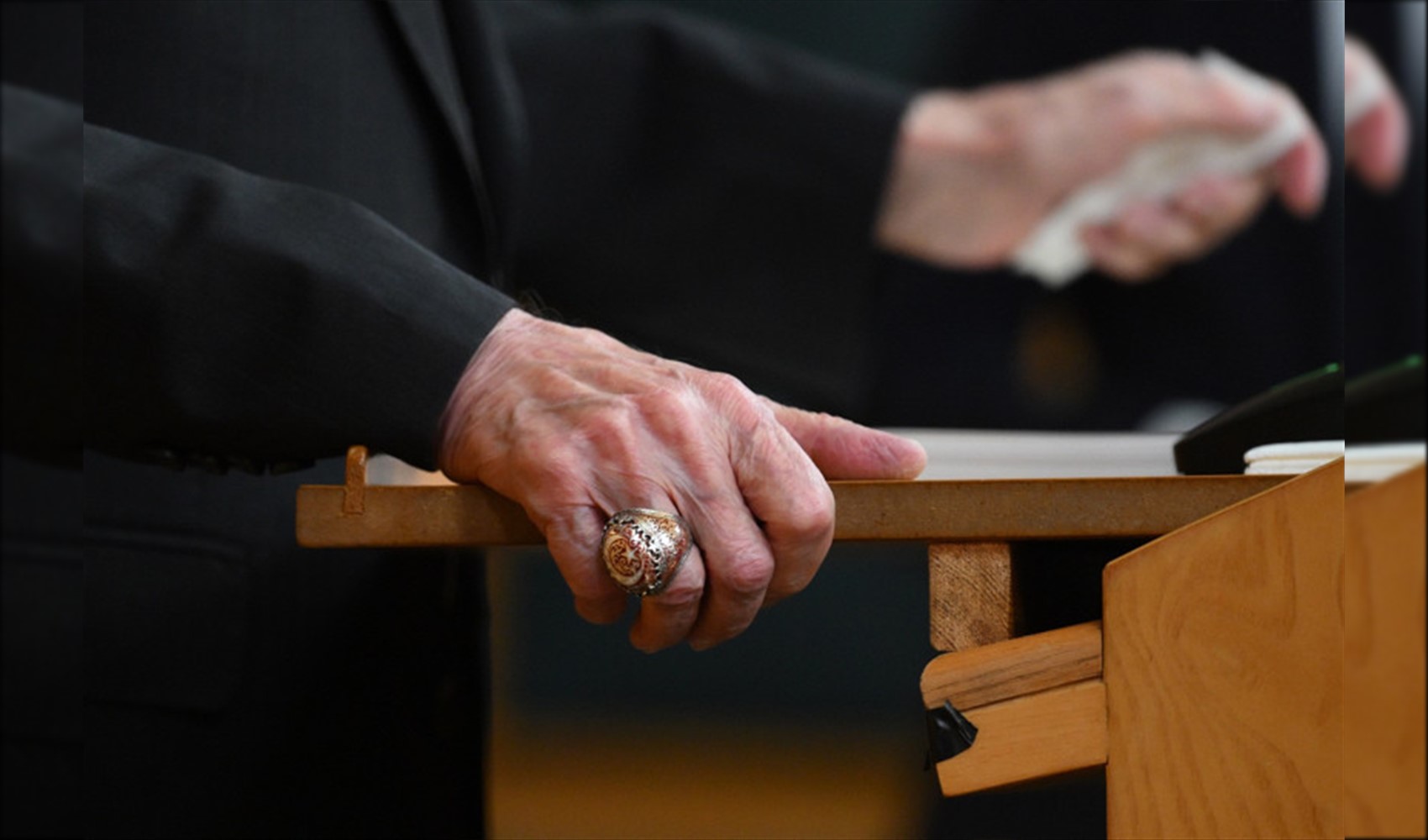
The inscription on Bahçeli’s ring draws attention