


Atatürk did not die


If he hadn't existed, we wouldn't be here
“Atatürk did not die, he lives in my heart…”
In our primary school years, we used to sing this song every November 10th. At that tender age, we perhaps didn't even fully understand what death meant. But we had grasped his immortality.
Atatürk was, of course, a human being made of flesh and bone like all mortals. However, we were not only taught about his life, the wars he won, or the Republic he founded. His ideas, what he did for this country, and his vision for the future were also passed on to us. We grew up with that love, that faith, and the trust we felt in the enlightened path he showed us.
The legacy Atatürk left behind is not limited to a struggle for independence that was won. He aimed for a country exhausted by wars to stand back up, produce, develop, and stand on its own two feet in the modern world. One of the important parts of this vision was industrialization.
From scrap cars to a modern transportation network
Before the proclamation of the Republic, encountering an automobile on the roads of Anatolia was not a very common situation. The number of automobiles that began to be used in the final periods of the Ottoman Empire was limited. Transportation was largely provided by animal-powered vehicles, and the inadequacy of the roads made the use of motor vehicles difficult.
During the years of the National Struggle, Mustafa Kemal Pasha also made use of automobiles. However, the vehicles he used were in a condition that could almost be considered scrap due to the conditions of the period. According to what Mazhar Müfit Kansu conveyed, despite all these difficulties, Mustafa Kemal did not give up on using automobiles throughout the War of Independence.
After the war, the issue of transportation gained a new meaning. It was no longer enough to just make use of existing vehicles; it was necessary to develop the transportation infrastructure of the newly established state, increase production capacity, and ensure its economic independence.
For Mustafa Kemal, independence was not a goal to be completed with military victory. He was aware that political independence could not be permanent as long as economic independence was not achieved. The İzmir Economic Congress, which gathered on February 17, 1923, even before the Republic was proclaimed, became one of the important turning points where the new state's understanding of economic development was set forth. In his opening speech at the congress, Mustafa Kemal Pasha reserved a special place for the country's transportation infrastructure and said:
“We are obliged to turn our country into a network with railways and highways on which automobiles operate.”
These words showed that in Atatürk's understanding of development, agriculture, industry, and transportation were not independent of each other, but complementary elements that strengthened the country's economic independence. Industrialization was not just about building factories; it was also necessary to transport the goods produced, deliver agricultural products to markets, strengthen connections between cities, and develop trade. The need for railways, highways, and modern means of transportation was a part of this whole. The automobile was also considered not just a means of transportation, but one of the important elements of economic development.
An automobile factory in Istanbul
Turkey's relationship with the automotive industry is generally started with the Devrim (Revolution) automobile project produced in 1961. Yet, in the early years of the Republic, an important automotive initiative had taken place that is not well remembered today.
In 1929, the American Ford Motor Company established an automobile assembly plant in Istanbul's Tophane district. By June 1931, this facility, which went down in history as Turkey's first free zone application, had reached a daily automobile and truck assembly capacity of 48 vehicles for the domestic market and exports. This figure was remarkable for a country where the use of motor vehicles had not yet become widespread. Moreover, Turkey was being evaluated not just as a market that imports automobiles, but as a part of a regional automotive production and trade network.
However, the Great Depression that began in 1929 deeply affected world trade and the automotive market. With the narrowing of export opportunities, production decreased, and assembly activities ended in the mid-1930s. Of course, this facility was an initiative where parts of a foreign brand were assembled. However, it had an important place in our industrial history in terms of the fact that activities aimed at automotive production had begun in the early years of the Republic. This journey, which started with assembly, would turn into Turkey's quest to produce its own automobile in the following years.
Much more than an automobile
It is not possible to evaluate the industrialization initiatives during the Atatürk era only through the automotive sector. With the statism policies implemented in the 1930s, industrial establishments were created in different fields from textiles to mining, from iron and steel to chemistry. Institutions such as Sümerbank and Etibank undertook important roles in the financing and organization of industrial investments.
Besides these, the automotive industry was a big part of this great transformation. Because the automotive industry is not just about factories that produce automobiles. It feeds many sectors from iron and steel to electronics, from machine manufacturing to software. It also plays an important role in the industrialization of countries in terms of qualified labor, engineering accumulation, and technological development.
Turkey's initiative to produce its own designed automobile materialized years after Atatürk's death, with the Devrim project in 1961. Then came Anadol and the automotive industry that developed in later years. In this way, it is possible to say that the goals of industrialization and developing production capacity set forth in the founding years of the Republic maintained their importance in subsequent periods.
Today, Turkey is one of the world's important automotive production centers. Automobiles produced in our country are exported to different markets. The automotive industry, together with its sub-industry, is among the most important sectors of the economy. However, the world is now in the midst of another transformation. So, where are we in this transformation? While looking for the answer to this question, it is necessary to remember the perspective Atatürk put forward a century ago.
A century ago, the country needed to attain modern transportation and production facilities. Today, it is necessary to be a country that develops these facilities, produces technology in every field from artificial intelligence to electric transformation, and can compete with the world. Technology may have changed, but the will to produce, develop, and determine one's own future should not change.
Atatürk did not die…
I understand the meaning of that song we hear every November 10th better as the years pass.
Today, as we commemorate Atatürk on the 88th anniversary of his passing, I believe it is necessary to remember not only what he did in the past but also his thoughts on the future. Atatürk is a leader, a commander-in-chief, a great hero. But he is not limited to these.
Atatürk is also science, civilization, secularism, and enlightenment.
He is the homeland, the flag, the Kuvâ-yi Milliye (National Forces).
He is the belief that a country can stand up, produce, develop, and determine its own future despite all impossibilities.
To describe him only as a great hero of the past would be to convey the legacy he left behind incompletely.
It falls upon us to tell our children not only which wars he won, but also why he attached such importance to science, education, industry, reason, and free thought. Because Atatürk will continue to live in every new generation that grows up with his ideas and works.
If he hadn't existed, we wouldn't be here.
Would you like to get notifications about new developments and save news?
- NotificationsNew developments and breaking news
- SaveNews is stored in the app
Most Read
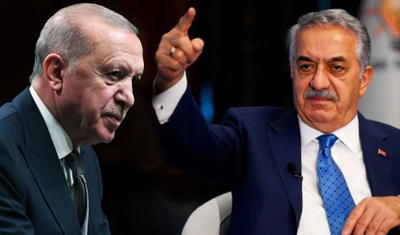
The backstory of Hayati Yazıcı's resignation from the AKP has emerged
And I thought the 'Reis' was furious!
Artificial intelligence, the US dollar, and BRICS
Passion in the garage, responsibility in the factory

12punto's Instagram account with 330,000 followers blocked
The Kilis Governorship appointment has been brought to the Parliament's agenda
Who is Kilis Governor Yusuf Alperen Ayar?
Target of spies captured by MIT revealed
Ümit Özlale responds to allegations regarding his wife Serap Belovacıklı
They appointed the person who appointed a trustee to Atatürk's party