


Two examples of deviation from liberal democracy: Hungary and Turkey



FROM LIBERALISM TO ILLIBERALISM
An article I read regarding the shift of Hungary and Turkey from a liberal democratic system to an illiberal system encouraged me to write on this subject. The article belongs to Dr. Seda Dunbay, a faculty member at Başkent University Faculty of Law. The article is titled “A Brief Assessment on the Future of Liberal Democracies in the Face of the Problem of Executive Growth.” The article is included in the book “A Gift from Women Jurists to the Centenary of the Republic,” edited by Dr. Zülfiye Yılmaz from Bilkent University. This gift, published by a group of women jurists coming together, is a product of the Turkish women's revolution and is very promising. I also wrote an assessment inspired by Dr. Seda Dunbay's article.
First, it is necessary to clarify and put some concepts in their proper place, of course. The most important sign of the legal and institutional transformation that results in the growth of the executive is the erosion suffered by the principle of separation of powers.
Illiberalism means abandoning liberal democracy by using democratic means and hollowing it out. In both case studies (Hungary and Turkey), the most concrete evidence is the rendering of democratic negotiation channels dysfunctional by using the paths within the existing constitutional order. Making the law usable for political power and turning it into an apparatus of power is a common feature of illiberal regimes.
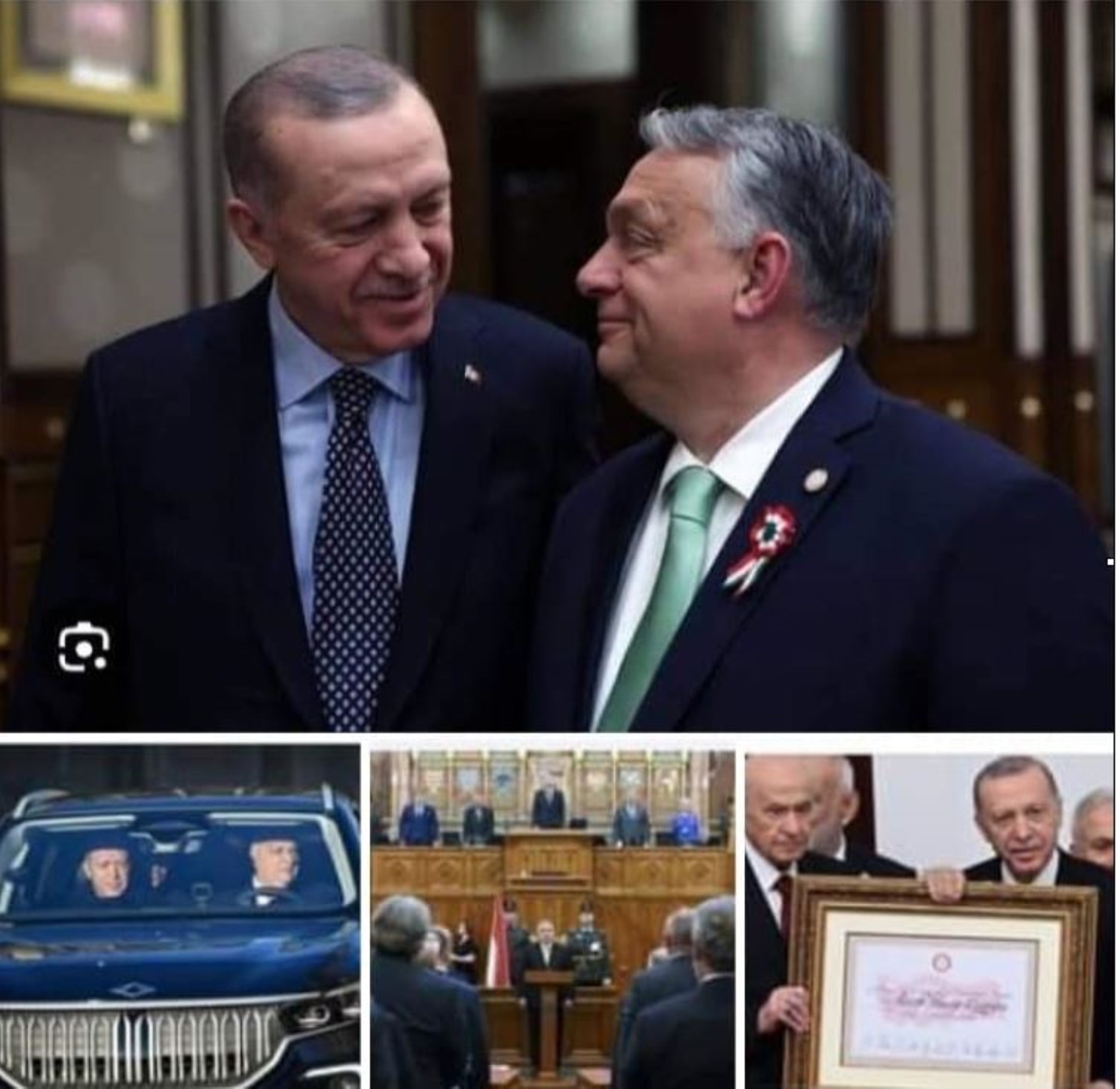
HUNGARY: AN OLD IRON CURTAIN COUNTRY
Before being included in the Iron Curtain system, Hungary was governed by a system with partial political freedom under a regency. This freedom also included parliament and political parties. Admiral Horthy, who came to power after the First World War, maintained his position as regent until the end of the Second World War (1920-1944). Like every country in Central Europe liberated by the Red Army, Hungary was included in the socialist bloc. When Hungarian socialism showed a liberal deviation under the leadership of Imre Nagy, it was crushed by Russian tanks in 1956. The fundamental point that should not be forgotten is this: Hungarians and other Central European peoples were kept within the Warsaw Pact under Moscow's pressure.
With Soviet Russia (real socialism) on the verge of collapse, resistance to the political authority tied to Moscow began in Hungary.
The transition to liberal democracy in Hungary (I mean the open regime) took place through negotiation, not through revolutionary methods. The existing institutions that had existed since 1949 were changed through reform.
Multi-party free elections were held. This was an extremely important development in terms of Hungarian history. The most important factor determining political parties and the political attitude of the public in Hungary is the 1956 Soviet invasion. This traumatic event continues to have an impact today. There are two attitudes that guide the country, which was governed by a Communist Party directly tied to Moscow for nearly 40 years: Catholicism and Hungarian national identity.
POWER STRUCTURE IN HUNGARY
In Hungary, the Fidesz – Hungarian Civic Alliance party has been in power for a long time. The 1949 Constitution underwent radical changes in 1989. Hungary ceased to be a country governed by Stalinist principles and became a state of law and democracy (Amendment No. XXXI). A new constitution entered into force on April 25, 2011. Since that date, the party that has won most of the elections has reached the majority to change the constitution with the support of a small right-wing party. This result is significant.
Viktor Orbán's party emerged victorious from almost every election and secured a majority. However, in the last elections, it reached the number required to change the constitution. It needs the support of a small right-wing party for this. And that seems to have been provided.
With this qualified majority, everything from the election of Constitutional Court members to the election of boards responsible for fundamental rights, the election of the head of the judicial affairs institution, and the election of the Ombudsman is directly or indirectly in the hands of the Parliament. This means that the ruling wing, which forms the parliamentary majority, dominates all decisions.
It is not possible for the President, who was elected by the parliamentary majority, to act as a brake against the actions of this supermajority. Although the constitution literally prescribes a liberal democratic parliamentary system, this point has been reached through supermajorities. The executive has taken its place at the center of the Hungarian political system.
VIKTOR ORBÁN'S POWER
In all countries re-established after the collapse of the socialist bloc, the existing political elite necessarily had a Communist Party background. Like Aliyev, Nazarbayev, Islam Karimov, and even Merkel, who was born in East Germany. In each of these countries, a new political system, elite, and leadership structure developed with their own dynamics. It is seen that each has its own unique aspects. The common point is the past communist party experience. Viktor Orbán also defined his own past as a modest communist party member.
Orbán entered parliament in the first multi-party elections held in 1989. In 1998, his party Fidesz (Hungarian Civic Alliance) came to power. Fidesz remained in opposition against the power obtained by the Socialist Party with a weak majority in 2002 and 2006.
While the Hungarian Democratic Forum (MDF) was losing power during the weak and controversial government of the socialists, the Hungarian Civic Alliance rose rapidly. In 2000, Fidesz left the Liberal International and turned into a right-wing conservative party. Those who wanted to keep the party on a liberal line left or were purged. Orbán's party is currently based on EU skepticism, social conservatism, anti-immigration, and Catholicism.
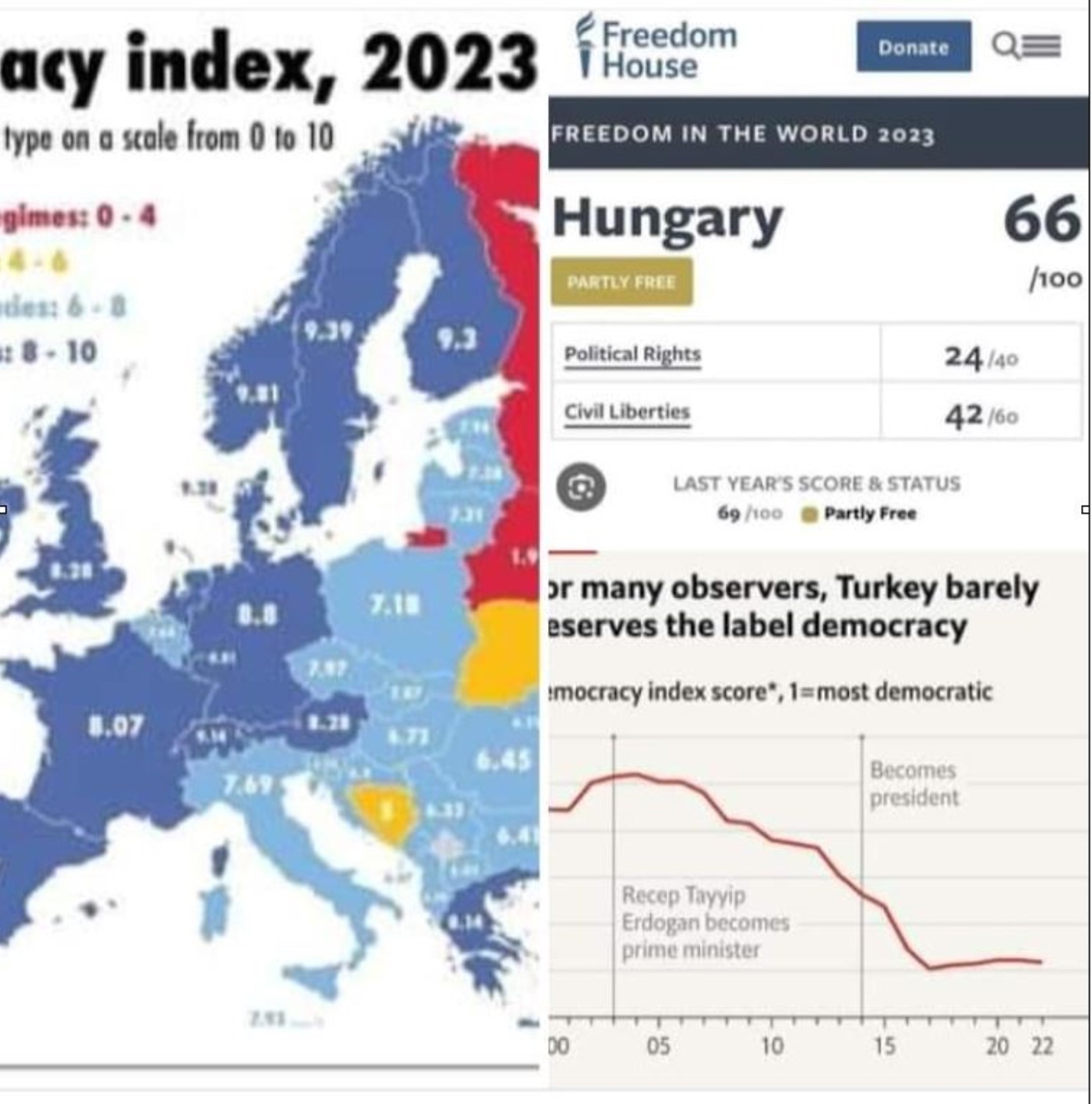
Hungary has been a member of the European Union since 2004. Since 1989, it has also been governed—theoretically—by a liberal democratic system. However, international observers and published reports see Hungary in the flawed democracy group. Failure to comply with the rule of law and widespread human rights violations form the basis for this characterization.
The government under Orbán's presidency governs the country with emergency decrees. The Legislative Assembly is bypassed. A development that reinforces this even further is that the Fidesz-Christian Democratic People's Party alliance obtained a two-thirds majority in the last elections. There are widespread rumors of ballot tampering and manipulation in the elections, but the result is this: The ruling bloc has reached the majority to change the constitution in parliament.
Orbán is governing the country under a state of emergency, citing the Ukraine-Russia War. Ukraine is one of the countries neighboring Hungary. The declared state of emergency has been continuing since May 31, 2023. There is talk of systematic human rights violations by security forces and the army.
JUDICIARY AND OTHER INSTITUTIONS IN HUNGARY
Hungary's Supreme Court is called the Curia. It is the highest authority of the judicial judiciary. The taking of office of Supreme Court and Constitutional Court members depends on the parliamentary majority. Therefore, the highest authority of the judicial judiciary and the members of the Constitutional Court, which acts as the regime's judiciary, are determined by the majority in parliament. Judges are appointed by the head of state, but the parliamentary majority decides this. It is inevitable that someone with tendencies in the same direction as the majority in parliament will be brought to the position of Head of State. As in the most recent presidential election. The Chief Public Prosecutor's Office, the Ombudsman's Office (Public Auditing), and all various institutions and organizations related to civil society rights have been blockaded by the government with the state of emergency regime.
ORBÁN'S EXPLANATION OF ILLIBERALISM AND THE EUROPEAN PARLIAMENT
Viktor Orbán defined Hungary as an “Illiberal State” in a 2014 speech. But he said he understood this as moving away from unfair social liberalism. However, that is not the meaning of illiberalism. It is defined as a kind of low-intensity democracy. In this sense, it is a hollowed-out democracy. It is an expression first used by political scientist Fareed Zakaria in his article “The Rise of Illiberal Democracy.” He uses the expression that although elections are held in these countries, the rulers manipulate the elections, cheat, and those in power legitimize themselves in this way.
There are also sources that describe the Viktor Orbán administration as electoral authoritarianism (hybrid regime). In such regimes, democratic institutions appear to exist but are dependent on the government. They do not perform the function of checks and balances.
Although elections are held in these regimes, fair and equal conditions do not exist among political actors. In 2022, the European Parliament adopted a resolution characterizing the Hungarian regime as “electoral autocracy,” based on the principle of the rule of law and the restrictions placed on the exercise of fundamental rights and freedoms.
THE LATEST SITUATION IN THE HUNGARIAN PARLIAMENT
The total number of members in the Hungarian parliament consists of 199 deputies. The ruling front, consisting of Orbán's party (Fidesz) with 116 deputies, its right-wing ally KDNP with 19 deputies, and the German minority party with 1 deputy, has a total of 135 seats in parliament.
The total number of opposition members is 63. As can be seen, there is a large numerical imbalance between the government and the opposition. The opposition MSZP (10 deputies) has formed an alliance with DKMS (15 deputies). That is, there is a small opposition alliance consisting of a total of 25 deputies. Apart from this, there are also parties like Momentum that have 10 deputies. As a result, the opposition in Hungary presents a numerically weak and extremely fragmented picture.
WHAT WAS THE FUNCTION OF THE AKP GOVERNMENT IN TURKEY?
Parallel to the collapse of the Soviet system, changes took place in Turkey, which is a NATO member. This has a close relationship with the destruction of the World balance based on anti-communism. Turkey has even reached a point that could not have been imagined within 30 years.
In the 90s, the right-wing ruling parties (DP, AP, ANAP) supported by the USA since 1952 in Turkey had rotted in terms of structure and function. The introduction of the AKP in their place coincides—temporally—with the rise of Orbán's right-wing policies in Hungary.
While Viktor Orbán's Hungary became a full member of the European Union in 2004, Islamism gained momentum in Turkey. Under the suggestions that would consign Kemalism to history and ensure its entry into the union, revisionist Islamism was legitimized with the “taking off the shirt” (taqiyya) tactic. The AKP was brought to power with full support from the institutional actors of global capitalism, the USA, and Europe.
If a balance sheet is to be made, has it now become clearly apparent that the function of the AKP government has been to hollow out the founding paradigm of the Republic of Turkey, which was built on the accumulation of the National War of Independence and Kemalist revolutions? Economically, regarding public ownership, ideologically, regarding the Kemalist understanding of secularism, no founding principle regarding the national state based on the Turkish nation, as defined by the Great Atatürk in his book “Civil Knowledge,” is actually in force today.
The AKP has become a little more authoritarian after every election. After the 2007 Constitutional amendment and the conquest of Çankaya, the AKP either eliminated all institutional obstacles in front of it or hollowed them out. Universities, the high command, the Supreme Board of Judges and Prosecutors, the Supreme Court of Appeals, the Council of State, trade unions, and even bar associations have been turned into institutions that act on the instructions of the government.
THE EXECUTIVE FROM 1961 TO THE PRESENT
The 1961 Constitution had continued the tradition of the supremacy of the legislature. Continuing a line coming from the 1921 and 1924 constitutions (Turkish public law thesis), it had found a solution to the separation of powers. In the 1982 Constitution, the most profitable state power was the executive. As my teacher Bülent Tanör stated in a balance sheet article, the losers of the 1982 Constitution were the legislature and the judiciary. My teacher Tanör had made the diagnosis that the institution that regressed the most is the judiciary. The guardianship role attributed to the Presidency in 1982 made the office a center of political attraction more than ever before.
The fact that the President was equipped with “transcendent powers” that cannot be explained by the parliamentary system provoked the dream of the Turkish right to have the head of state elected by general vote.
PRESIDENTIAL GOVERNMENT SYSTEM
The Presidential Government System in Turkey is actually a de facto presidential system. This is based on a political structure that centers the executive—that is, the president—as the name implies. Until 2014, the President derived his legitimacy from an election held in the Grand National Assembly of Turkey. Since that date, he has derived it from the general vote.
In the Turkish-type presidential system, accountability to the parliament has been almost completely eliminated. There is no audit other than the referral of the President and ministers to the Supreme Court (Yüce Divan). Because the executive does not emerge from the parliament. It does not come to office with a vote of confidence received from the parliament. The source of its legitimacy is elsewhere.
The path to the Supreme Court is almost impossible. Because the referral decision is possible with a qualified majority. There is practically no possibility of such a decision being taken in a parliament where the government, which has more seats than the absolute majority, is located. Because the majority that brought the President to office coincides with the parliamentary majority. A relative majority formed at the general vote level ends up holding both the legislature and the executive. That is how the system works.
As of today, the executive has turned the legislature into an institution whose approval is only obtained procedurally/formally on some issues with its increasingly expanding regulatory areas.
In a parliamentary regime, the source of the executive is the legislative assembly. As my teacher Erdoğan Teziç stated, the executive is a derivative state power. The parliament is a source of legitimacy that approves the formation of the government and public policies. The parliament is not just busy with the work of making laws (legislation).
Everywhere it was established as a parliamentary system and the president was elected by general vote—including the Fifth Republic of France—problems arose in the executive field. The regime crisis led to the change of the political system. The system evolved into another model. While this manifested itself as semi-presidentialism in France, it happened as a strong presidency in Turkey. Turkey's political regime had hybridized with the 2007 constitutional amendment; it became based on the supremacy of the executive (presidency) from 2017 onwards.
This longing. All right-wing party leaders from Özal to Demirel had pronounced it. Only during the Bayar period was such a thing not mentioned. The reason for this was that the party leader was already brought to Çankaya for three terms with the votes of the DP majority. Since both Çankaya and the Grand National Assembly of Turkey were in the hands of the Democrat Party, there was no need for this anyway. I am also sure that Bayar would not have wanted this.
ERDOĞAN AND THE EXECUTIVE POWER
How the Erdoğan regime is perceived from the outside is an important issue. For example, Noam Chomsky had said that Erdoğan intended to eliminate the remainder of democracy in Turkey by establishing a regime similar to the Ottoman caliphate. Chomsky's projection has no applicability in the Middle East geography. My opinion is in this direction. But I don't know about his ambitions.
One of the early examples of the arbitrary expansion of the executive during the AKP era is the demolition of the “Monument to Humanity” built by sculptor Mehmet Aksoy in Kars upon the instruction of the prime ministry. As of that date, the AKP leader, who was at the head of the politically responsible wing of the executive, first described the statue as a “freak” (ucube). Then he notified its removal. Since the dimensions of the 24.5-meter-high statue were not suitable for removal, it could only be removed by being cut and dismantled. Sculptor Aksoy criticized the demolition of his work in this way with a balanced anger. Despite this, an investigation was opened against him. Aksoy had completed his statue in 2006. It was demolished in 2011 upon the instruction of the prime minister. Aksoy's struggle to defend his work began with the judicial judiciary. The case, known in the public as the “Freak Case,” eventually went to the Constitutional Court. In its decision dated July 11, 2019, the Supreme Court ruled that Aksoy's freedom of expression and art had been violated and sentenced the prime minister of the time to pay compensation.
In addition to this, between 2014 and 2019, 128,872 people have been sued for insulting the president. However, one of the most important conditions of liberal democracy is that the political power is open to criticism. Unfortunately, Turkey is now a country where a slightly harsh criticism of the executive power can easily turn into a lawsuit for insulting the president.
Two examples of the growth of the executive through legal institutions are the conversion of the Hagia Sophia and Chora museums into mosques using a subject that is extremely flawed in terms of standing to file a lawsuit. The conversion of both museums into mosques by an administrative judicial decision can be shown as obvious examples of the politicization of the judiciary following the concentration of the executive in a single hand.
After the AKP leader Erdoğan became a candidate for the presidency for the third time—in an unconstitutional manner—and his candidacy was legitimized by the opposition, he has completely narrowed the sphere of activity of the legislature through Presidential decisions and decrees.
THE TURKISH EXPERIENCE
The Turkish experience to date has shown this: The complaint of the lack of authority of the executive, which began with Demirel in the 60s, has reached its final point with a state where the executive organizes all state powers around itself. The 2010 constitutional amendment had ensured the achievement of the goal of the executive's control over the judiciary.
When the accountability obligation was disabled by a judiciary dependent on the government, the further expansion of the executive's sphere of activity dropped Turkey from illiberal democracy into the category of electoral authoritarian regimes.
Although the elections held in all high courts were indirectly determined by the AKP government, there is still an area that is seen as problematic: constitutional judiciary. However, constitutional judiciary is the guarantee of the regime. With the 2017 amendment, except for three members elected by the Grand National Assembly of Turkey, the remaining 12 members are selected and appointed by the President. Despite this composition, the government is complaining about the Constitutional Court.
The President's authority to issue decrees has further reduced the effectiveness of the legislative body. When Presidential decisions, which are actually a type of administrative act, are added to the decrees, the executive seems to have become the sole ruler of all areas. I think it would be appropriate to give an example from recent times: The “Council of Europe Convention on Preventing and Combating Violence Against Women,” to which Turkey was previously a party, was terminated by a Presidential decision on August 28, 2023.
EVALUATING THE TWO COUNTRIES
In the assessment of the Economic Intelligence unit regarding the two countries (based on democracy index results), while EU member Hungary is considered a flawed democracy, Turkey is considered a hybrid regime. After the May 14, 2023 elections, the executive and legislature remained in the hands of the People's Alliance once again. Since this date, the practices that cause the regression of index criteria have continued to expand. For this reason, I believe Turkey's democracy index is a candidate for further regression.
The most worrying recent development in this regard—apart from the Gezi and Kavala decisions—has been the government's resistance to the Constitutional Court's Can Atalay decision by taking a part of the judiciary behind it. The Constitutional Court decision regarding the elected deputy Can Atalay binds all judicial authorities. Instead of the decision being implemented without hesitation, an impression was created as if the event would be spread over time by first showing it as if there were a judicial dispute. This was called a judicial crisis. Then a criminal complaint was filed against the members of the Constitutional Court. This result indicates that we have reached a grave point. The fact that the judicial judiciary not only failed to fulfill the decision of the constitutional judiciary but also filed a criminal complaint—with an attitude that is undoubtedly unconstitutional—has revealed the nature of the regime in Turkey. Under these conditions, it would probably not be wrong to say that our country has moved out of the electoral authoritarian system category and has reached the borders of an authoritarian state.
Today, Turkey is a country where the government is determined by manipulated elections under extraordinarily unequal conditions. The government has created a de facto state without a constitution, relying on plebiscitary legitimacy. By plebiscitary legitimacy, I mean—somehow—having won the election. This is the reason why the new constitution is constantly kept on the agenda. Let us end with the words of the author of the article, Dr. Seda Dunbay: “The issue is not to be a state with a constitution, but to continue to be a constitutional state.”
Would you like to get notifications about new developments and save news?
- NotificationsNew developments and breaking news
- SaveNews is stored in the app
Most Read
Statement from Nihat Zeybekci on the fund investigation

New 75,000-seat stadium plan for Fenerbahçe
Interpol and MIT tracking yields results in Izmir
ID convenience for KPSS candidates

2027 Budget: Taxes for the people, tax exemptions for capital

The Çanakkale robbery -1- How was the Troy treasure smuggled out?

To whom and how was the Petition of Intellectuals submitted? Who accepted the petition?

The reality of Akkuyu and the longing for national nuclear power

Artificial intelligence and the new imperialism

Ministry investigation into unauthorized promotional messages