


What did the CHP do?



"Every great plane tree has wounds inflicted by time on its trunk. Those who deny these wounds cannot read the future; those who only look at the wounds and weep cannot build the future. Politics is, first and foremost, the courage to be held accountable in one's own conscience. Today, as we look back at the past, we are writing neither an epic of praise nor a court transcript. We simply want one of the Republic's most deep-rooted political movements to look in the mirror. Because no movement that does not confront its past can walk into the future."
In our recent article titled "What Will the CHP Do?", we recalled the headings from the Republican People's Party's (CHP) 1961 election manifesto. What was written in that manifesto was not merely an election promise; it was a roadmap for Turkey's democratization, development, and social state ideal.
Rights and freedoms...
Development...
Justice in taxation...
The producing farmer...
Education mobilization...
Labor rights...
Health for all...
Homeownership for low-income earners...
More than sixty years have passed since then.
Now is the time to ask the second part of the same question.
Which of these goals did the Republican People's Party achieve, in which did it succeed, where did it stumble, and what misfortunes did it face?
The period between 1961 and 2002 was the most turbulent era not only for the CHP but also for Turkish democracy.
Throughout these years, governments changed, coalitions were formed, economic crises occurred, coups were staged, memorandums were issued, and politics was redesigned.
And right in the middle of all this was the Republican People's Party.
The party succeeded in bringing social democracy together with the language of Anatolia, especially in the 1970s. The concept of "the land belongs to those who till it, the water to those who use it" was not just a slogan; it was the political equivalent of labor and production. Significant steps were taken toward strengthening the social state, improving union rights, and increasing the political representation of peasants and workers. The state seriousness displayed during a historical turning point like the Cyprus Peace Operation also took its place as one of the important pages in Republican history.
However, politics is not just about what was done right.
March 12 and subsequently September 12...
These two dates wounded not only governments but democracy itself.
The Republican People's Party was shut down.
Its institutional memory was scattered.
Its cadres were purged.
Political bans were imposed.
For years, it could not engage in politics under its own name.
This was a loss not only for the CHP but for Turkish democracy as well.
However, it would not be right to place the entire burden on the shoulders of the coups.
Because, like every political movement, there were periods when the CHP had to conduct its own accounting.
As society changed, its language sometimes did not.
As Turkey transformed, its reflexes sometimes remained the same.
Intra-party struggles, factionalism, and personal agendas sometimes took precedence over the country's issues.
Distances formed between the public's agenda and the priorities of party administrations.
A significant portion of the energy that could have been an alternative to power was consumed in internal disputes.
Yet, the historical mission of the Republican People's Party was not just to oppose; it was to reproduce the founding intellect of the Republic according to the needs of the era.
When the CHP was reopened in 1992, it encountered a completely different Turkey this time.
Globalization had accelerated.
The economy had changed.
Urbanization had increased.
The expectations of new generations had diverged.
However, the party was not always successful in bringing the legacy of the past together with the language of the future.
The 2002 elections were not just an election result.
That election was a breaking point where the old political order in Turkey was liquidated.
The center-right collapsed, the coalition era ended, and politics entered a new phase.
Although the Republican People's Party returned to Parliament as the main opposition, it now faced a completely different political climate.
When we look back today, we see that the history of the CHP is not limited to elections.
This history is a history of coups, bans, rebirths, hopes, and disappointments.
This history is a history of courage at times, and of moments when courage could not be shown at others.
Most importantly, there is this fact:
What keeps a political movement alive is not just what it did in the past.
It is what lessons it has learned from its past.
Because the nation carries into the future not those who are flawless, but those who can confront their mistakes, see their shortcomings, and renew themselves.
The principles written in the 1961 election manifesto still maintain their relevance today.
Democracy...
Rule of law...
Productive economy...
Social state...
Equality of opportunity...
Justice...
Perhaps the real issue is not that these principles are outdated, but how the will to bring them back to life will be manifested.
It is easy to account for yesterday.
The real responsibility is to be able to provide the answer for tomorrow.
So, what will the CHP do now? We shall see that too...
Prof. Dr. Duran Bülbül
Would you like to get notifications about new developments and save news?
- NotificationsNew developments and breaking news
- SaveNews is stored in the app
Most Read

Video response to Kim Jong-un claims

Murat Ağırel’s police statement has been revealed
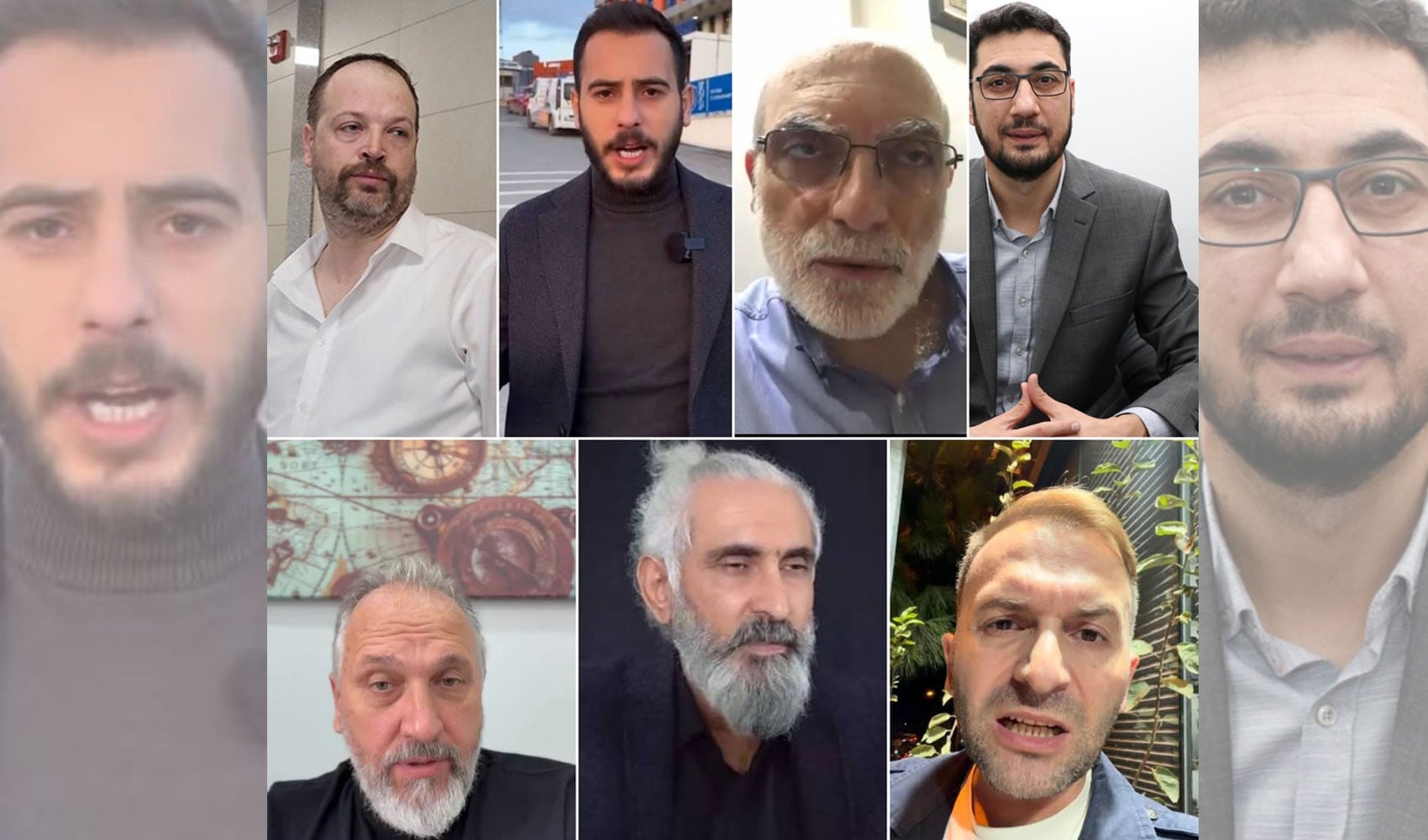
Azerbaijan issues arrest warrants in absentia for 7 people living in Turkey

The Orionid meteor shower will be visible from Turkey!

The penalty for Ronaldo, who left the national team camp, has been announced

Fatoş Seğmen reveals the cause of her daughter's death

Latest status in the race between AKP and YENİ Party revealed

Injury shock at Liverpool: He may miss the Fenerbahçe match

Who authorized the concert held in a parking garage?

From brotherhood to a distant partnership...