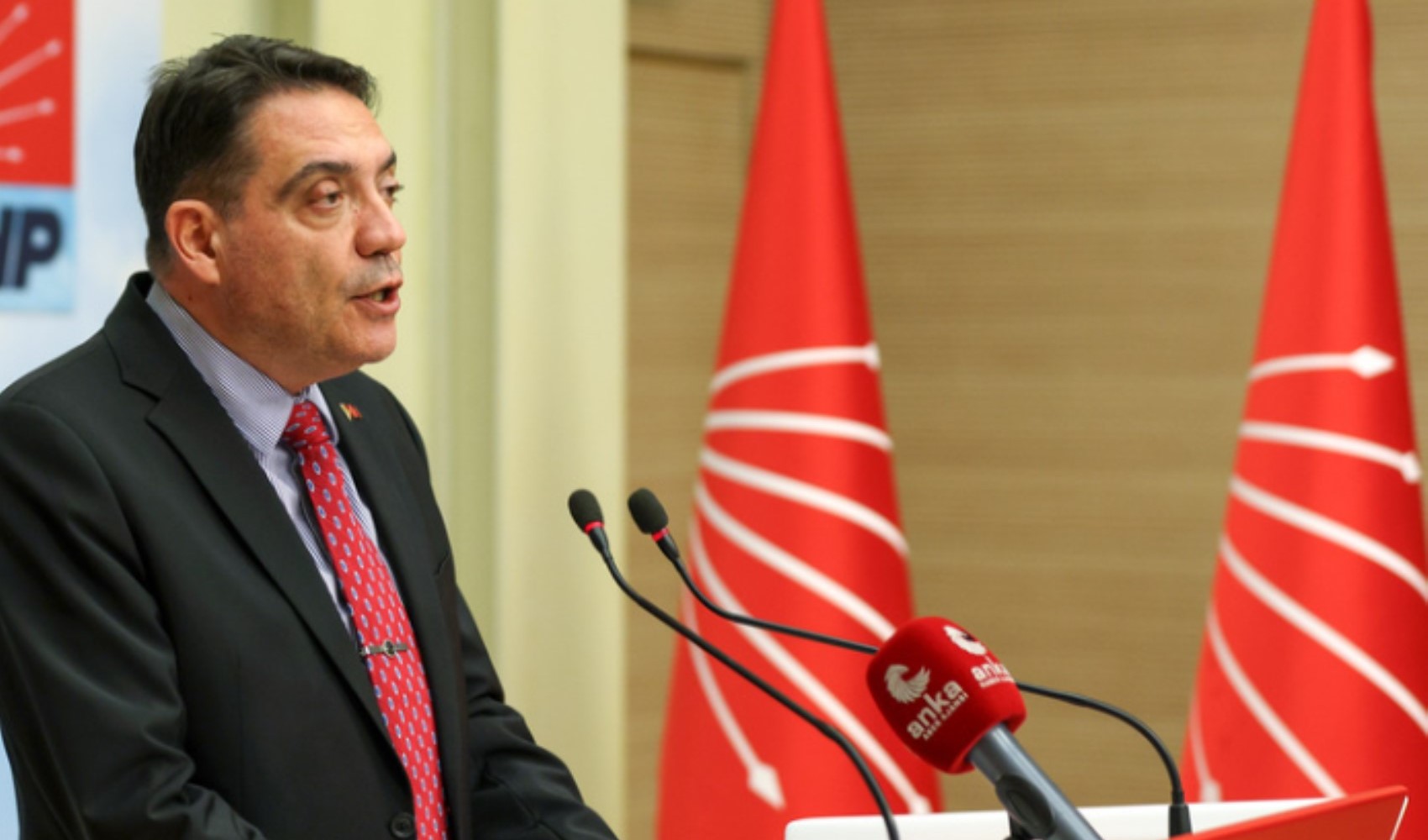
CHP Deputy Chairman responsible for National Defense Policies, Yankı Bağcıoğlu, issued a written statement regarding the Constitutional Court's decision dated April 30, 2025. Bağcıoğlu stated that the decision failed to resolve the distortion in the command structure of the Turkish Armed Forces and resulted in the continuation of the current structure, which contradicts Article 117 of the Constitution.
Stating that this situation negatively affects the TSK's combat readiness and ability to make effective decisions, Bağcıoğlu expressed that the authority of command must be redefined and brought into compliance with constitutional and military requirements.
"CONTRADICTS COMMAND AND CONTROL AND WARFARE PRINCIPLES"
Yankı Bağcıoğlu noted the following:
"In its decision published in the Official Gazette dated 30/04/2025 (AYM, E.2021/44, K.2024/172, 17/10/2024), the Constitutional Court examined and ruled on the application made by the CHP due to the unconstitutionality of certain articles of the Law on Amendments to the TSK Personnel Law and Certain Laws, dated 18/2/2021 and numbered 7281. In the aforementioned decision, the requests for the cancellation of articles that were requested to be annulled due to their unconstitutionality—generally regarding the relations between the Chief of General Staff, Force Commands, and the Ministry of National Defense, and the regulations that established the current command and control structure—were rejected.
As is known, following the constitutional amendment in 2017, the transition to the Presidential Government System was made, the duties, powers, and responsibilities of the Ministry of National Defense and the General Staff were reorganized with 'Presidential Decree No. 1', and while the Force Commands were previously under the General Staff, they were placed under the Ministry of National Defense with the new regulation.
However, Article 117 of the Constitution, titled 'Commander-in-Chief and Chief of General Staff', clearly defines the Chief of General Staff as the commander of the Armed Forces. Despite this, in the current administrative structure, there is no direct hierarchical link between the Chief of General Staff and the Force Commands; each is structured as being under the Ministry of National Defense. This situation contradicts military science, the unity of command and control, and the principles of warfare."
"TODAY'S SYSTEM HAS CAUSED CONFUSION"
"Command is not just a title; it is a responsibility of direction and administration," said Bağcıoğlu, adding the following:
"The preparation of the forces in all aspects during peace and war, from training to health, must be under the absolute authority and power of the commander. While today's system may have been created with the claim of removing military tutelage, it has caused a confusion that is contrary to both constitutional regulations and modern military structures.
The current success of the TSK is largely maintained thanks to a command and control culture based on tradition and the self-sacrifice of its personnel. However, this structure is not sustainable. Reconnecting the Force Commands to the General Staff, conducting all activities such as military training and combat readiness under the umbrella of the General Staff, and making this structure responsible to the President while remaining under the Ministry of National Defense is essential both for compliance with the Constitution and for national security.
As the CHP, our concrete proposals and goals for establishing a structure where the TSK can effectively fulfill its duties and responsibilities are included in detail in our National Security Policy Document, covering other problem areas as well."
WHAT HAPPENED?
The Constitutional Court canceled some powers granted to the President and the Ministry of National Defense in regulations concerning Turkish Armed Forces personnel, finding them contrary to the principle of "non-delegability of legislative power."
The Court canceled by majority vote the regulation that "the amounts to be paid to foreign national instructors to be employed on a contract basis in vocational schools for non-commissioned officers shall be determined by the President." In its decision, the Court stated that "there is no aspect of the aforementioned regulation that is compatible with the principle of non-delegability of legislative power, as it grants the executive branch the authority to make regulations at the first instance without determining the basic principles and foundations in the law." Constitutional Court members Yılmaz Akçil, Ömer Çınar, and Metin Kıratlı cast dissenting votes.
The High Court also canceled the provision changed to read "the Ministry of National Defense shall determine which unit commander will perform the duty of garrison command in exceptional cases" on the grounds that "a general framework regarding the establishment of new staff and organizations by the ministry in limited situations was not regulated in the law." The Constitutional Court's cancellation decisions will enter into force in 9 months.
News Source: 12punto