 1 / 17
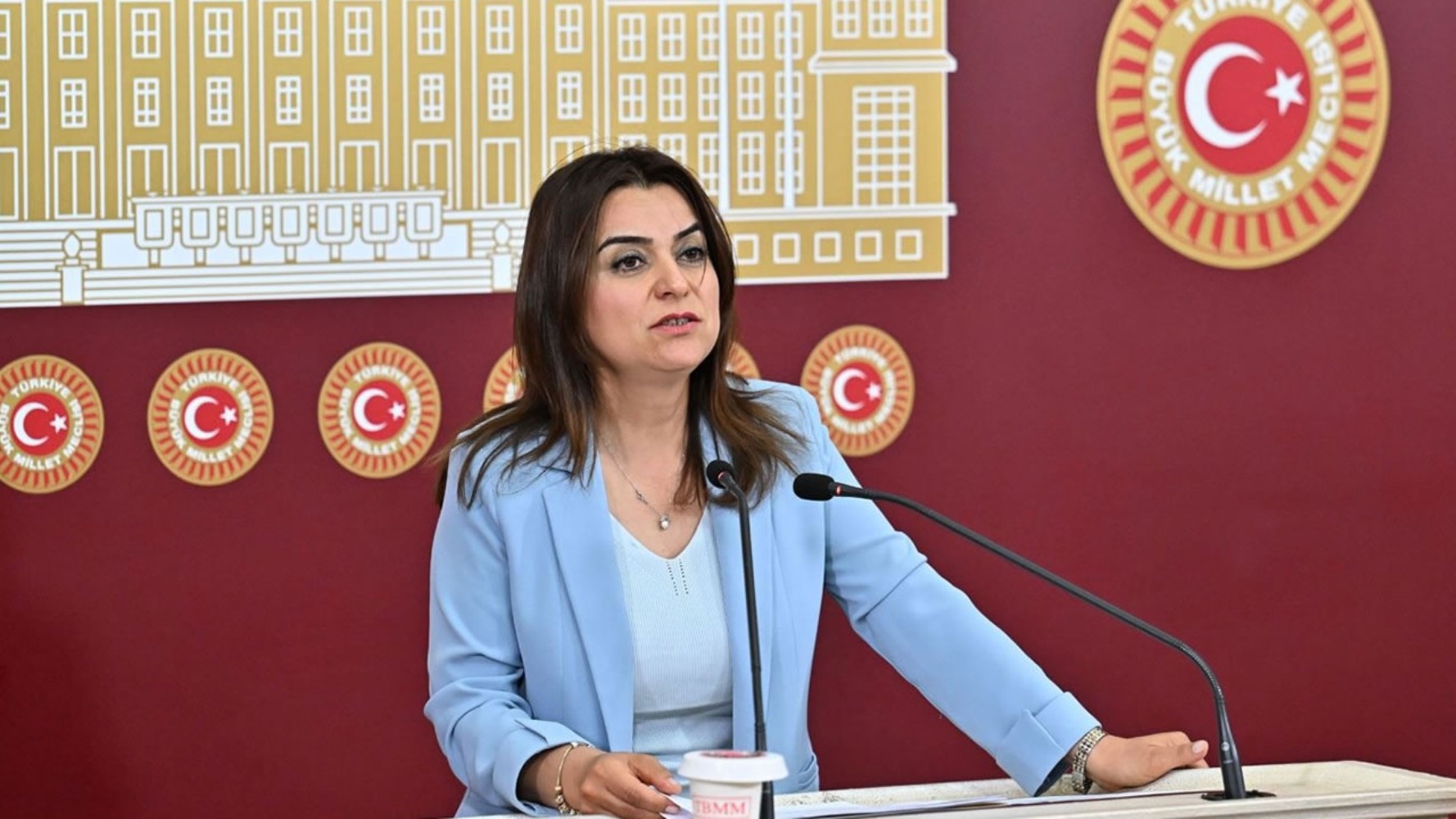
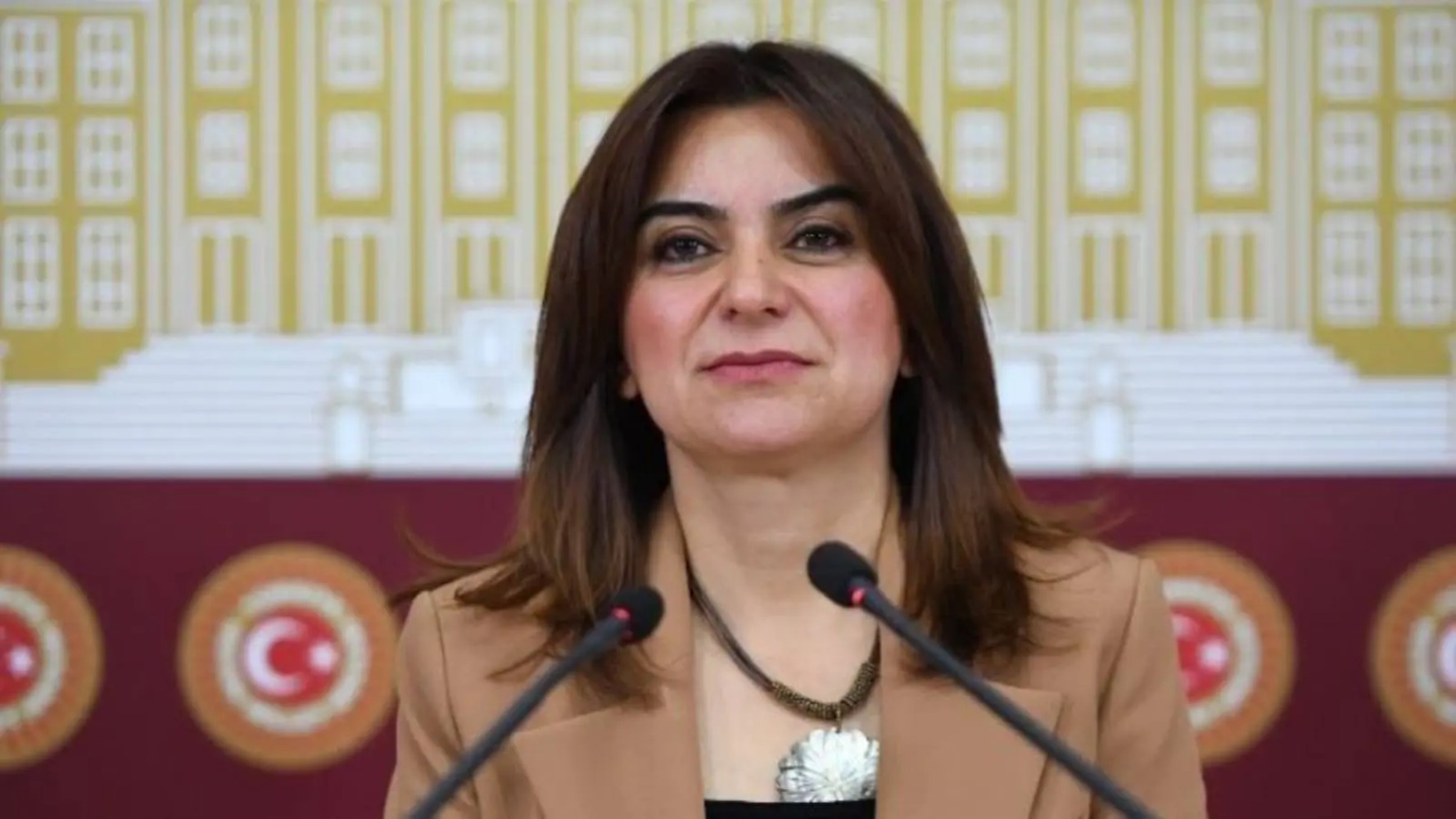
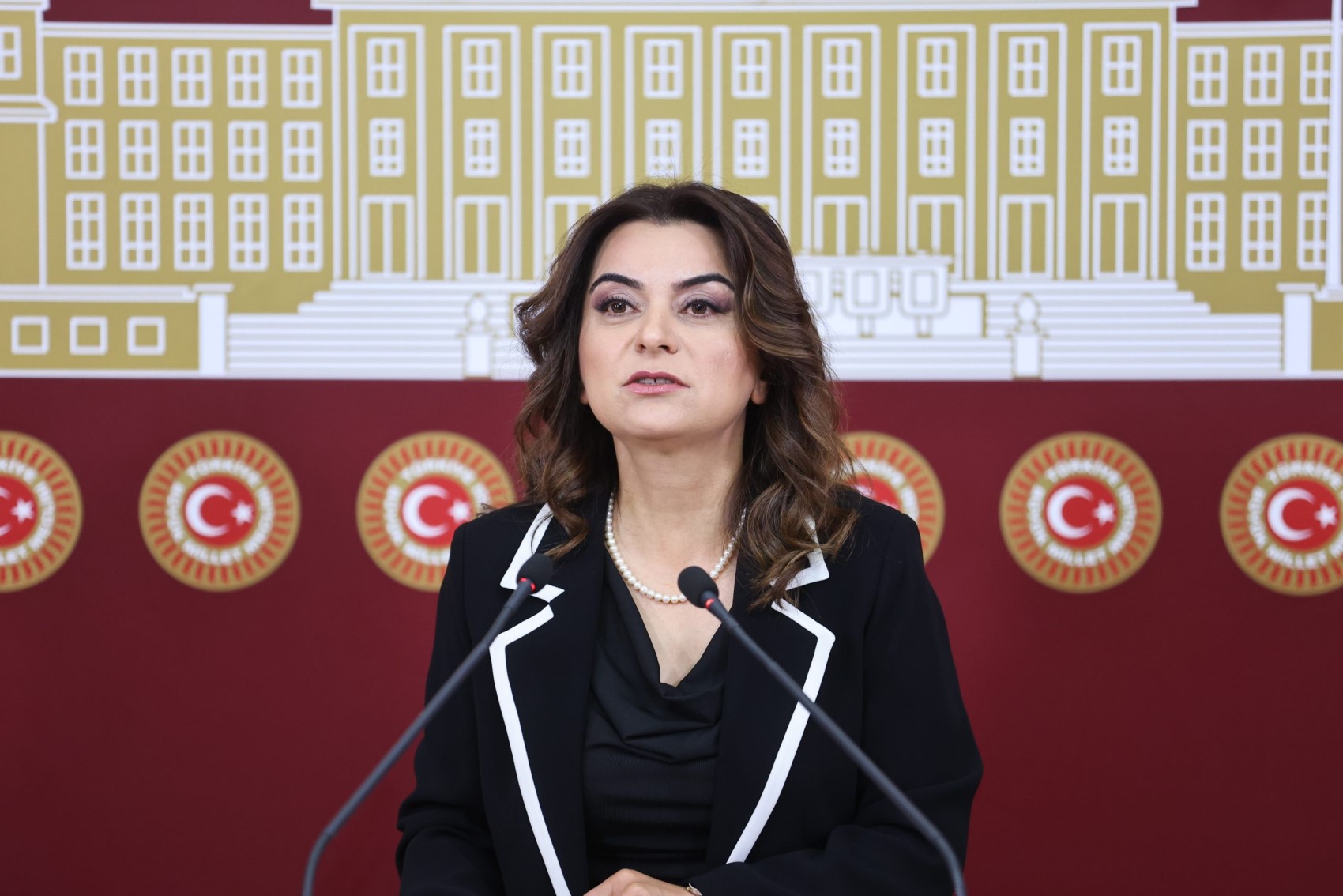
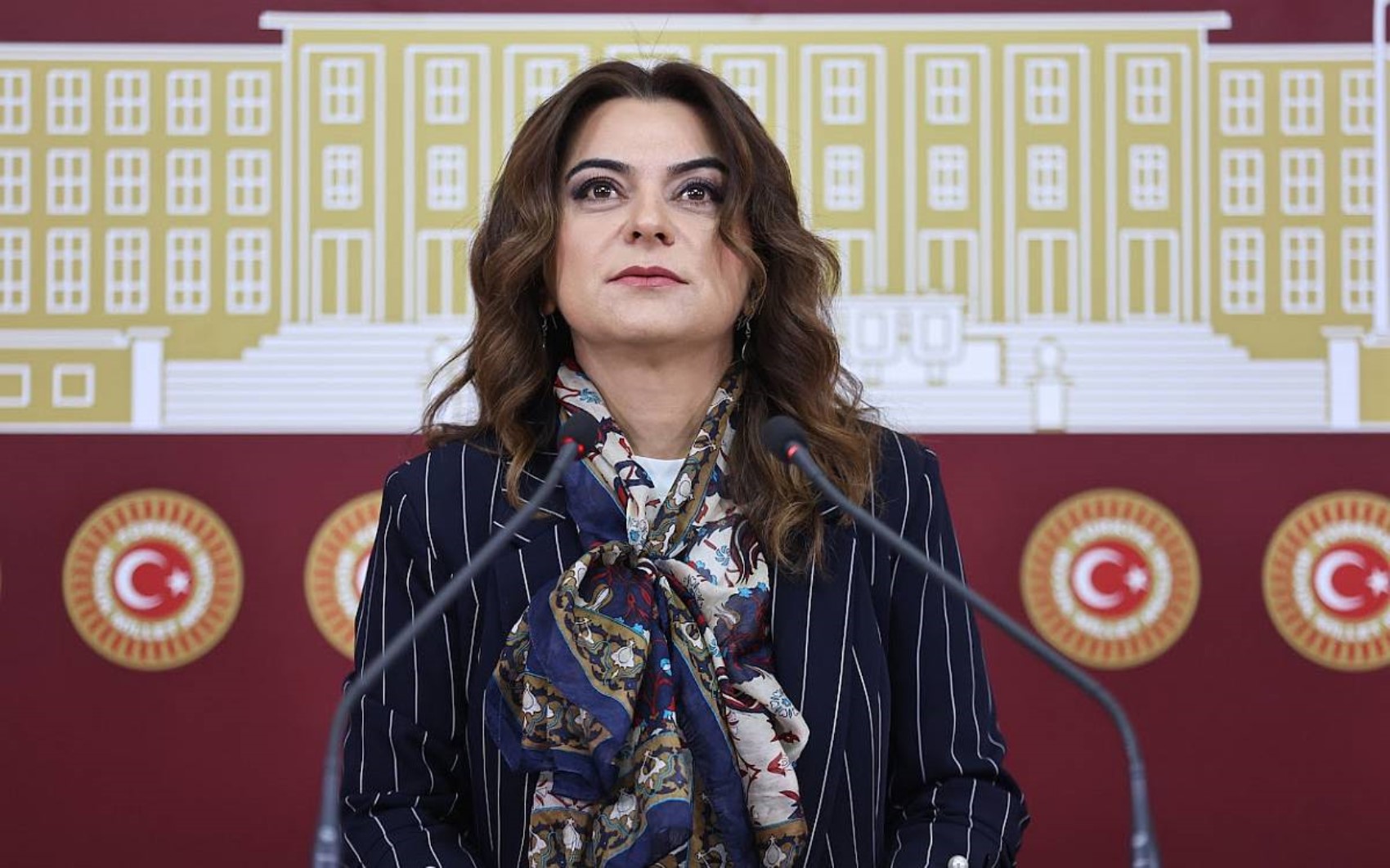
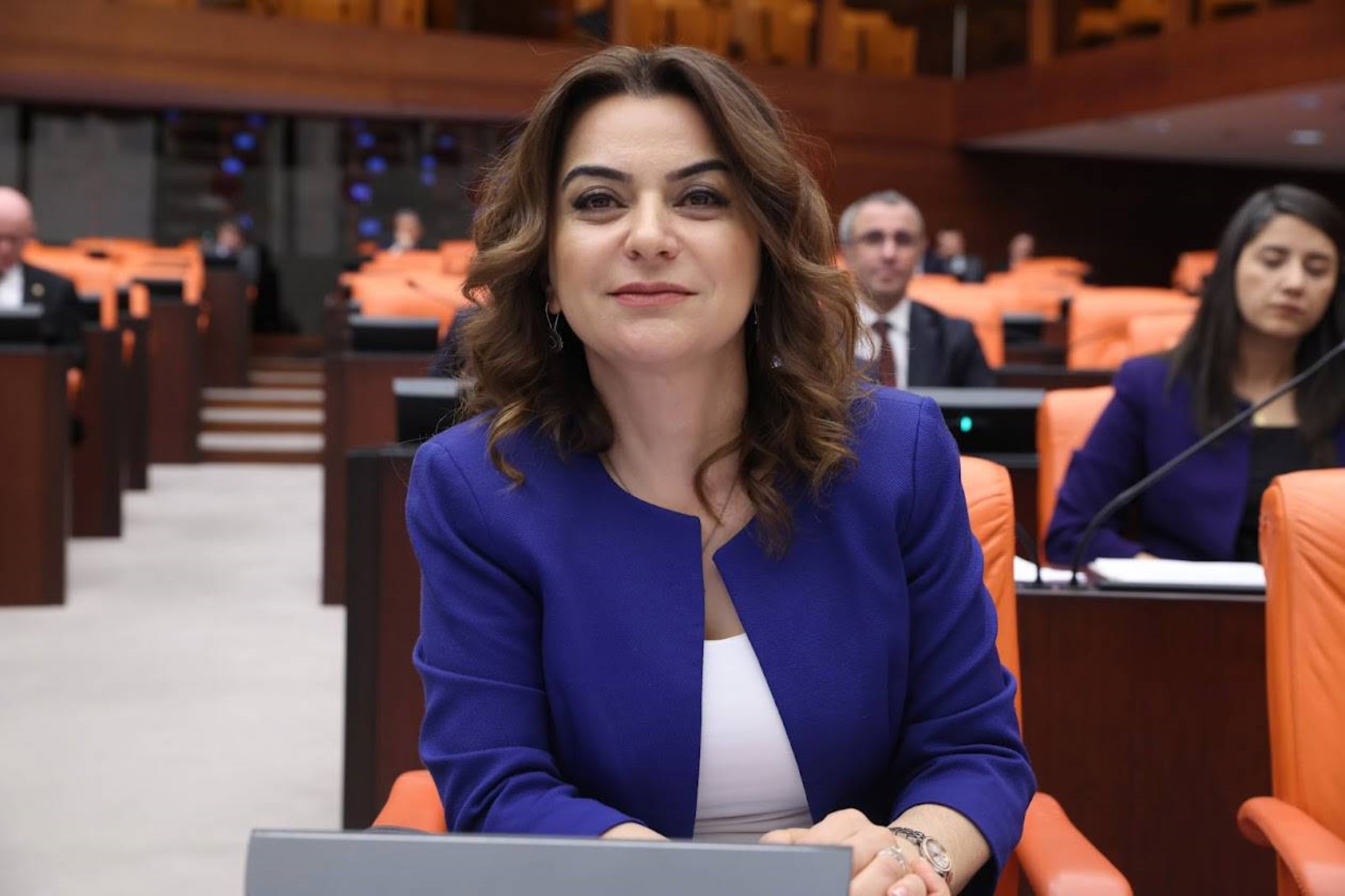
DEM Party Group Deputy Chair Gülistan Kılıç Koçyiğit shared the details of the meeting they held with the leader of the PKK terrorist organization, Abdullah Öcalan.
 2 / 17
Koçyiğit made the following statements regarding the meeting:
Öcalan entered the room and greeted and shook hands with each of us one by one.
When speaking to each member, Öcalan addressed them by name, saying, “Mr. Fethi, Mr. Hüseyin.”
Öcalan was very strong; his morale was high. He entered the hall laughing and in a very energetic manner.
"I wish the CHP had come too,” he said.
He drew attention to the danger that if the process is not successful, a coup mechanism could ultimately be activated again.
He stated that the fact that those who laid down their arms and burned them have not returned to Turkey is due to a lack of legislation.
 3 / 17
The interview Koçyiğit gave to Mezopotamya is as follows:
You met with Abdullah Öcalan on Imralı Island as three political representatives on behalf of the commission. Can you describe what happened from the moment you set out for the island?
The commission meeting was held on Friday, and the decision was made that day. Then we were told that preparations would be made. After all, there were necessary permission procedures. The authorized institutions had to carry out these permission procedures because an application had to be made to the Ministry of Justice. The Speaker of the Parliament carried out these procedures, and then on Sunday, we received information that this visit would take place on Monday. We woke up very early on Monday morning. We met in Ankara as three delegation members and then set off for Istanbul.
What time did you set off? How long did the journey take, and what was the atmosphere like there?
We went to the island by air from Istanbul. Of course, there were security personnel from the institution accompanying us, and we were met by the relevant authorities on the island. We quickly moved into the Imralı High-Security Prison located on the island. We did not experience any negativity during the journey, after the journey, or on the island. Our delegation was met in a very normal manner, in accordance with the procedure, and we moved into the prison. Then we went to the meeting room.
 4 / 17
Did you enter the hall where the meeting was held first, or did Abdullah Öcalan?
Yes, we as the delegation went to the meeting room and took our places. At that time, the officials gave us a brief briefing. There was a preparation process of a few minutes. A short while later, Mr. Öcalan entered the room and greeted and shook hands with each of us one by one. Then we all sat down together and the meeting began.
What was the seating arrangement in the hall where the meeting was held?
Mr. Öcalan was opposite us. We, the three delegation members, were on the other side of the table; we sat facing each other.
How did the greeting take place? How did Öcalan host you? Who spoke first? Who asked the first question?
He said “Welcome” to us mutually. He expressed that he follows us and knows us. Then the delegation members explained our purpose for being there, that we were there as members of the commission, and explained our parties and our representations. They stated that today's meeting was ultimately a meeting of the commission. Mr. Öcalan listened to this, and the meeting continued with details.
 5 / 17
Was a video recording taken during the meeting?
No. The meeting was not recorded on video. Only an audio recording was taken for the minutes.
Following the debate that took place before the visit, how did the delegation address Abdullah Öcalan?
When speaking to each member, Öcalan addressed them by name, saying, “Mr. Fethi, Mr. Hüseyin.” As a delegation, we addressed Mr. Öcalan as “you” (formal) while speaking to him.
 6 / 17
What was Abdullah Öcalan’s health condition and morale like? Could you share your observations?
Mr. Öcalan was very strong; his morale was high. He entered the hall laughing and in a very energetic manner. He greeted and shook hands with each member one by one and said, “Welcome.” Then one of the friends from the delegation introduced the delegation one by one. He himself expressed that he knew us and followed us from the public. I specifically asked about his health. He looked very well; he looked healthy and in high spirits. Overall, he was very good.
You were the only woman in the parliamentary commission delegation; did he have any evaluation regarding this? Or did he say anything about the participation of women in the process?
Mr. Öcalan generally talked about the historical journey of the PKK, the time periods when Kurds and Turks historically formed alliances, and how all these alliances benefited the peoples of Turkey, the Kurds, and the Turks, and he mentioned historical breaking points. He also made a broad assessment of the peace quests after the conditions of the PKK's emergence, and especially how there were peace initiatives from the government and state side every time, but how all these peace initiatives were ultimately thwarted. Of course, the delegation members also had questions for him about the process. At the very end, I had the opportunity to convey the special greetings of women to him, and since it was before November 25, I asked if he wanted to say anything specifically on this subject. He made a brief assessment regarding women: He specifically mentioned that there is a culture of killing in the streets. He mentioned that femicides are taking place. And in this sense, he made a very brief assessment that his own view of women's freedom and his approach to women is very different, and that he bases it on women's freedom. And he sent his greetings to everyone.
 7 / 17
A year ago, such a meeting at such a political level would have been unimaginable. However, it happened. When we think about it in the context of solving the problem, what is the importance of the meeting?
We are talking about a process that has left 14 months behind. In this sense, we can say that October 1, 2024, itself was a historic day and that we have been in a process that started since that day. We have left a year behind, and there have been very critical developments within this process. In this sense, after Mr. Bahçeli came to the DEM Party benches and shook hands with us on October 1, Mr. Öcalan had a very important, historic approach and practice that did not leave this hand hanging in the air, that did not leave this hand unrequited. In that sense, it is necessary to underline the importance of both his first message reflected to the public on October 23, that is, his statement that he has the theoretical and practical power to move the Kurdish issue from the ground of conflict and violence to a legal and political ground, and the fact that he has truly fulfilled the requirements of this theoretical and practical power during the process. We must underline that the fact that a delegation on behalf of the commission met with Mr. Öcalan in Imralı on November 24 has an important share in the thresholds that Mr. Öcalan has developed and overcome throughout this entire process.
Let us underline that the call of February 27 itself and the fact that his organization has fulfilled its requirements by standing behind this call has opened this path. Of course, along with this, we had stated that the commission established in Parliament on August 5 was also of historical importance. Because from the very first day, Mr. Öcalan had stated that this process should be discussed in Parliament, that a commission should be established in Parliament, and that various segments of society and the broadest segments of politics should be involved in this process and develop initiative in this process, and this commission was of historical nature in this sense.
Of course, after the establishment of the commission, hearings were held on a very broad ground. But it would have been a great deficiency not to have met with Mr. Öcalan, who is the main actor of this problem and the architect of the process and peace. It would have been an attitude not in accordance with the needs and requirements of the process. Let us underline that the commission's going to Imralı on November 24 and holding a meeting with Mr. Öcalan was of historical nature. In fact, a process was experienced in which another important threshold was crossed and another critical threshold was left behind. Secondly, until today, the state had various contacts with Mr. Öcalan. The DEM Party Imralı delegation has been going to the island, and there have been meetings. Likewise, before the February 27 call, a large delegation, including our co-chairs, had gone to the island and a meeting had taken place with Mr. Öcalan. However, our going to the island on behalf of a commission established in Parliament and meeting with Mr. Öcalan is of very historical importance in terms of Mr. Öcalan's political power. The meeting on November 24 confirmed that the problem should be removed from the axis of being merely a security problem, that it should be removed from being just a matter of laying down arms, and that it is also a political problem and that political solutions must be developed for this political problem. In this sense, let us state that we held a very important, historically significant meeting.
 8 / 17
The expression “critical threshold” was always used for this meeting. When we look at it, what was overcome with the government and the state reaching this point, what was that threshold we call the “critical threshold”?
There is an approach by a segment to limit Mr. Öcalan's representation and power, to see him only as an interlocutor in the matter of the organization laying down arms and dissolution. Whereas we have always said this: Mr. Öcalan is not only the interlocutor of the issue of laying down arms or the issue of the dissolution of the PKK. He is also the interlocutor of the democratic and peaceful solution of the Kurdish issue. If this problem is to be solved in a political sense, if it is to be solved on a legal ground, if we have a search for a solution on a legal ground here, then we need to hear from him personally how Mr. Öcalan truly wants to make a transformation and his suggestions and views regarding the democratic solution of the Kurdish issue. We saw that he is actually a political power, a political interlocutor, outside of the understanding that limits Mr. Öcalan to only being ‘the person who will liquidate armed forces.’ It is necessary to underline the importance of this. That is, we see that there is a mind that tries to limit Mr. Öcalan's role and power, that wants to limit him to being only a person whom the state's security units meet with. We see that there is a mind that does not want to see him as a political interlocutor, that wants to get in the way of his political interlocutorship. Whereas the commission said, “I was established for the issue of the democratic solution of the Kurdish issue, I have made progress, and today I want to talk about the problem with the real interlocutors of the problem, talk about the solution, and talk about the new stages that may come.” This decision was taken by a qualified majority, and we expressed this while we were holding this meeting. It is necessary to state that this is very, very important.
 9 / 17
Did Abdullah Öcalan have any evaluation regarding the CHP not being involved in the voting in the commission and not sending a representative?
Mr. Öcalan's thoughts regarding the CHP are actually known. He had made evaluations regarding the CHP through our Imralı delegation. Some of these evaluations were reflected in the public. It is known to the public that he attaches importance to the CHP as the founding party of the Republic and that he has evaluations that the CHP must definitely be within this process. In this meeting, he specifically made an evaluation regarding the CHP not coming and said, “I wish the CHP had come too.”
What kind of topics did Abdullah Öcalan touch upon? What did he tell you?
In this meeting, Mr. Öcalan explained the historical background of Kurdish and Turkish relations. In this sense, first, an evaluation was made regarding the alliance at the 1071 Malazgirt, the relationship of Sultan Alparslan with the Kurdish principalities. He also had an evaluation regarding the Sultan Sanjar-Seljuk period in the 1500s. He stated that the rebellion of the Kurdish principalities during the dissolution period of the Ottoman Empire was effective in the dissolution, and that Abdülhamid realized this and established the Hamidiye regiments to prevent it. Then, he had an evaluation regarding the War of Independence and the participation of Kurds in the War of Independence. He presented a holistic historical background. He stated that this was realized as a result of the joint struggle of Kurdish and Turkish forces during the period when Saladin Ayyubi conquered Jerusalem, and then he came to the present day.
Starting from the perspective of Republican history, he made a brief evaluation regarding the Sheikh Said Rebellion and focused on the reason why this rebellion happened in 1925, not in 1921. Because ultimately, Kurds also participated in the War of Independence with an understanding of the Ummah, and this war was fought together by Kurds and Turks, and the reason was the understanding of the Ummah. But he stated that moving away from this understanding of the Ummah and the nation-state understanding beginning to dominate led to a rebellion. Later, he explained how he started the process of founding the PKK, his journey that started with six people in Çubuk, and ultimately the historical development of the PKK and the process up to today.
 10 / 17
What did he place his most fundamental emphasis on?
We can say that his most fundamental emphasis here relied on two things. In this sense, he emphasized how historical Kurdish-Turkish relations are a symbiotic relationship, how they feed and develop each other, how they gain when they are in alliance together, and how they lose together when they move away from this.
He placed a lot of emphasis on peace efforts. He explained that he started to overcome the idea of real socialism since '95 and his search for peace. He expressed how every peace process or every peace effort was thwarted in some way, both at the state level and on his own side. The Özal period, Erdal İnönü, the Demirel government period searches, the Erbakan period... And he expressed what kind of practices were displayed after each of them, what kind of interventions there were, and how all these peace efforts were thwarted every time. And here, he exemplified through the death of Özal that there are international powers that do not want the Kurdish-Turkish alliance to be realized, that do not want peace to be realized, and how big things they can do to sabotage the process. He stated that he did not evaluate the death of Mr. Turgut Özal as a coincidence and that one should look at this with suspicion.
 11 / 17
Well, how is his approach to this process? In what aspects does he see this process as different from other processes? Did he have an evaluation regarding this?
Of course, he also evaluated the one-year process. He expressed many things, from the speech Mr. President made in Ahlat to Mr. Bahçeli coming to the DEM Party benches and shaking hands, to the group speech on October 22, and said that all of these are very valuable and that an will has been formed in this sense. He stated that he also wanted to create a response to this, to create a response to that handshake or that peace effort. In this sense, he stated that he also formulated the February 27 call for the dissolution of the organization and laying down arms within this framework. He said that the most important aspect of the February 27 call is that it is a consensus, a consensus reached at the state level as well, and underlined that every sentence and every line of it is of programmatic nature. This was one of the most important parts. He said that the PKK has complied with all calls during this process, that the ceasefire has been put into effect quickly, and that there has been no news of any martyrs since that day. He stated that he attaches great importance to this and finds it very meaningful, and stated that the issue is not just a matter of laying down arms, but that the fundamental problem is a problem of construction. In this sense, we can say that he has a perspective that centers on democratic transformation and construction itself.
What kind of construction is Abdullah Öcalan talking about, how does he define construction, did he convey it to you? Will the state and the Kurdish people do it together? Will the Kurdish people do it on their own?
There were too many topics, so he could not open this up too much. But I think the following emphasis is very important: The issue is not just a matter of laying down arms. The issue is actually a bit of a matter of construction. It is very important that he emphasizes democratic construction here. It is necessary to understand that he points to a process that also takes the democratic transformation of the state as a basis, rather than a unilateral process. But of course, there was no opportunity to explain this at length. But we know this very well from his previous evaluations. That is, the democratic transformation of the state, the society becoming a power, the provision of the society's self-organization, and the emergence of a ground where we will fight together for a true Democratic Republic, and for this, a legal ground needs to be formed. That is, he referred to a legal recognition, a need for a regulation in a legal sense. But most importantly, he emphasized that there is a need for a political consensus. While stating that there is a consensus with the state, he stated that the fundamental search today is a political consensus and that when this political consensus is realized, many things can actually be overcome.
 12 / 17
Both Devlet Bahçeli and Feti Yıldız have been making statements and posts regarding the “Right to Hope” since the beginning of the process. Did the “right to hope” come up in this meeting?
He clearly said that he attaches importance to Mr. Bahçeli’s evaluation regarding the right to hope. His evaluation on this subject remained within this scope.
Another issue that is wondered about is Democratic Integration. Did he have evaluations on this subject? In what way will the Kurds be included in the state? What is his perspective on this?
We can express this more for the Syrian context. The subject of Syria constituted the main axis of the meeting. The delegation members also asked more questions about Syria. Because many segments we listened to in the commission had specifically talked about Syria. The possible effects of the process in Syria on the process here and the developments in Syria itself constituted the main focus of the meeting a little more. In the context of Syria, he said this very clearly and explicitly: 'There was an Assad administration for a very long time, and the characteristic feature of the Assad administration was ultimately a dictatorship, and they lived like this for years. Today there is a Shara administration. If there is no real democratization, this will ultimately lead to a dictatorship,' he stated. In that sense, we must underline that one of the most fundamental things he stated as a must is local democracy.
He touched upon democracy, the organization of society, communes, councils, creating its own civil society, and as he said for the Bayırbucak Turkmens, Kurds, and Circassian communities in the Syrian context, everyone building their own community, commune, council, and civil society, and in this way participating in the system with their own self-existence.
For this, he said that there is a need for democracy, and he stated that if there is no democracy, there will be a dictatorship in Syria again, and that this will not bring peace, prosperity, or happiness to the Syrian peoples in any way. I can say that he expressed it not sentence by sentence, but in a rough form. In that sense, it is necessary to emphasize once again that the question of ‘What will they integrate into?’ in terms of democratic integration is a fundamental problem for all of us. That is, what will the Kurds or other peoples integrate into? What kind of system will they integrate into? One can only integrate into what is truly democratic. One can be a part of what is democratic. If the state democratizes, if it provides a democratic transformation, peoples can also provide their own self-organizations within that democratic system and exist, he added. This is also valid for Turkey, but as I said, the evaluation developed more in the context of Syria upon the questions asked. There, too, democracy is a must. He stated that an approach that protects and sees the right of Kurds to exist must be taken as a basis, both for Turkey, for Syria, and for all countries where Kurds live.
 13 / 17
Another issue that comes to the agenda the most and is wondered about is Syria. Developments between the Autonomous Administration of North and East Syria and Damascus. Turkey is also imposing that the SDF lay down its arms. The AKP Spokesperson also touched upon this issue in his latest statement. Did Abdullah Öcalan say anything about this issue?
In Turkey, the issue is discussed over a duality; will the YPG lay down its arms or will it not? The main axis of the entire discussion is locked here in the Syrian context, and the answer is tried to be expressed as ‘Yes’ or ‘No.’ It is handled with an approach like ‘Will it lay down its arms, say yes or no to this.’ Whereas Mr. Öcalan handled this issue a bit long and in detail. He expressed democratization and what Shara will turn into if there is no democratization. Regarding the title of laying down arms, he said this; he said that he attaches importance to the March 10 consensus and that it should be implemented. Perhaps it should be said that this is the most fundamental emphasis that should be underlined in the Syrian context. He stated that the March 10 consensus, that is, the consensus made between the SDF administration and the interim government there, that is, the consensus signed between Mazlum Abdi and Shara, should be implemented and that he attaches importance to this. In this sense, he expressed that armed forces should be integrated into the army, but at the same time, there should be local security forces. He expressed one as the Ministry of Interior and the other as the Ministry of National Defense. ‘You can think of it as dual,’ he said. One will be integrated into the Ministry of National Defense as an army. Local security forces will be local security under the Ministry of Interior. ‘It can be thought of like that,’ it was said. He underlined that this issue should be discussed thoroughly.
I must state that his attitude regarding the Syria issue is very constructive. Mr. Öcalan believes that the problems there can be overcome through dialogue. And he also stated very clearly and explicitly that he himself would be very effective on this subject. Already, when this question was asked to him, he said, ‘Yes, those there will also listen to me’... But of course, he underlined that ‘conditions must be formed’ for this. Ultimately, he specifically stated that if conditions are formed, if grounds for dialogue develop, if they can meet, he can overcome many problems and contribute to the solution of many problems.
 14 / 17
What did Hüseyin Yayman and Fethi Yıldız specifically ask? What were the questions that caught your attention?
The other two delegation members asked questions that are discussed in the public, that the public is very curious about, and that come to the agenda the most in Turkey when the Kurdish issue is mentioned or when this process is discussed, as a priority. As I said, Syria constitutes the main axis of this. Integration in Syria or the issue of implementing the March 10 consensus. Of course, some special topics were also asked and talked about. For example, many questions were asked, from the question ‘what will happen to oil revenues’ to questions like ‘will the YPG lay down its arms.’
 15 / 17
Do you think the delegation members were convinced after the conversation they had with Abdullah Öcalan?
They were convinced. I think they were satisfied. They saw for themselves Mr. Öcalan’s determination regarding this process, that he stands behind the February 27 call, that he has a perspective for the democratic solution of the Kurdish issue not only for Turkey but for the region, and that as a Kurdish citizen of Turkey, he is ready to spend all the effort he can for the democratic solution of the Kurdish issue and that he is spending it. I can state that they returned very convinced on this subject. I observed this personally. As the National Solidarity, Brotherhood and Democracy Commission delegation that went to the island as a result of this meeting, we had the chance to personally observe Mr. Öcalan’s will to carry out this process and his effort and determination regarding fulfilling the requirements of the February 27 call, and I can say that we returned convinced as commission members.
The process is currently at a different stage. Until today, the state was meeting, but now politicians have also started to meet. What kind of evaluations did he make regarding this stage currently found? Did he have an evaluation regarding its importance?
The most general evaluation he made on this subject was that this meeting was historic, and in this sense, stating that he has a search for consensus for a political solution and that he sees us there as a political delegation, he said to our delegation: ‘You are here as politicians. We were always meeting with the state until now. This time, for the first time, we are meeting with a political delegation. This is also a search for consensus regarding a political solution and the problem.’
Of course, Mr. Öcalan took the Kurdish issue back to the very past within this entire historical journey and explained it. He explained its historical roots. He explained the historical alliance of Kurds and Turks. But at the same time, he also made the following determination: ‘For the first time, we moved the Kurdish issue from the gallows to the table,’ he said. I think it is necessary to state that this was one of the most fundamental emphases in this meeting. All Kurdish rebellions until today have always ended at the gallows. They have always been suppressed in some way, and because a deep-rooted solution could not be found, they have repeated. This has also had very painful results. But for the first time, for the emergence of the PKK, which is expressed as the 29th Rebellion, he had an expression: ‘We moved a Kurdish rebellion from the gallows to the table and we will conclude this with peace.’ I think this is very important.
 16 / 17
One of the issues discussed the most is legal regulations. What is his evaluation regarding legal regulations?
Mr. Öcalan stated that he attaches great importance to the weapon-burning ceremony on July 11 and the withdrawal of PKK forces from Turkey on October 26. He also underlined that the ceasefire that has been continuing since March 1 and the fact that there has been no loss of life is pleasing and that this is very important. He stated that the fact that those who laid down their arms and burned them have not returned to Turkey is due to a lack of legislation, and again, referring to Bahçeli there, he said, ‘Mr. Bahçeli had also said this. I wish they could have come.’ In that sense, he stated that there is a need for a legal regulation to create the condition for them to come.
 17 / 17
Will the minutes be shared with the public?
As three commission members, we signed the minutes created from the audio recording and delivered them to the Speaker of Parliament. I think that the signed version of these minutes, that is, as it is, must definitely be transferred to the commission. In our opinion, these minutes should also be open to the press. The entire public must definitely know the minutes so that there is no room for any speculation. We think it is very important for the entire public to know Mr. Öcalan’s transfers to the commission regarding the democratic solution of the Kurdish issue, and for the peoples of Turkey to know. If those minutes are opened, everyone will see Mr. Öcalan’s solution perspective much more clearly regarding how he attaches importance to the peoples of Turkey and the region, and his view on the democratic solution of the Kurdish issue, and in this sense, all speculative discussions will be left behind. Another duty of the commission is the report it will prepare as a result of its work. By November 28, all parties were to quickly give the general framework and general headings that will be included in the report to the Speaker of Parliament. In that sense, we are also making our preparations. On Thursday, there will be a negotiation of the general headings that should be included in the report.
Later, it will be discussed how the general report will be written and how it will be penned, and then the report will be completed quickly and sent to the General Assembly, and the legal making process will have started.
News Source : 12punto