


From brotherhood to a distant partnership...


The debate that began with Ilham Aliyev's statement, 'No one should show us the way or interfere with our lifestyle,' has reached a point within a few days that calls into question the boundaries of the relationship between Turkey and Azerbaijan.
This was followed by tensions in Azerbaijan over the ban on headscarves in schools, harsh accusations directed at Turkey, and Hakan Fidan's contacts in Baku.
Let us put on our reading glasses and rewind the tape a little.
What does Baku want to do?
To understand this, it is enough to look at the calendar. On September 21, dress codes in state schools in Azerbaijan were changed. The regulation prohibited additional clothing that was incompatible with school uniforms and contradicted the principle of secular education.
Although the text did not explicitly mention headscarves, the implementation sparked a debate over the 'right to education' for female students wearing headscarves. A day later, at the United Nations General Assembly, Erdoğan described headscarf bans implemented in schools in some countries as an attack on women's fundamental rights; he did not name any specific country.
While reactions to the practice in Azerbaijan were rising, particularly in political Islamist circles in Turkey, Aliyev said on October 2 at the congress of the New Azerbaijan Party, which he leads, that no one could interfere in his country's internal affairs and that Azerbaijan did not need outside guardianship.
Aliyev did not mention Turkey by name either. However, the timing explained why his words were perceived as a message in Ankara. Baku rightly viewed the headscarf debate as an interference in its own sovereign sphere.
To put it mildly, it wanted the criticisms coming from Ankara to remain merely as social reactions and not turn into political pressure.
Indeed, on October 13, the New Azerbaijan Party issued a harsh statement accusing the AKP of interfering in Azerbaijan's internal affairs.
Thus, the debate moved from school uniforms to an open polemic between the ruling parties of the two countries.
However, the issue was not just the headscarf.
We can read Aliyev's emphasis on 'we do not need guardianship' as a broader message regarding the position Azerbaijan wants to see itself in its relationship with Turkey.
Let us flesh out the issue a bit more.
Turkey's political and military support during the Karabakh war was important for Baku. However, after the victory, a stronger Azerbaijan began to emphasize more loudly that it makes its own decisions in its foreign policy.
Its continued military and technological cooperation with Israel, and its conduct of relations with Russia and the West in line with its own calculations, are also parts of this multi-faceted policy.
The detail that should not be overlooked here is this: Azerbaijan wanting to act independently of Turkey is one thing, and aiming to deliberately spoil its relations with Turkey is another.
There are signs supporting the former; however, more evidence is needed to accept the latter as true.
Closeness with Israel does not, by itself, prove that Baku is building a strategy against Ankara.
However, it suggests that Azerbaijan no longer views Turkey's support as an automatic political commitment.
Hakan Fidan's arrival in Baku on October 14 was important for this reason. The visit took place within the framework of participation in the summit of the Conference on Interaction and Confidence Building Measures in Asia; however, it remained in the shadow of the tension between the two countries.
While Fidan stated that relations were strong, he also acknowledged that there were differences of opinion. Ankara's preference was to resolve problems through diplomatic channels rather than escalating mutual accusations in public.
It appears that Baku intends to make a serious paradigm shift in its relationship with Ankara.
In other words, it is trying to redefine its relations with Turkey. It wants to replace the form of relationship that has been described for years with the phrase 'two states, one nation,' but where Ankara was more decisive in terms of political weight, with a more equal and distant partnership.
This means moving out of the de facto big brother-little brother, protector-protected, guardian-guarded relationship with Turkey.
In fact, Aliyev is looking for a foundation for a relationship as it should be.
Returning to the beginning, his statement was meaningful in this respect.
He did not mention Turkey in his words. However, the language he used found a response in Ankara and the Turkish public. Especially when the emphasis on not interfering with the lifestyle and no one showing the way to Azerbaijan was combined with the debate between the two countries over the headscarf, the political meaning of his sentences grew even larger.
For this reason, the headscarf issue should not be seen merely as a clothing debate. The Azerbaijani administration's understanding of secularism and dress codes in schools is its own internal matter.
Baku has shown that it will not accept Ankara imposing political or ideological standards on it.
Behind this stance is the self-confidence Azerbaijan has gained in recent years. The recapture of Karabakh, energy revenues, and a strengthened military capacity have allowed Baku to act more assertively in foreign policy.
The strategic relationship it has built with weapons and technology received from Israel is also one of the important parts of this picture.
Can we conclude from this that Israel is managing the Turkey-Azerbaijan tension?
A more accurate reading is that Baku wants to expand its room for maneuver by redefining and subsequently utilizing its relations with different power centers.
And this is its most natural right.
So, how aware is Ankara of this?
We do not know!
The most remarkable development was the intensification of accusations against Turkey following Hakan Fidan's contacts in Baku. Allegations that Fidan held secret meetings, gave instructions, and tried to interfere in Azerbaijan's internal affairs were explicitly denied by the Turkish Embassy in Baku. The embassy described these publications as disinformation attempts aimed at damaging the relationship between the two countries.
It may not be a coincidence that Ankara is not escalating the tension despite this.
Turkey knows that a potential rift will affect not only bilateral relations but also the balances in the Caucasus, energy and transport lines, and the cooperation carried out with the Turkic world.
For that reason, it is currently calculating to tread carefully.
Let's come to the ten-point expert question: if Baku's concern is to establish a more distant relationship with Ankara, why doesn't it say so openly? Then, Turkey could also evaluate whether or not to accept this new approach in line with its own interests.
In short, Turkey may be choosing not to respond to every move by Azerbaijan. However, this does not mean that the interests of the two countries overlap in every heading.
Let us conclude our article by saying that the real test here is whether the rhetoric of brotherhood can carry the diverging interests.
Would you like to get notifications about new developments and save news?
- NotificationsNew developments and breaking news
- SaveNews is stored in the app
Most Read
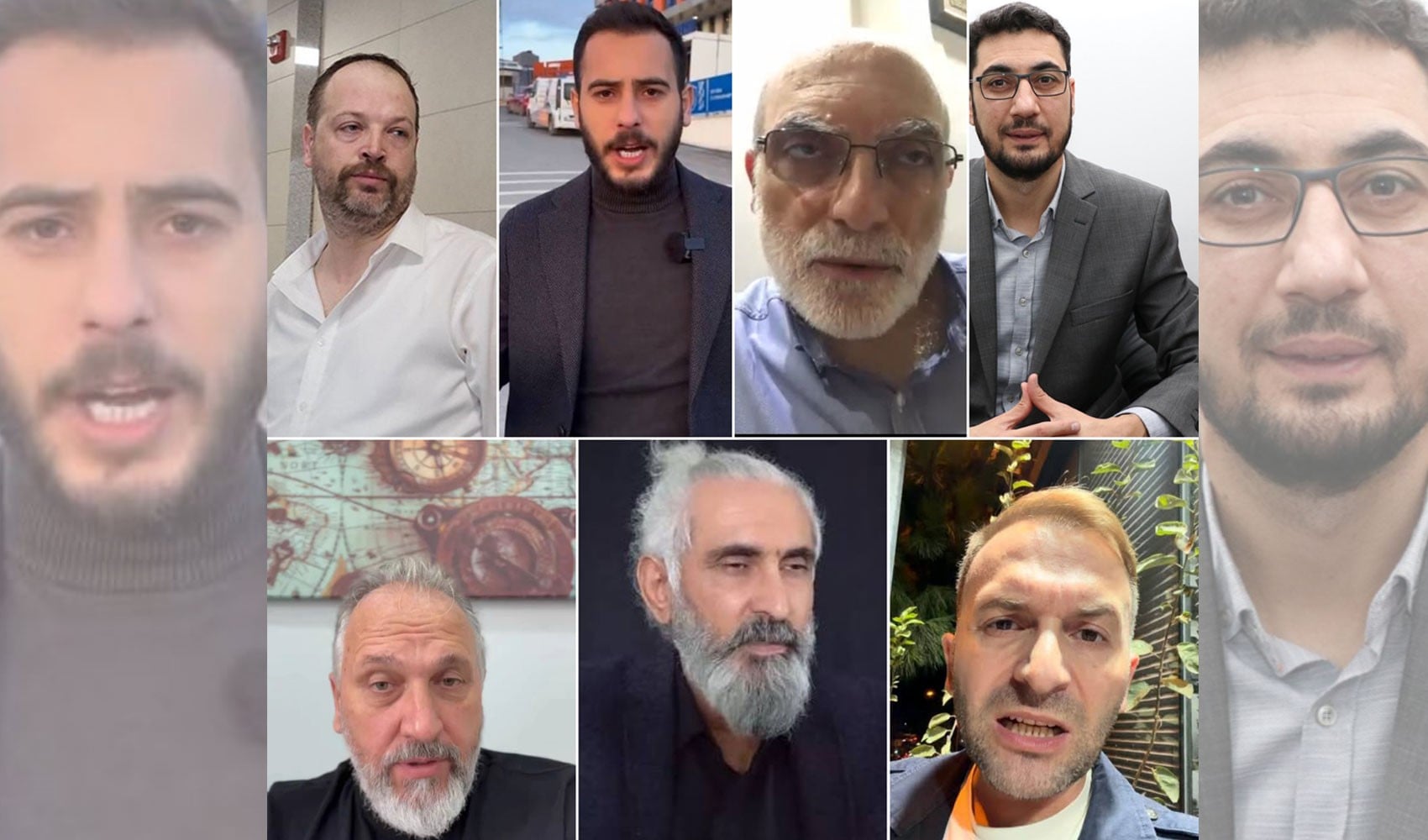
Azerbaijan issues arrest warrants in absentia for 7 people living in Turkey
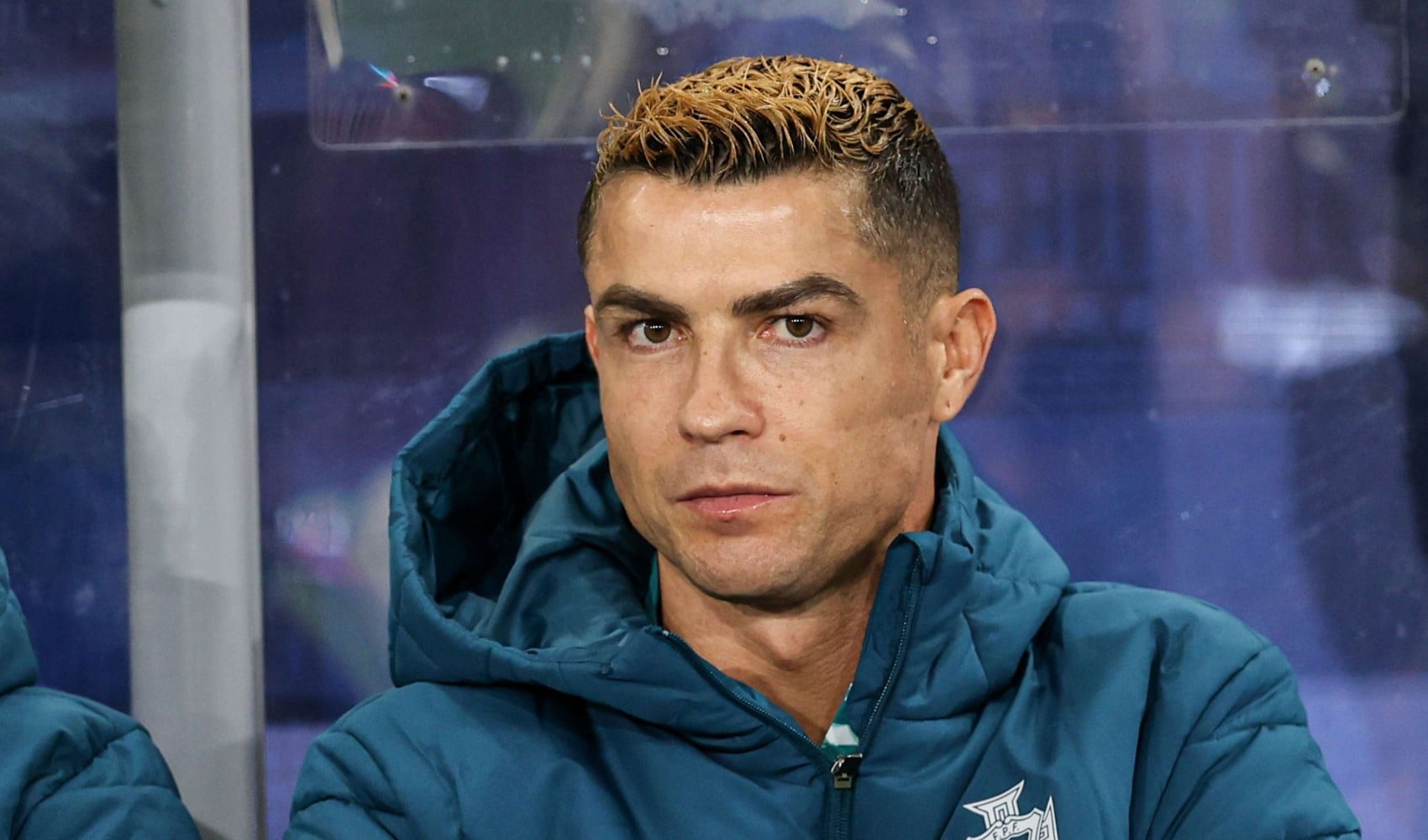
The penalty for Ronaldo, who left the national team camp, has been announced

The proposal submitted to Parliament for the lowest pension has been revealed

Fatoş Seğmen reveals the cause of her daughter's death
AKP's vote share drops in one month following fund scandal
TMSF trustee for Tera Yatırım
From brotherhood to a distant partnership...
Good news from Izmir, may Istanbul be next

Who authorized the concert held in a parking garage?

YENİ Party mayor resigns!