Ersin Eroğlu/12punto EXCLUSIVE
“Even the imagination of the lines, pages, and leaves of a book you could take into your brain had both an intoxicating and a narcotic effect.”
As I read journalist Cengiz Erdinç's book “Overdose Türkiye”, which tells the truth about drugs, this quote from Stefan Zweig wanders through my mind.
As I read every line of the book and turn every page, a painful truth hits me beyond excitement. As the pages progress, I see that the effect of drugs is not just in the book.
Overdose Türkiye explains with documents how Anatolia has entered a drug spiral. The truth emerging from the sewer confronts us with the reality of drugs in the country.
How so?
Cengiz Erdinç, who accessed the Wastewater Analysis Reports in Turkey, has revealed with documents that drugs are gushing from the sewers and that Anatolia is in a drug spiral.
I learn from Overdose Türkiye:
In 2011, the European Monitoring Centre for Drugs and Drug Addiction (EMCDDA) initiated measurements in many cities simultaneously, four times a year, for one week each, to complement other data on the drug problem, and these data were shared with the public online. The results of the pilot wastewater analysis, conducted for the first time in 2016 in the Beyoğlu and Çatalca districts of Istanbul, were announced to the public at a press conference on January 3, 2017. Apart from ordinary observations such as increased weekend use, results requiring explanation, such as “a decrease in cannabis use in Beyoğlu on weekends,” were also announced. The pilot application, which continued in 14 districts of Istanbul and two districts of Adana, was expanded in 2019 to 49 wastewater treatment plants in 18 provinces in cooperation with the Turkish Green Crescent (Yeşilay), the Ministry of Interior, and Istanbul and Çukurova Universities. The study, which also examined heroin residues in addition to cannabis, cocaine, methamphetamine, and MDMA residues, expanded to 62 provinces in 2020, but could only be carried out for three periods due to Covid-19. The research, which was completed in four periods in 2021, revealed remarkable results. The scope of the research had grown, but the fact that only Istanbul and two points from Adana were included on the EMCDDA website led to speculation. Objections were also raised to some of the results of the research; for example, the fact that cannabis remains in the body for a long time, and that heroin residue both continues to degrade in wastewater and resembles residues from medical use, affected the measurements. However, the use of prescription morphine and similar opium derivatives was calculated in most regions and subtracted from the obtained figure. Due to these difficulties, heroin has not been reflected in European wastewater reports in recent years. A similar calculation necessity was experienced with methamphetamine. Since it is an amphetamine-derivative narcotic, it is possible for its metabolite to be confused with other drugs of the same derivative. However, it is thought that cocaine and ecstasy residues provide more consistent results. The results of the sewer analysis were announced to the public with limited explanations. On October 7, 2020, Minister of Interior Süleyman Soylu stated that heroin was used most in Denizli, based on measurement results limited to 18 provinces. The research conducted in 62 provinces shows that drugs have left the metropolitan cities behind and spread to medium-sized Anatolian cities and towns.
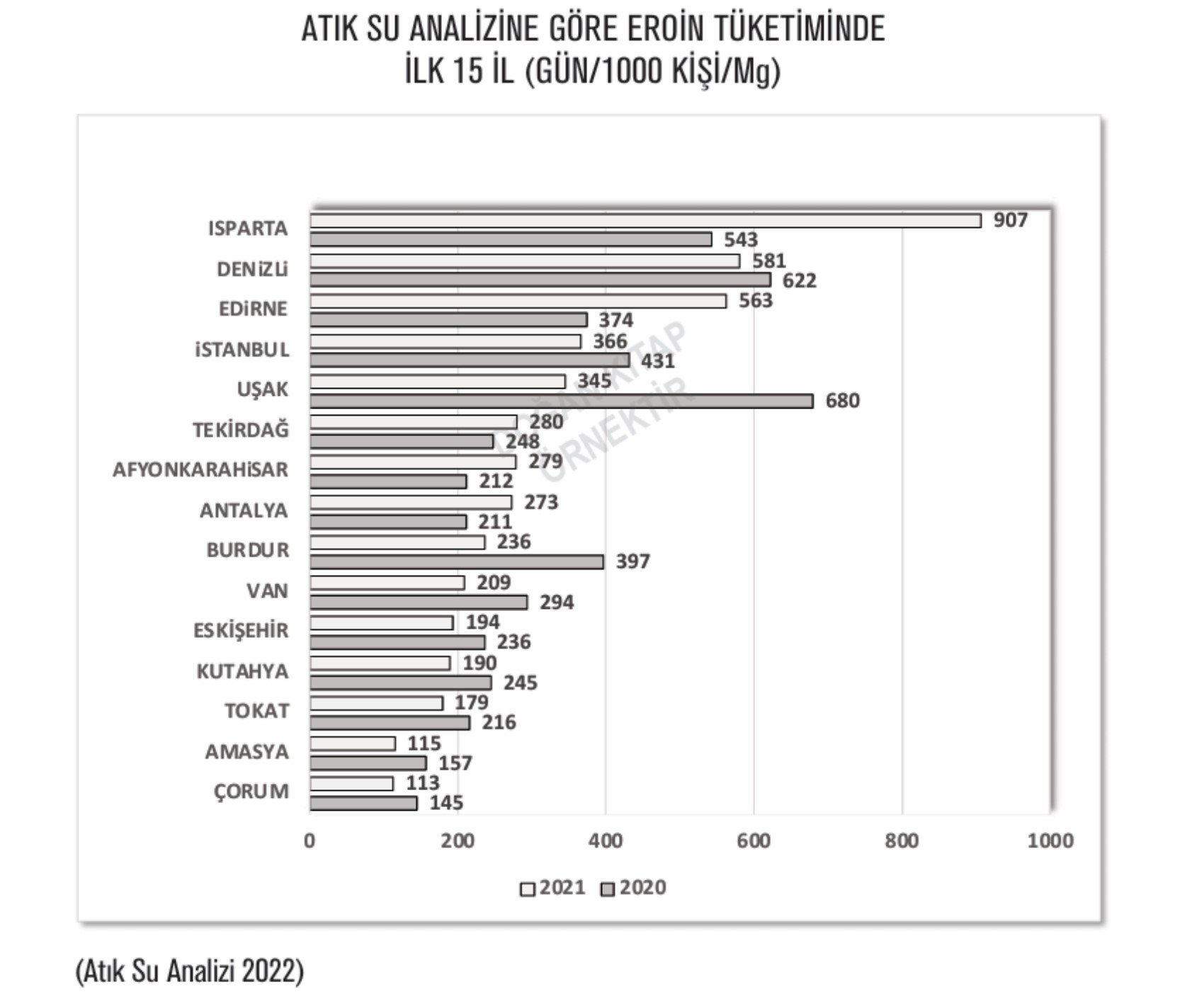
According to the sewer analysis, the top three provinces in heroin use in 2021 were Isparta, Denizli, and Edirne. Isparta also ranked among the top five provinces in drug use crimes in the adult population in judicial statistics. It is not difficult to guess that apart from Edirne, where there is transit density, Isparta and Denizli are also in the top ranks in narcotics cases. Looking at the top 10, the fact that five provinces are traditional opium-producing provinces shows that some substances used in medicine or food can turn into metabolites and mix into the sewage.
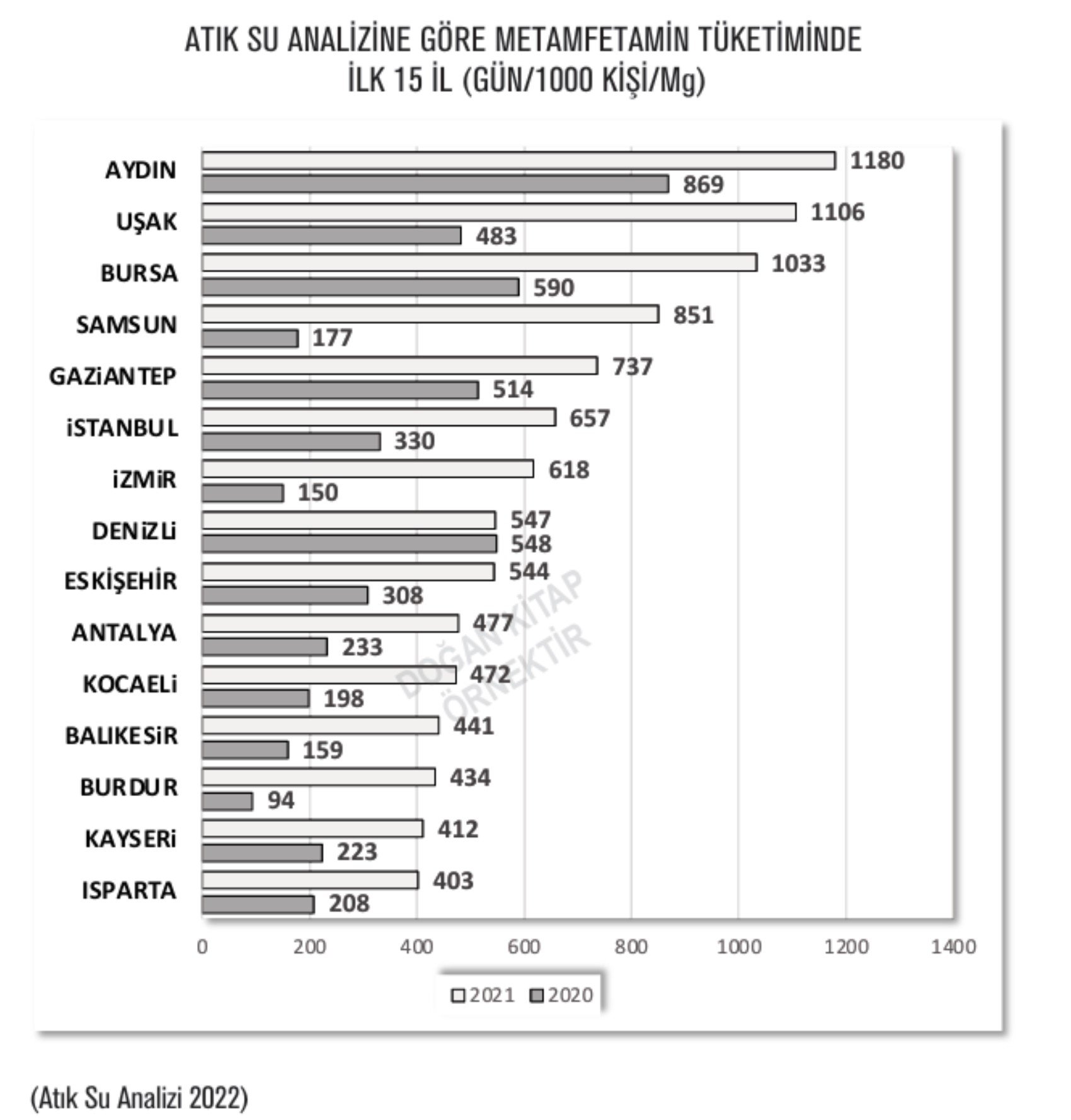
Alarm bells are ringing for methamphetamine, which is gradually turning into a nightmare. Aydın, Uşak, and Bursa, which are in the top three, are approaching Czech cities such as Ostrava, Brno, and Prague, which ranked at the top in methamphetamine use in the EMCDDA in 2021. Aydın was in first place in terms of drug use crimes in the adult population in 2020 with 58 convicts per 100 thousand. Uşak and Denizli from the Aegean are also among the top 10 provinces in wastewater analysis. Gaziantep, which draws attention with methamphetamine smuggling in police records, is also in fifth place in consumption. Since the units are different, comparison may be misleading, but roughly, the consumption of over 1,000 milligrams in the top three provinces is a value that can compete with cities such as Riga, Antwerp, and Dresden, which were over 200 milligrams for 2021 in European cities.
Karaman ranks first and its neighbor Konya ranks third in ecstasy use in sewer data. With a daily consumption of 77 milligrams per thousand people, Karaman shows the potential to be among the top 20 cities in Europe. Even if Konya does not approach European cities, it draws attention as the leader of the previous year. It is remarkable that both cities do not appear in the top ranks in convict statistics. The fact that the most important producer of ecstasy is the Netherlands and that 11 percent of the 500 thousand Turkish workers living in the Netherlands are from Karaman may be a key to explaining this bridge.
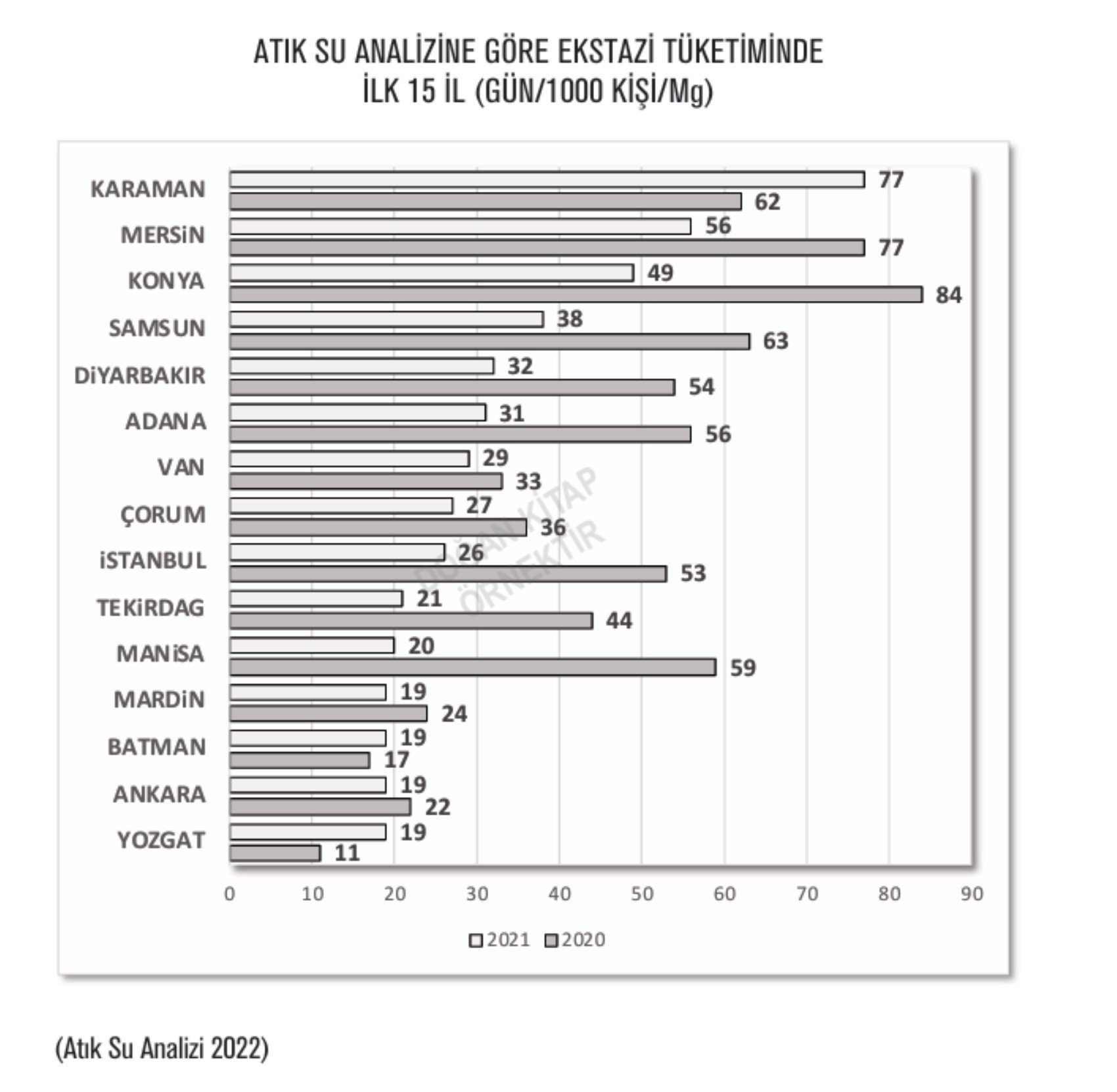
Although Turkey's wastewater analysis data cannot be compared to Europe, it shows that all kinds of drugs have gone beyond the metropolitan cities and spread into the interior of Anatolia. Despite all these findings, wastewater analysis alone is not enough to reveal the drug problem. It needs to be supported and combined with different data. It is useful to remember that provinces such as Elazığ, Kilis, Samsun, and Aksaray, which rank at the top in judicial statistics for use, manufacture, and trade, have data that do not draw attention in wastewater analysis. Another important point shown by judicial statistics is that provinces such as Aydın, Bursa, and Uşak, which stand out in drug use and trade, also have remarkable figures in crimes that are harbingers of organized crime, such as murder, injury, assault, extortion, and looting.
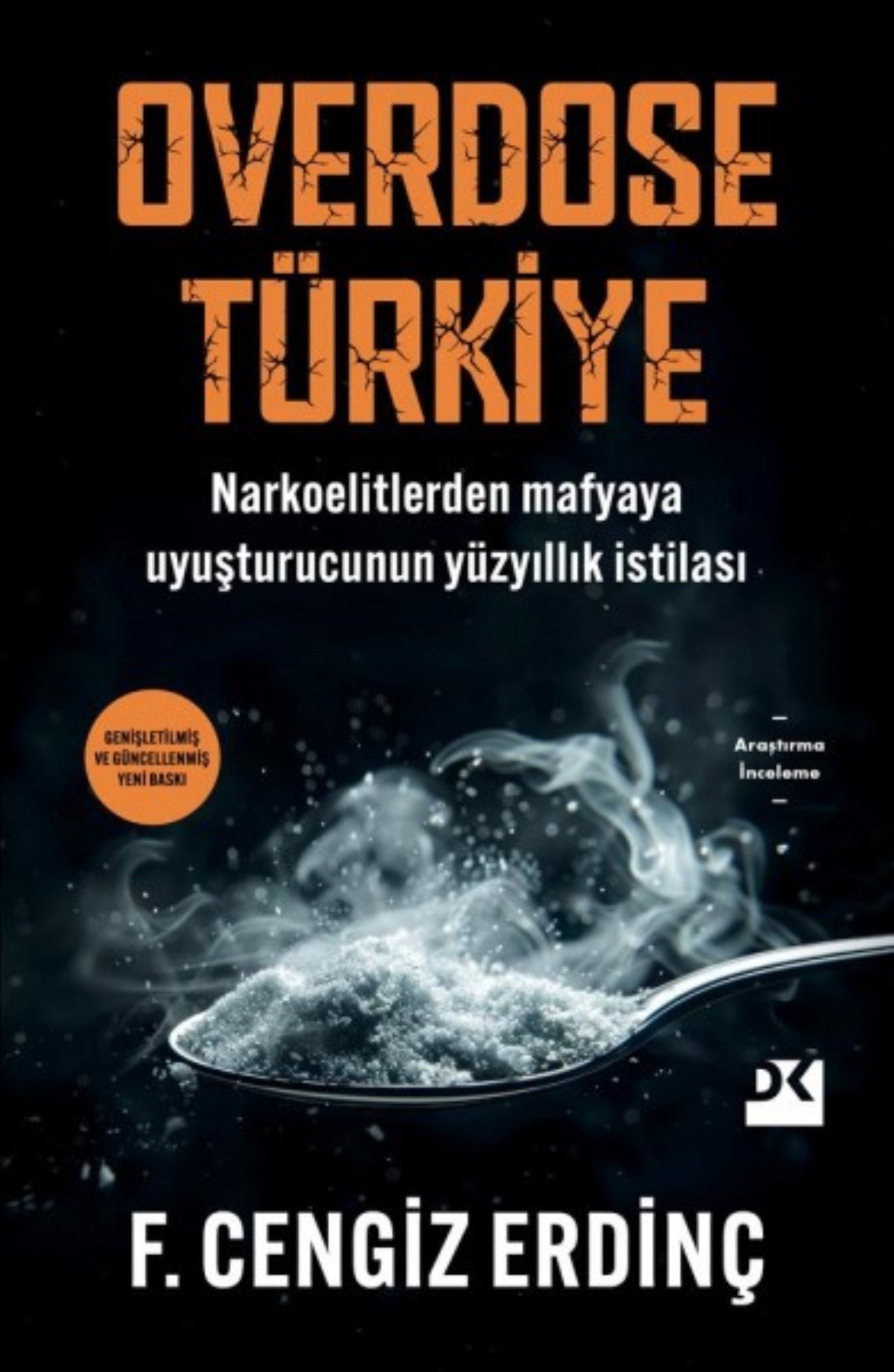
Cengiz Erdinç brings the sewer we are afraid to face to light with his book “Overdose Türkiye - The Century-Long Invasion of Drugs from Narco-elites to the Mafia,” published by Doğan Kitap. Who knows, maybe that sewer has already burst and is about to swallow us, but we are not even aware of it.
News Source: 12punto