The "Journalistic Rights and Freedoms Declaration," which serves as the final report of the media conference titled "The Transformation of Journalism and Quests" prepared by the Media Solidarity Group, has been announced. The declaration offers solutions to journalists' economic problems and the obstacles to press freedom, stating that "the principle of 'more law, less state' should be fundamental in the media environment."
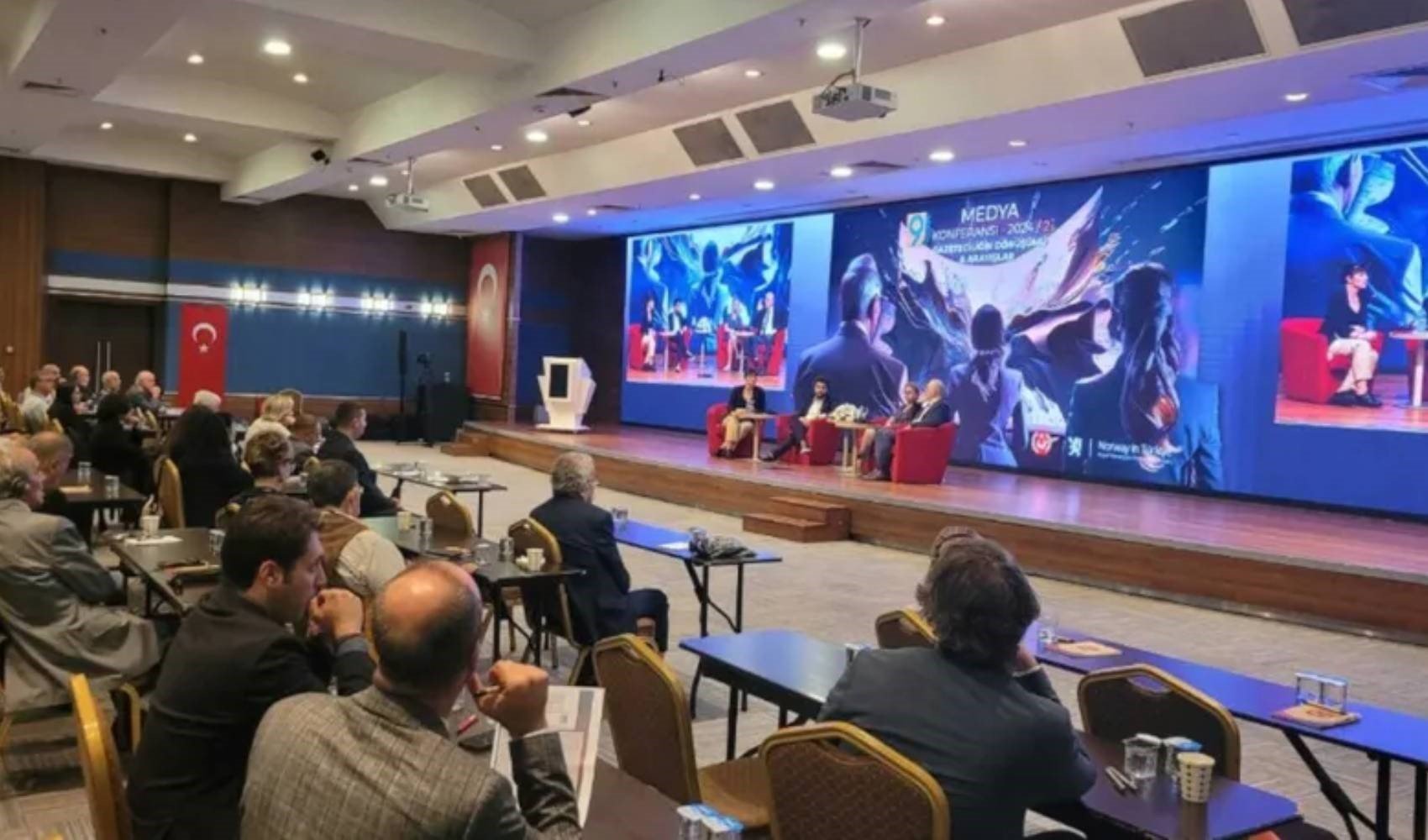
The future of the journalism profession and the challenges it faces were discussed at a conference held in Ankara. The second Media Conference titled "The Transformation of Journalism and Quests," organized by the Media Solidarity Group, took place at the Union of Turkish Bar Associations' Litai Guest House.
At the conclusion of the conference, the declaration, which contains the demands of journalists and was prepared by the working group formed as a result of the first meeting held last April, was announced.
The declaration, presented by Media Ombudsman Faruk Bildirici, covers three main headings: "Freedom of Expression and Media," "Digitalization and Intellectual Property Rights," and "Working Life," offering solutions to the problems faced by journalists under these topics.
'THE STRUGGLE MUST BE WAGED AGAINST THE USURPATION OF RIGHTS'
The declaration states that the Press Law should be updated to include digital journalism and freelance journalism in cooperation with professional journalistic organizations, adding that "a struggle must be waged against the arbitrary usurpation of legal rights related to journalists by institutions and the judiciary."
The declaration notes that threats and violence against journalists constitute an obstruction of public duty and a violation of the public's right to receive information. It proposes expanding the provision in the Press Law regarding a journalist's right not to disclose their news source by adding the phrase "even if the subject matter constitutes a crime." Key points from the declaration are as follows:
"The ownership structures of media organizations, including all financial relationships such as advertising revenues received from the public, must be made transparent. Ownership structures should be clearly stated in the mastheads of media organizations, and the access to and accuracy of this information should be audited by the public.
Accreditation practices in information meetings held by all public institutions, especially the Presidency, should be abolished, and journalists' freedom to ask questions on behalf of the public must be guaranteed.
'THE SCOPE AND DURATION OF THE BAN MUST BE EXPLAINED'
In decisions regarding access blocking, content removal, and publication bans, freedom of the press and expression, as well as the public's right to information, must be prioritized. The practice of issuing indefinite publication bans and providing template justifications should be abandoned; a concrete justification, the scope, and the duration of the ban must be explained for each case.
When the Radio and Television Supreme Council (RTÜK) transmits publication ban decisions, which can only be issued in exceptional circumstances, to radio and television stations, it must be mandatory to also notify them of the court decision. The 'authority to block access ex officio for catalog crimes,' which grants judicial power to the President of the Information and Communication Technologies Authority, should be removed from the law.
Journalism is against war, all forms of violence, and terrorism. Journalistic activity cannot be seen as support for terrorist organizations or terrorism, whether knowingly or unknowingly, and journalism cannot be made a subject of punishment. In counter-terrorism cases, news products cannot be accepted as criminal evidence, and journalists and journalistic activities cannot be put on trial.
RTÜK should no longer be a political board composed of members elected by political parties. Digital broadcasts in the internet environment should not be within RTÜK's jurisdiction. Instead of being a board that acts as a judicial and supervisory body, RTÜK should be transformed into an expert board that focuses on guidance.
The Press Ethics Principles should be abolished, and the Press Advertising Agency (BİK) should be prevented from engaging in ethical auditing. The Press Advertising Agency should only be able to issue sanction decisions for technical reasons and for a limited duration; it must be transparent when providing official announcements and advertisements to print and digital media. Like all organizations related to the media, the Press Advertising Agency should be removed from being a 'political' institution. The number of journalist members in the management of the Press Advertising Agency should be increased above the decision-making quorum. The primary function of BİK should be guidance, encouraging development, and supporting the media rather than auditing.
'JOURNALISTIC ORGANIZATIONS SHOULD ALSO BE INVOLVED IN NEGOTIATIONS WITH COMPANIES'
Digital royalties should be demanded from large technology companies such as Alphabet (Google), Amazon, Meta (Facebook), Apple, and Microsoft, which earn large profits from the digital advertising market by using news, article, and photo content produced by journalists on their platforms. Journalistic organizations should also be involved in the state's negotiations with these companies to ensure that the process is shaped in the direction of public interest.
It is essential to create a fair digital environment so that journalism can effectively benefit from the new opportunities brought by digitalization and strengthen public interest-oriented journalism. Journalists must be protected against the economic and professional restrictions of transnational platforms and their algorithmic regulations, the criteria of which are kept secret.
Journalists' working conditions must be guaranteed, their severance rights should be expanded and reorganized, the right to just termination must be made applicable, and severance pay should be obtainable even in the event of resignation.
The Press Labor Law should not be merged with the general labor law; it should be updated while preserving the special nature of journalism as a profession. A special section titled "Rights and Protection of Journalists in Working Life" should be added to the Press Law.
The advance payment of monthly salaries, the application of monthly/daily interest on unpaid wages, overtime, and holiday work pay, and the payment of half the salary during military service should be made applicable again.
'WEEKLY WORKING HOURS SHOULD BE LIMITED TO 40 HOURS'
In the termination of employment contracts, the payment for unused annual leave, calculated at double the amount based on the journalist's last salary, should be reorganized in a way that does not allow for interference. Weekly working hours should be limited to 40 hours, and the right to two days off per week must be guaranteed.
In public service broadcasting institutions like TRT and AA, employment and working conditions based on merit must be provided to ensure the editorial independence of journalists.
Economic and professional regulations should be introduced for freelancers and those working in digital media, and journalistic income should be exempt from taxes.
'EMPLOYING UNIONIZED JOURNALISTS SHOULD BE MADE ATTRACTIVE FOR EMPLOYERS'
Measures and regulations that encourage union membership to practice the journalism profession should be introduced. The membership acceptance criteria of unions should be clear, and their practices should be open to public scrutiny. Employing unionized journalists should also be made attractive for employers.
The issuance of press cards by a board within the Directorate of Communications makes journalists dependent on the state and, consequently, on the initiative of the political power. The principle of 'more law, less state' should be fundamental in the media environment.
Legal regulations must be enacted to allow press cards to be issued by professional journalistic organizations to ensure the independence of the journalism profession."
News Source: 12punto