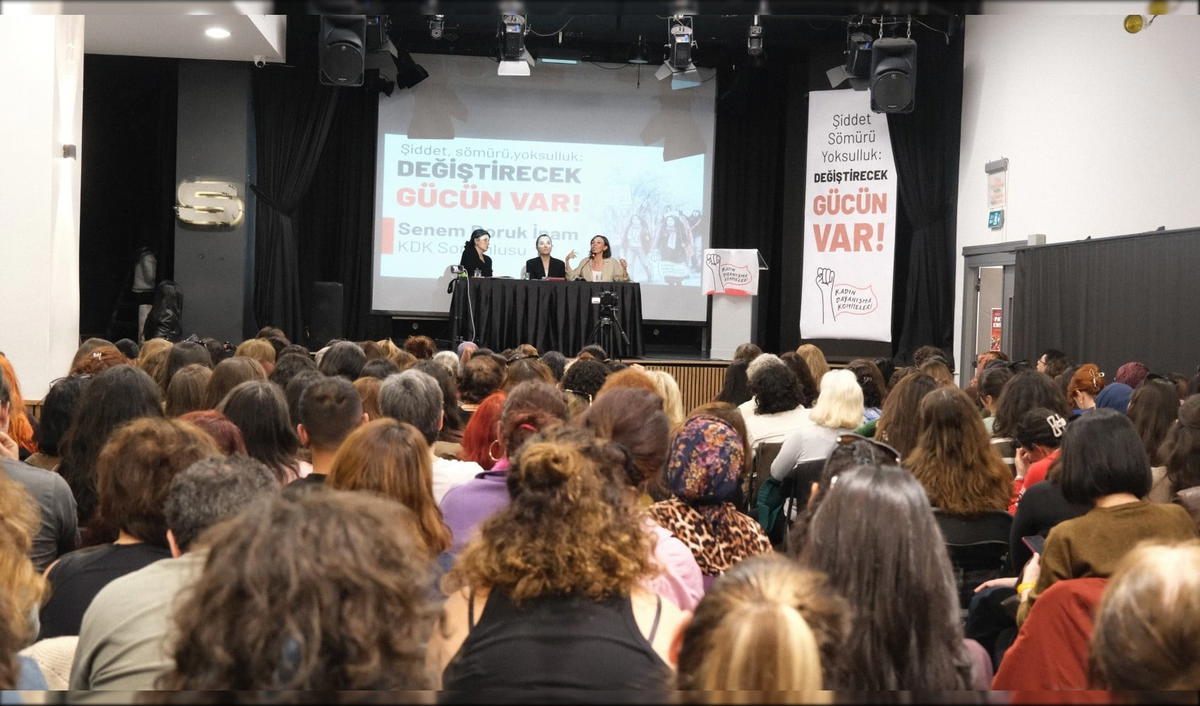
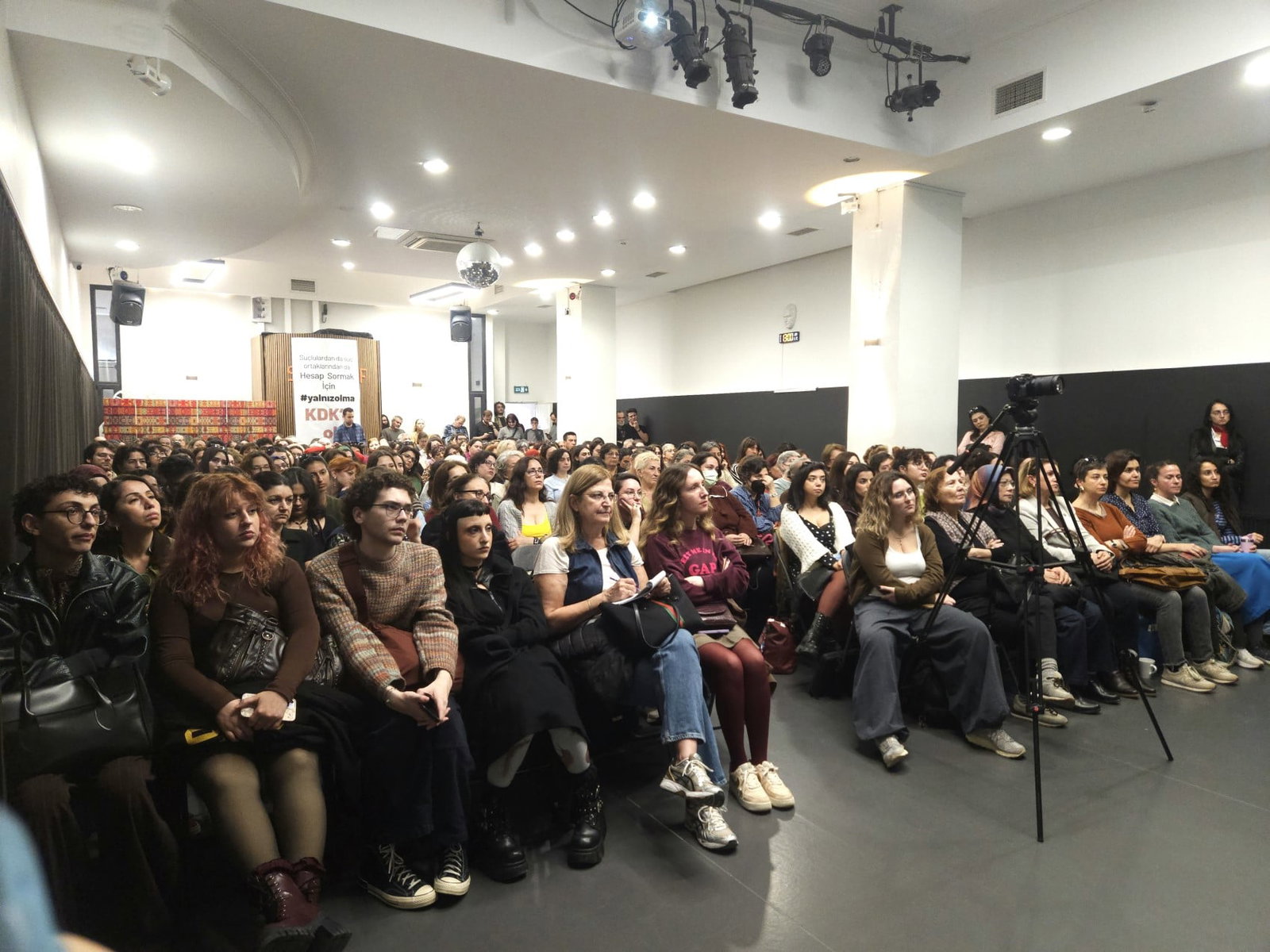
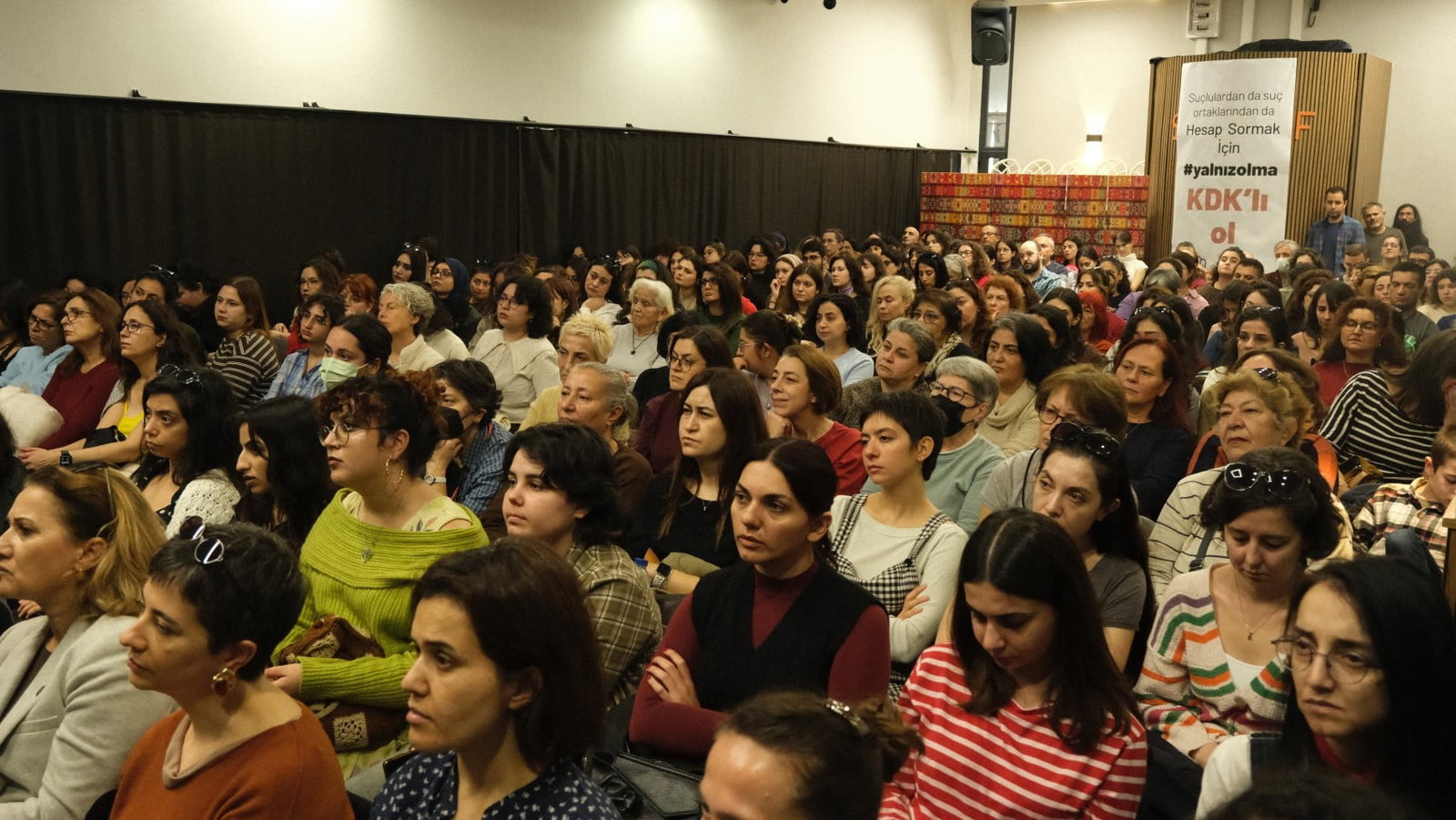
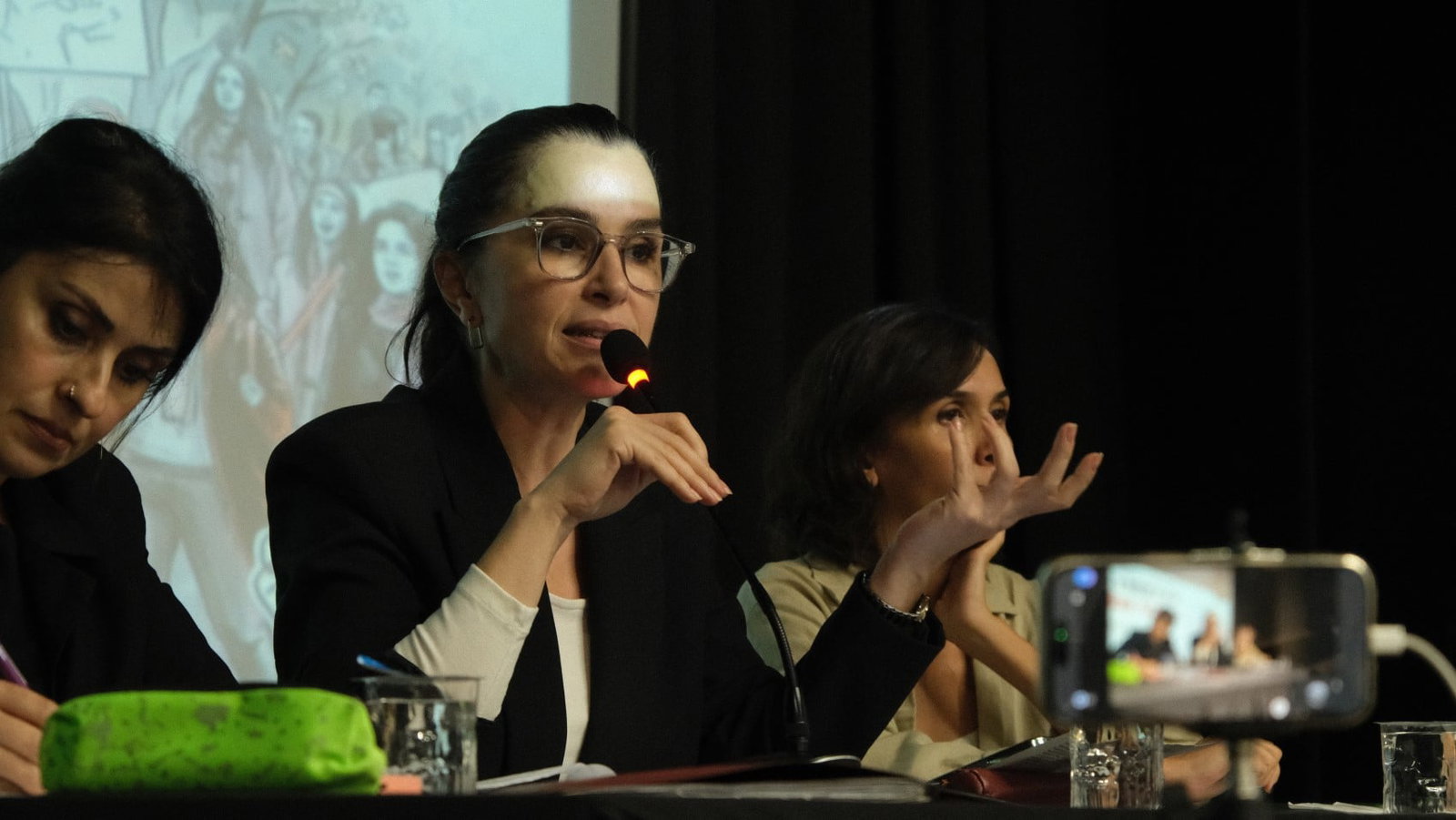
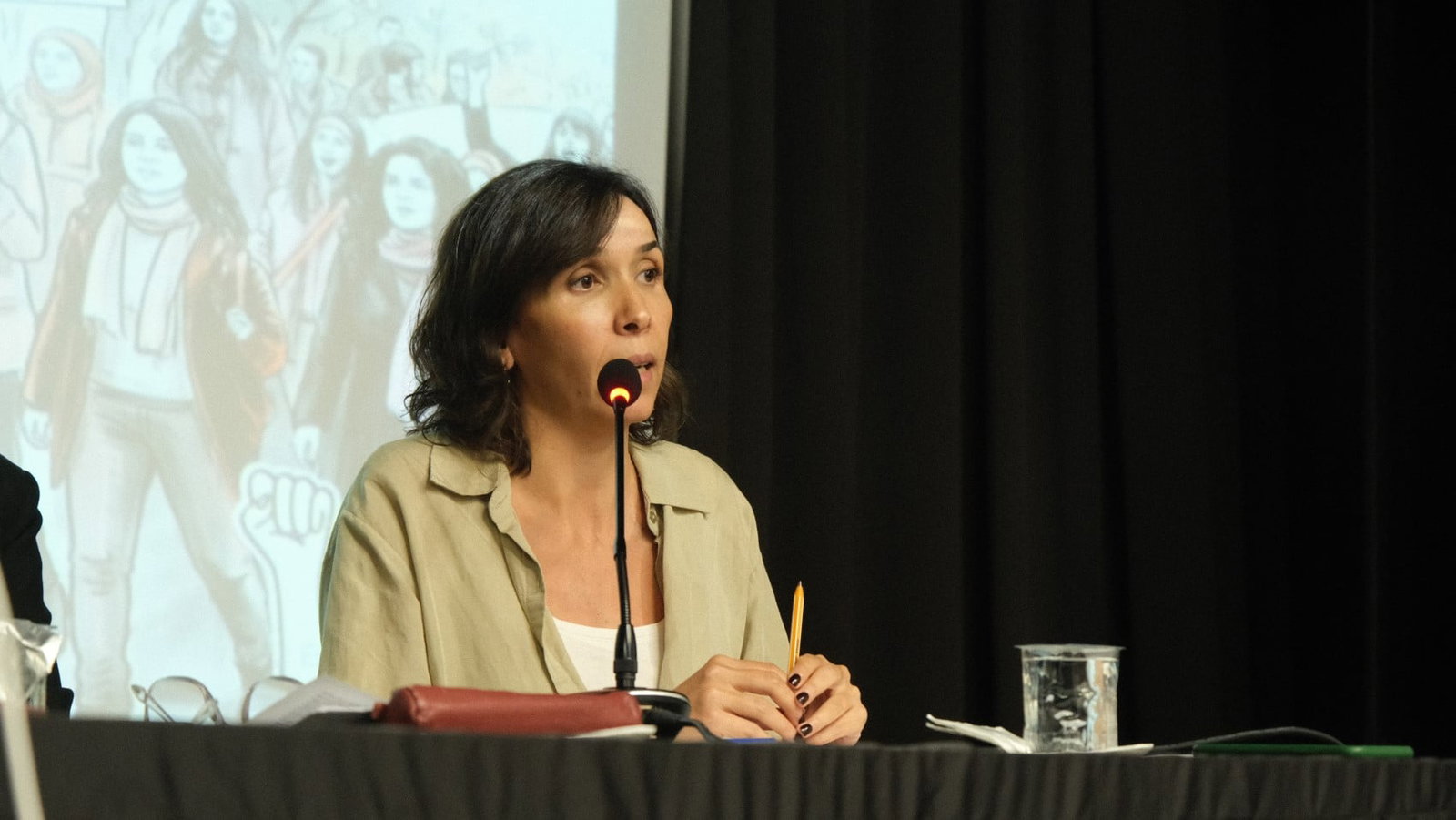
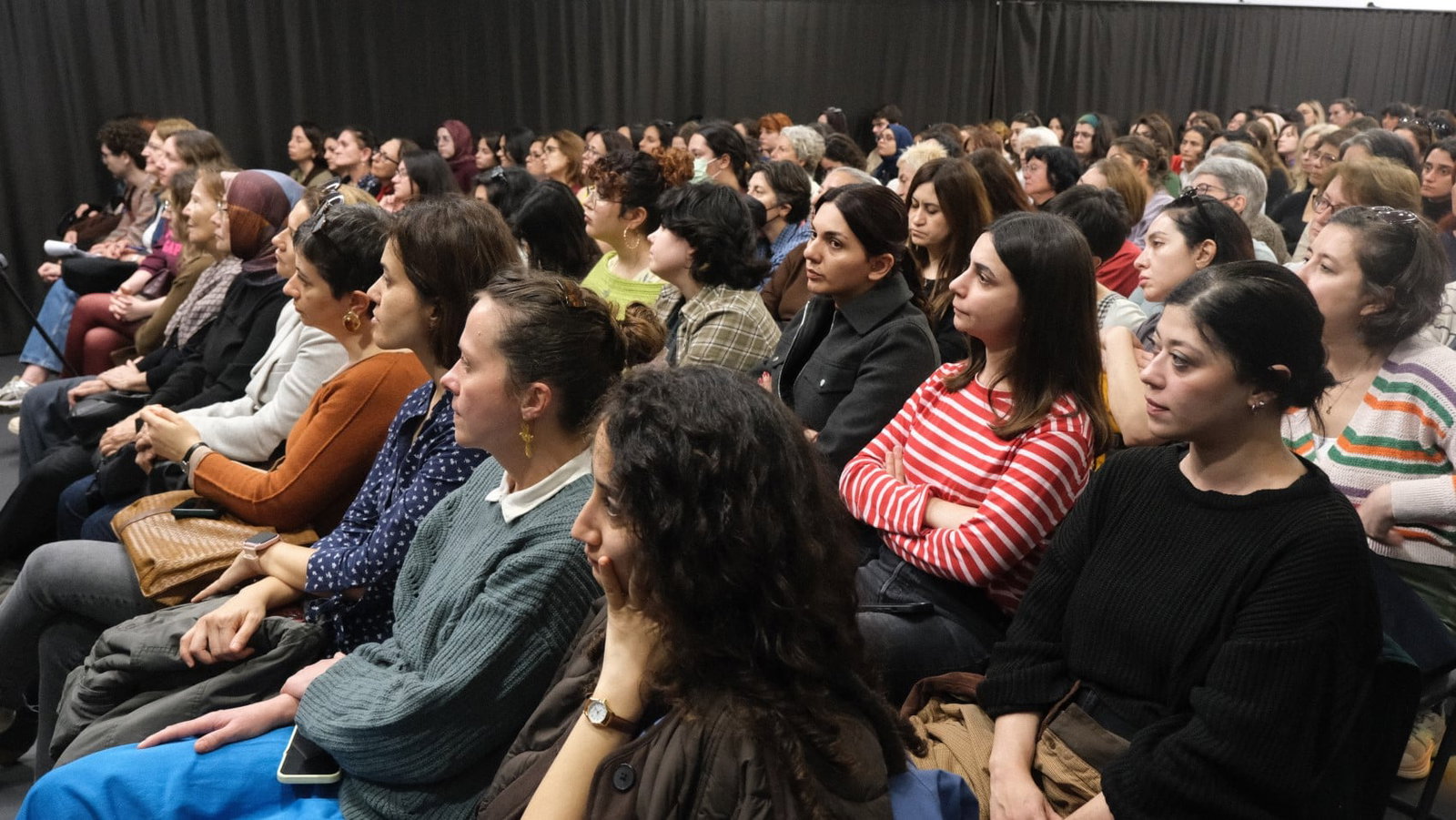
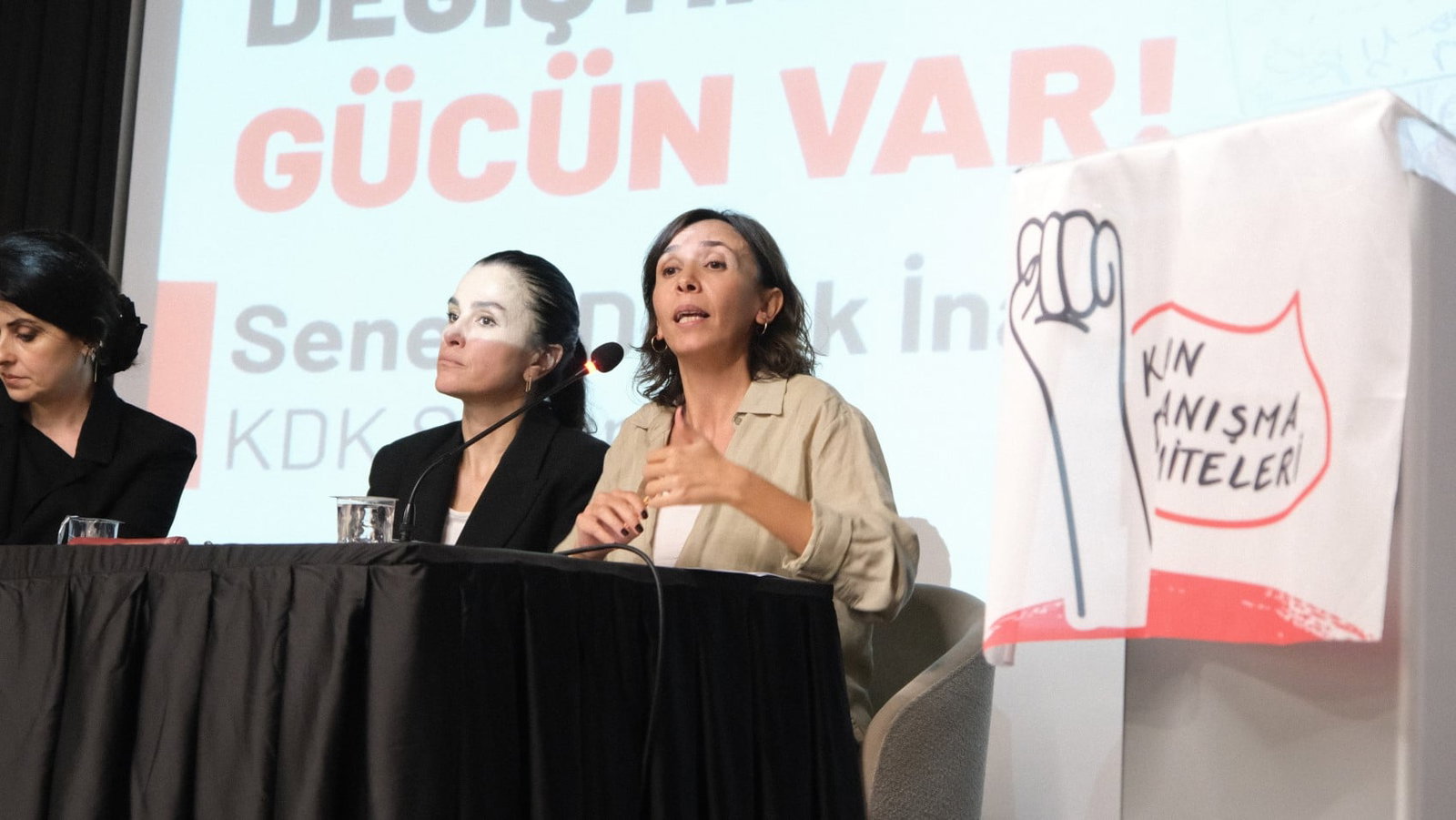
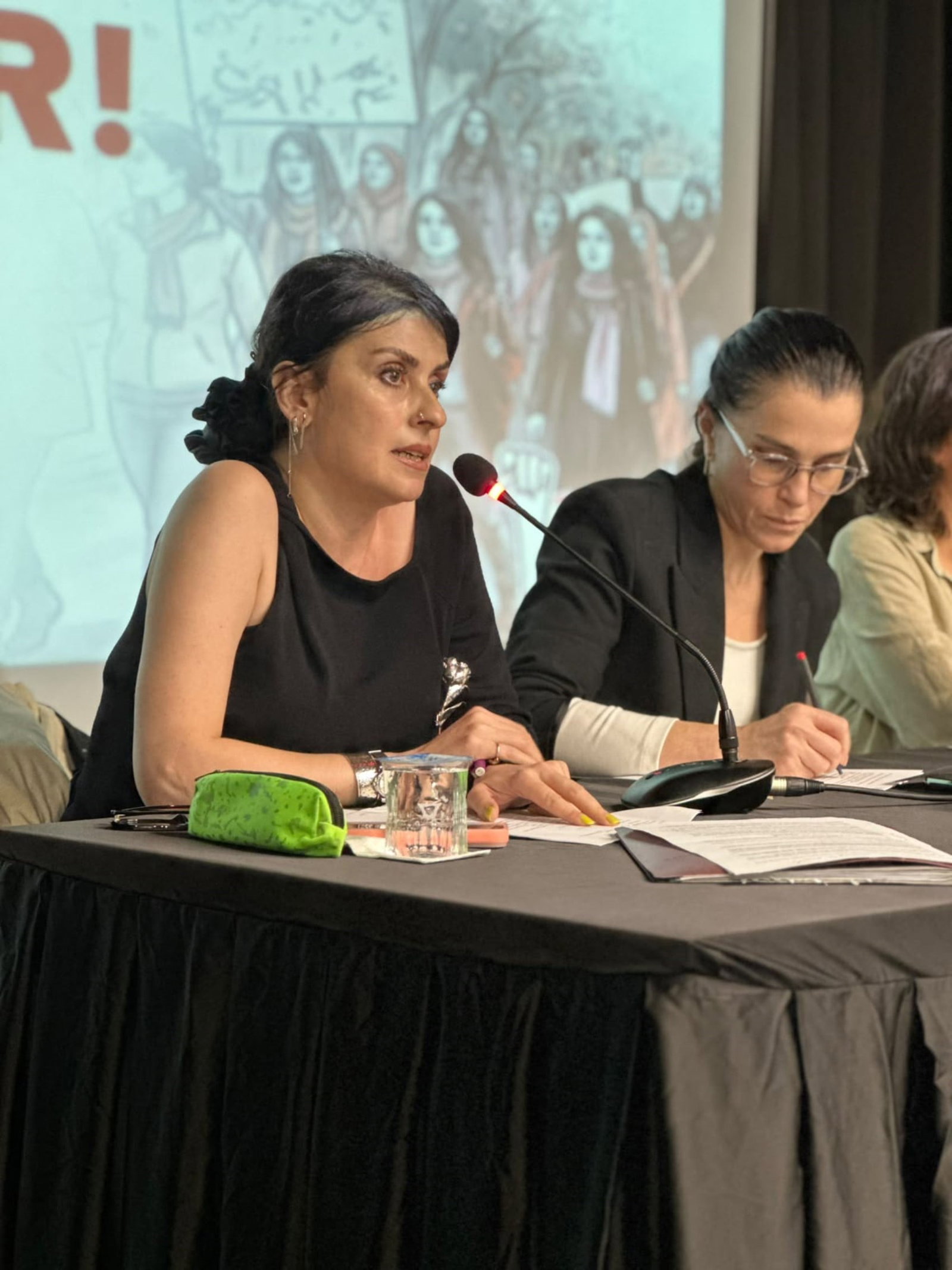
The class, legal, and political dimensions of violence against women were discussed at the event, which featured journalist Filiz Gazi, lawyer Hande Gündoğdu, and KDK representative Senem Doruk İnam as speakers.
Striking data regarding femicides was shared at the event, where it was noted that one out of every two women murdered is killed by firearms.
Emphasizing that these murders are not isolated incidents, KDK representative Senem Doruk İnam stated that they would take their "You are guilty" campaign, launched last year, a step further, announcing that they would mobilize across Turkey against individual armament as of November 25.
'They Do Not Want to Eradicate Poverty, They Prefer to Manage It'
Taking the floor first at the event, journalist Filiz Gazi stated that the strengthening of religious sects and communities, especially in the poor outskirts of the city, is no coincidence. Emphasizing that the social state has been deliberately withdrawn from districts such as Zeytinburnu, Güngören, Bağcılar, Gaziosmanpaşa, and Sultangazi, Gazi said:
"We are talking about women who have no education in their lives. Their class background is clear, they have no economic independence, and they have no visibility in the public sphere. Now, these gaps should normally be filled by the social state. When there is no social state, and there is also political Islam, those gaps are left intentionally. These structures fill all those gaps. Go to Adana, to a mountain village; remember, 11 girls died in a fire at a Süleymancı dormitory. The state was not there. There is no state school or dormitory; they say, 'We have one, there is a Süleymancı dormitory, you can send them there.'"
Stating that political Islamists prefer to manage poverty rather than eradicate it, Gazi drew attention to the capital accumulation at the top of these sects:
"They never want to eradicate poverty because they prefer to manage it. The poverty in these neighborhoods does not serve the interests of İsmailağa, Menzil, the Süleymancılar, or İskenderpaşa. Because they can manage it. They feed on that poverty. By the way, the people they oppress the most are those people. The people at the top of these structures have holdings, companies, jewelry stores, construction companies, they have everything. They are in the media, in education, in the judiciary, they are everywhere."
'The Women's Movement Remains Limited Unless It Engages with the Class Issue'
Expressing that the women's movement remains limited to its own circles, Gazi said, "The first reason for this is that it does not engage with the class issue. Without an awareness of poverty, you do not know life in the provinces, the pressures within the provinces, or the order of priorities. If there were class consciousness and an understanding of how that poverty reflects on cultural life and daily practices, one would stand in a different place."
'We Now Call Children Gang Leaders, Loan Sharks, and Drug Dealers'
Noting that after the liquidation process in political neighborhoods like Gaziosmanpaşa and Okmeydanı, even children are being drawn into the web of gangs and drug trafficking, Gazi said, "There are so many criminal organizations and gangs where the leaders are 20-21 years old, the drug dealers are 13-14, and the hitmen are 15-16... The last place corruption reaches in a country is childhood. But right now, when we describe childhood, we say gang leader, drug dealer, hitman, leader of this criminal organization."
It has reached childhood, which is something that the state should protect, social services should protect, and the family should protect."
'The Liberation of Women is Possible with the Liberation of the Class'
In her speech, lawyer Hande Gündoğdu stated that the struggle against violence against women cannot be considered separately from the struggle for equality, saying, "For us, this is historical knowledge for the life philosophy and struggle constitution of the Women's Solidarity Committees, historical knowledge taught by Marxism. The liberation of women is possible with the liberation of the class."
Emphasizing that the law is not a steel, impermeable block, but is ideologically and politically determined by power and class relations in society, Gündoğdu criticized the structure of the judiciary through unjust provocation reductions with the following words:
"You would be surprised if you looked at the justifications for unjust provocation reductions applied to women's murderers in the judicial history of this country. For example, not drinking the orange juice squeezed by one's husband. Dancing in public places. Responding to a man's question 'What time is it?' while walking down the street. These are cases that have gone down in the judicial history of the Republic of Turkey, and a significant portion are high court decisions. If it has become more difficult today to grant an unjust provocation reduction to the murderer of a woman who was killed because she did not drink the orange juice squeezed for her, this is the result of the struggle. It is not the result of a tremendous legislative process. Who makes the law? The Parliament. Is there anyone who trusts the Parliament? While there is an opposition that prefers not to go to the Parliament even for the Mecca Agreement, which will determine Turkey's fate, we measure our strength not by the laws made by a parliament to which we have surrendered our will, but by our own power."
'We Can Protect Today by Demanding Tomorrow'
Stating that treating the concept of rights like a "gift package waiting in a drawer" is fatal for the women's struggle, Gündoğdu pointed out that women are also killed when they want to exercise their legal rights:
"When we look at the social reasons for violence against women, those women are actually killed because they want to use the rights legally granted to them. Because they want alimony, because they want a divorce, because they want to work, because they want custody. A woman whose right to alimony you take away, a woman whose work you tie to her husband's permission, experiences violence within the home. There is no social support mechanism for her to get out of this cycle of violence; everything has been taken from her, privatized, or handed over to sects. At this point, can you say 'Oh, well, I have rights in the law' and walk away? No. Today, we are not in a position to 'protect the status quo and think about tomorrow later,' but rather we can only protect the status quo by demanding tomorrow, that is, the advancement of a right, something further."
'The Only Guarantee Against Injustice is Systemic and Organized Struggle'
Stating that the belief in justice in Turkey has disappeared, Gündoğdu shared her observation that in femicide cases that do not reach the press, the judiciary tends to make decisions in favor of the perpetrators more quickly:
"Except for fanatics, no one in Turkey sincerely believes that this order will bring a solution to violence or produce equality and justice. No one trusts Müge Anlı, who cannot find any branch to hold onto. However, the fact that society's common and burning needs are common does not automatically produce a common will to struggle. It produces a common anger, but the distance between our needs and our disorganization, between our needs and our organization must be bridged. I have personally worked as a lawyer in too many femicide cases; I have observed the tendency of judges and prosecutors to finish cases that are less covered by the press more quickly and to the detriment of the victim. If the voice of the woman who died there is not heard much in the press, you reach the natural limits of your professional existence. The only way to win today is to create a systemic, organized line of struggle that desires the future."
Gündoğdu also reminded that the reporting and solidarity line within the KDK directly contributes to women rebuilding their lives with legal and psychological support.
'They Challenge Women, Who Are Mostly Killed in Their Homes, by Declaring a 'Year of the Family''
KDK representative Senem Doruk İnam stated that the system suggests to women, "You are alone, you are helpless, do not expect anything from this order," and said, "In the midst of so much evil, femicides, which are now numbered in the tens, have become very normal. In the main news, it is said in a minute or two, 'This woman was killed by this monster,' and it is passed over and individualized. While women are forced to defend their right to life, they declare a 'Year of the Family.' Yet statistics say that women are mostly killed in their homes, within families. As if mocking, they can say, 'You are weak, you are being killed in your homes, but we are coming out and declaring a 10-Year Family Plan.'"
'We Must Demand an Order Where Femicides Are Totally Eradicated'
Stating that the capitalist class and religious reactionism position women as cheap labor and individualize unemployment and insecurity with the perception that "you are failing," İnam emphasized that liberation is shared with the struggle of the working class:
"Today we must know that there is no liberation for women alone. While so many workers are dying at HABAŞ, while women are losing their lives in a perfume factory in Dilovası, women are not independent of this. Can we make a demand today that 'fewer women should be killed'? We must demand an order where femicides are totally eradicated."
'One Out of Every Two Women Murdered is Killed with Firearms'
With the "You are guilty" campaign launched last year, the KDK exposed that the state was not fulfilling its obligations to prevent violence. Announcing that they would take the "You are guilty" work a step further, KDK representative Senem Doruk İnam said, "This November 25, the Women's Solidarity Committees will launch this work across Turkey, and we will weave its legs together."
Emphasizing that a vast majority of femicides in Turkey are committed with firearms, she shared striking data:
"Unfortunately, there is such a statistic, dear friends: One out of every two women murdered is killed with firearms. While the issue of whether it is licensed or unlicensed is a separate debate, according to the information we have obtained, 84 percent of murders committed with firearms are committed with unlicensed weapons. Today, in Turkey, women are in danger in a situation where armament is so widespread, easily accessible, and an atmosphere is created where anyone can take a gun in their pocket and use it as they wish. Not only women, but our children are also in danger in the same way."
'Why Doesn't the State, Which Finds Those Who Write Opposition on Social Media, Find Those Who Sell Weapons?'
Sharing the results of their data study on where and how weapons are obtained, İnam stated that in addition to sects, gang and mafia structures are also organizing street by street, and weapons are being put into the hands of young people who are still children.
Giving examples from perpetrator statements and reminding of the judiciary's speed against government opponents, İnam said: "Engin Çelik, who killed Ayşe Çelik, says, 'I bought the gun from someone I didn't know for 20,000 TL.' Another says, 'I bought the pistol I used in the murder online, from Facebook, from Telegram; I bought the unlicensed pump-action shotgun from a website.' In Turkey, you can be taken from your home when you insult or write something against the government on social media. Such widespread access to weapons is provided via the internet, Facebook, and Telegram. We know, we can find these; can't the state find them? Doesn't it have such power or opportunity? It has, but they choose not to."
Call for the November 29 Rally
Speaking at the closing of the event, KDK representative Filiz Acar stated that poverty and violence are not destiny and invited the women in the hall to the workers' rally to be held in Kartal on November 29 against corruption, poverty, and imperialist policies.
Acar stated that they would meet at the Başak Metro station at 12:00 for the rally.
News Source: 12punto