

Workers are once again paying the price for coal: No wages, no severance, and no job security
The months-long struggle for wages and severance pay by workers at the Doruk Mining and Yunus Emre Thermal Power Plant in Mihalıççık, Eskişehir, highlights a major contradiction in Turkey's coal policies. While public funds are used to support coal plants, there is no comprehensive mechanism in place to guarantee the wages and severance pay of the workers employed at these facilities.



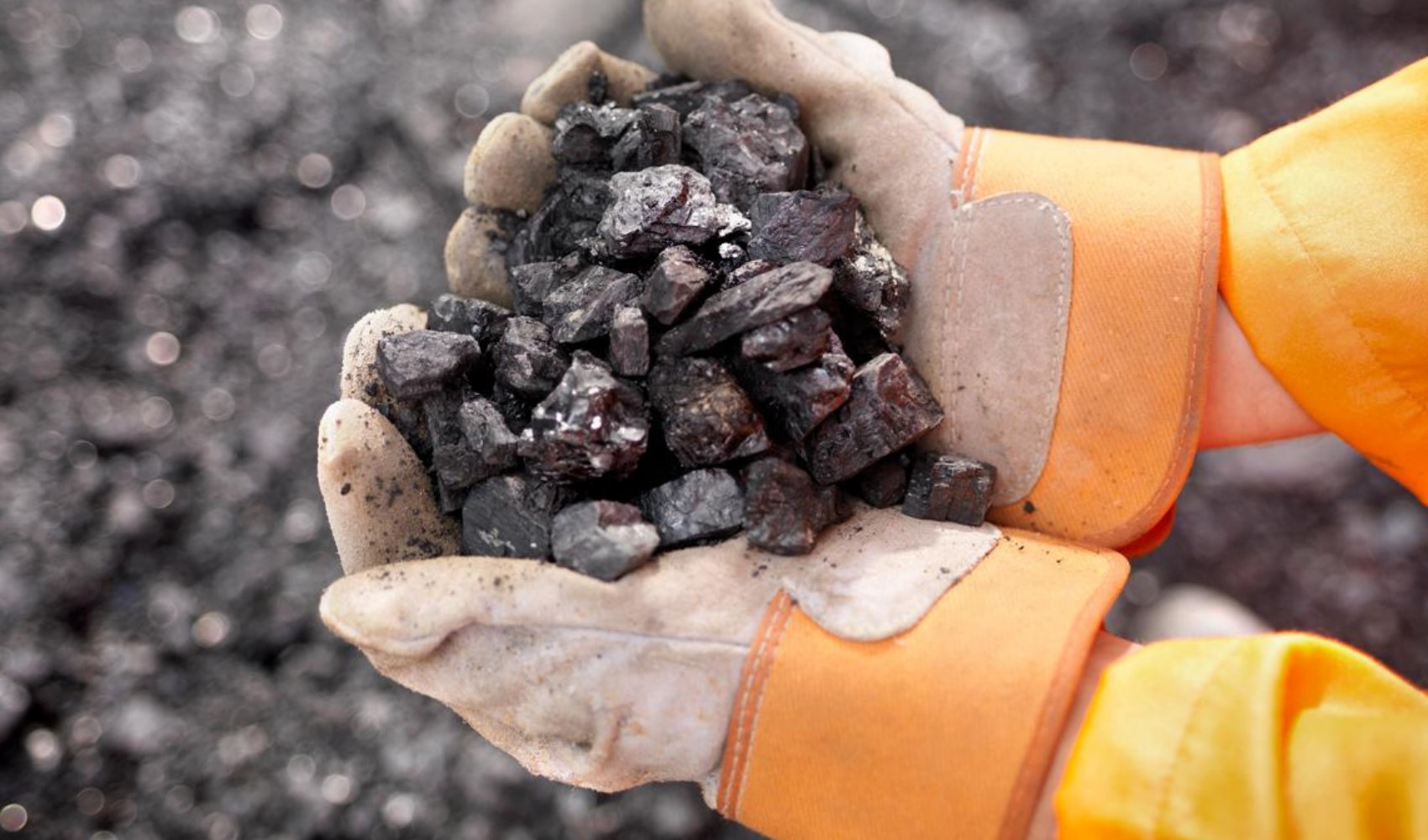
The struggle for wages, seniority and notice pay, and other personal rights by workers currently or previously employed at the Doruk Mining and Yunus Emre Thermal Power Plant in the Mihalıççık district of Eskişehir has been ongoing for months.
The workers began a protest in April by marching from Eskişehir to Ankara, after which it was announced that some payments would be made. However, stating that not all promises were kept, the workers resumed their protests in August. Many workers were detained during the demonstrations held in front of the Ministry of Energy and Natural Resources.
The Independent Mine Workers' Union (Bağımsız Maden-İş) reports that approximately 400 mining and energy workers who have worked or continue to work at Doruk Mining and the Yunus Emre Thermal Power Plant are suffering from grievances regarding wages, severance pay, unpaid leave, and other personal rights.
THE SAME PICTURE IN COAL BASINS
What is happening at Doruk Mining is not viewed merely as a problem of unpaid wages at a single enterprise. The common denominator of the problems emerging in different forms in coal basins such as Soma, Ermenek, and Mihalıççık is that the reduction or cessation of production, or the possibility of business closures, directly threatens the income and job security of the workers.
The fact that 87 workers were placed on unpaid leave following the suspension of production at the Soma Thermal Power Plant is cited as an example of this situation.
The contraction in coal operations does not only affect mine and power plant employees. Transporters, maintenance and repair workers, local tradespeople, and households that make a living from the coal sector are also directly affected by this process. For this reason, the downsizing in the coal sector is becoming a problem that concerns the employment structure and local economy of coal basins, rather than just the future of individual businesses.
PUBLIC SUPPORT EXISTS, BUT NO WORKER SECURITY
With the incentive regulation announced by the Ministry of Energy and Natural Resources in 2025, a specific floor price mechanism was established for 60 percent of the electricity produced in domestic coal plants. Under the regulation, a payment of 7.5 cents is envisaged for domestic coal plants for electricity, compared to the average purchase price of 4 cents per kilowatt-hour from other plants.
According to calculations by Ember Turkey, the four-year cost of this support could reach 8.7 billion dollars. It is stated that if all coal plants are included in the scope, the estimated cost could rise to 9.8 billion dollars.
CAN Europe Turkey Climate and Energy Policy Coordinator Özlem Katısöz states that the fact that workers' wages are not guaranteed while coal plants are supported with public funds makes the problems in the sector visible.
Katısöz assesses the situation by saying, "The fact that workers cannot receive their salaries while the companies operating coal plants are supported with our taxes is the clearest evidence of the collapse in the coal sector."
This picture shows that using public resources solely to support energy production or business revenues is not enough. The failure to guarantee the wages and severance pay of workers in businesses benefiting from public support leads to economic risks being left on the shoulders of the employees.
THE MENTALITY OF "COAL'S TIME IS UP, LET THE WORKER BE UNEMPLOYED" IS NOT A SOLUTION
According to Özlem Katısöz, Turkey's coal policy has long been generating problems due to a lack of planning and high costs. Stating that fossil fuel policies that stand against energy transition are creating unemployment and grievances today, Katısöz draws attention to the fact that workers' wages cannot even be paid while resources are being transferred to companies.
Katısöz argues that in the processes of privatizing power plants and encouraging new coal investments, a gradual downsizing schedule, income security, new skill acquisition programs, and alternative employment areas should be planned from the very beginning.
The fundamental issue here is not to abandon workers to unemployment if the coal sector is to be transformed. As energy policies change, the livelihoods of workers and coal regions must be secured.
The non-payment of wages and severance at Doruk Mining, and the emergence of uncertainty regarding unpaid leave and closures with the cessation of production in Soma, reveal different consequences of the same lack of planning.
THE SOLUTION IS A "JUST TRANSITION" THAT PROTECTS THE WORKER, NOT THE COMPANIES
It is stated that the problems in coal operations cannot be solved solely by transferring public funds. In a joint report published by DİSK and CAN Europe in 2024, a transformation framework is proposed that includes social protection, new skill acquisition, re-employment, local development, and the participation of unions in decision-making processes.
DİSK's "Just Transition" report
Academic studies published in 2025 also point out that income losses in coal regions should be compensated, re-employment and training programs should be created, and local transition boards should be established before businesses close.
In this context, it is proposed that conditions be imposed on businesses receiving public support to ensure that worker claims are guaranteed and that this is regularly audited.
Determining the current skills of mine and power plant employees and launching training and employment programs in areas such as energy efficiency, maintenance of electrical grids, energy storage, renewable energy, and rehabilitation of mining sites before businesses close are also among the solution topics.
Creating regional economic plans that will reduce the dependence of coal basins on a single large employer is also of great importance. Without these plans, which would involve municipalities, development agencies, unions, professional chambers, universities, and local businesses, the cessation of operations at a mine or power plant makes the economic future of not just the employees, but the entire region, uncertain.
CRITICISM OF COAL INCENTIVES FROM CIVIL SOCIETY
Climate and labor organizations operating in Turkey also direct similar criticisms regarding coal policies.
In statements made by the Climate Network (İklim Ağı), it is stated that Turkey continues to provide incentives to both imported and domestic coal plants, and it is emphasized that public resources should guarantee the rights and future of workers, not the revenues of companies.
At a time when Turkey has assumed the COP31 Presidency, how to reduce fossil fuel use and how to protect workers and local economies in coal regions from this transformation stand out as one of the important topics of the discussion.
It is stated that energy policies must be carried out in conjunction with social protection and "just transition" plans so that the cost of exiting coal is not loaded onto workers' wages, severance pay, and job security.
News Source: 12punto
Most Read

Kadir İnanır's inheritance revealed

İsmail Saymaz publishes interview with Sedat Savtak, who played Kazım Kaşifoğlu

Are you aware of the danger in the economy?

Towards a new era in the world

The Journey of Odysseus-3. The sea where man is tested

Where does China stand in this utopia?

Trabzonspor sends a message to Galatasaray following 4-goal victory

What kind of man was Mustafa Kemal?

After Fenerbahçe, Beşiktaş also reacts to beIN Sports over Okan Buruk coverage
Iran: Our conditions for ending the war have been conveyed to mediators