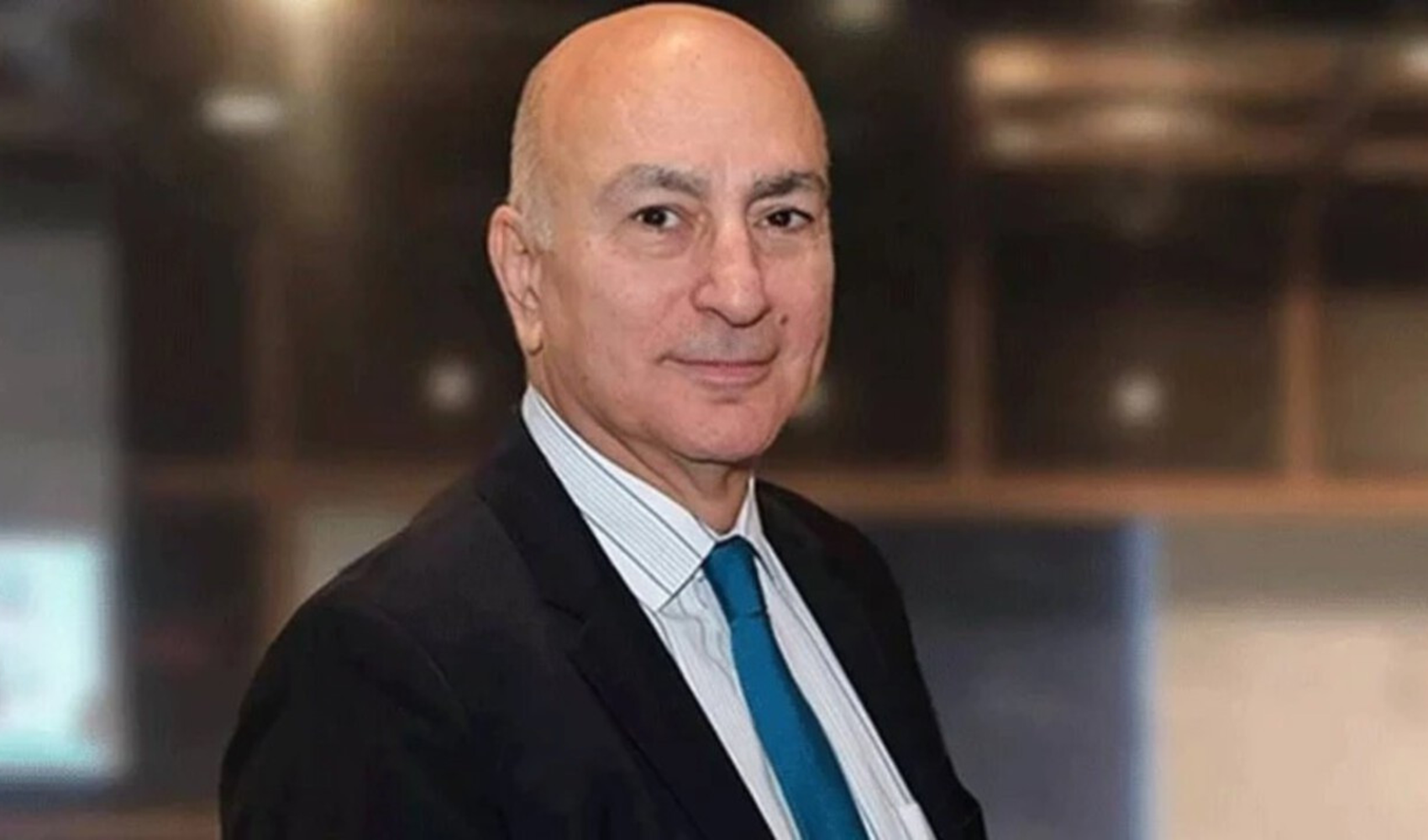
Economist Mahfi Eğilmez evaluated the financial impact of the Foreign Currency Protected Deposit (KKM) system, which ended as of August 23, 2025. Eğilmez stated that this system has imposed a burden of at least $58.9 billion on the Turkish economy. However, he emphasized that this figure could increase further when factors such as tax losses and the indirect losses of the Central Bank are included.
The KKM was launched in December 2021 to control foreign currency demand. Eğilmez summarized the system's operation as follows: "At the end of the maturity period, if the exchange rate difference is higher than the interest yield, the exchange rate difference is paid; otherwise, the interest is paid."
According to Eğilmez's calculations, the system, which placed a burden of 92.5 billion TL on the budget in 2022 and 59.5 billion TL in 2023, brought a total direct cost of $8.7 billion to the Treasury. Following the Central Bank's announcement of a 818.2 billion TL loss in 2023 and a 700.4 billion TL loss in 2024, it is believed that a large portion of these losses stems from the KKM. In this case, the total cost to the Central Bank was calculated at $50.2 billion.
Eğilmez noted that there is still a balance of 440.5 billion TL ($10.9 billion) in the KKM and that the system therefore continues to generate costs. Stating that the Central Bank should also be transparent on this issue, Eğilmez said, "Just as the Ministry of Treasury and Finance has calculated and published the payments falling to its share from the KKM down to the last penny, it is a requirement of the transparency policy for the CBRT to do the same."
Stating that factors such as tax losses and carry trade effects have not yet been fully reflected in the calculations, Eğilmez said that this situation could lead the Treasury to resort to additional borrowing.
Eğilmez said, "If the Treasury and the CBRT had not assumed the interest that banks would normally have to pay through the KKM by lowering interest rates, the banks would have had to pay tax deductions from the interest they paid to the Treasury; therefore, the budget would have collected revenue instead of facing costs."
News Source: 12punto