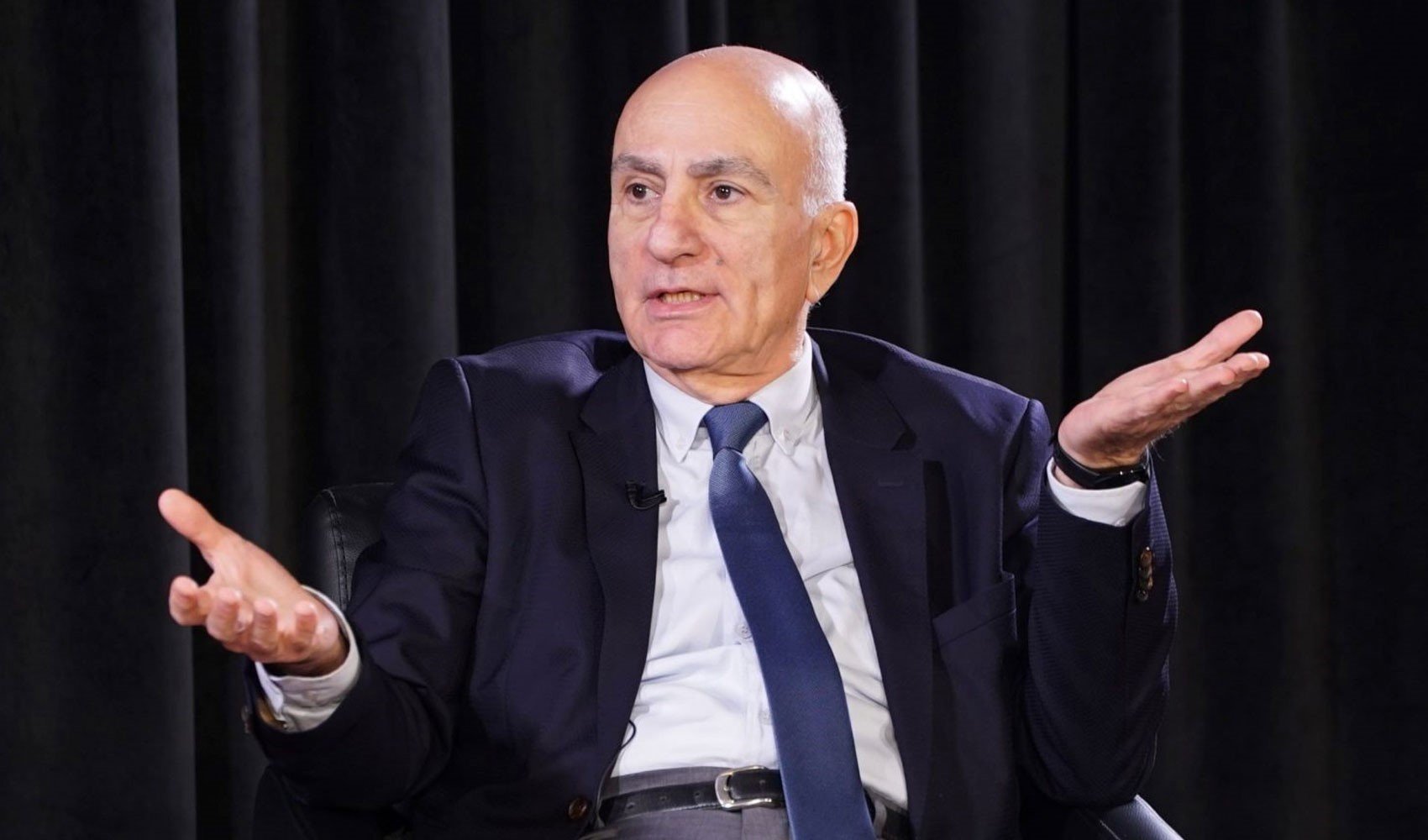
Former Treasury Undersecretary Mahfi Eğilmez made striking observations regarding the course of the economy in an article published on his own website.
Pointing to the purchasing power and income distribution between the past and today, Eğilmez compared old Turkey with new Turkey in his article titled 'A Street and an Apartment from Old Turkey' and commented, "We used to be poor but happy, we had hope."
Stating that even families in the lowest income group at that time could buy a whole watermelon and apples by the kilogram, Eğilmez evaluated the current practice of selling by the slice as an indicator of the decline in purchasing power.
The full text of Eğilmez's article is as follows:
In the Ankara of the 1950s, there were two-story houses with gardens. We lived in a rented ground-floor apartment of a house with a garden on the street just below Atatürk Boulevard. Adakale Street, where we lived, was one of the best streets in Ankara, and we could afford to live there on my father's civil servant salary. In the house next to us, a landlady and her daughter lived on the upper floor, a merchant and his family on the middle floor, and a widowed mother working at the Social Security Institution (SSK) and her three children lived in the basement. On our other side was the three-story building of the British Council. Just below that, there was a self-employed lawyer with his wife and three children. We were all friends; we would go to school together and play together after school. In the whole neighborhood, only the merchant's family had a car. And my father's official car. My father never let my mother or us ride in that car even once. He himself only used it when going from home to work and returning from work to home. All the houses on the street were two-story: usually, the landlords lived on the upper floors, and tenants like us lived on the ground floors. The gardens of the houses were our playgrounds. No one showed off to anyone back then. As a matter of fact, there weren't such differences back then to show off about. Imports of consumer goods and such were limited. No one had the luxury of showing off with expensive sneakers, jeans, bags, or glasses. Therefore, no one really knew anyone else's wealth or poverty. Back then, watermelon wasn't sold sliced like this, and apples weren't sold by the piece; even those of us with the lowest income had enough income to buy a whole watermelon and apples by the kilogram. Everyone was able to make meat dishes one way or another, or at the very least, buy ground meat and knead meatballs. I don't remember if incomes were high, if production was higher, or if purchasing power was in good shape, but no one cut back on their food and drink like they do today. No one did barbecues or anything in the garden. Such things were considered shameful, considered tacky. Apricots, cherries, grapes, and peaches grew in the gardens. For example, there were apricots and quinces in our house's garden, plums and grapes in the neighbor's garden next door, and apples and pears in the neighbor's garden on the other side. All these fruits were like open-air fruit tables at the disposal of the neighborhood children. The first ones harvested were always given to the neighbors in a plate. They would do the same. Income distribution wasn't that different. The wealthy and the middle-class, even the poor, shopped at the same places and went to the same market. We would come home from school, eat our meal, do our homework if we had any, and go out to the garden. We wouldn't enter the house until dinner time except to drink water and get fruit. Each other's house was like our own home. Whoever's house we were near, we would go in, drink water together, get fruit, and go back out. When it was light out, we played football, nine-stone, dodgeball, tag, and when it got dark, we played hide-and-seek. Let alone mobile phones, most houses didn't even have a landline. We enjoyed an endless freedom. We played the real-life versions of the virtual games that children today play on tablets in the garden and on the street.
We went to the schools closest to our home. There were no shuttle buses or anything. The closest school to us was Mimar Kemal Primary School. It was a historic three-story building with a ground floor in a garden on Yüksel Street. The classrooms were crowded. Our class had 60 people. Three people sat at one desk, with boys and girls sitting side by side. After primary school, my older sister went to Ankara College, and two friends from the neighborhood went to Galatasaray High School. The rest of us went to middle schools in Ankara.
During the 1950s, we moved out of the house we lived in as tenants on Adakale Street in Ankara in 1961. That year, my father added the forty thousand lira loan he took from the Emlak Kredi Bank of that time with a ten-year maturity to his own savings of thirty thousand lira and bought an apartment for seventy thousand lira in the Uğur Apartment building, located at the intersection of Olgunlar Street and Tunalı Hilmi Street, on the street then called Ahmetler Street. Being in debt bothered him incredibly. On the first day of every month, as soon as he received his salary, he would go to the bank and pay his loan installment. Perhaps because we saw it from him, we never liked being in debt. Yet, in a country with inflation, borrowing is smart. Uğur Apartment was a modest five-story building with two apartments on each floor. Members of parliament lived in three of the ten apartments. The people living in the other apartments were people from various segments of society: an army commander, a retired high criminal court judge, a contractor, a member of the Presidential Symphony Orchestra, and a restaurant owner. One of the members of parliament was İsmet Sezgin, who had also served as a minister and Speaker of the Grand National Assembly of Turkey (TBMM). In one of the apartments lived the leading Turkish art music composer of the period, İsmail Baha Sürelsan, and his wife. There was no difference in rank or position among these completely different families. Everyone greeted each other, went on holiday visits, asked after one another, and we would play together in the garden at the back of the apartment. The site of today's Kocatepe Mosque was empty back then; that was our football field. No one wondered what the other earned or spent. In any case, incomes and expenses were more or less close to each other. The apartment owner who was a contractor earned more, but he never showed it. The situation was the same in the apartments next to us and across from us. People from all walks of life lived side by side in the same apartments, and we lived more or less similar lives. We all went to the same schools. The boys went to Atatürk High School, which was the closest school to that district at the time, and the girls went to Ankara Girls' High School. Some children also went to Ankara College. Our family had a mixed structure in this respect: my sister went to Ankara College, and my brother and I went to Ankara Atatürk High School. Because members of parliament lived in the same buildings as us and their children went to the same schools, they knew the people's troubles and voiced these troubles in parliament. No one had right-of-way or vehicles with flashing lights. No one tried to seek favoritism or create privileges; such things were unknown. Aside from an allegation being made that there was unfairness in exams, such a thing couldn't even be imagined. Everyone got in on their own merit and got out on their own merit.
We usually walked to and from school. If it rained or snowed, we would take the bus. This tradition of walking didn't break even when we were at university. My classmate Hasan lived a little further up from us; he would come, and when I saw him, I would go down, and we would walk to Mülkiye in Cebeci while talking. The journey would take about forty minutes or so. After classes ended in the afternoon, I would hang out in the canteen for a while, then walk home again. The number of days I went to school by bus during my university life is not more than the fingers of one hand. We would go to the cinema once, sometimes twice a week. Compared to today's prices, the cinema was almost free back then.
There are those who interpret those days by saying that those living in cities were happy, but those living in villages were unhappy. This is not true. Both the villager and the farmer were happy. The only problem was the lack of schools and hospitals in the villages. In later years, instead of focusing on these problems and solving them to keep the villager and the farmer in their place, we directed them to the cities. As a result, while cities became crowded and turned into piles of concrete, our villages were emptied. People neglected agriculture and animal husbandry. The self-sufficient country of our childhood turned into a country that imports everything. If the only things we lost were related to the economy, it wouldn't be considered that important. Because it is possible to reorganize and recover them. We primarily lost our morality, our respect and love for each other. People believe that there is cheating in every entrance exam, inflation data is not seen as credible, growth data is controversial, the unemployment rate seems strange, the budget deficit seems inconsistent, and there is no trust in justice. Surveys conducted reveal that the vast majority of people do not believe in the state, state institutions, and the statements they make.
The worst part of the past was military coups. Coups severely wounded and damaged every corner of the state, but more than anything, they devastated the university. In every coup, university professors were fired, removed from the university, and some were imprisoned. As a result, the universities were left to professors who we could call the water of the water of the water. There are undoubtedly very respectable and valuable ones among them, but unfortunately, this number is very low. When I decided to do my doctorate at Mülkiye, Professor Tuncer Bulutay told me, "You cannot both prepare for the finance inspectorate proficiency exam and do a doctorate. Both are serious jobs." He was right; it would have been very difficult to prepare for the proficiency exam while going on tours and dealing with tiring inspections and examinations during the three-year assistantship period, and at the same time attend doctorate courses and prepare for its proficiency exam. In this situation, I decided to prioritize my profession and prepare for the proficiency exam. After passing those stages, I did my doctorate. Time passed, and I started giving undergraduate and graduate courses at the university. In the first class of the master's degree, I would ask the students for what purpose they came to do a master's degree. When I learned that some of the male students came to postpone their military service, I was both very surprised and saddened. Doing a master's degree to postpone military service! I don't know if there is an example of such a thing in the world. When I heard these answers, Professor Tuncer's seriousness about education would come to my mind. We came from there to here.
There are those who often ask, "You are always telling the good sides of old Turkey, didn't it have a bad side?" Of course it did. There were coups, there were shortages due to embargoes, there was inflation, there were armed right-wing and left-wing conflicts, there was poverty, there were infrastructure deficiencies. But even in the worst times of old Turkey, our hope for the future was much stronger. We might be richer now, but our hope is not as strong as it used to be.
News Source: 12punto