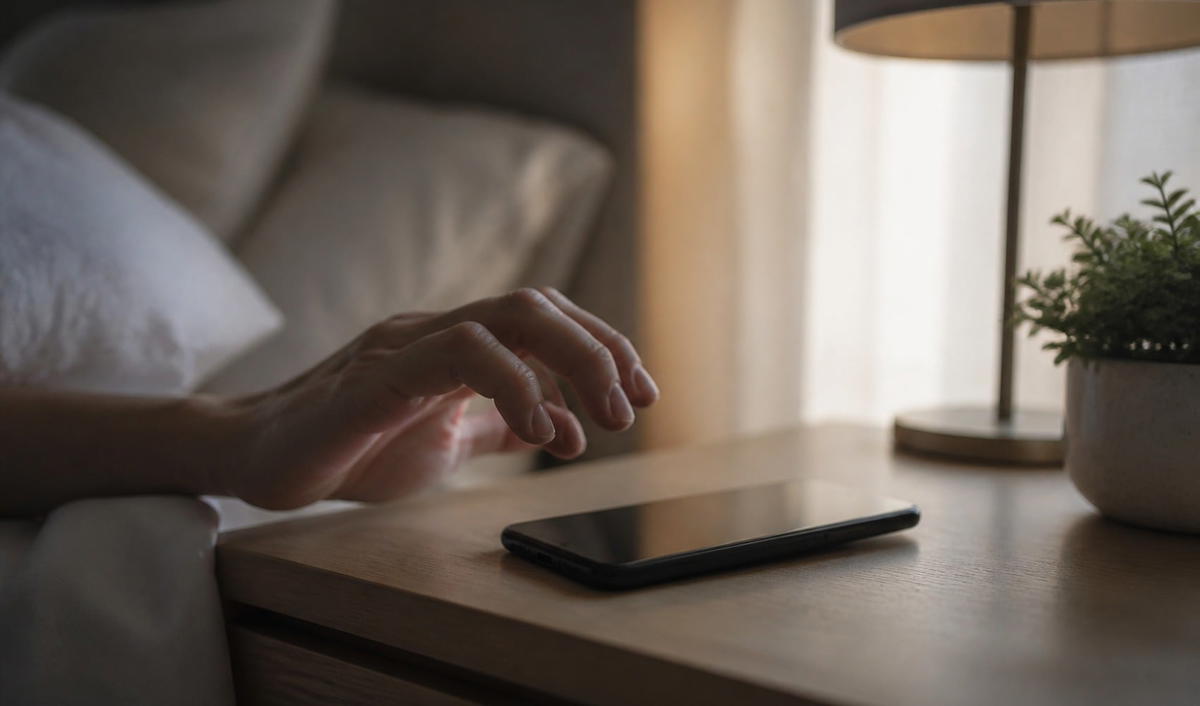
In modern life, the mobile phone has ceased to be merely a device for making calls. Many functions—such as receiving news, working, socializing, finding directions, shopping, and managing daily tasks—are now carried out on the same screen. This widespread usage can turn into a distinct sense of restlessness and incompleteness for some people when their phone is not with them. This condition is associated with the fear of being without a phone, known as “nomophobia.”
Nomophobia can manifest as intense stress when a person cannot access their phone, when the battery is low, when the internet connection is lost, or when they cannot check notifications. Checking the screen as soon as one wakes up in the morning, scrolling through social media in every spare moment, or checking the phone frequently even when there are no notifications can be counted among the signs of this cycle in daily life.
According to Specialist Clinical Psychologist Jülide Unutmaz from Anadolu Health Center Hospital, it is not enough to view the relationship established with the phone merely as a technology usage habit. Behind this relationship may lie the fear of missing out on developments, a need for validation, anxiety about losing social ties, and a desire to maintain control. Therefore, when evaluating the bond formed with the digital world, it is necessary to also consider the person's emotional needs.
HOW DOES NOMOPHOBIA APPEAR IN DAILY LIFE?
For some, being away from the phone is not just a practical inconvenience; it can turn into an experience that affects one's sense of security and mental balance. Not having the device with them, even for a short time, can trigger thoughts such as “Am I missing something?”, “Is there someone trying to reach me?”, or “Will something happen outside of my control?”
For this reason, nomophobia is often strengthened by the expectation of being constantly reachable. When work, social circles, and news feeds are moved to the phone without interruption, it can become difficult to remain silent or wait. A person may remain mentally stimulated even in moments of solitude; this can make it difficult to recognize the need for rest.
Social media usage can also fuel this cycle. Content encountered on platforms can lead a person to compare themselves with others. Notifications and the non-stop flow of content can trigger the brain's reward mechanism, creating a short-term feeling of relief. However, this relief does not mean the mind is truly resting. Time spent on social media to take a break can keep the mind even more stimulated due to the content consumed one after another.
EMOTIONAL NEEDS AND PHONE USAGE
Phone usage can also be linked to a desire to escape from loneliness, stress, and uncomfortable emotions. When a person experiences a challenging emotion, they may want to quickly shift their attention elsewhere; at this point, the phone offers an easily accessible escape area. As this habit, which provides short-term relief, becomes more frequent, time spent without a phone can become more challenging.
Specialist Clinical Psychologist Jülide Unutmaz emphasizes that for this reason, treating nomophobia solely as “phone addiction” is insufficient. The truly important point is how safe, calm, and balanced a person can feel when their device is not with them. The restlessness that emerges when the phone is absent can sometimes be related to the fact that the emotions the person is trying to avoid become more visible.
WHAT CAN BE DONE FOR DIGITAL BALANCE?
Under today's conditions, completely distancing oneself from the digital world is not realistic for most people. However, it is possible to make the relationship with the phone healthier. One of the first steps is to turn off unnecessary notifications and prevent the screen from constantly demanding attention. In this way, the phone can partially stop being a stimulant that interrupts the mind at every moment of the day.
Staying away from the phone at certain hours of the day can also be psychologically protective. Making room for silence instead of the screen during meals, before going to sleep, as soon as one wakes up in the morning, or during short breaks can help a person notice their own thoughts and bodily needs. The goal here is not to remove the phone from life entirely, but to prevent its usage from turning into an automatic reflex.
Creating screen-free times is important, especially in terms of learning to cope with the feeling of emptiness. Instead of filling every moment of waiting with content, stopping for a few minutes, focusing on one's breath, observing the surroundings, or taking a short walk can help the mind reorganize itself. These small intervals contribute to the phone remaining a tool used only when needed.
Coping with nomophobia is not just about reducing notifications; it also involves the person realizing which emotional needs they are trying to meet with digital tools. Sometimes what a person needs is not a new notification, new content, or new validation, but a quiet space where they can hear their own inner voice.
News Source: 12punto