Of course they can be reconciled. Because these two concepts are not antithetical to each other. One of the most important “global” demands of the post-Cold War era is the elimination of the “national.” In other words, a deep-seated opposition has emerged between globalization and the nation-state. The foreign policy perception of the nationalist-Kemalist wing, led by Attila İlhan in the 2000s, was also built upon this. While this approach holds meaning in terms of defending Turkey’s national interests, it ultimately possesses a quite incomplete and misleading content. Why?
 First, the globalization process is not one-dimensional. That is, it cannot be reduced to and dismissed solely as the concept of “imperialist occupation.” Because “globalization,” which has become the most effective hegemony tool of the neoliberal world order, has created its own opposite in accordance with the rules of dialectics. The movements described as “anti-globalization” show significant parallels with the anti-globalization objections we have here. An essentialist opposition to the concept of globalization, despite having a “national” character, enables the rise of right-wing populist and conservative tendencies. This results in the rise of demagogic rhetoric rather than cooperation.
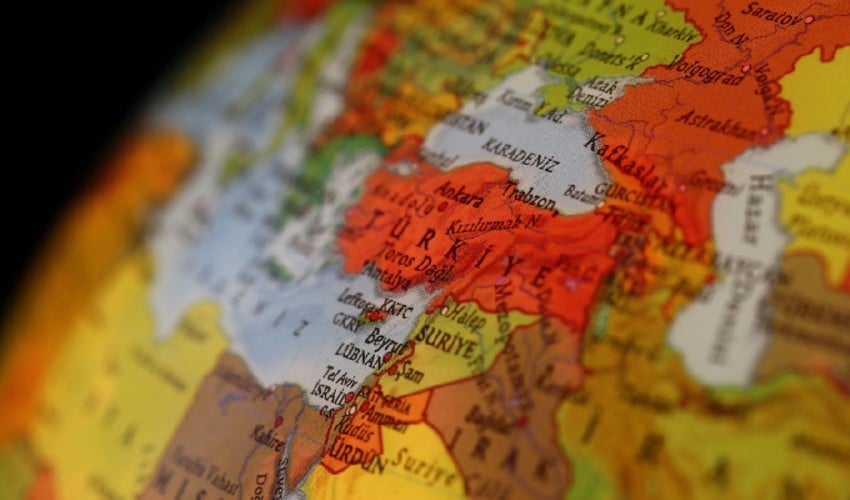
Second, the Republic of Turkey is not in a system isolated from the rest of the world. The constantly emphasized “geopolitical” importance is proof that the country is primarily located within a regional system. Turkey is not the only country affected by the struggle for hegemony over this region. Since the general situation of the region closely concerns Turkey, trying to achieve gains solely in the context of “national security” is not meaningful on its own. Just as in the Atatürk era, the understanding of a “Region-Centered Foreign Policy” must be brought back to the agenda as a starting point. In other words, as long as regional security is not ensured, Turkey’s ability to ensure its own security alone will not mean anything in the long run.
Third, Turkey is experiencing crises quite similar to many states both in its region and across the world. The wave of migration, high inflation, the concentration of capital and wealth in a narrower area, the widening gap between the working classes—who cannot sustain their lives without debt—and political and economic powers, the rapidly rising ecological crisis, etc., create a commonality that all peoples under neoliberal domination, known as the “Global South,” are exposed to. In global dynamics where the distances that we could once say “everyone has their own troubles” disappeared a long time ago, we are obliged to have a global agenda in order to correctly identify the crises.
The political, economic, and cultural crises that Turkey is in are not simple problems that can be reduced to the decisions of those in power. If we continue to look only from this point, we may be convinced that Turkey’s problems can be solved with just a change of government. However, this pushes us to look for a single culprit in all the crises we experience. This culprit should by no means be underestimated. On the other hand, if we ignore the system that created this culprit, we reach a highly misleading conclusion. Because this means: “There is no problem in the current order, there is only a government crisis in our country. If a democratic and pluralistic government comes to power, all problems will be easily solved.”
Turkish political life has acted with the above prejudice since the beginning of the Cold War, and thanks to the laziness of looking for the problem in individuals rather than the order itself, it has continued to face crises within a similarity where ultimately nothing changes.
In short, the “national” and the “global” are not antithetical to each other. It is not possible for an approach that is not well-versed in the global agenda to produce solutions to Turkey’s national problems. On the other hand, while trying to get out of the crises we are in, trying to draw prescriptions only within national borders will also be a deficiency. As long as we remain within national borders and are predominantly occupied with military security issues, we will witness that distrust toward the outside world intensifies even further. Because many problems in the world have long since transcended national borders with the increasing domination of capitalism, and countries have ceased to be as convenient a unit of analysis as they once were to distinguish between the “oppressor and the oppressed.”
A second problem arises at this very point when looking at the outside world. This stems from reading international relations too state-centrically. Seeing all states outside of us as a conflict-free whole with all their power holders, institutions, working classes, etc., and attributing every sentence uttered by the rulers to all the people in the country is misleading from the start. Ways of cooperation should be sought with all non-state actors that do not serve the current order, with global solidarity networks, and with all national, local, or international organizations that resist neoliberal domination, and what the “commons” are with all actors exposed to political and economic pressure like us should be identified.
Turkey’s national security and future will only be possible with the expansion of its international vision and the search for ways of cooperation. A world perception that is trapped within the limits of neorealist rigidity in the name of being occupied with “world realities,” where demands outside the current order are belittled as being “utopian,” has no role other than bringing more war, more inequality, and more crises to this world.
Assoc. Prof. Dr. İhsan Ömer Atagenç
News Source: 12punto