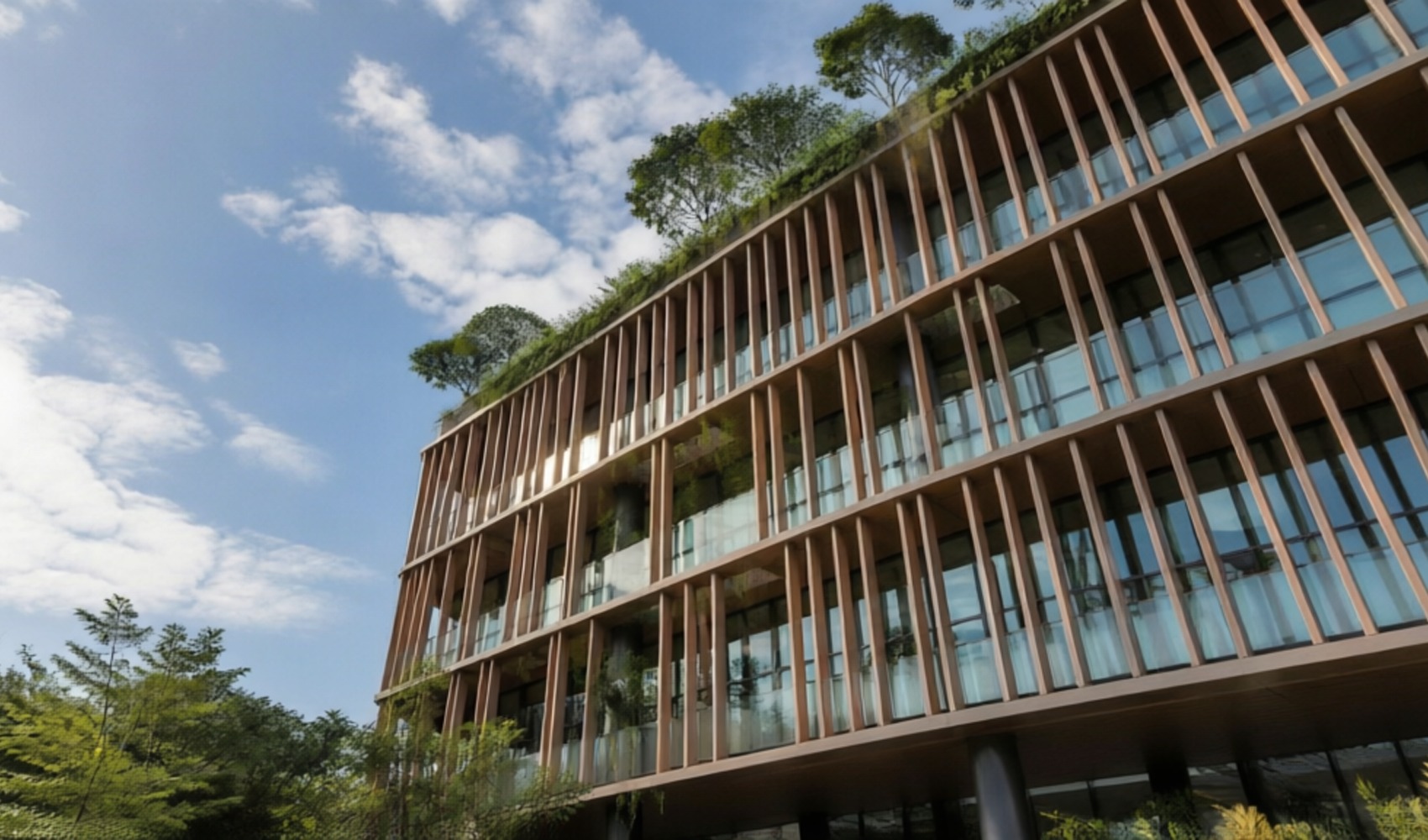
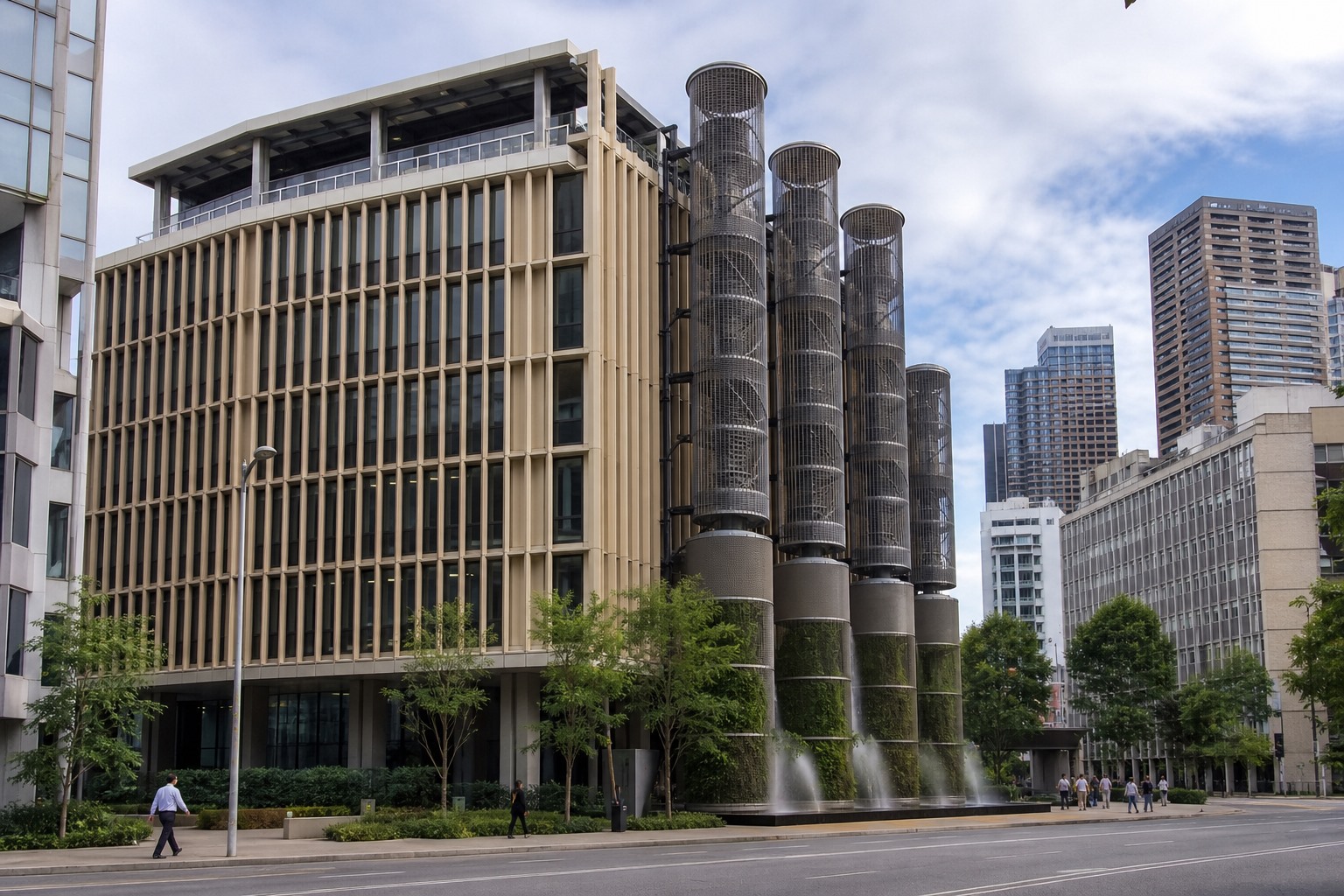
The Council House 2 (CH2) building in Melbourne, Australia, is drawing attention with an unusual cooling system designed to reduce reliance on traditional air conditioning. Five towers located on the southern facade of the 10-story, approximately 12,500-square-meter structure cool the air naturally through artificial rain created inside them.
Each of the towers, which are approximately 13 meters tall and 1.4 meters in diameter, draws in hot outside air from the top. Water sprayed from the top of the towers moves downward along with the air. During this process, some of the water droplets evaporate, absorbing heat from their surroundings and cooling the air inside the tower.
The cooled air is then directed to areas on the ground floor of the building. The system works with higher efficiency, especially in dry weather, because the cooling effect through evaporation increases when humidity levels are low.
INTEGRATED SYSTEM THAT REDUCES AIR CONDITIONING LOAD
Tests have shown that the temperature of the air passing through the towers can be reduced by between 4 and 13 degrees, depending on conditions. In one trial, it was reported that air entering the tower at 40.9 degrees was cooled down to 26.8 degrees.
In the system, not only the air but also the water passing through the towers is cooled. The water, which can drop to approximately 12 degrees, is sent back to the building's cooling infrastructure, allowing the same resource to be used at different stages.
The five towers are not an independent solution designed to cool the entire building on their own. At CH2, methods such as chilled ceilings, natural ventilation, movable sunshades, the heat storage capacity of concrete, and night purging are deployed together.
When the outside air is cool enough at night, the heat accumulated during the day is expelled. The sunshades on the facade prevent the structure from overheating by limiting direct sunlight. When the environmentally friendly systems in the building are evaluated together, it is stated that energy consumption can be reduced by approximately 80 percent and water usage by up to 75 percent.
News Source: 12punto