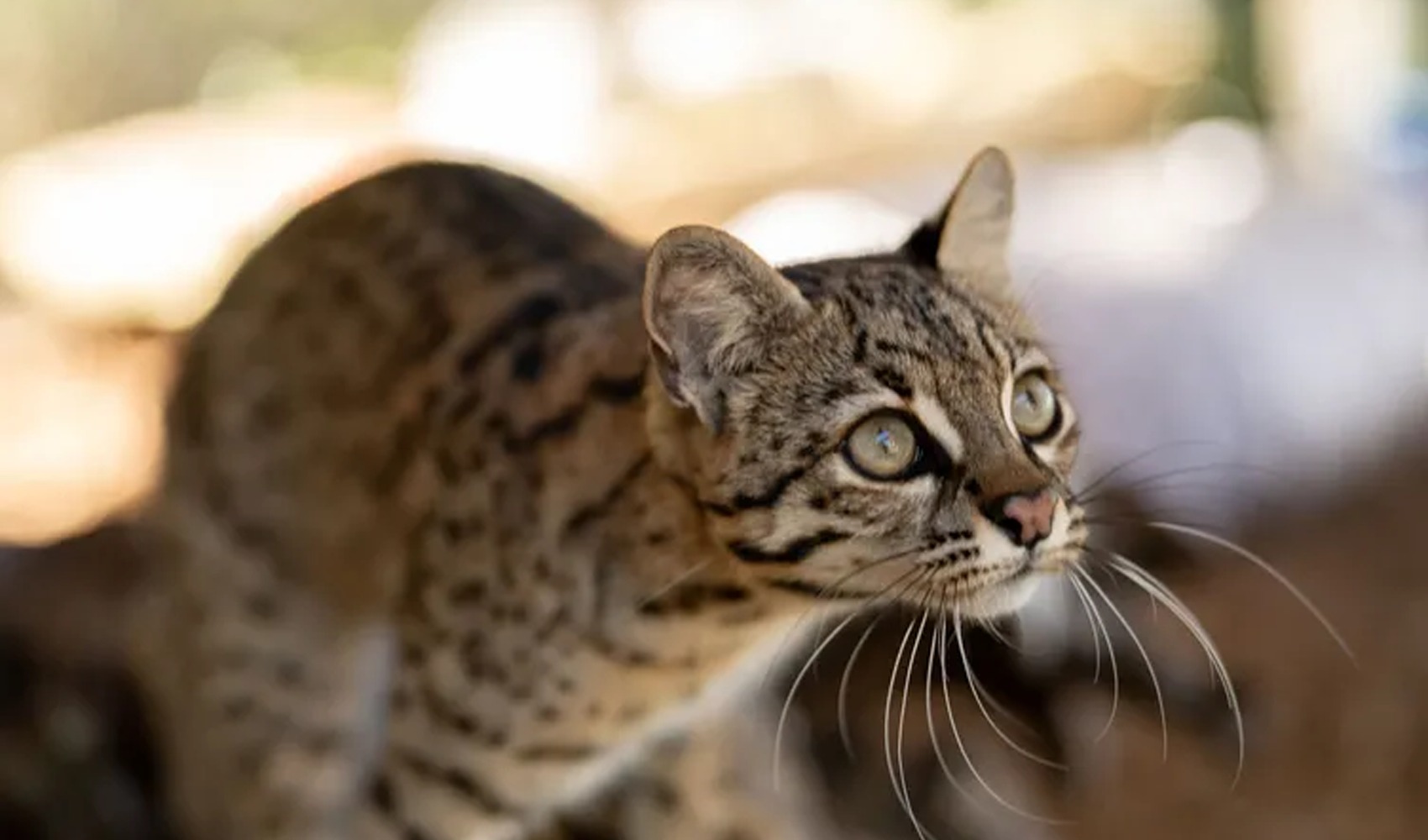
Found in the rain and covered in mud in Bolivia’s Yungas region in 2017, the kitten—initially mistaken for an abandoned house cat—has years later become the center of a scientific discovery. Following genetic analysis, it was announced that the animal, named “Tigrino,” belongs to a previously unidentified species of wild cat.
Rescued as a kitten, Tigrino was later taken to the Senda Verde Wildlife Sanctuary. Experts at the sanctuary noticed that while the animal resembled wild cats in South America, it exhibited physical characteristics and behaviors that did not perfectly match any known species.
An international team led by Bolivian biologist Paola Nogales-Ascarrunz compared the DNA of 38 felids obtained from different regions of South America. According to the results published in the journal Current Biology in September 2026, Tigrino was recorded as a new species belonging to a distinct evolutionary lineage.
The species, introduced to the scientific world under the name Leopardus tilcayo, is noted as one of the first new wild cat species to be identified alive in the region in approximately 100 years. It was reported that the small-bodied species is about 46 centimeters long and weighs 1.4 kilograms, with dark spots and rosette patterns on its light brown fur.
The species' natural habitat is identified as the biodiverse Yungas cloud forests on the eastern slopes of the Bolivian Andes. However, deforestation, the expansion of agricultural land, fires, and mining pressure in the region pose a threat to its habitat.
Tigrino is not expected to be released back into the wild. According to experts, the animal, which was taken into human care as a kitten and has lived under protection for a long time, has not developed the reflexes necessary to survive in the wild. Therefore, it is planned that Tigrino will continue its life at Senda Verde under expert care.
News Source: 12punto