United States President Donald Trump's statements regarding the incorporation of Greenland into the U.S. have been met with significant backlash across Denmark. Following the ensuing debate, Danes have launched an organized movement to refrain from purchasing U.S.-origin products.
A boycott group launched on Facebook reached tens of thousands of people in a short time. In Denmark, which has a population of approximately 6 million, the number of consumers looking to avoid American goods is increasing every day. Another factor increasing the impact of the boycott is a new mobile application that makes it easier to identify the origin of products on supermarket shelves.
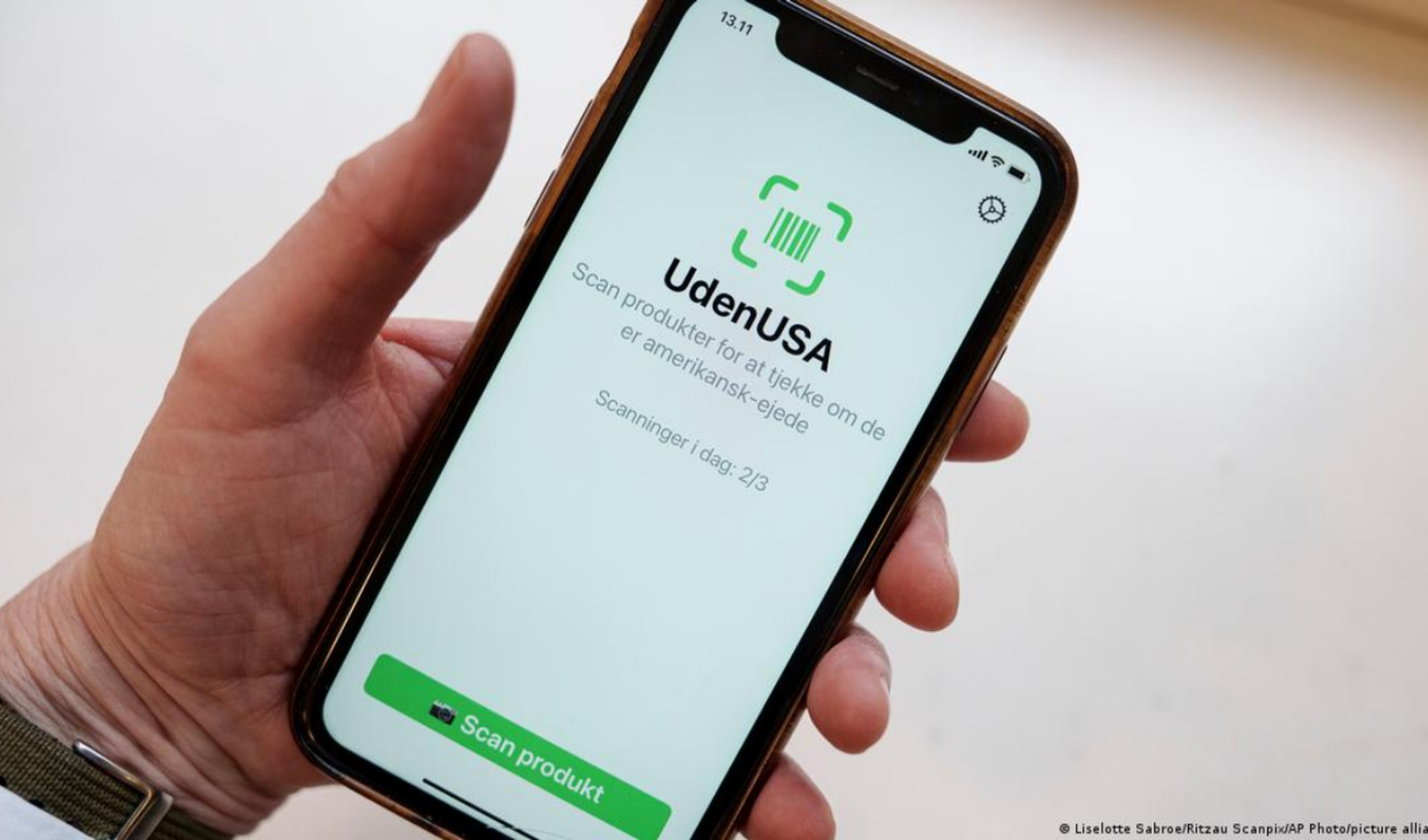
Developed by 21-year-old Jonas Pipper and his friend Malthe Hensberg, this application called "UdenUSA" provides the ability to check whether products come from America while shopping. Thanks to the application, users can easily view origin information by scanning any grocery product with their phones, and the application also suggests alternatives from European producers.
As of Wednesday, UdenUSA broke a record by reaching the number one spot on the list of free applications downloaded in the country. Similar boycotts occurred in Denmark last year, and some supermarket chains added star symbols to price tags to make European-produced products more visible.
The ultimate economic impact of the boycott is not yet clear. Since Denmark has a small economy on a global scale, the share of American food products consumed in the country is quite low. Experts are of the opinion that even if widespread participation occurs, its impact on the U.S. economy or the politics between the two countries will be limited.
Sascha Raithel, a marketing professor at the Free University of Berlin, assessed that "even if a significant segment of consumers in the country boycotts U.S. products, this may not create a strong impact in economic or political terms." Jan Landwehr from Goethe University stated that large boycott movements produce more visible results when the decisions in question are put into practice.
Katharina Gangl from the Nuremberg Institute for Market Decisions emphasized the role of the availability of alternative options to boycotted products in consumer behavior. Pelle Guldborg, a behavioral researcher at Roskilde University, expressed that the reactions toward American products reflect the public's anger, stating, "People watch the news and get angry. Right now, Greenland and we are at the center of the discussion."
This organized reaction developed by Danes against Trump's Greenland statements has turned into a wave that affects not only politics but also daily shopping habits in the country.
News Source: 12punto