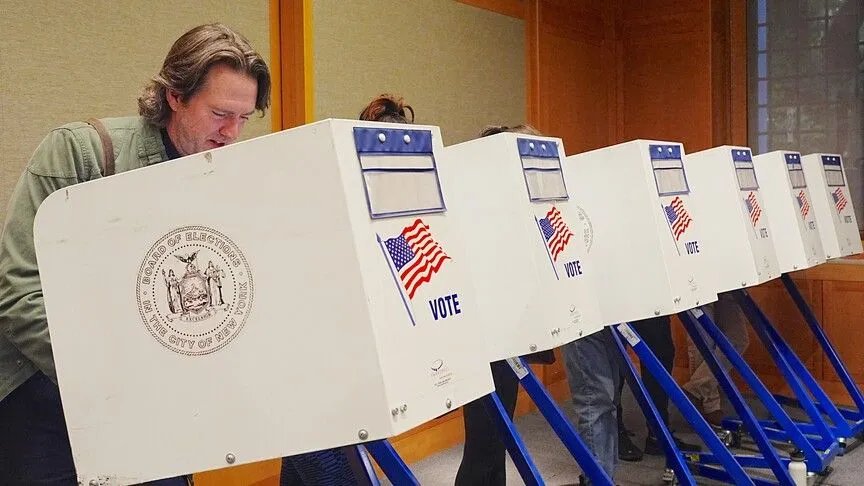
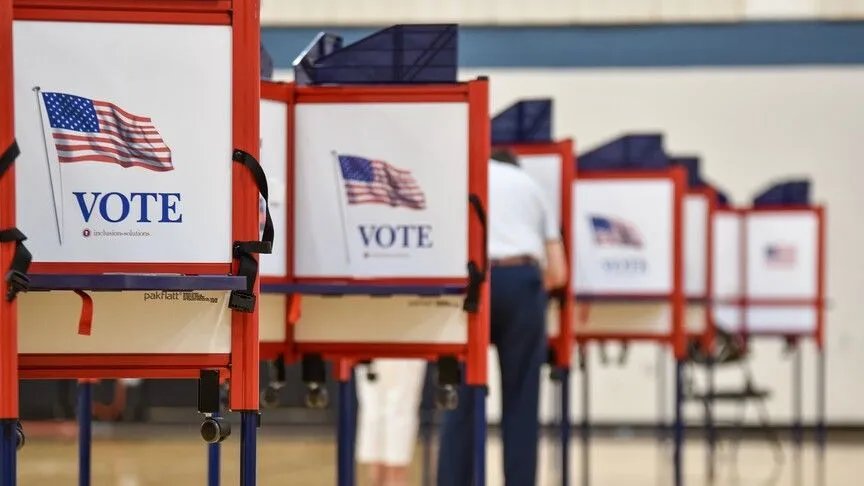
Millions of voters in the US are heading to the polls today for the Congressional midterm elections. In the elections, votes are being cast for all 435 seats in the House of Representatives and 35 of the 100 seats in the Senate. While gubernatorial elections are also being held in 36 states, polls are also open for numerous state legislatures and local governments.
The elections, which fall in the middle of President Donald Trump’s second term, will directly affect not only the arithmetic of Congress but also the White House’s legislative power over the remaining two years. While Republicans are trying to maintain their dominance in both chambers of Congress, Democrats are aiming to take the majority in the House of Representatives and the Senate.
CALCULATING THE MAJORITY IN CONGRESS
Poll averages released before the election indicate that Democrats appear to have an advantage over Republicans in both chambers. However, the states and districts where neck-and-neck races are ongoing make it difficult to predict the final picture.
According to data from RealClearPolitics, which compiles general and state-level polls, Democrats are expected to win 47 seats and Republicans 44 in the Senate. Of the remaining 9 seats, 8 appear closer to Republicans and 1 to Democrats. For Republicans to maintain their Senate majority, they need to win at least 6 of the 9 contested seats.
In the event of a 50-50 tie in the Senate, Vice President JD Vance’s tie-breaking vote could provide the majority to the Republicans. To reach a majority in the House of Representatives, 218 seats are required. While RCP forecasts show that Democrats could win 227 seats and Republicans 180, it is noted that the race could be decisive in 28 districts.
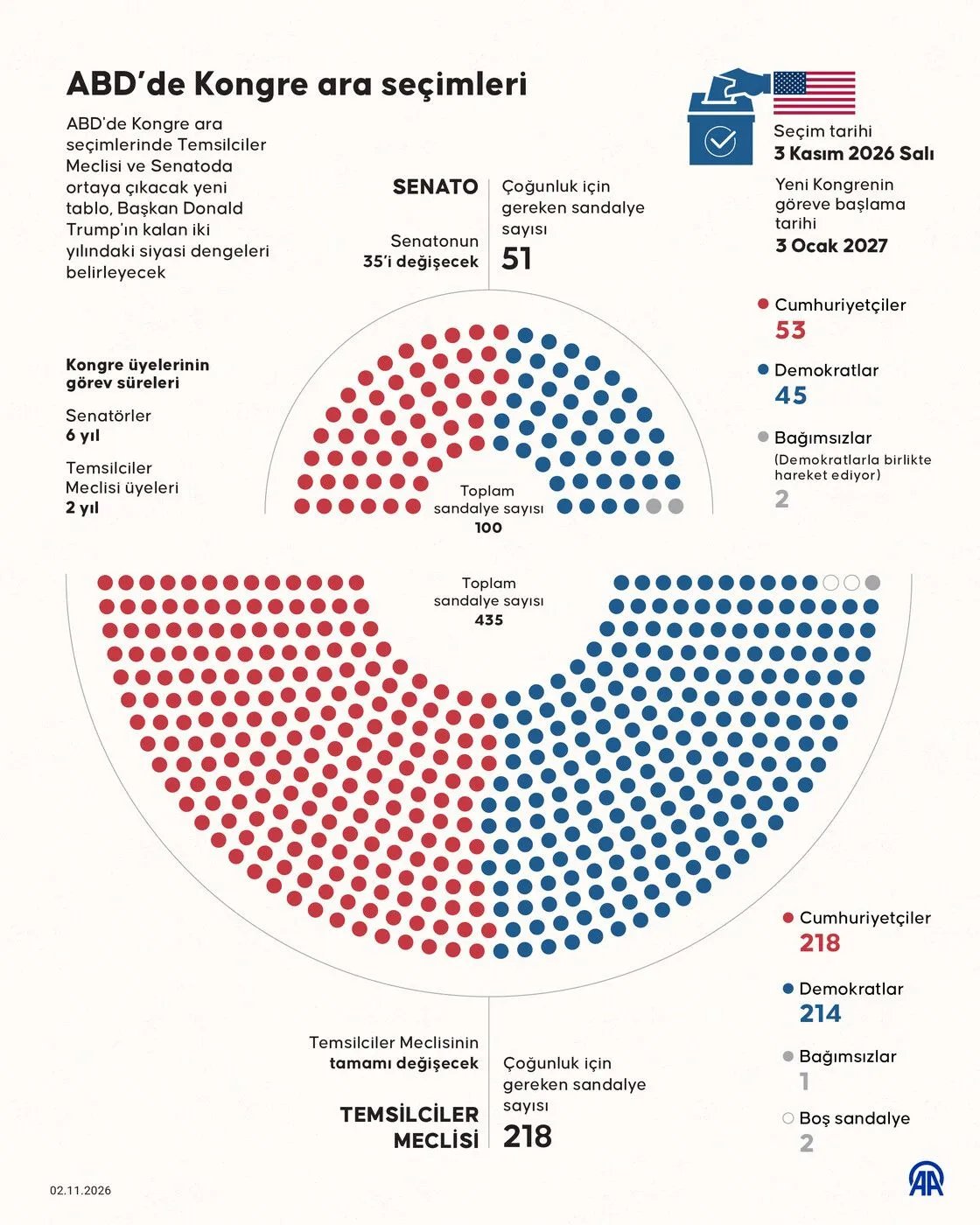
In the current picture, Republicans hold 53 seats and Democrats 45 in the Senate; two independent senators align with the Democrats on many issues. In the House of Representatives, Republicans have 218 seats and Democrats 214. There is one independent member in the House, and 2 seats are vacant.
NECK-AND-NECK RACE IN MICHIGAN
One of the most closely watched addresses of the election is Michigan. The Senate race in Michigan, which is seen as a “swing state,” is considered critical in terms of the struggle for a majority in Congress. Democrat Abdul El-Sayed and Republican Mike Rogers are facing off for the seat of Democratic Senatör Gary Peters, who will retire at the end of the year.

63-year-old Republican Rogers is running his campaign with a line that supports Trump’s policies. 42-year-old Democrat El-Sayed, on the other hand, opposes the Trump administration on many issues, from immigration policies to attacks on Iran and the support given to Israel. It is stated that if El-Sayed wins, he will go down in history as the first Muslim senator elected to the US Senate.
Abdulrahman Mohamed El-Sayed, who is the child of an Egyptian immigrant family and is also known for his identity as a medical doctor, is in the progressive wing of the Democratic Party. El-Sayed became his party’s Senate candidate by surpassing Representative Haley Stevens in the Democratic Party primary held on August 4. It was stated that AIPAC, which supported Stevens during the primary process, spent 62 million dollars.
According to the multi-candidate poll average released by RCP until November 1, El-Sayed appears at 47.7 percent and Rogers at 45.3 percent. The difference of approximately 2.4 points makes the turnout of undecided voters and the participation rate even more important for the result.

It is stated that approximately 250 thousand Muslims live in Michigan, which corresponds to approximately 2.4 percent of the state’s population. The fact that the race is proceeding within a narrow margin makes the participation of different voter groups in the polls one of the decisive factors. In the state, voters will determine the members of the House of Representatives, the governor, and state legislative representatives, in addition to the Senate race.

Midterm elections in the US are defined as Congressional elections that do not coincide with presidential elections and fall in the middle of the president’s four-year term. Members of the House of Representatives are elected for two years, and senators for six years. Approximately one-third of the seats in the Senate are renewed every two years. This year, when two special elections in Florida and Ohio were added to the 33 senators on the normal calendar, the number of seats entering the race rose to 35.
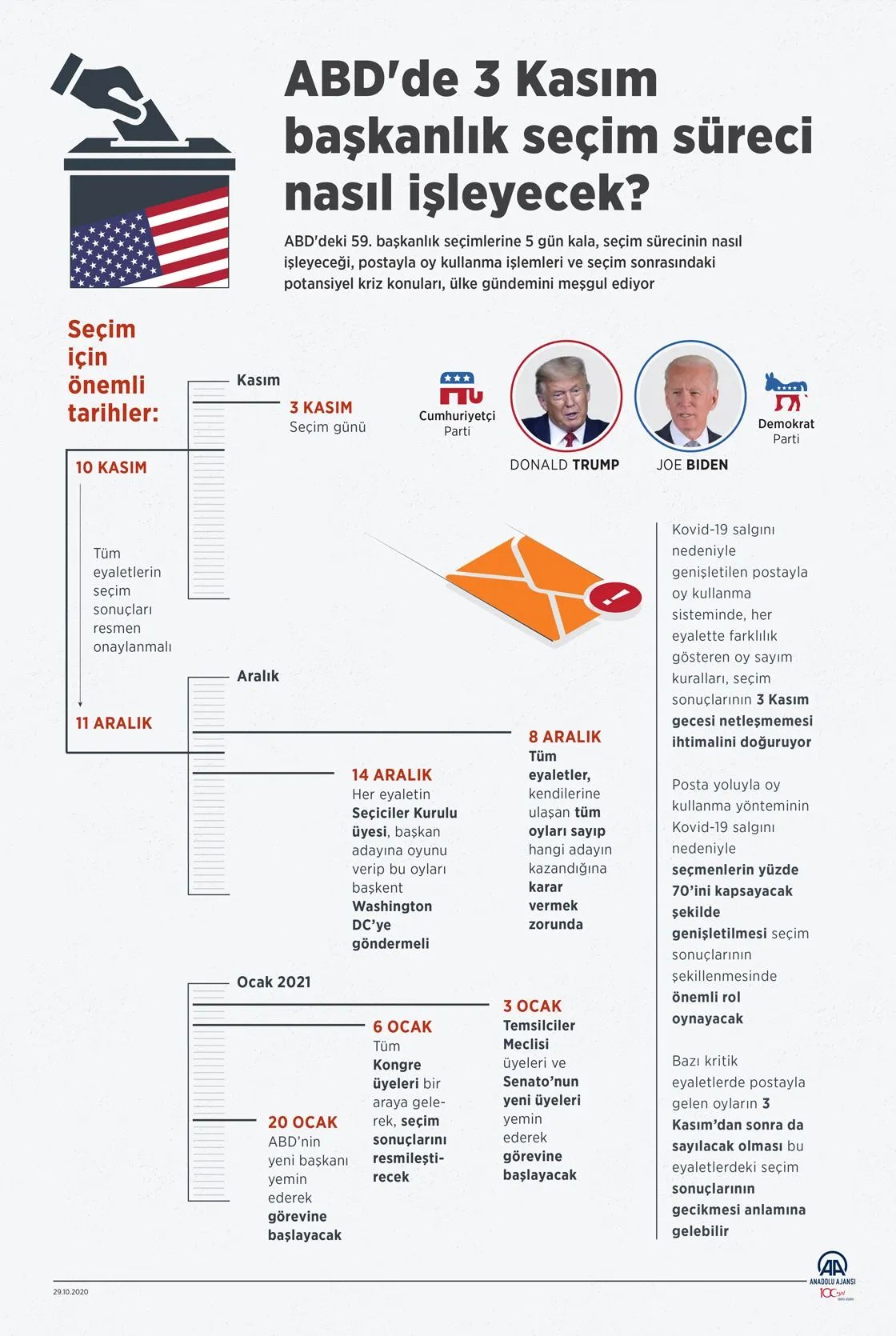
Although it is a federal election, voting and counting processes are largely conducted according to state rules. Voters can cast their ballots at the polls, by voting early, or by mail. Requirements for showing identification, voter registration calendars, and conditions for accepting mail-in ballots vary between states.
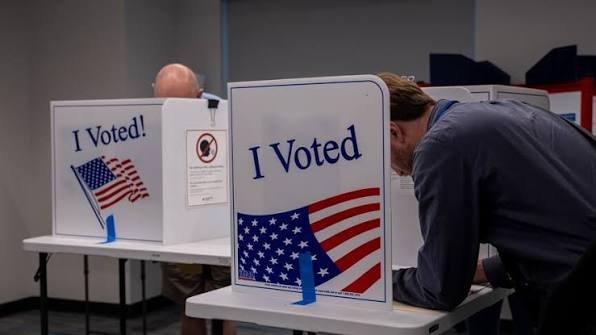
Since there is no common poll closing time across the country, results will begin to be announced gradually from east to west. In states where the vote margin is very small, it may take a few days for final results to emerge due to the counting of mail-in ballots and potential challenge processes.
According to analyses in the US media, more than 43 million voters in 47 states and the capital Washington have voted early or sent their ballots by mail. This number shows that approximately 10 million more voters have cast their ballots compared to the same period of the 2022 midterm elections.
If Democrats win the majority in the House of Representatives and the Senate, it may become difficult for the Trump administration to pass regulations regarding budget, tax, and immigration policies through Congress. Even if Democrats win the majority only in the House of Representatives, it could disrupt the White House’s budget plans and force the administration into more difficult negotiations.
News Source: 12punto