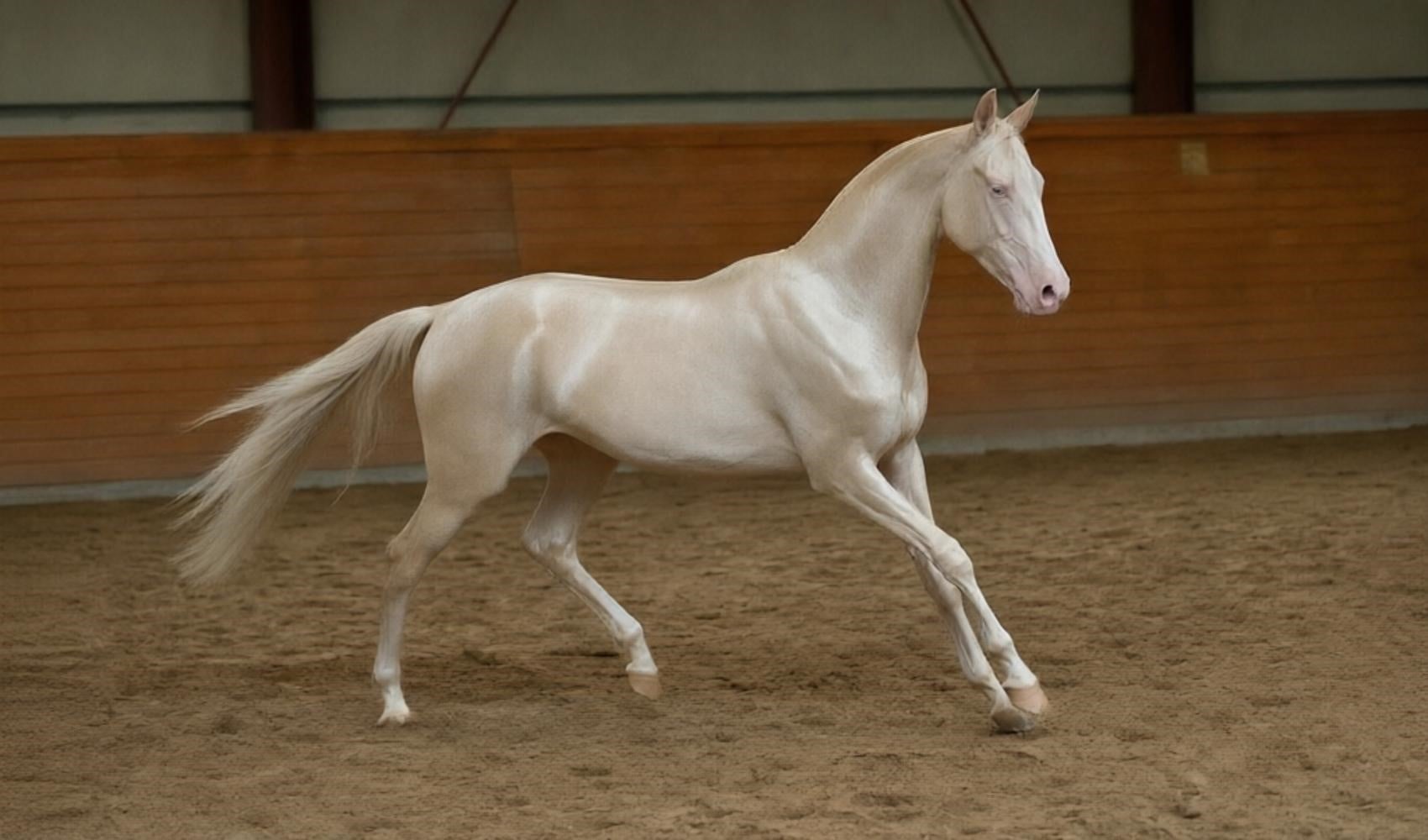
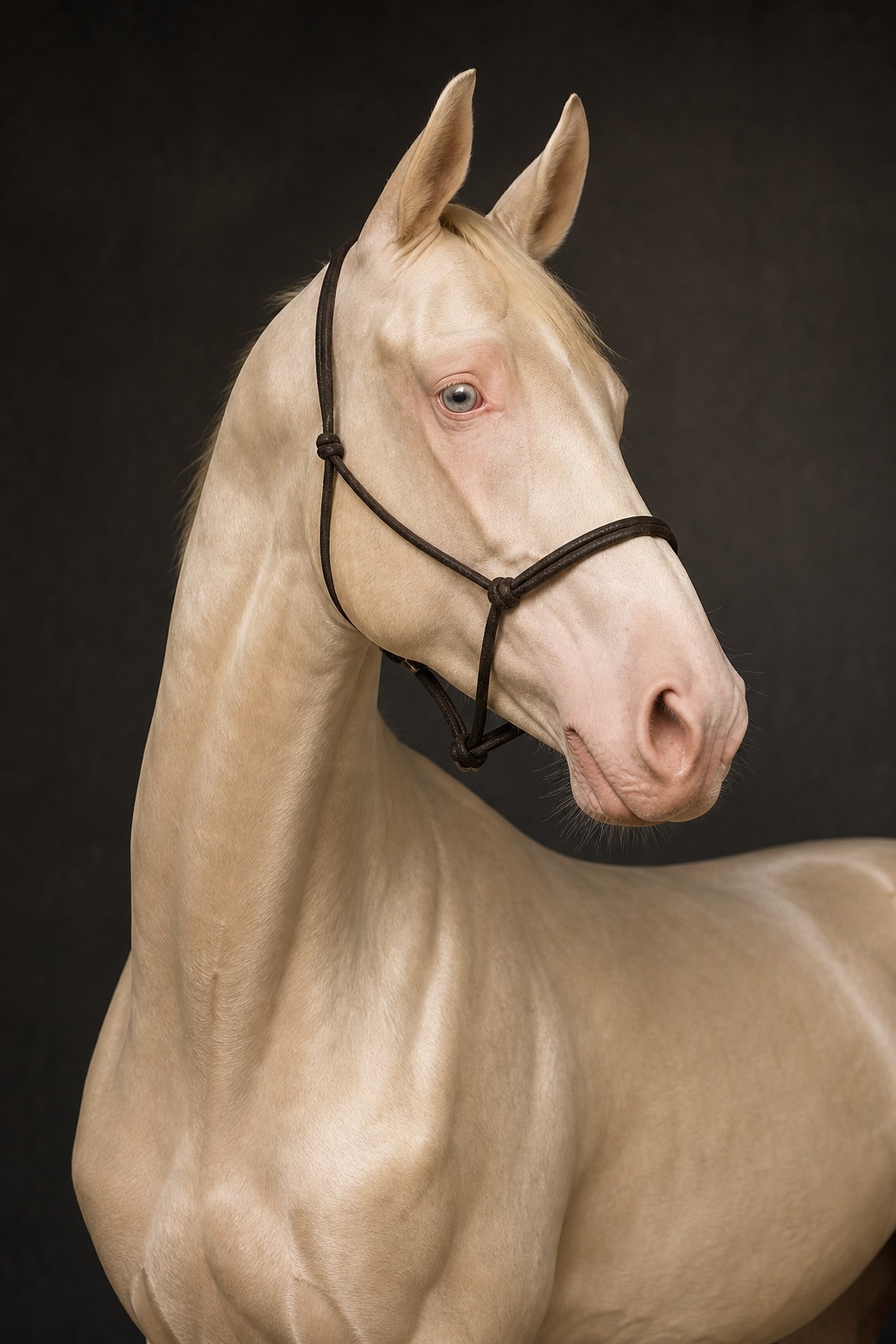
In Kazakhstan, Aqzhan, a light-colored mare of the Ahal-Teke breed, has emerged as one of the country’s new symbols not only because of her appearance, but also because of the cultural meaning she carries. The horse, noted for her satin-like glossy coat, has attracted wide interest on social media and in international publications.
Aqzhan came to public attention after Kazakhstan President Kassym-Jomart Tokayev shared a post following his visit to the presidential stables. Tokayev said he had named a light-colored Ahal-Teke foal Aqzhan last year, describing the horse as “tall, with an elegant neck, well-shaped ears, a slender body and a clear gaze.”
Aqzhan, born in Astana on March 30, 2025, is reported to have the isabelline color seen in only about 3 percent of Ahal-Teke horses. Although this color may at first give the impression of albinism, the main effect is created by a satin sheen formed as the fine hairs refract light.
THE PLACE OF THE HORSE IN STEPPE CULTURE
In Kazakhstan, the horse is regarded as one of the strongest symbols of nomadic culture. It is stated that the earliest evidence of horse domestication in the region is linked to the Botai culture in Central Asia, with earlier findings dating this process to around 2200 BC and newer research taking it back as far as 3500 BC.
For centuries, horses were at the center of transportation, trade, migration and warfare on the steppe. The mobility of groups such as the Huns, Avars, Hungarians and Mongols, based on cavalry power, is also counted among the important examples of this historical bond.
In Kazakh tradition, the association of isabelline-colored horses with good fortune, abundance and strength has further increased interest in Aqzhan. In local commentary, the horse’s name, “Pure Spirit,” is seen being mentioned together with modern Kazakhstan’s national identity.
Tokayev also draws attention to the special place horses hold in the lives of the Kazakh people, emphasizing that horse breeding and equestrian sports should be supported. The presidential stables are known to also house special horses gifted by foreign leaders.
Kazakhstan keeps horse culture on the agenda not only as a traditional heritage, but also through nature conservation efforts. Recently, under a program to reintroduce Przewalski’s horses to the steppe, 22 horses were brought from breeding centers in Europe to the Altyn Dala State Nature Reserve. The goal is to establish a sustainable population of about 40 horses by 2029.
News Source: 12punto