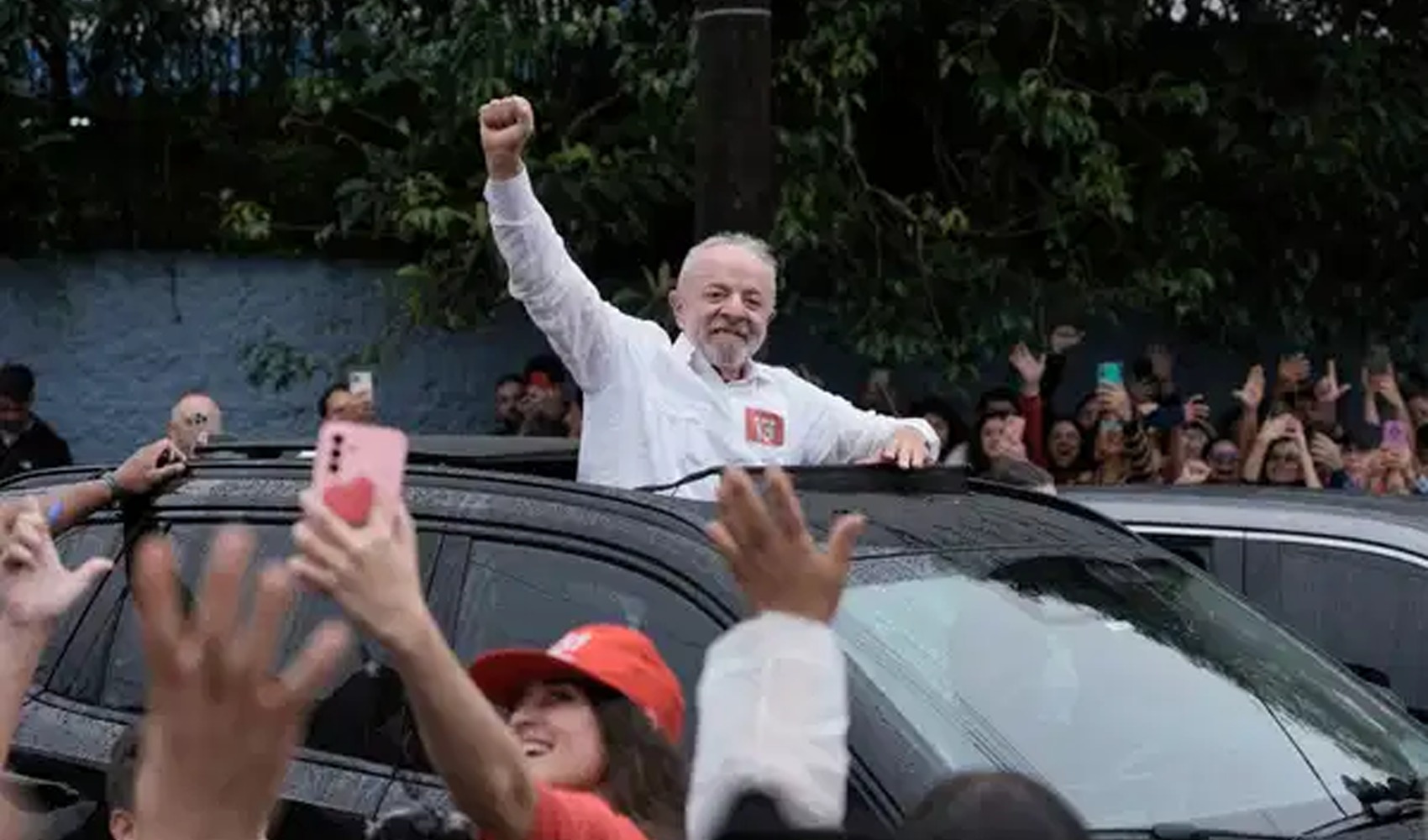
In the second round of Brazil's presidential election, incumbent President Luiz Inacio Lula da Silva was re-elected after defeating Senatör Flavio Bolsonaro, the son of former President Jair Bolsonaro. According to results announced by Brazil's Superior Electoral Court, Lula finished with a margin of more than 4 million votes over his opponent.
The victory of 80-year-old Lula is considered a historic milestone since the country's return to democracy in the 1980s. With this result, Lula became the first politician in Brazilian history to be elected president four times.
Flavio Bolsonaro, who had finished the first round in the lead, losing in the second round stood out as the most notable development of the election race. It had been noted that Lula struggled during the campaign process due to debates over living costs, economic hardships, and corruption.
PREPARATIONS TO CHALLENGE THE RESULTS
Flavio Bolsonaro announced that he would not accept the election results. It was reported that Bolsonaro would file an application for the cancellation of the results, citing the Brazilian Supreme Court's decision to extend voting hours by two hours on election day.
However, political analysts see it as highly unlikely that the challenge will change the outcome due to the size of the vote margin between the two candidates. Furthermore, the fact that the Bolsonaro camp had also requested an extension of voting hours due to heavy rains in the south of the country will be one of the main points of contention in the appeal process.
Mario Braga, a Latin America analyst at the risk consultancy firm RANE, assessed that while right-wing groups might organize protests in the coming days, it is extremely unlikely that these actions will change the election result.
SOCIAL WELFARE AND ECONOMIC AGENDA
In the final phase of Lula's campaign, promises such as expanding social welfare, improving living conditions for workers, and making public transportation free on weekends came to the fore. The promise of a 15 percent increase in social assistance programs was also cited among the issues that strengthened voter support.
Recalling his policies aimed at reducing poverty and income inequality during his previous presidential terms, Lula argued that social gains must be protected. Lula, who previously served as president between 2003 and 2011, returned to politics after his convictions were overturned and defeated Jair Bolsonaro in the 2022 elections.
A more challenging Congressional landscape awaits Lula in his new term. The gain in power by right-wing parties in the legislature could narrow the government's room for maneuver regarding budget regulations, economic reforms, and high-level appointments.
High interest rates, rising public debt, and household indebtedness in the Brazilian economy are among the primary tests for the new administration. In the country, where the government projects 2.3 percent growth for next year, debates over public spending and fiscal discipline are expected to come to the fore even more in the new term.
VICTORY SPEECH FROM LULA: “BRAZIL IS NO ONE'S BACKYARD”
After the election results were announced, Lula da Silva met with his supporters at a hotel in Sao Paulo and drew attention to Brazil's independence and democratic values in his speech.
Thanking the voters, Lula said, “I owe all of this to you. Brazil has saved its democracy; the election was won by honesty, nationalism, and democracy. Brazil is not and will not be anyone's backyard.”
Touching on his political background, Lula said, “I am very proud because I am the only president in this country to be elected four times through democratic means without a university degree.” Lula also announced that he would not run for president again after completing his current term.
FULL-DAY EDUCATION AND BRAZIL-SPECIFIC ARTIFICIAL INTELLIGENCE PLAN
Sharing his goals regarding education policies, Lula stated that they plan to expand full-day education up to the high school level and broaden savings incentive programs for students.
Noting that they want to reduce the country's foreign dependency in the field of technology, Lula expressed that they do not want to remain dependent on China and US-based artificial intelligence systems. Lula conveyed that the goal is to establish data centers utilizing Brazil's renewable energy sources and to develop artificial intelligence technologies specific to the country.
Touching on climate policies and the protection of the Amazon Rainforest, Lula said that deforestation in Brazil has decreased for four consecutive years.
LULA'S ELECTION CRITICISM OF TECHNOLOGY COMPANIES
Criticizing the influence of big technology companies on election processes, Lula argued that digital platforms attempted to influence election results and stated that regulations in this area need to be strengthened.
Stating that crimes committed in the digital environment should be treated in the same way as crimes in real life, Lula expressed that companies that generate high income without paying taxes cannot be allowed to steer election results.
Lula also thanked the elderly and sick voters who went to the polls to vote on election day. He stated that he was moved by the images of voters who were taken to vote with the support of their relatives.
News Source: 12punto