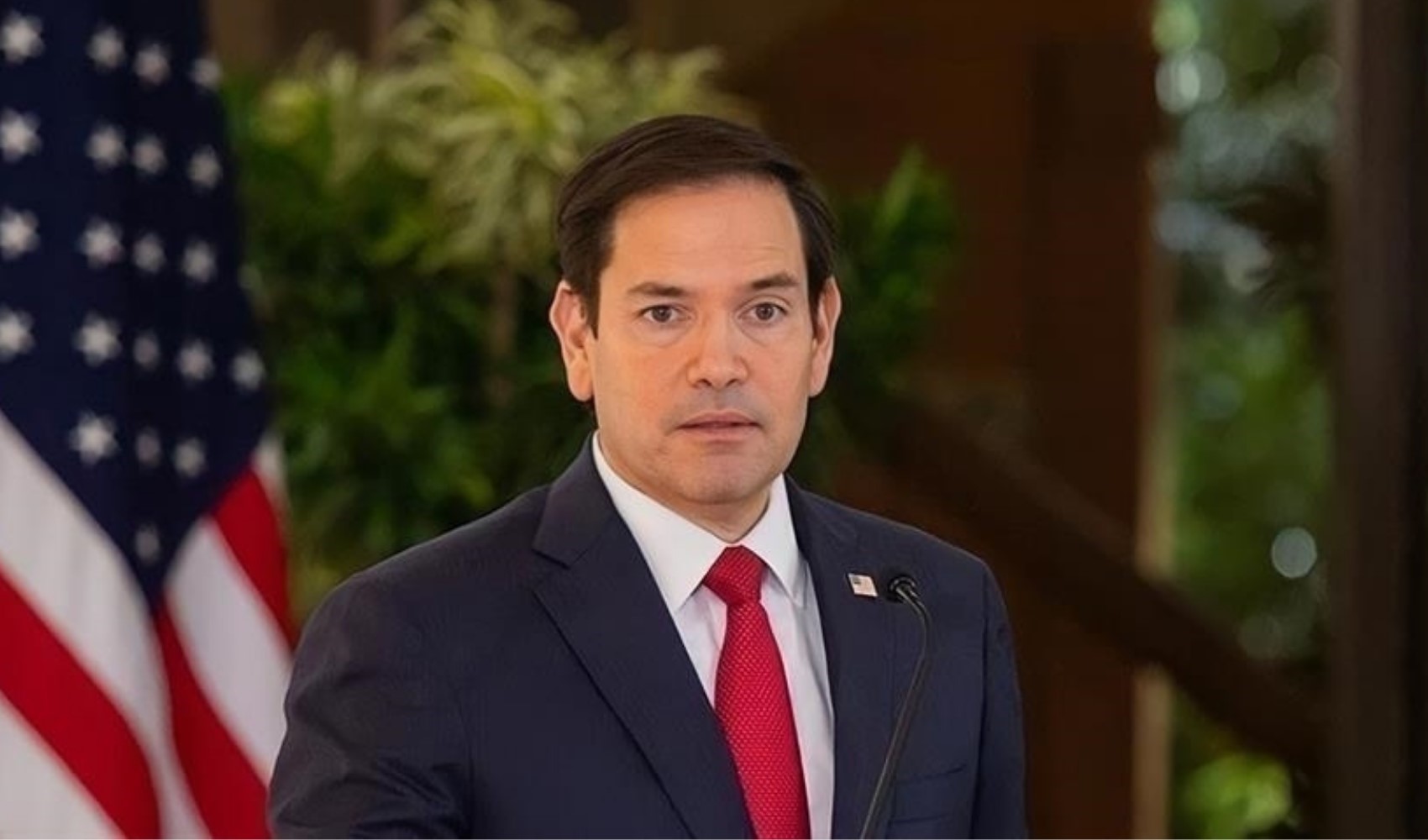
US Secretary of State Marco Rubio testified before Congress for the first time since the start of the conflict with Iran.
Rubio answered questions from senators regarding Iran during his testimony before the Senate Foreign Relations Committee in connection with the US State Department's budget request. During his testimony, Rubio made statements regarding negotiations with Iran and argued that Operation Epic Fury had been extremely successful in achieving its military objectives.
"Iran still has a large number of UAVs"
Rubio said, "The operation has significantly reduced Iran's defense industrial infrastructure and its capacity to produce missiles and UAVs. The missile program, in particular, has been greatly weakened. I will leave the exact figures to the Department of Defense. I am not speaking as a general or a military planner. However, there has been a significant drop in the number of missile launchers they possess. Iran still has a large number of UAVs. These are very easy to produce, and as we know, this is not just an issue related to Iran, but a global one. Even cartels in Mexico are using UAVs against each other."
"The Iranian navy is lying at the bottom of the ocean"
The US Secretary of State remarked, "There is no such thing as an Iranian navy anymore. There are a few small speedboats with machine guns attached to them, but there is no navy. The Iranian Navy is lying at the bottom of the ocean and will likely turn into a reef in a few years, making these areas good fishing spots."
Stating that Iran entered a ceasefire following the weakening of its conventional capabilities and that the US "agreed to pause," Rubio said, "As part of the agreement, they were supposed to reopen the Strait of Hormuz, but they did not do so."
Rubio stated that the blockade imposed on Iran is based on the fact that Iran will never be allowed to use the Strait of Hormuz while it remains closed to the rest of the world.
"We are now conducting talks"
Regarding the talks with Iran, Rubio said, "We are now conducting talks. However, these are not like conducting talks with Switzerland, for example; they are very different. Unfortunately, mediators are required. But we have a possibility before us that could happen today, tomorrow, or next week. As far as I recall, for the first time, Iran has agreed to discuss certain issues that it refused to even name in nuclear negotiations a month or even a year ago."
Rubio stated, "This is ultimately no guarantee that an agreement will be reached that the Senate or the American people will accept. But we will be able to put them into a process that will test how far they are prepared to go. What makes this process difficult is that the Iranian regime is fragmented within itself. It sometimes takes days to get an answer from their system."
US Secretary of State Rubio said, "Our hope is the reopening of the Strait of Hormuz, entering a period of negotiation with defined boundaries on specific issues, and reaching a conclusion that is both acceptable to us and achievable for them."
In response to a question from Democratic Senatör Chris Murphy about how the Strait of Hormuz would be opened—noting that the closure of the strait carries a heavy cost for the US as well as the Iranian economy—Rubio replied, "The only reason for the blockade is that Iran is firing on commercial vessels and has mined a large portion of international waters in the Strait of Hormuz." Rubio added, "What Iran is doing is unlawful and illegal. There is not a single country in the world that supports Iran's actions, perhaps with the exception of Oman, which winks at this situation. China is against it. Russia is against it. Everyone is against it."
Rubio said that the number one condition in the talks between the US and Iran is the reopening of the Strait of Hormuz. Rubio stated, "The reopening of the strait means that ships can pass through international waters without coming under fire and without paying transit fees, just as they do at other strategic chokepoints around the world. This is the primary condition."
"They have to reopen the strait"
To the senator's follow-up question regarding whether the Strait of Hormuz is a result of the US military operation against Iran and how the US administration plans to open the strait, Rubio replied, "They have to reopen the strait. If they refuse to do so, we have other options available. However, our preference is to ensure its reopening through negotiation." When asked what they expect from Iran for this to happen, Rubio said, "It is very simple. Iran needs to declare that it will no longer fire on commercial vessels passing through the strait."
Rubio stated, "They need to clearly declare that the strait is now open and we are not demanding a transit fee. They must announce that they will help remove the mines we have placed there and that they will not fire on ships."
When asked if US President Trump is also demanding commitments from Iran regarding its nuclear program, Rubio said that in addition to the Strait of Hormuz issue, Iran must commit to negotiations on highly enriched uranium, noting that this is a prerequisite for the second phase of the talks. Rubio said, "They need to agree to negotiate on imposing heavy, long-term restrictions on uranium enrichment activities or ending them entirely. Of course, these are highly technical matters."
Sanctions relief is conditional
Responding to a question about the possibility of lifting sanctions on Iran, Rubio said, "There are different types of sanctions. These include international sanctions, Congressional sanctions, and presidential sanctions. Therefore, we can lift some, but not others. However, any relief of sanctions depends on addressing the reasons why these sanctions were initially imposed. That reason is Iran's nuclear program."
Rubio stated that if Iran agrees to abandon the nuclear activities that led to the sanctions, then relief from those sanctions would be on the table. Rubio added that something like sanctions relief in exchange for opening the Strait of Hormuz has neither been discussed nor proposed.
"Some indicators show that the new supreme leader is becoming increasingly involved in the process"
In response to a question during the session regarding the state of the Iranian leadership and whether Iran's new supreme leader is alive, Rubio said, "The indications we have show that he is alive."
Stating that Iran's Supreme Leader Mojtaba Khamenei is taking an increasingly active role in the negotiations, Rubio said, "We have not seen him in public, nor have we heard his public statements. Frankly, considering what has happened to many leaders, I suspect that being visible in public is not something advised internally. However, some indicators show that the new supreme leader is becoming increasingly involved in the process. But all communications are conducted in writing and through intermediaries," he said.
"We are not begging anyone"
In response to Democratic Senatör Cory Booker's claim that the US is at a stalemate regarding Iran and that the Trump administration is now "essentially begging to return to a deal it initially broke," Secretary of State Rubio retorted, "We are not begging anyone."
Stating that he does not understand the inference that Iran is in a stronger position, Rubio said, "Maybe the Iranians are begging. Because their economy is losing hundreds of millions of dollars a day. You have to understand the scale of what they are losing. Remember, before all of this started, there were street protests in Iran. All economic indicators in Iran are much worse today compared to six months ago when those protests were taking place."
News Source: 12punto