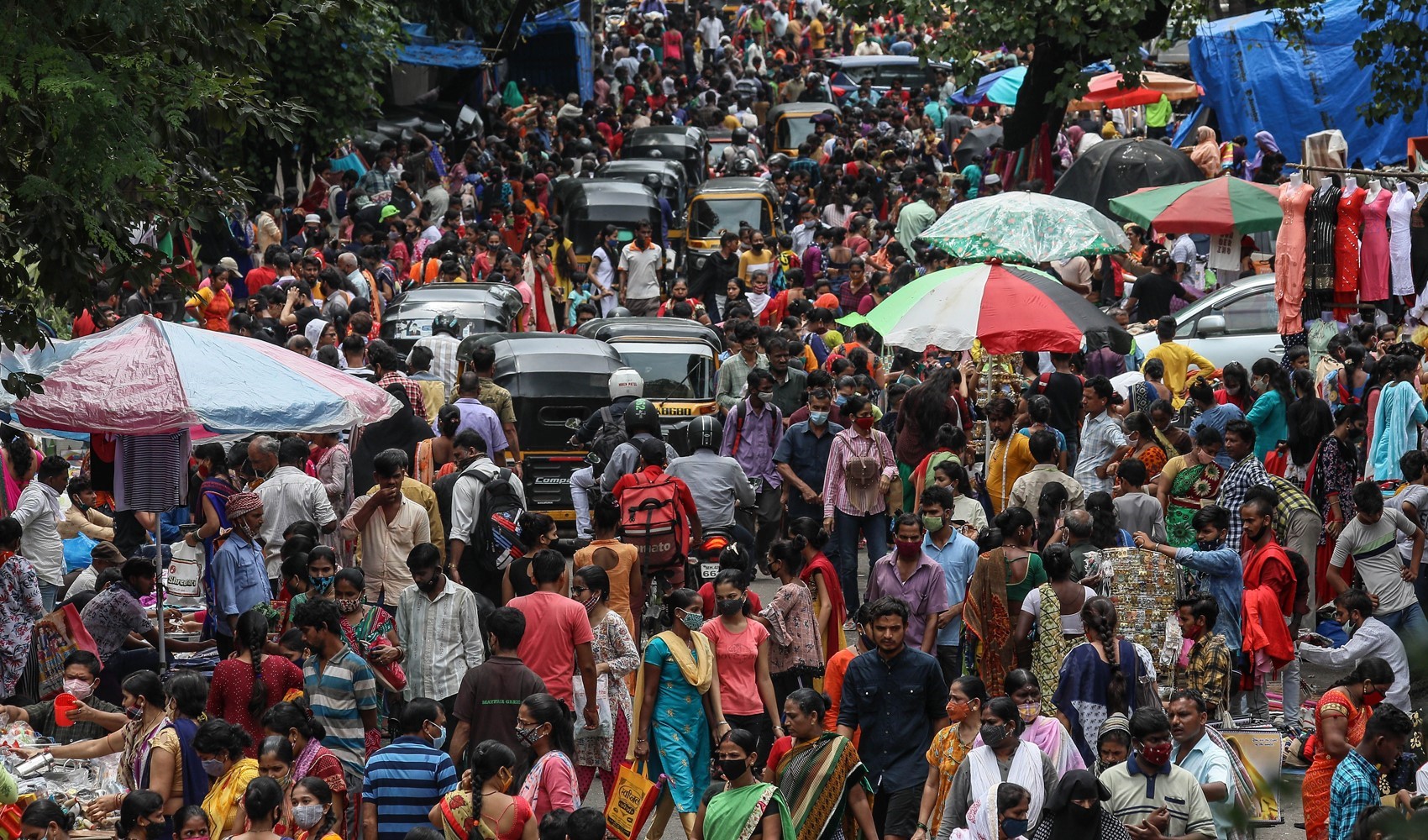
The world population has exceeded 8 billion.Having reached 6 billion in 1998, 7 billion in 2010, and 8 billion in 2022, the world populationis, according to various estimates based on UN data,currently estimated to bebetween 8.2 and 8.3 billionas of today.
According to estimates prepared by the statistics platform Worldometer based on official data,Approximately59 percentof the world's population lives in Asia, 19 percent in Africa, 9 percent in Europe, 8 percent in Latin America and the Caribbean, and approximately5 percentin North America.Theworld population is expected to reach 9 billion by 2037 and 10 billion by the year 2060.The population is expected to reach these figures.
There are 16 countries with a population exceeding 100 million
As of 2025, there are 16 countries worldwide with a population exceeding the 100 million threshold countries. In terms of population,theglobal leaders China and India are the two countries that have crossed the billionthreshold, and together these two countries account for approximatelyone third of the world'spopulation.
India, with a population of 1.46 billion,and China, with a population of 1.41 billion, are followed by fivecountries with populations exceeding 200 million. These include the US, which ranks thirdwith a populationof over 347 million, andthe most populous country with 285 millioninhabitants.The Muslimcountry of Indonesia, Pakistan with a population of 255 million, Africa'smost populous country Nigeria, and South America'slargestcountry Brazil consistof.
NCountries with a population between 100 and 200 millioninclude Bangladesh, Russia, Ethiopia, Mexico, Japan, Egypt, the Philippines, the Democratic Republic of the Congo, and Vietnam.Europe faces demographic challenges
Interestingly,
countries located entirely within Europe that haveThere are no countries with a population over 100 million. The closestcountry in this regard is Germany, which stands out with a population of 80 million.This picture shows that across Europe, thepopulation growthrate is slowing down andmany countries arefacing an agingreveals that it is facing challenges such aspopulation and migration.
China, which has a shrinking population, has madebirth controlmore expensive.
Europe alongsidecountries, China isalsoamongthe countries struggling withlow birth rates.Inpopulation growth, China, which followed a one- child policy between 1979 and 2015 to keep the rate under control, is now facing a historic decline in birth rates, and a rapidly aging population.population andworkingforce ratiosare implementing new measures to increase birth rates as of 2026 due to the decline inthe workforce.
The country's long-term stabilityis threatened bydemographicdeclining birth rates, in China, as of January 1, 2026, the government imposed various birth control products at a rate of 13 percentbegan implementing value-added tax. With this decision, in 1993, theentirebirth control product tax exemption decisionwas shelved. The total population, which has beensteadily declining for the last 3 years, China, the world'sthe most populous country titlewas handed over to India in 2023.
In Italy, the population over the age of 100 has doubled.
The Southern European country The population over the age of 100 in Italy has doubled compared to 2009.In 2025, the number of Italians who have surpassed a century of life increased nearly twofold compared to 2009, reaching 23,548 people. Of thoseItaliansover the age of 100, 82.6percent are women.were women.
The population over the age of one hundred in other European Union member countries also show a rapid increase, while the countries with the highest proportion of people over the age of one hundred were France, Italy, and Greece.
The title of the world's most populous city has passed from Tokyo to Jakarta.
In 2025, Indonesia's capital, Jakarta, with a population of 42 million, took over the title of the world's most populous city from Japan's capital, Tokyo. Jakarta is followed by 37 million people infollowed by Dhaka, the capital of Bangladesh, in terms of population,while Tokyo ranked third with a population of 33 million.The radical change in the rankingsoccurred after the UN adopted a new methodologyfor its population estimates that is more consistent in the way it classifiescities, towns, and rural areas.This shift in methodology led to the updated figures.realized.
News Source: İHA