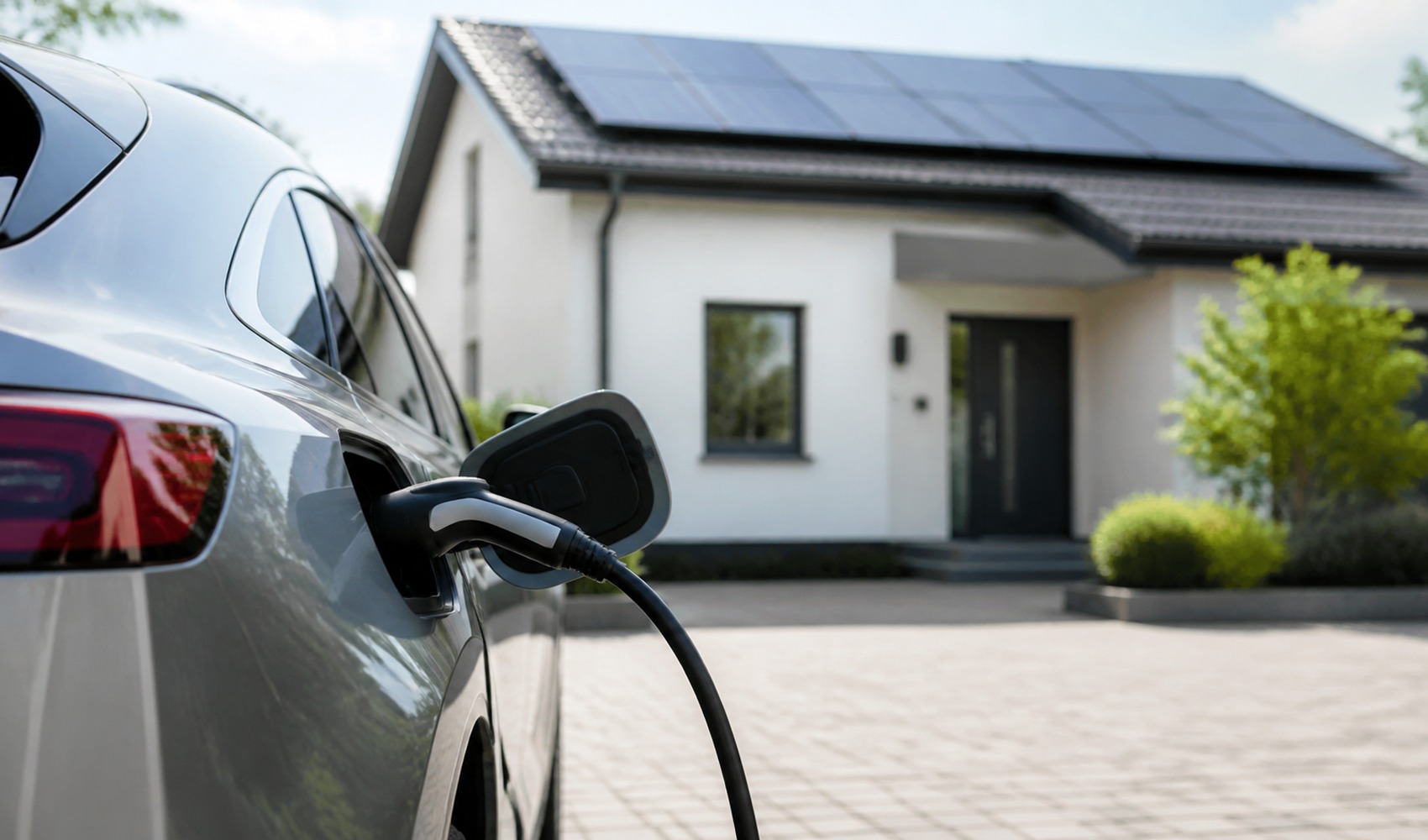
A new era is on the horizon for electricity bills for users who charge their electric cars at home. The annual 3,000 kWh limit for the Last Resort Supply Tariff (SKTT) that the Energy Market Regulatory Authority (EPDK) will implement for residential subscribers in 2027 could increase costs, especially for households that charge regularly at home.
In Turkey, the average monthly electricity consumption in households is considered to be around 190-200 kWh. This corresponds to an annual consumption of approximately 2,400 kWh. The new limit remains only about 600 kWh above the annual consumption of an average household. For this reason, a subscriber who charges their electric vehicle at home may enter the high-consumption group faster than expected.
The picture becomes clearer when taking Togg's long-range rear-wheel-drive models as examples in the calculations. The combined consumption of the T10X V1 RWD Long Range is stated as 19.7 kWh per 100 kilometers, and the consumption of the T10F V1 RWD Long Range is 17 kWh per 100 kilometers. When average household consumption is assumed to be 200 kWh per month, only 600 kWh of space remains annually for the car.
WHEN IS THE LIMIT EXCEEDED?
With this assumption, it is possible for a household using a Togg T10X to exceed the 3,000 kWh limit with approximately 3,046 kilometers of home-charged usage per year. For the T10F, this distance is calculated as approximately 3,529 kilometers. While the average monthly consumption of a T10X driven 15,000 kilometers per year rises to 246.25 kWh, the total monthly consumption reaches the 446 kWh level when combined with the household's 200 kWh consumption.
With the same annual usage, the T10F's monthly consumption is approximately 212.5 kWh, and the household's total consumption reaches 412.5 kWh. In these scenarios, the limit can be expected to be exceeded after the middle of the year. The fact that the EPDK will also look at 2026 calendar year consumption for the transition to the upper tier is of additional importance for users who charge frequently at home.
The difference becomes more visible in the cost calculation. Assuming a Togg T10X driven 10,000 kilometers per year consumes approximately 1,970 kWh of additional electricity, this means an average additional consumption of 164 kWh per month. The total consumption of a household that consumes 250 kWh per month and pays a bill of approximately 820 TL can rise to the 414 kWh level with the vehicle.
Based on September data, it is calculated that the bill at this consumption level could reach approximately 2,801 TL, including the active energy cost, distribution fee, and taxes. Accordingly, home charging could add an extra burden of approximately 1,982 TL per month and approximately 23,781 TL per year to the bill. However, this calculation is based on the assumption that the vehicle is only charged at home.
Despite this, the energy cost advantage of electric cars does not disappear completely. It is stated that if the same consumption were met only at DC fast-charging stations, the annual cost could exceed 25,000 TL. When compared with diesel and gasoline SUV examples, it is seen that the home-charged Togg T10X still provides a significant advantage in annual energy expenditure.
The new regulation makes not only the car's consumption but also the household's total annual electricity usage critical for electric vehicle owners. Due to the 3,000 kWh limit that will come into effect in 2027, users will need to evaluate their charging habits, home consumption, and different charging options together.
News Source: 12punto