


The name of hope for the future is the Republic


Another October 29th, and once again, the same unchanging scenes...
The mandatory official statements from those in power,
The people and citizens carrying the enthusiasm of the Republic to the streets and squares,
People of all ages—the elderly, the young, mothers, fathers, and children—coming from all corners of the country,
Offering their love and loyalty to the founder of the Republic at Anıtkabir and celebrating the Republic...
*
The reality revealed by these scenes we witness every year is this:
Our country is governed by a political understanding that is at odds with the Republic,
And our citizens view the Republic merely as a holiday celebrated once a year.
This picture shows that,
As a society, we do not know the meaning of the Republic and its importance for us.
We did not object or oppose its being severed from its principles and philosophy,
Or its works being sold off and destroyed.
As a result, we are experiencing problems in every area of life and complaining with learned helplessness.
*
This one-man regime created by the RTE-AKP,
From retirees to workers, from women to the youth,
From the business world to employees, farmers, and tradespeople, has destroyed two phenomena in the Nation.
Seeing the future and having hope for the future.
The words of Nevin and Nehir to the person in charge of the Ministry of National Education, “If there is no future for us, there is no peace for you,” are an expression of the youth's anxiety about the future and their hopelessness.
The fact that our youth, our country's most important resource, are seeking their future in other countries is a significant loss and a danger for the future of our country.
*
To be able to see the meaning and value of the Republic,
One needs to look carefully at this photograph from 100 years ago.
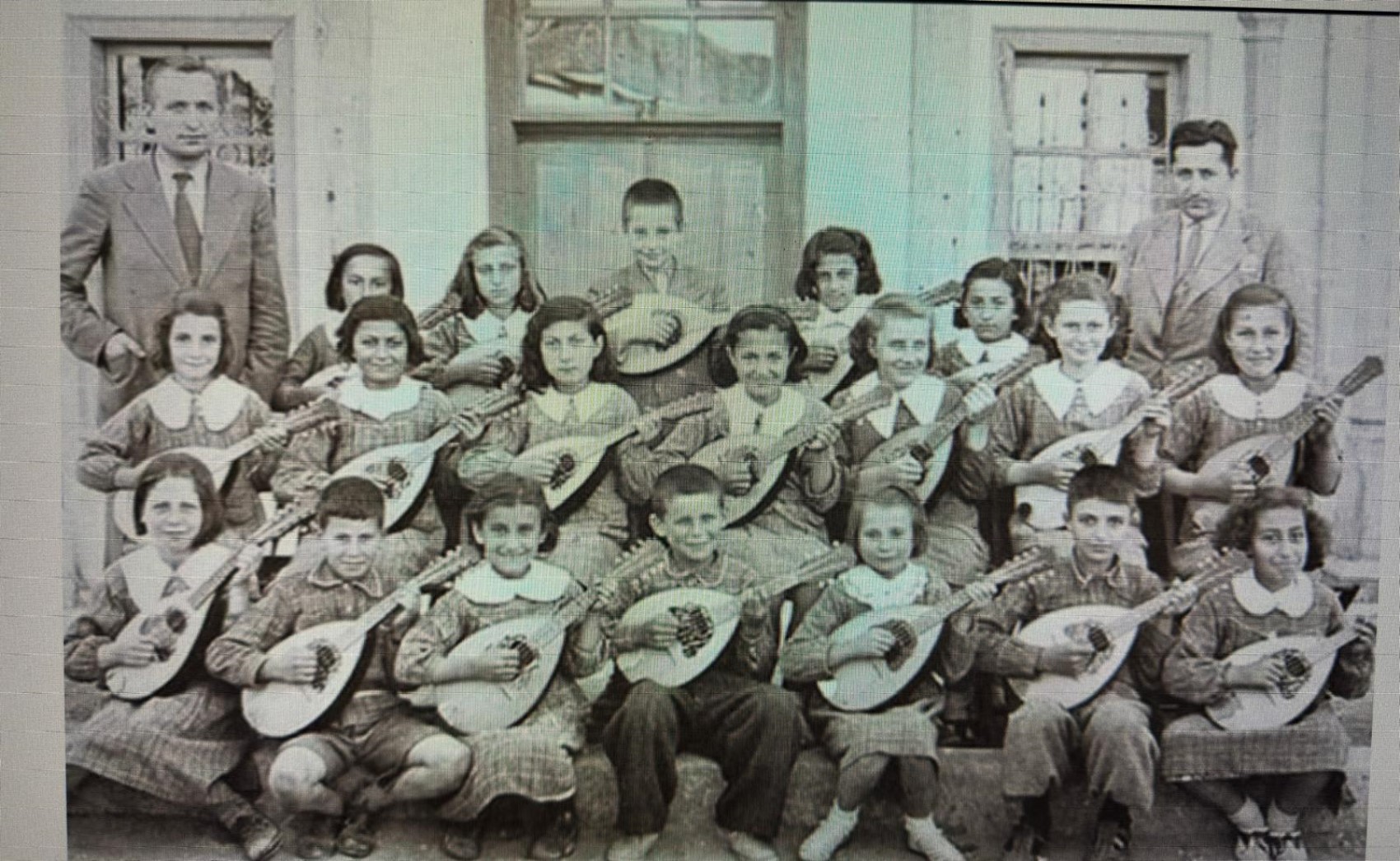
In this country, which was under ignorance, misery, and occupation 100 years ago,
One needs to think carefully about why these children, living in poverty in villages, are smiling.
These children, who work at home, in the fields, and herd livestock in the village,
Are smiling at life and the future with hope,
With the excitement and joy of meeting school, teachers, knowledge, and art through the Republic.
Because we do not live the Republic in its true sense today,
Because we only celebrate it as a holiday on October 29ths,
Because we do not know the meaning and value of the Republic for us and do not protect it,
We and our youth have lost the ability to smile at life and the hope for the future.
*
Let us see what the Republic means in the thoughts of its founder, Mustafa Kemal Atatürk.
Republicanism;
“The form of government that provides the most contemporary and rational application of the principle of democracy is the Republic.
…In the Republic, the final word belongs to the parliament elected by the Nation.
…In the Republic, the parliament, the president, and the government can do nothing other than think of and strive to ensure the freedom, trust, and peace of the people.
Because they know that the owner of the will and sovereignty that brought them to power and authority for a certain period is the Nation, and they also know that they were brought to positions of power not to reign, but to serve the Nation.
If they abuse their responsibilities and duties toward the Nation, they may face the realization of the national will against them in one way or another.
The obligation of those tasked by the Nation, in the name of the Nation, to govern the state to account to the Nation when necessary cannot be destroyed by frivolous and arbitrary behavior.” (*)
*
The answer he gave to a student's question during his visit to the İzmir Girls' Teachers' School on October 14, 1925, is sufficient for us to see the difference of the Republic.
“The Republic is a government based on moral virtue.
The Republic is virtue.
The Sultanate is a government based on fear and threat.
The Republican administration raises virtuous and honest people.
Because the Sultanate is based on fear and threat, it raises cowardly, base, miserable, and disgraceful people.
The difference between them consists of this.”
The difference between the Republic defined by Mustafa Kemal Atatürk and the governing understanding that exists today clearly shows the reason for the problems we are experiencing.
*
Let us also provide information for those who claim that Democracy is not found in the principles of the Republic.
Democracy (Populism);
“In governments based on the principle of democracy, sovereignty belongs to the people, to the majority of the people. The principle of democracy necessitates that sovereignty resides in the nation and nowhere else. In this way, the principle of democracy touches upon (is based on) the origin and legitimacy of political power and sovereignty.” (**)
Atatürk identified the democracy we see in every step taken from the Liberation to the Establishment with our principle of Populism.
*
The answer to the question of why we cannot live the Republic in its true sense today is clear.
• The closure of the Village Institutes,
• The changing of the Republic's Education Policy based on reason and science,
• The selling of the Republic's factories and production facilities,
• The destruction of the Republic's Mixed Economy Policy, which was based on production, planning, and development,
• The abandonment of the Republic's Philosophy and Principles...
*
Today, the politics that claims to be the owner of the Republic, especially the main opposition,
Must see these facts and protect the Republic.
• In a system where we produce raw materials in the field and mine,
• Technology at the university,
• Consumer goods in the factory,
Where we share fairly and justice exists...
Our nation, and especially our youth, can regain their lost trust and hope for the future.
*
The duty that falls to the Nation, to us, is,
To protect our Contemporary Way of Life,
Our Democratic Secular Republic and Social State of Law,
Not just on holidays, but every day.
We must all shout together that we will support those who truly protect the Republic.
(*) Civil Knowledge p. 32
(**) Civil Knowledge p. 29
Would you like to get notifications about new developments and save news?
- NotificationsNew developments and breaking news
- SaveNews is stored in the app
Most Read
Haluk Bilginer's controversial 'Turkey cinema' correction

Bitcoin remains below the $75,000 threshold
New study for public sector salary system
A statement from Özge Borak about Ata Demirer years later
Emir Sarıgül, released under house arrest, defies his father
Journalist close to the government reveals the figure being discussed for the lowest pension!
The hero of the East, the guide for oppressed nations
On Trump's defeat
Erdoğdu’s message from prison regarding Fatma Betül Sayan Kaya
Robberies: 'System financing' or preparation for the 'finale'?