


The Çanakkale robbery -2- Where is the Troy treasure?


A STONE IS HEAVY IN ITS OWN PLACE – 176. LET US NOT FORGET, LET US NOT LET IT BE FORGOTTEN.
We continue to trace our artifacts smuggled from Çanakkale-Troy.
In the previous article, we explained how Heinrich Schliemann smuggled the treasure he found in Hisarlık in 1873 to Athens, violating Ottoman laws.
Once this smuggling was discovered, the Ottoman State filed a lawsuit in Athens to recover the treasure.
The person tasked with conducting the case was Philipp Anton Dethier, Director of the Müze-i Hümâyun (Imperial Museum).
A German.
And the day after the lawsuit was filed, a new law was approved that facilitated the removal of antiquities abroad. He was one of those who prepared that law.
Was this a coincidence?
***
The Ottoman State first launched an investigation into those whose negligence was seen in the smuggling of the treasure.
It was decided to prosecute Kumkale Director Rüstem Ağa, Çanakkale Customs Director Halid Ağa, and some officials working at the customs. (Ali Sönmez, A Legal Struggle in Pursuit of the Troy Treasures: The Ottoman State and the Schliemann Case. Ankara University Journal of Ottoman History Research and Application Center OTAM Issue 29/Spring 2011)
Then it was the turn of the case in Athens. And Dethier.
Philipp Anton Dethier (1803–1881), a historian, archaeologist, and expert on ancient inscriptions, was born in Kerpen near Cologne, Germany, studied at the University of Berlin, and held a doctorate in history.
He settled in Istanbul after 1847 and was appointed director of the Müze-i Hümâyun in 1872.
He continued as museum director until his death in 1881.
Dethier was the last foreign director of Ottoman museums. He was succeeded by Osman Hamdi Bey.
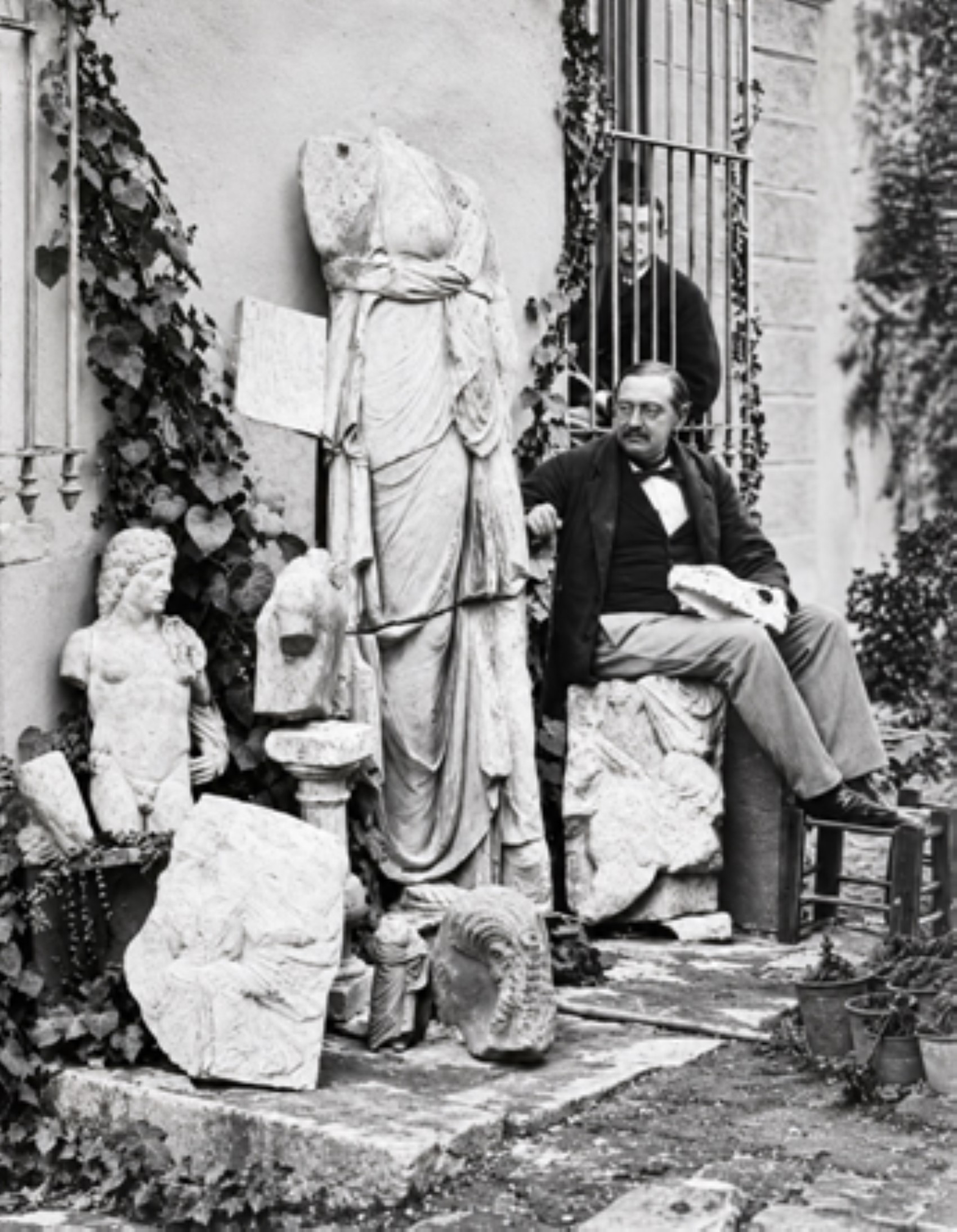
(Philipp Anton Dethier: The Ottoman Empire's German Director of the Imperial Museum. The state handed the lamb over to the wolf)
***
The case in Athens began in April 1874. Around the same time, the new Regulation on Antiquities (Âsâr-ı Atîka Nizamnamesi) was approved.
This was a significant change from a legal perspective.
While the 1869 Regulation prohibited the removal of antiquities abroad, the 1874 Regulation made it possible for artifacts found in excavations to be shared in thirds between the state, the landowner, and the excavator, and to be taken abroad under certain conditions.
In other words, it was a transition from an absolute ban on taking antiquities abroad to conditional freedom.
Moreover, this change coincided with the days when the Ottoman State had launched a legal struggle to recover the Troy treasures.
A German, H. Schliemann, wanted to take the Troy artifacts abroad; another German, C. Humann, wanted to take the Pergamon Altar and its artifacts abroad; and yet another German, Ottoman Museum Director P. A. Dethier, was preparing the law that facilitated this.
What a wonderful world it was for historical artifact smugglers!
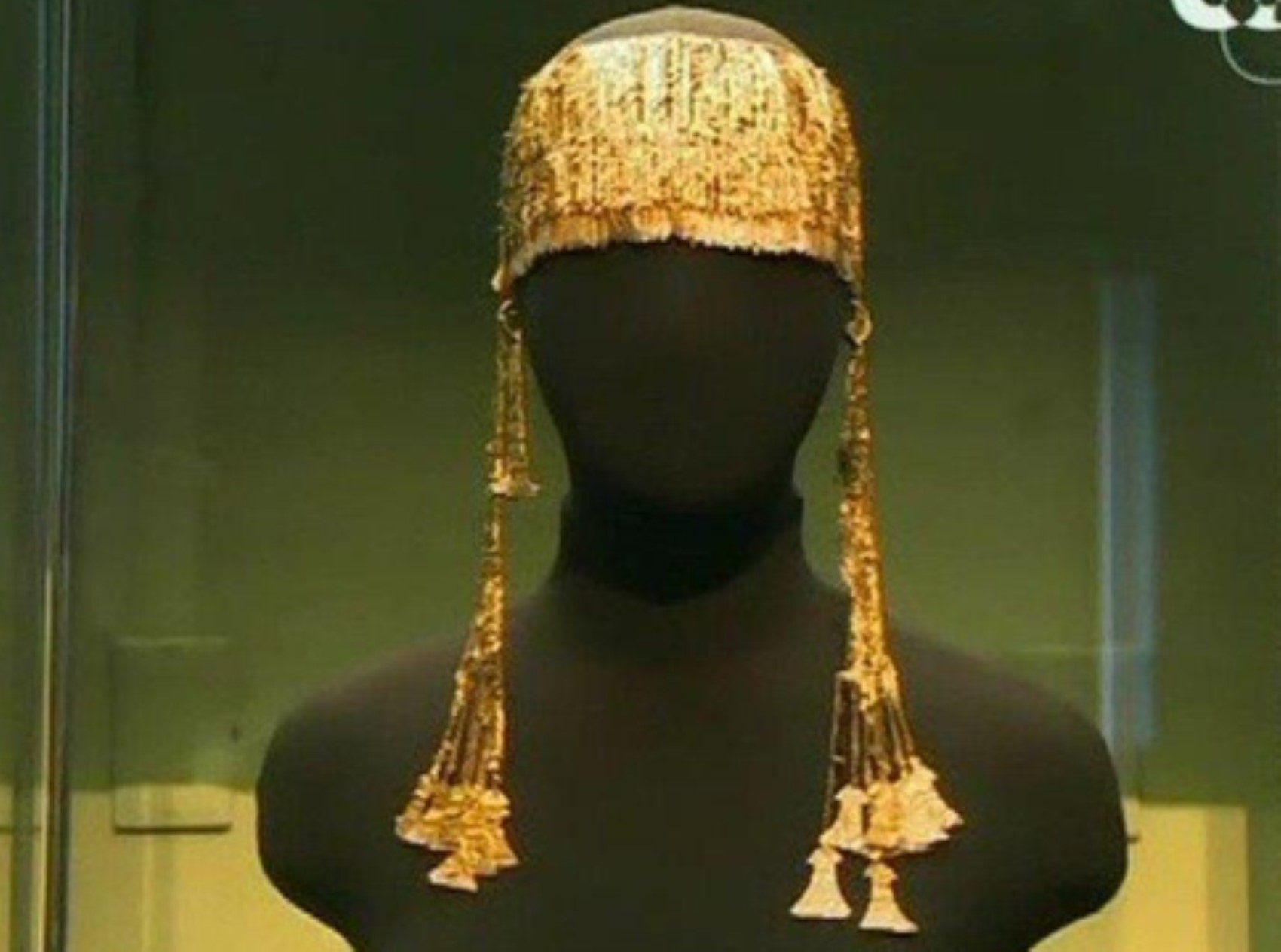
(The gold diadem Schliemann found in Troy. It is currently on display at the Pushkin State Museum of Fine Arts in Moscow.)
***
And the person who would conduct the case was again Dethier.
Dethier went to Athens, taking the excavation permit and related documents with him. He ensured a lawyer was hired, followed the case, and reported developments to Istanbul.
The interesting part is that both Schliemann, who smuggled the Troy treasures, and Dethier, the Director of the Imperial Museum who conducted the case in Athens on behalf of the Ottoman State, were German.
Was there a closeness, a solidarity between the two Germans?
There is no definitive document showing this.
On the contrary, it is understood that Dethier made efforts in Athens to defend the rights of the Ottoman State.
Or did he appear to be defending them?
There was an interesting situation here.
In the case conducted by Dethier, it was not claimed that all of the Troy treasures were illegally removed from Ottoman lands. Only the return of the half that fell to the Ottoman State was requested.
However, even though the removal of antiquities abroad was prohibited according to the 1869 Regulation, why was the return of the entire treasure not requested based on this ban?
This legal choice requires questioning the nature of Dethier's struggle in Athens. (Rüstem Aslan, “What happened in Athens? ‘Priam’s Treasures’ and the attitude of the Ottoman State”, Gastroia: Journal of Gastronomy and Travel Research Vol. 3, Issue 1, 1-16, 2019 ISSN: 2602-4144)
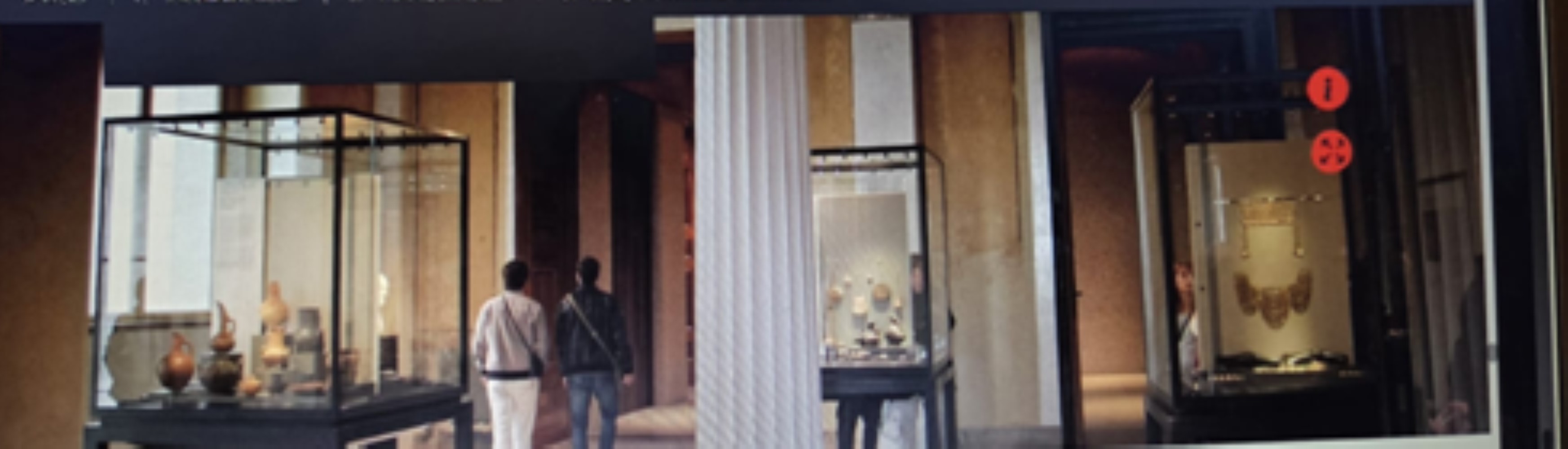
(A portion of the Troy treasure is kept in the Berlin Neues Museum/Prison. Some of the exhibited artifacts are original, while some are copies.)
***
Dethier's name appears not only in the case related to the Troy treasures but also regarding the historical artifacts taken from Pergamon to Germany.
In an article published in the magazine Servet-i Fünun in 1910, Mehmed Vahid reports that Dethier advocated for leaving the artifacts unearthed from Pergamon to Germany.
According to Vahid's account, Dethier argued in a report he submitted to the Ministry of Education that transporting the artifacts to Istanbul would cost hundreds of liras, and that it would be more appropriate to leave them to the Germans in exchange for a thousand Napoleon gold coins (5.8 kg of pure gold).
Moreover, he described the artifacts in question as worthless, broken marble pieces. (Mehmed Vahid (1910): “History of the Ottoman Museum”, Servet-i Fünun 38, no=984, Rumi: April 1, 1326-Gregorian: April 14, 1910, p.343 /// Kahraman Bostancı (2003): “Mehmet Vahit Bey and a Treatise on Terminology Regarding Fine Arts”, Istanbul: Archaeology and Art Publications)
It is certainly thought-provoking that a museum director tasked with protecting the Ottoman State's historical artifacts would make such a proposal.
Such a proposal clearly contradicted the responsibility of protecting Ottoman cultural heritage.
The same German director who represented the Ottoman State in Athens in a suspicious manner to recover the Troy treasures was now advocating for the Pergamon artifacts to be left to Germany.
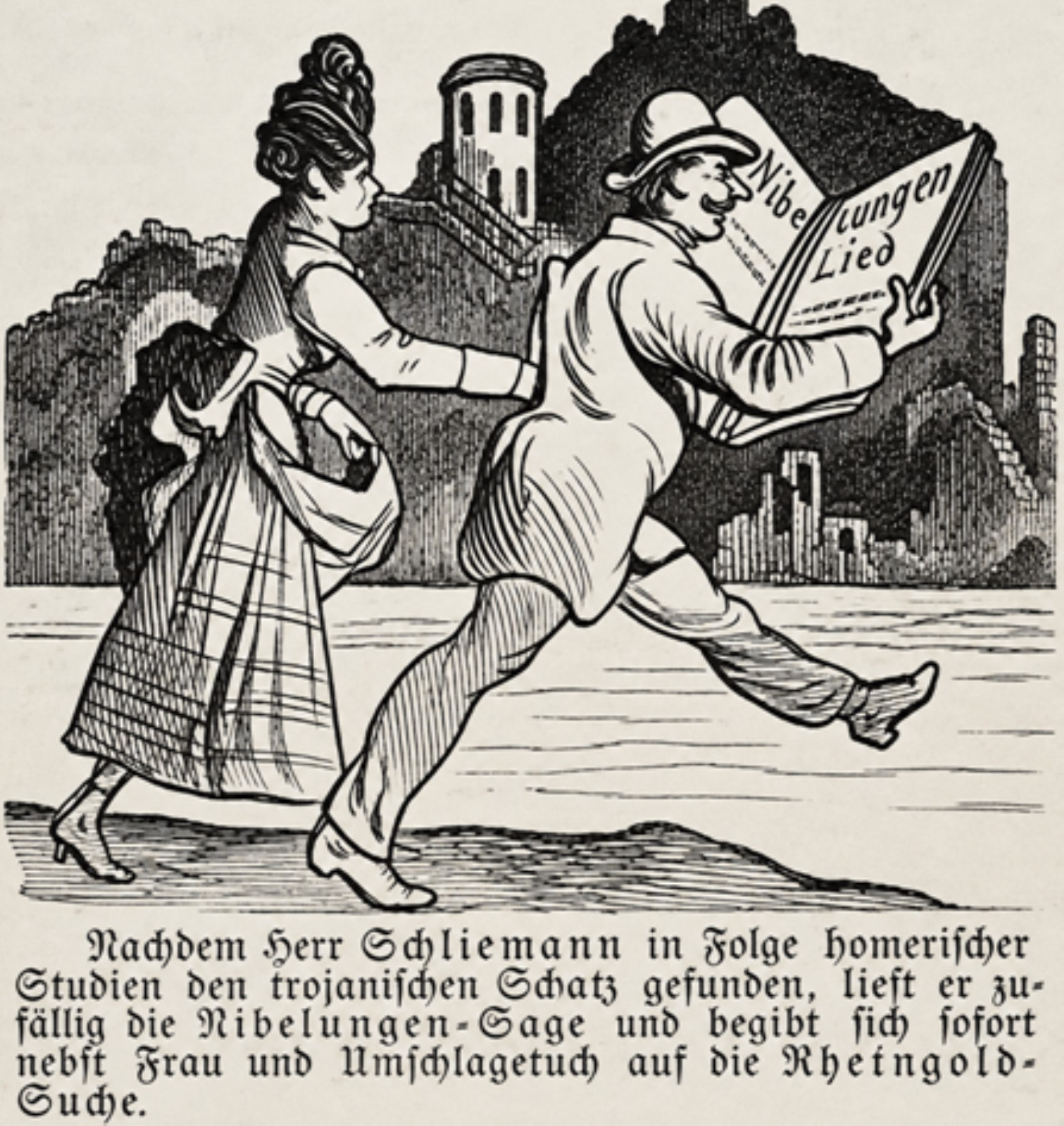
(Schliemann was mocked in German satirical magazines for claiming that the Troy finds were Priam’s treasure in order to gain fame.)
***
In Athens, in the court of Greece, which had broken away from the Ottomans, the first result was a great disappointment for the Ottoman State.
The court ruled against the Ottoman State in late May 1874.
Upon this, Dethier informed the center that he thought the Greek authorities were protecting Schliemann!
He suggested publishing protest notices in European newspapers to prevent the treasures from being sold!
Istanbul was not giving up the fight.
It was decided to take the case to a higher court.
They did not stop there.
A protest text was prepared to be published in newspapers in Vienna, Berlin, Paris, and London to prevent Schliemann from selling the artifacts collectively or individually.
The aim was to create a reaction against Schliemann in European public opinion as well.
And this time, the result changed.
The Greek Court of Appeals overturned the first court's decision in June 1874 and ordered the return of the smuggled Troy artifacts.
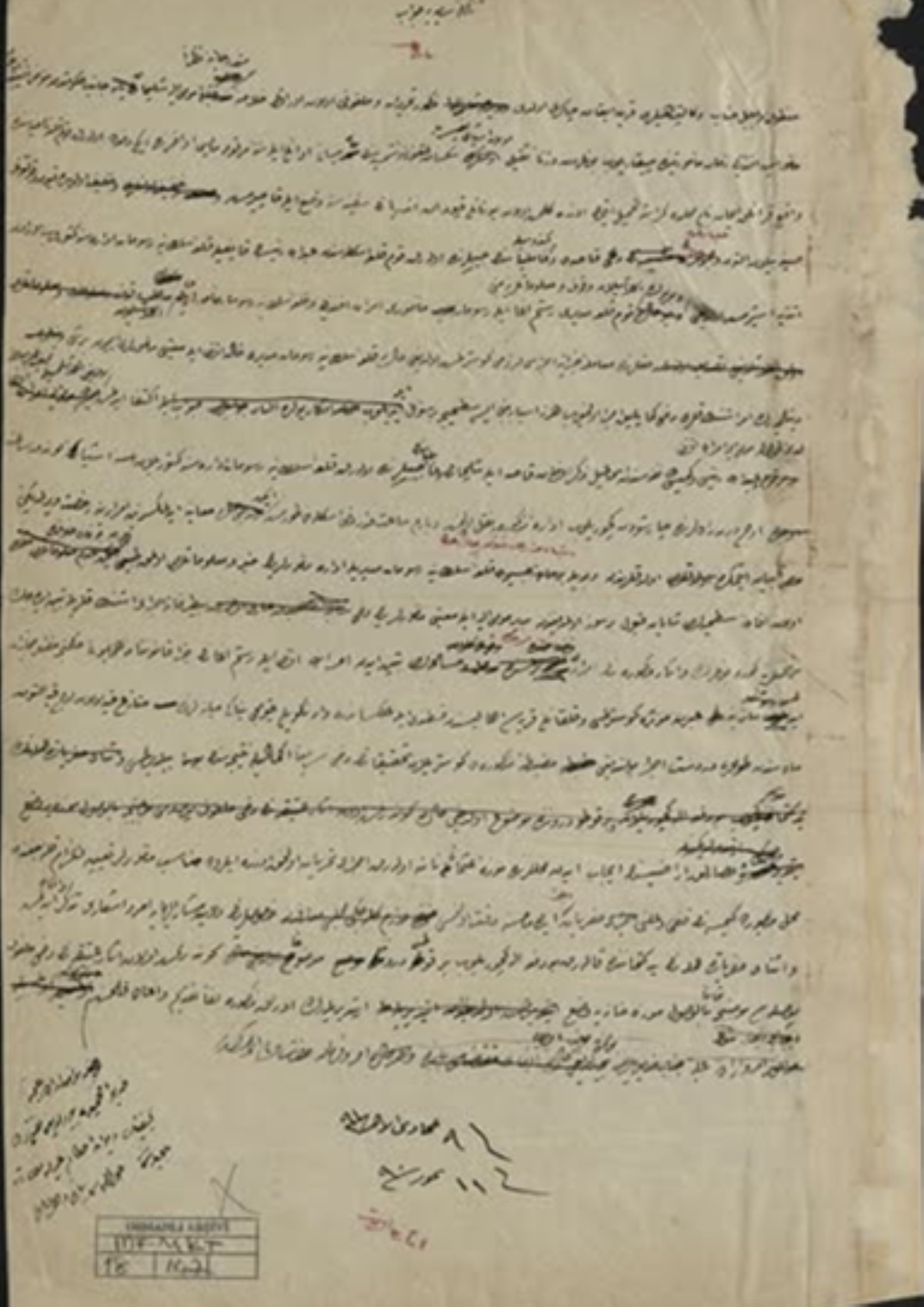
(İzzeddin Efendi’s Report on the smuggling of Troy artifacts, July 24, 1874. Presidential Ottoman Archives, MF. MKT, 18 / 147. Source: Ali Sönmez.)
***
The Ottoman State appeared to have won the legal battle.
But there was a significant problem:
The treasure was nowhere to be found.
The artifacts were no longer in Schliemann’s house.
He had likely smuggled the Troy treasure out of Athens as well.
The Ottoman Embassy in Athens requested that the Greek authorities find the treasure and hand it over to them. Money was even paid to hire detective officers to keep Schliemann’s house under surveillance.
Then a new compensation lawsuit was filed.
The Ottoman State’s demand was one million francs (290 kg of pure gold). This was a large amount.
However, at the end of the legal struggle that lasted about ten months, the Greek court decided that Schliemann should pay only 10 thousand francs (2.9 kg of pure gold) in compensation.
10 thousand francs for a demand of one million francs. Was the Greek court protecting Schliemann’s robbery this time?
This decision largely ended the Ottoman administration’s hope of recovering the treasures.
Just at this moment, Schliemann made an interesting offer.
He proposed to pay more than the 10 thousand francs determined by the court, 50 thousand francs (14.5 kg of pure gold), and to make a new excavation agreement with the Ottoman State.
“He wasn’t sparing the chicken where the goose would come from!”
The matter was discussed in the Ottoman Council of Education on April 3, 1875.
The court fees, lawyer fees, and other expenses of new, long-lasting lawsuits were taken into account. It was also unclear whether a new legal struggle would yield results.
They were giving up the fight.
Finally, it was decided to close the matter through a settlement.
The demand of one million francs had been reduced to 50 thousand francs.
How would they agree to this reduction?
In the end, the Ottomans agreed!
Had Dethier, who followed the case in Athens on behalf of the Ottoman State, been influential in this compromise as well?
Or did he aim to protect his fellow citizen Schliemann? We do not have a document confirming this.
(Prof. Ali Sönmez, who has extensive research on the Troy artifacts and the removal of the Pergamon Zeus Altar abroad)
***
Schliemann would pay 50 thousand francs as compensation and legal expenses for the Priam’s Treasure he had unearthed from Hisarlık and smuggled out.
Schliemann was ready to give five times the amount he was sentenced to pay for this unique treasure.
In return, the Ottoman State waived its share of the artifacts in question.
However, the Istanbul Council of Education also made another important decision:
Schliemann would not be granted excavation and research permits in Troy from then on.
As Prof. Dr. Ali Sönmez points out, despite the clear decision taken in 1875, the political and economic conditions or the negligence of which administrators led to Schliemann being granted excavation permits again later have not been fully investigated even today. (Ali Sönmez, “Heritage Smuggled from Anatolia: Troy Treasures”, Eurasia International Research Journal, Vol. 8, Issue 21, March 2020.)
Or was the Ottoman State’s Museum Director Dethier involved again?
Despite this, a significant distrust had arisen.
The Ottoman administration no longer trusted Schliemann.
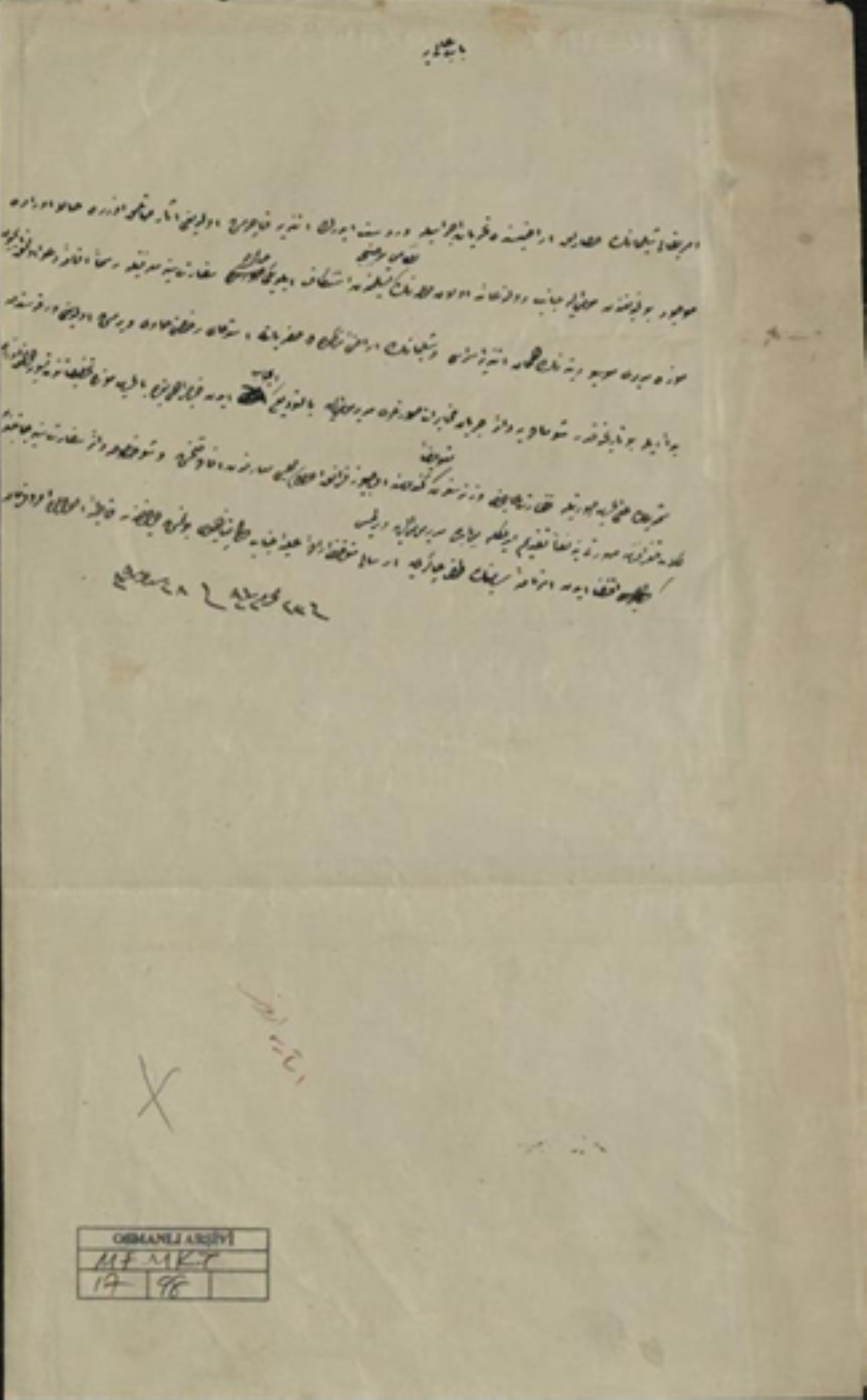
(The decision to send the Ottoman Empire’s Museum Director Philipp Anton Dethier to Athens to sue Schliemann, March 12, 1874. Presidential Ottoman Archives, MF. MKT, 17 / 98. Source: Ali Sönmez)
***
Schliemann was monitored much more strictly in his subsequent excavations, working conditions were made tougher, and he was not even allowed to wander in the region during periods when excavation permits were expired.
However, the excavation ban was not long-lived.
In the spring of 1876, Schliemann received a new excavation decree.
His diplomatic connections in Istanbul had worked again.
But a surprise awaited him in Troy. The Ottoman administrator in Çanakkale, İbrahim Pasha, put obstacle after obstacle in his way. The pickaxe didn’t even touch the ground.
Schliemann left Troy and went to Greece, to Mycenae. The famous “Mask of Agamemnon” came out of that excavation. He could only return to Troy in 1878. The 1876 permit could not be used.
Afterwards, he was granted permission to excavate in Troy three more times in 1878, 1882, and 1890.
The liver was being handed over to the criminal cat again!
P. A. Dethier died in 1881.
He was replaced by the painter Osman Hamdi Bey. His policies and behaviors regarding antiquities during his tenure, especially in Pergamon and Gaziantep, should be discussed.(https://12punto.com.tr/yazarlar/sefa-taskin/gaziantep-soygunu-5-trasli-taslar-109358)
We have described his inappropriate actions in our previous articles.
An archaeology adventure that started in Hisarlık turned into one of the darkest stories not only of a great discovery but also of the removal of historical artifacts unearthed from Anatolia to Europe.
Schliemann had robbed Troy.
He had truly found an extraordinary treasure in Troy.
But the treasure he found was not Priam’s.
Moreover, he did not leave it in the lands that had hidden it for thousands of years.
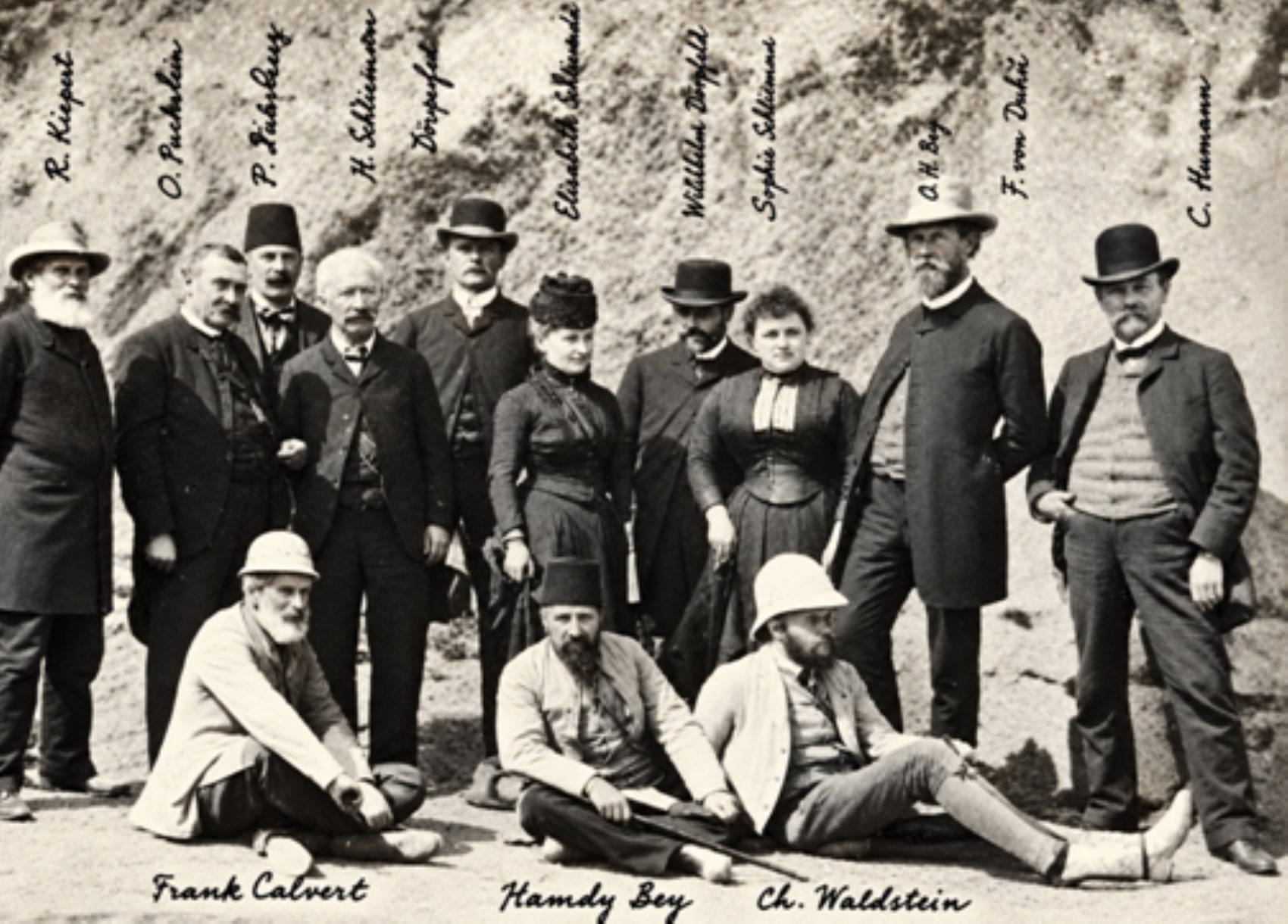
(A so-called scientific meeting held in Troy in March 1890 regarding the smuggled artifacts. The robbers are together with the Ottoman Museum Director, Osman Hamdi Bey, who was supposedly officially tasked with protecting the artifacts. How comfortable the painter director is. In the picture; Standing: Fourth from the left is Troy smuggler Heinrich Schliemann, third from the right is his wife Sophie Schliemann, first from the left is Pergamon robber Carl Humann, first from the left among those sitting in front is Frank Calvert, in the middle is Ottoman Museum Director Osman Hamdi Bey. Source: Schliemanns Grabungen als Medienereignis | Virtuelle Ausstellungen DDB. )
***
The treasures of Troy were no longer in Troy.
So what happened to these artifacts that Schliemann smuggled to Athens later?
Schliemann held onto the treasure for a long time.
He first hid it in Greece; later, he tried to get these masterpieces accepted by Europe’s great museums.
Finally, in 1881, he donated this collection to the Royal Museums in Berlin.
Thus, the new address of the artifacts secretly removed from Troy became Berlin.
That is, the prisons called museums where the Pergamon Zeus Altar and countless historical artifacts were locked up.
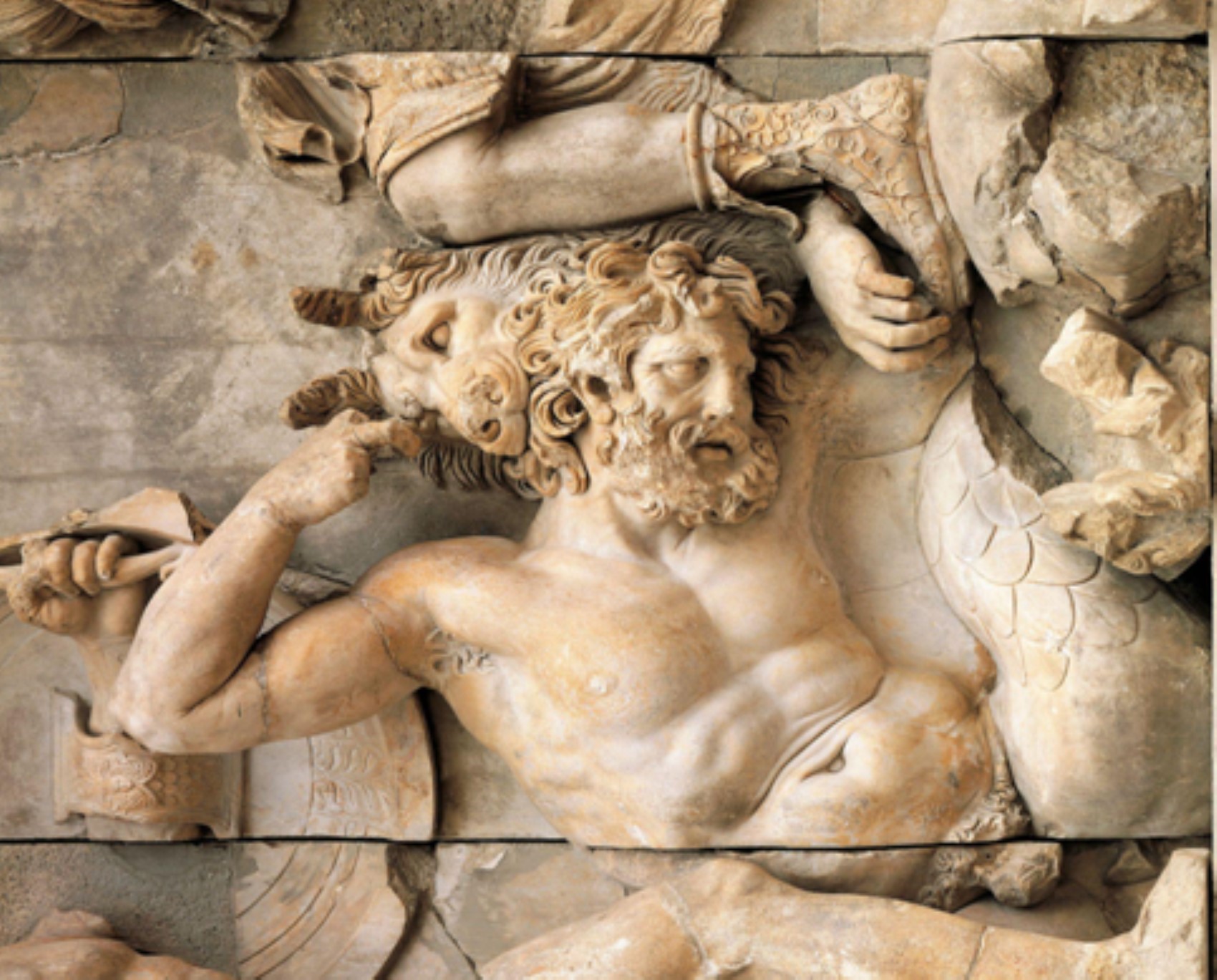
(Detail from the reliefs depicting the “war of the gods and giants” of the Pergamon Zeus Altar, which is imprisoned in the Berlin Museum/Prison.)
***
Schliemann died in 1890.
But the journey of the treasure did not end with his death.
The Troy treasures continued to be exhibited in museums in Berlin. When the Second World War began, they, like other valuable museum artifacts, needed to be protected from bombing.
In 1941, the most valuable pieces of the collection were first moved to the vaults of the Prussian State Bank, and then, like other artifacts, to a large anti-aircraft bunker near the Berlin Zoo.
Just like the Pergamon Zeus Altar and its unique statues.
When the war ended in 1945, the Soviet Red Army entering Berlin seized these artifacts.
The treasure that went from Troy to Athens, and from there to Berlin, was taken to Moscow this time.
Just like the Pergamon Zeus Altar and its beautiful marbles. The altar was returned to Berlin in 1958; the Troy treasure was not.
Moreover, the location of the Troy artifacts was not disclosed for many years.
The world could only learn the fate of the gold artifacts that Schliemann named “Priam’s Treasure” definitively in 1993.
During the term of Russian President Boris Yeltsin, Minister of Culture Yevgeny Sidorov officially acknowledged that the treasure was in Moscow with a statement he made on August 25, 1993.
The treasure was in Moscow.
The Troy Treasure, which had been hidden for nearly half a century, came to light again on April 16, 1996, at the Pushkin Museum in Moscow.
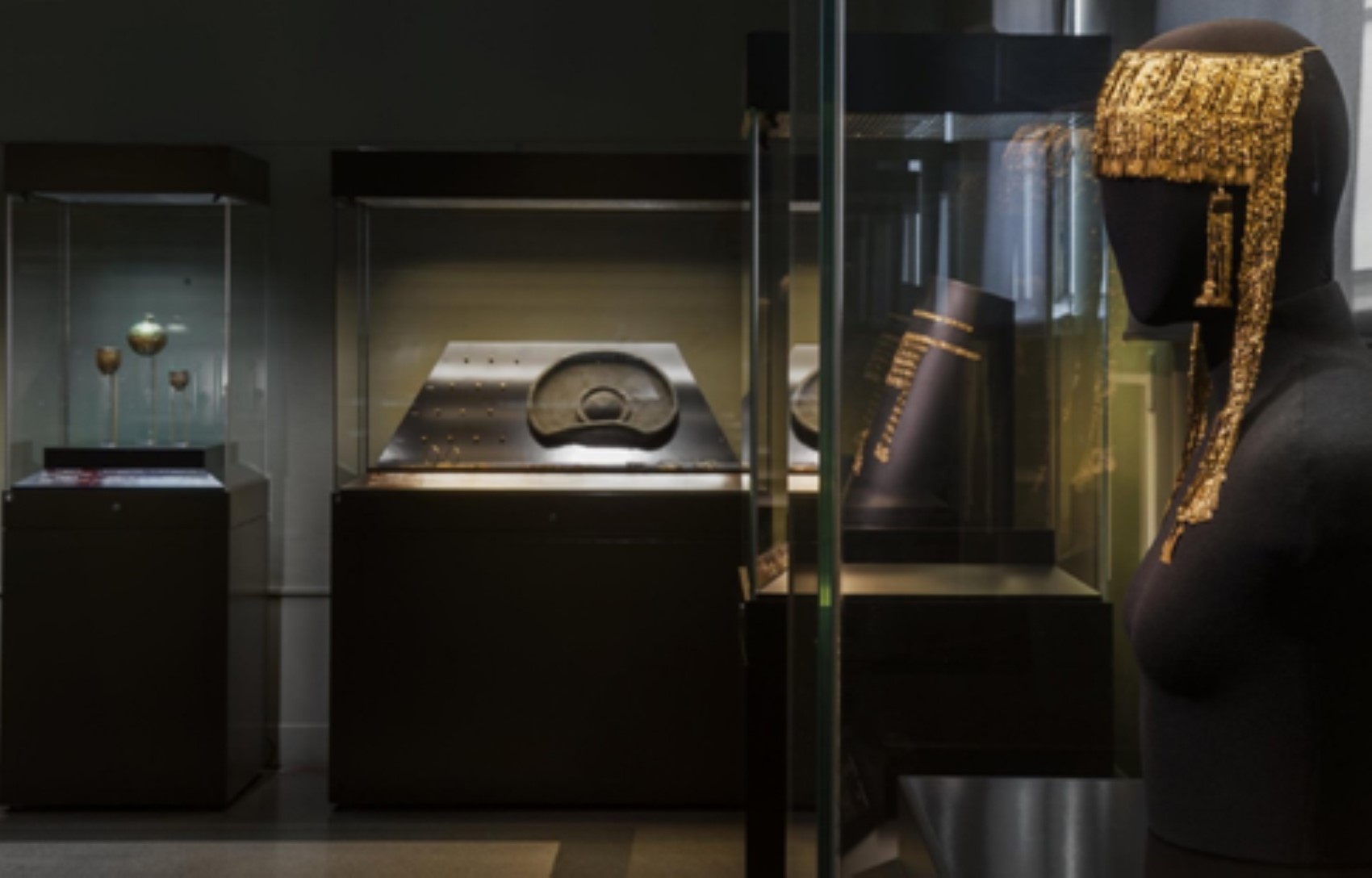
(Troy treasure. Pushkin Museum-Moscow-Russia)
The Soviet Army moved 13 of the 17 treasure groups that Schliemann brought to Berlin to Moscow in 1945.
259 artifacts belonging to these 13 groups, which German experts considered “irreplaceable” in 1939 and mostly consisting of precious metals and stones, are kept at the Pushkin State Museum of Fine Arts in Moscow. Among these are Troy’s famous gold jewelry, diadems, vessels, and other valuable artifacts.
As can be understood, the entire treasure is not in Moscow.
Treasure A, which is known as Priam’s Treasure and is the largest group, consisted of 183 pieces; only 101 of these are in the Pushkin Museum.(https://www.pushkinmuseum.art/museum/buildings/main/floor1/3_troy/index.php)
The collection has been fragmented over time. While some silver and ceramic artifacts are in the collection of the Museum of Prehistory and Early History in Berlin, 414 bronze and ceramic artifacts from the same treasure groups are in the Hermitage Museum in St. Petersburg.(https://conservation.pushkinmuseum.art/data/specprojects/the-gold-of-troy/index-eng.html).
Some artifacts remaining from the treasure Schliemann smuggled, some of which were brought to Çanakkale from the Istanbul Archaeology Museums, are exhibited in the Troy Museum today.(Çanakkale Provincial Directorate of Culture and Tourism.)
However, the main pieces of the treasure group in question are unfortunately not in Turkey today.
The values produced by the people of Anatolia are abroad, just like the others.
Taken with or without permission!
Smuggled!
Stolen!
The approximately one-hundred-and-fifty-year journey of the Troy treasures thus emerges:
From Troy to Athens…
From Athens to Berlin…
From Berlin to Moscow and St. Petersburg…
The Zeus Altar, which was taken from Pergamon during the same period, shared a similar fate.
The artifacts that remained under the soil of Hisarlık for thousands of years could never return to the lands where they were born after coming to light with Schliemann’s pickaxe.
Today, Turkey is the country from which the treasures were unearthed, Germany is the country that claims to be the owner of the collection donated by Schliemann, and Russia is the country where the most valuable pieces seized at the end of the war are located.
In other words, the treasures of Troy are not in Troy even today.
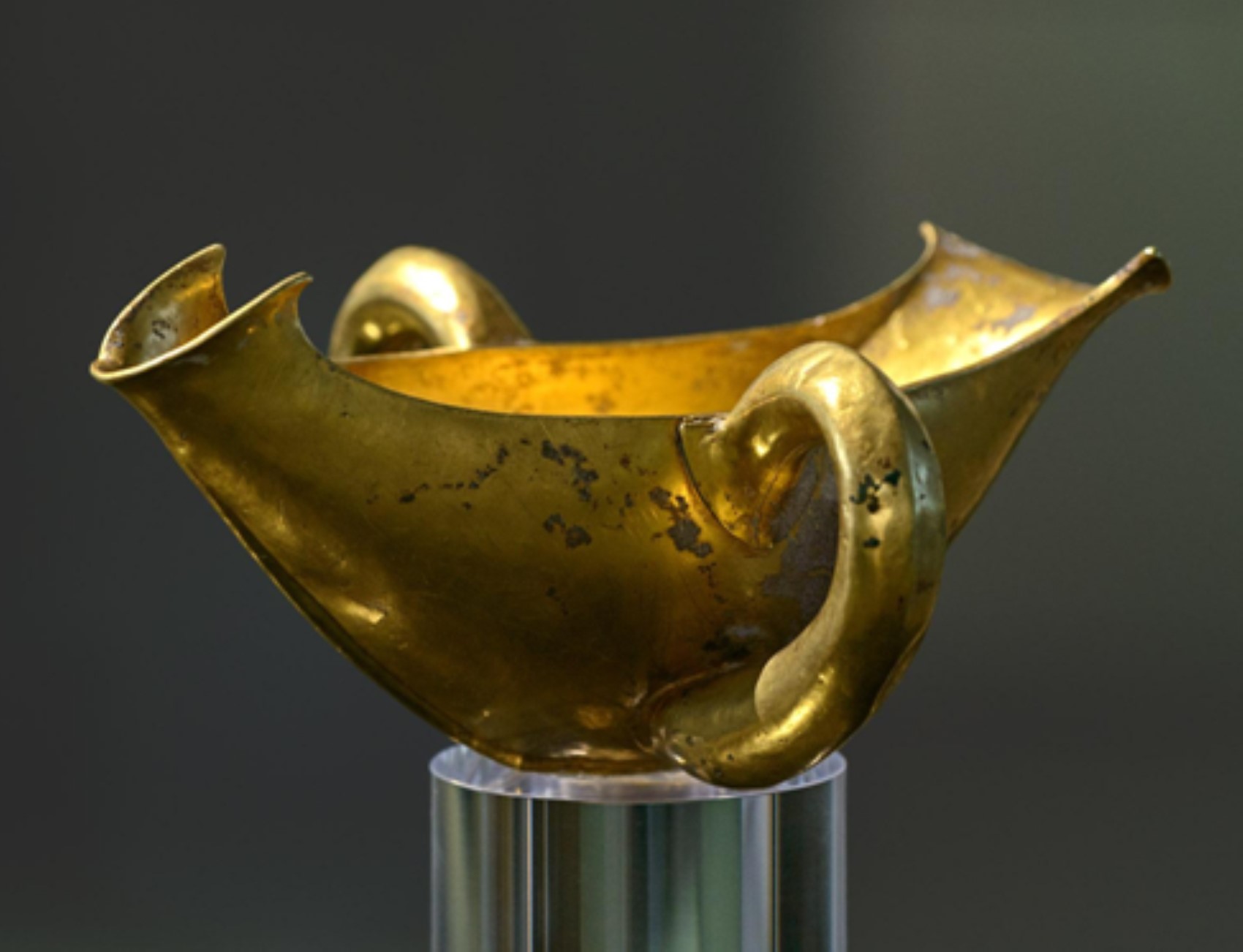
(There are also gold and silver vessels among the Troy treasures. Pushkin Museum collection-Moscow.)
***
One hundred and fifty years have passed.
States have changed. Empires have collapsed. Wars have been fought.
But these artifacts, which were torn from the soil of Anatolia, have not returned.
The Pergamon Zeus Altar remained in Berlin, and the Troy treasures remained in Moscow.
Yet the lands to which these artifacts belong have not changed.
A stone is heavy in its own place.
THE TROY ARTIFACTS DO NOT BELONG TO COLD AND FOGGY BERLIN AND MOSCOW, BUT TO BEAUTIFUL ANATOLIA. THEY MUST DEFINITELY COME BACK, THEY MUST RETURN HOME.
Sefa Taşkın
01.11.2026
Bergama/İzmir
Would you like to get notifications about new developments and save news?
- NotificationsNew developments and breaking news
- SaveNews is stored in the app
Most Read
Visa-free travel for Turkish citizens is ending!
His 48-year confession goes viral: He drinks cola instead of water
Striking instruction from Iranian leader Khamenei to the army
4 formulas on the table for the lowest pension
By whose decision was $12 million in 3 pension funds invested?

MLS claim for Lukaku: Two clubs in the mix
The Çanakkale robbery -2- Where is the Troy treasure?

Geopolitics and transport corridors
Message of return to those who left the 'Butlan' CHP for the NEW Party
What if imperialism no longer needs humans in the age of AI?