


A Reşat Fuat Baraner mirror to today's politics



While the wheels of today's dominant political order turn for money, property, and power, the share that falls to the people is often poverty, misery, and even war. The path a politician intends to take determines the fate of their destination. Whatever one fills their bag with, that is what they gather when they arrive.
So, could there not be other paths, other bags carried when setting out on those paths? Had it not happened in the past? Of course it could, and there have always been striking examples of this in the past. Now, in this article, I want to share one of those examples with you.
Have you heard the name Reşat Fuat Baraner?
Reşat Fuat Baraner was born in Thessaloniki in 1902. His father, Ahmet Fuat Bey, was a civil servant (or a judge, according to some sources) at the courthouse, and his mother, Zeynep Hanım, was a housewife. They were three siblings. His brother Mithat Baraner was a doctor, and Nihat Baraner was a technician. We know that they moved to Anatolia with their family in 1912. After graduating from Konya High School, Reşat Fuat studied Mathematics at Istanbul University. Before that, he worked for a few months at the Anatolian-Baghdad Railway Central Administration.
Reşat Fuat was a very successful student. So much so that when the calendar turned to 1925, he won an exam opened by the government and was sent to Germany to receive education at a technical college. After staying in Germany for a while, Reşat Fuat moved to the Soviet Union and stayed there for a period. These years also coincide with the time he lost his father.
So, what was the political path of Reşat Fuat that we mentioned above, what did he defend, and how did he view life?
In his own words, we learn that his national revolutionary sentiments were very high during the War of Independence. Another piece of information we learn is his interest in the working class. The reason for this stems from his brother, who was a worker. After the War of Independence, in his own words, "Kemalist rhetoric" was not enough for him. During his student years, he was interested in social work and founded a student union in high school. He participated in student movements at the university and was elected president of the faculty student union. He was organizing rallies when he was only twenty years old. Finally, in 1925, while studying at Istanbul University, he joined the TKP (Communist Party of Turkey).
The struggle for communism or socialism, as in almost every period of history, necessitated a tough fight in those years as well. There were prices to be paid, there was oppression, exile, and prison. Young Reşat Fuat experienced all of these; he became acquainted with imprisonment from his early thirties, and about seventeen years of his life were spent in dungeons.
During this time, he published magazines, translated books, and fought a political battle with his comrades as the general secretary of the TKP. Baraner spent almost forty years of his 66-year life with the political values he believed in; he fought this battle without any concern for profit, without any expectation of position, office, or personal power, and on the contrary, when he could have lived a very different and 'comfortable' life.
Mihri Belli, one of the symbolic names of the Turkish socialist struggle, spoke of him with praise while commemorating him at his graveside in 1968. "Walking on those tough paths in accordance with the rules is not something everyone can do," he said. According to Belli, Reşat Fuat was a courageous name who was fully aware of his revolutionary mission. Another valuable name who commemorated him in the same place that same year was Hikmet Kıvılcımlı. He also said this about Baraner: "The true ideal of the poor, destitute, working masses of Muslim Turkey has lost one of its fundamental pillars."
Let us come to another striking piece of information about Reşat Fuat.
Reşat Fuat Baraner, one of the fundamental pillars of the Turkish revolutionary movement, was also a close relative of Mustafa Kemal Atatürk. Because his mother, Zeynep, was the daughter of the younger sister of Atatürk's mother, Zübeyde Hanım. In other words, Atatürk and Reşat Fuat were cousins.
Atilla Akar provides striking information on the subject in his book "Eski Tüfek Sosyalistler" (Old Guard Socialists). According to this, Reşat Fuat, who graduated from Konya High School, subsequently came to Ankara and stayed with Atatürk at the Çankaya Mansion. Even in those years, he never mentioned his acquaintance with Atatürk anywhere, but those who later accessed this information made him feel this situation. However, he never hid behind this closeness, nor did he try to obtain a privilege from it; on the contrary, despite all this closeness, he chose to walk a tough and difficult path. At this point, Akar says the following about him: "Perhaps the most important feature of Reşat Fuat, who died in 1968, is that he was a typical idealist who pushed away the great opportunities and blessings in his hands with the back of his hand." Reşat Fuat was such an idealist that he did not even respond positively to the call of his wife, the writer Suat Derviş, to live abroad with him. "Whatever I did, I did to see my country happier. I am not guilty that I should flee from my country as if in shame," he said, and subsequently insisted that his wife return.
So what is Reşat Fuat Baraner saying? What remains of him for us?
Even if those who set out with personal ambitions and goals under the guise of politics drown today in darkness, they cannot darken the bright face of the past.
Politics is done for a fair and egalitarian society.
Politics is not done for pockets to be filled, for coffers to accumulate, or for party-looking gangs to grow, but for a populist, public-oriented order to come to life.
Politics begins first in a person's personality and character. The test is life itself, the sky we look at, the stance we take, the air we breathe, the city we build, and the legacy we leave behind.
Therefore, the story of Reşat Fuat Baraner is not just the life of one person; it is a silent but shattering lesson on what politics should be.
Because what truly reveals a person is not what they say, but what they are willing to give up.
Today, among those who abandon their principles for office, their conscience for wealth, and their people for power, Baraner's life reminds us of another possibility.
It turns out that politics could be done in another way.
It turns out that a person grows not by what they gain, but by what they are willing to lose for the sake of their cause.
Would you like to get notifications about new developments and save news?
- NotificationsNew developments and breaking news
- SaveNews is stored in the app
Most Read
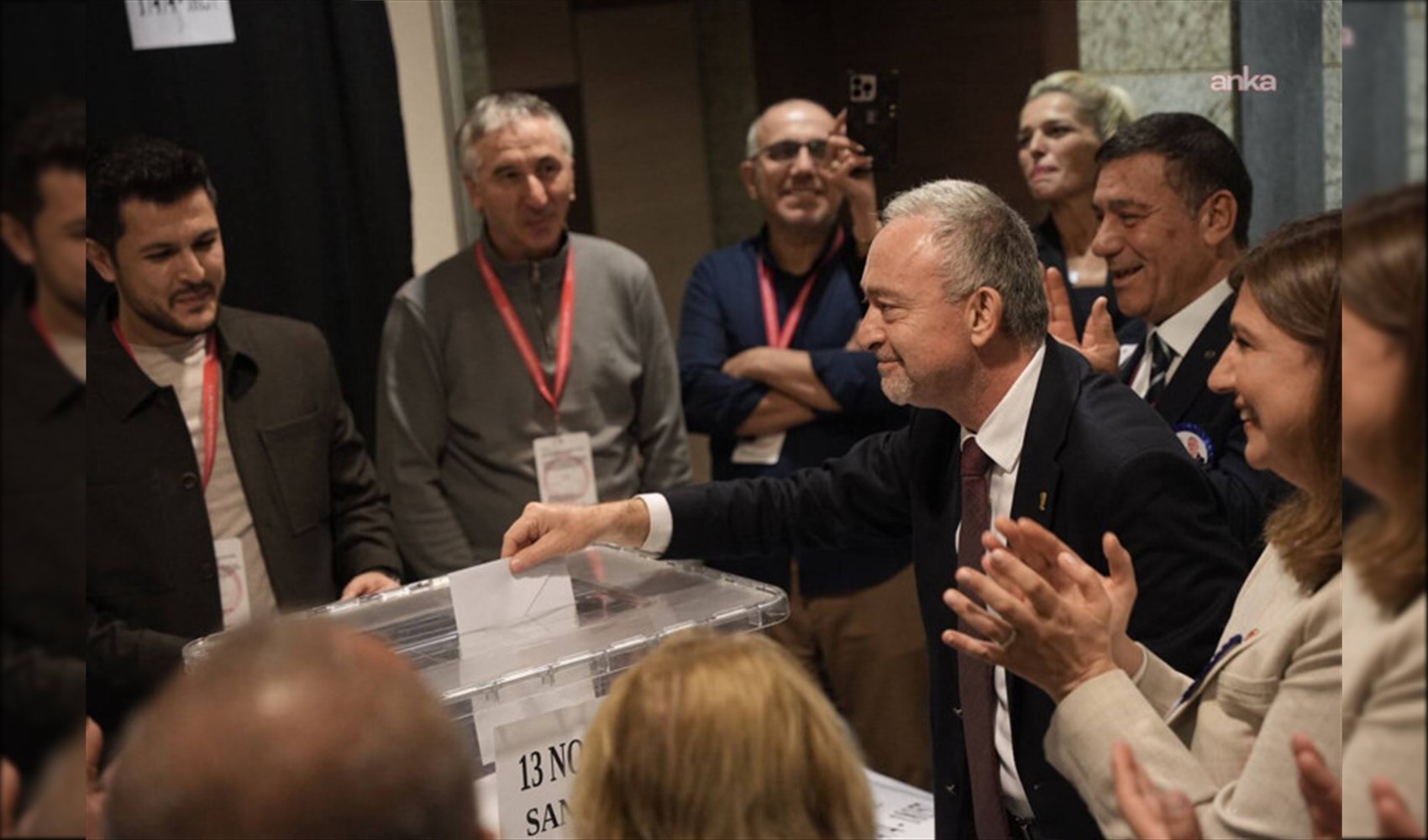
Ümit Kocasakal is the new president of the Istanbul Bar Association

Storm and heavy rain alert in Istanbul!
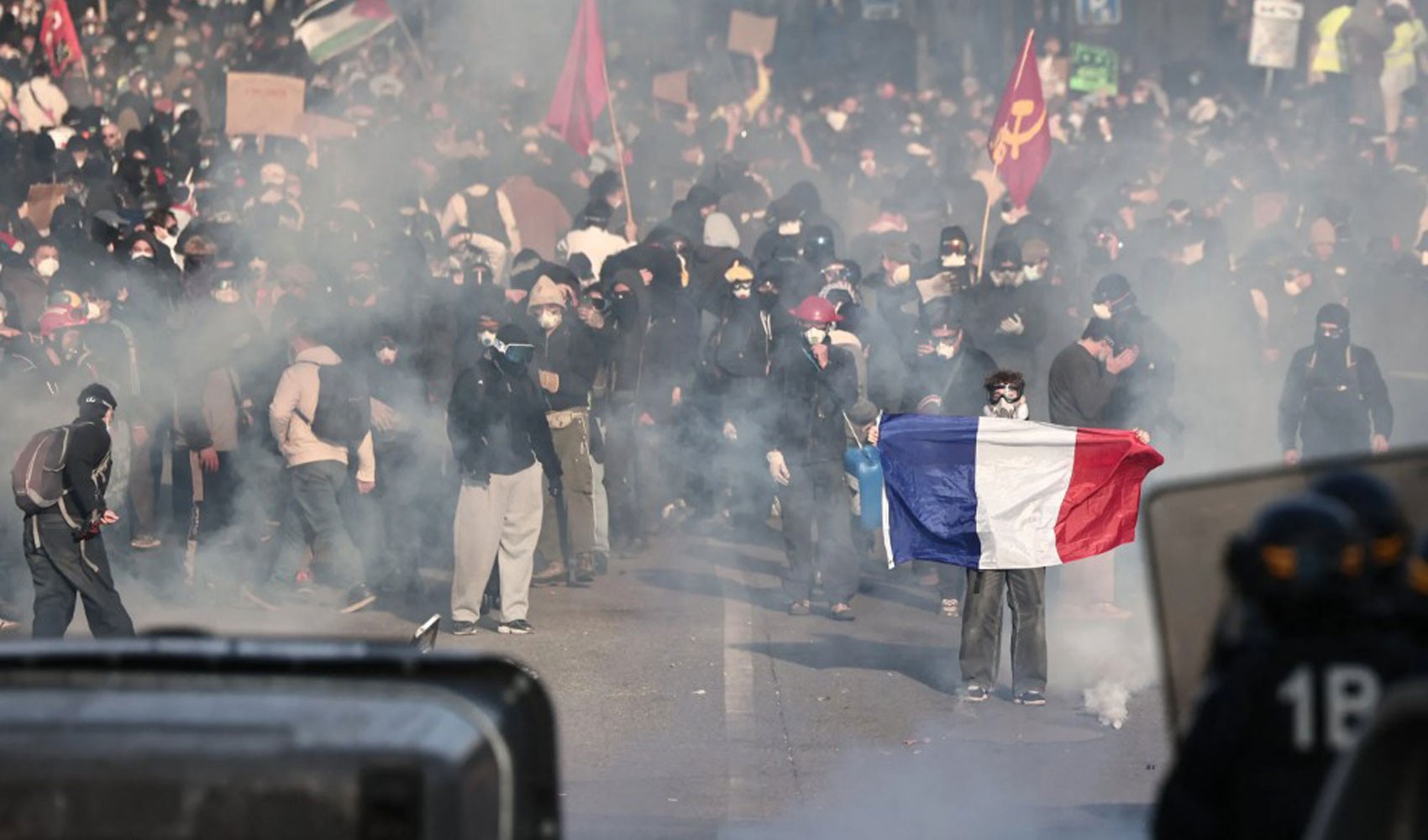
Protests against cost of living and education conditions continue in France
Those who touch it get burned... A 'Fund' shackle for a female shopkeeper too!..
Courthouse employee found dead in his home
The institution that dismissed Ebru Eroğlu’s father has been identified

He lay on the ground to stop the vehicle, then jumped into the driver's seat and fled when the driver got out
Hüseyin Özbek's take: 'The expansionists lost, the Republican alliance won'

Toppled by two articles
Seizure proceedings initiated at Tera Yatırım and Tera Portföy