


Tolstoy: The man who dared to live what he wrote



Lev Nikolayevich Tolstoy, considered one of the greatest writers of all time, was born on August 28, 1828, in Yasnaya Polyana, about 200 kilometers south of Moscow. He was the child of a noble family. His mother, Princess Mariya Volkonskaya, passed away when Tolstoy was only two years old. His father, Count Nikolay Tolstoy, a retired lieutenant colonel who had participated in the 1812 Napoleonic War, died seven years later. As the fourth of five children, Tolstoy grew up as an orphan who had lost both his mother and father by the age of nine, under the guardianship of his two aunts.
From his childhood, he possessed an insatiable curiosity for learning. He was not a brilliant student in formal education; however, the reason for this was not failure, but his preference for self-education over school discipline. He already belonged to an aristocratic family. He had inherited approximately 2,180 hectares of land and hundreds of serfs.
His diaries also reveal the works that influenced him during his childhood years. The story of Joseph in the Bible, The Thousand and One Nights, Russian epics, and Pushkin's poems left deep marks on his mind. Tolstoy is one of the three great names referred to as a "prophet" in Russian literature; the other two are Pushkin and Dostoevsky.
In his youth, he became an ardent follower of Jean-Jacques Rousseau. Dickens, Sterne, and Schiller were among the Western writers he admired. In his own country, he carried the influence of Pushkin, Gogol, and Turgenev. The Sermon on the Mount, particularly in the Gospel of Matthew, became one of the texts that defined his understanding of morality.
During his travels in Europe, he met Victor Hugo and greatly admired his novel Les Misérables. In Brussels, he met with the anarchist thinker Pierre-Joseph Proudhon. This encounter was influential in deepening his criticisms regarding the state and property.
However, reading Tolstoy only as a great novelist remains incomplete. His true greatness lay in his attempt to eliminate the distance between his thoughts and his life.
He viewed the state as a mechanism that inherently produces violence. His experiences, especially during the Crimean War, turned him into a staunch pacifist. In later years, he began to question private property; he demonstrated this not only theoretically but also in the practice of his life. He took off his aristocratic clothes and dressed like the peasants, worked in the fields, and opened thirteen schools for children. Interestingly, he also had thirteen children of his own.
Tolstoy's thoughts influenced not only Russia but the entire world. He corresponded with Mahatma Gandhi; Tolstoy played a major role in shaping Gandhi's understanding of non-violence. Later, Martin Luther King Jr. would also be nourished by the same tradition of thought.
The Tsarist administration and the Russian Orthodox Church were uncomfortable with these ideas. He was excommunicated by the Orthodox Church in 1901, especially after the publication of his novel Resurrection. However, this decision did not diminish his moral authority; on the contrary, it strengthened it.
One of the names mentioned alongside Tolstoy is Lenin. In his article titled "Leo Tolstoy as the Mirror of the Russian Revolution," Lenin states that his works reflect the contradictions of Tsarist Russia with extraordinary clarity. Tolstoy was not a revolutionary; however, his success in diagnosing the decaying social order had caught Lenin's attention.
Nevertheless, Tolstoy was also deeply influenced by issues such as the fight against poverty, income inequality, and the critique of property, which were targeted by socialists and communists, and he shared similar humanitarian concerns. On the other hand, he made notes about socialism and socialists in his diaries and expressed his criticisms of the subject openly. Tolstoy argues that socialism correctly identifies the exploitation experienced by laborers, but seeks the solution in the wrong place. According to him, socialists try to change only the economic order while neglecting the moral transformation of the human being.
Tolstoy writes:
The fundamental error in people's understanding of socialism is that they confuse the struggle against the exploitation of capital with the socialist society that is assumed to be established in the future. The former is natural and useful; the latter is an impossible dream.
He also criticizes the idea held by socialists that everyone will reach prosperity by increasing production. He says that the problem is not insufficient production, but the combination of wealth with the desire for unlimited consumption. According to him, justice does not emerge spontaneously as wealth increases; on the contrary, the power of those who hold authority grows even further.
He explains this situation with a striking analogy:
"Just as a stove that is constantly fed wood but left with its lid open cannot heat a house, merely increasing production cannot save humanity."
Tolstoy values economic models based on cooperatives and solidarity instead of competition. Despite this, he believes that the ultimate solution is not economic, but moral. The real issue is for humans to curb their unlimited desire for consumption.
In his eyes, the foundation of social transformation is the human conscience before the relations of production.
For this reason, he says:
"The only solution is to show people that true goodness is not wealth."
Tolstoy's interpretation of Christianity is also decisive here. According to him, a just society cannot be established without realizing the principle of love, sacrifice, and living for others taught by Jesus. He writes this sentence in his diaries:
Justice and true equality are only possible through a person's self-renunciation and finding the meaning of their life in serving others.
At this point, let us conclude our article by asking this question: What is left for us from Tolstoy?
Tolstoy packed not only immortal works like War and Peace and Anna Karenina into his eighty-two-year life, but also great questions directed at the conscience of humanity. His attempt to distribute his wealth to the peasants, his rejection of property, and his choice of a simple life were the most concrete examples of his effort to close the gap between what he wrote and how he lived. These choices caused a rift between him and his family.
In the final days of his life, he left his home and set out on a silent journey. However, his body was no longer strong enough to complete this journey. He passed away on November 20, 1910, at Astapovo Train Station, in the station master's house.
He did not leave behind only great novels.
He left a great legacy that calls for rethinking the state, property, religion, violence, conscience, and the human search for truth.
Perhaps what makes Tolstoy immortal was not just his powerful pen.
It was that he dared to live the life he wrote.
Would you like to get notifications about new developments and save news?
- NotificationsNew developments and breaking news
- SaveNews is stored in the app
Most Read
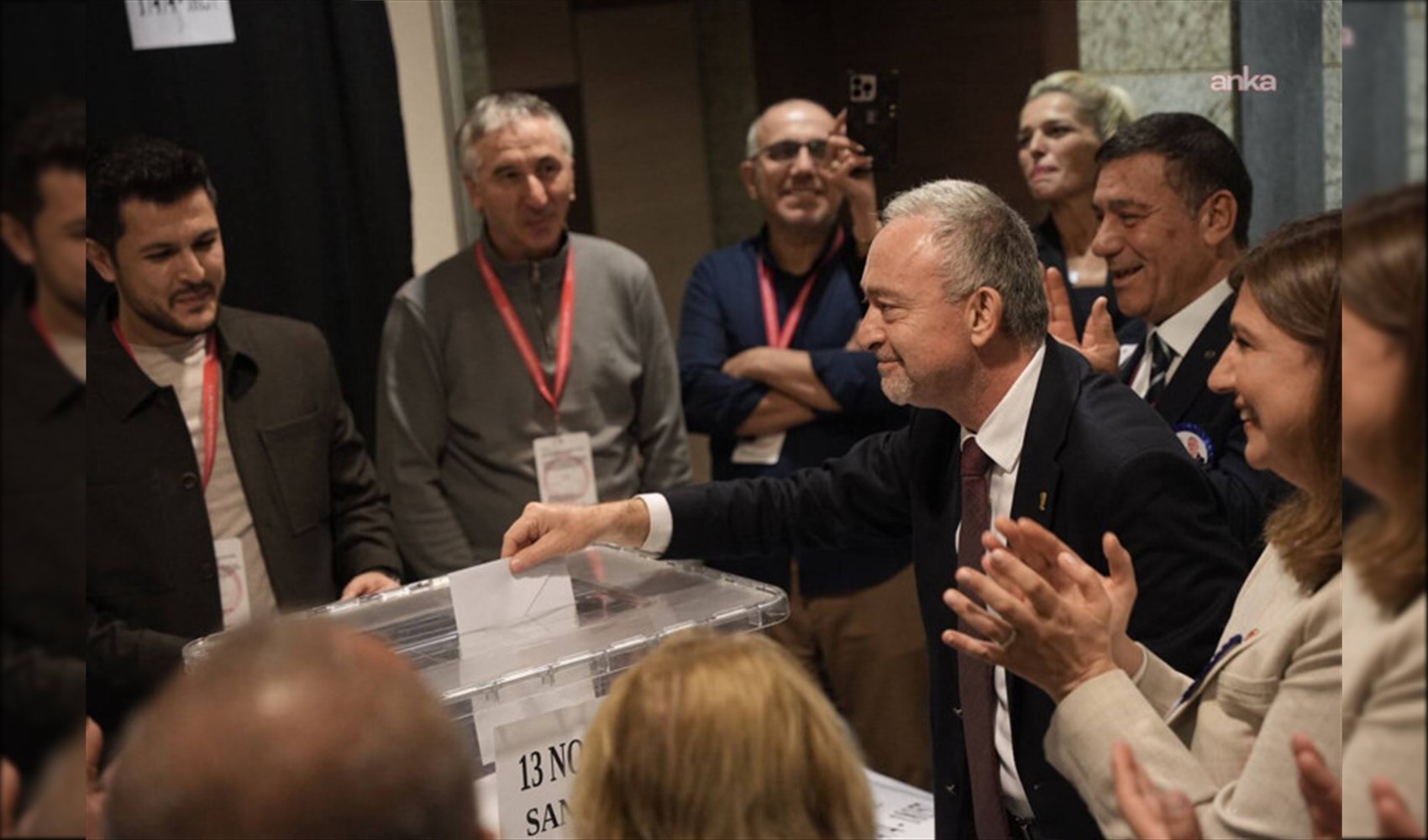
Ümit Kocasakal is the new president of the Istanbul Bar Association

Storm and heavy rain alert in Istanbul!
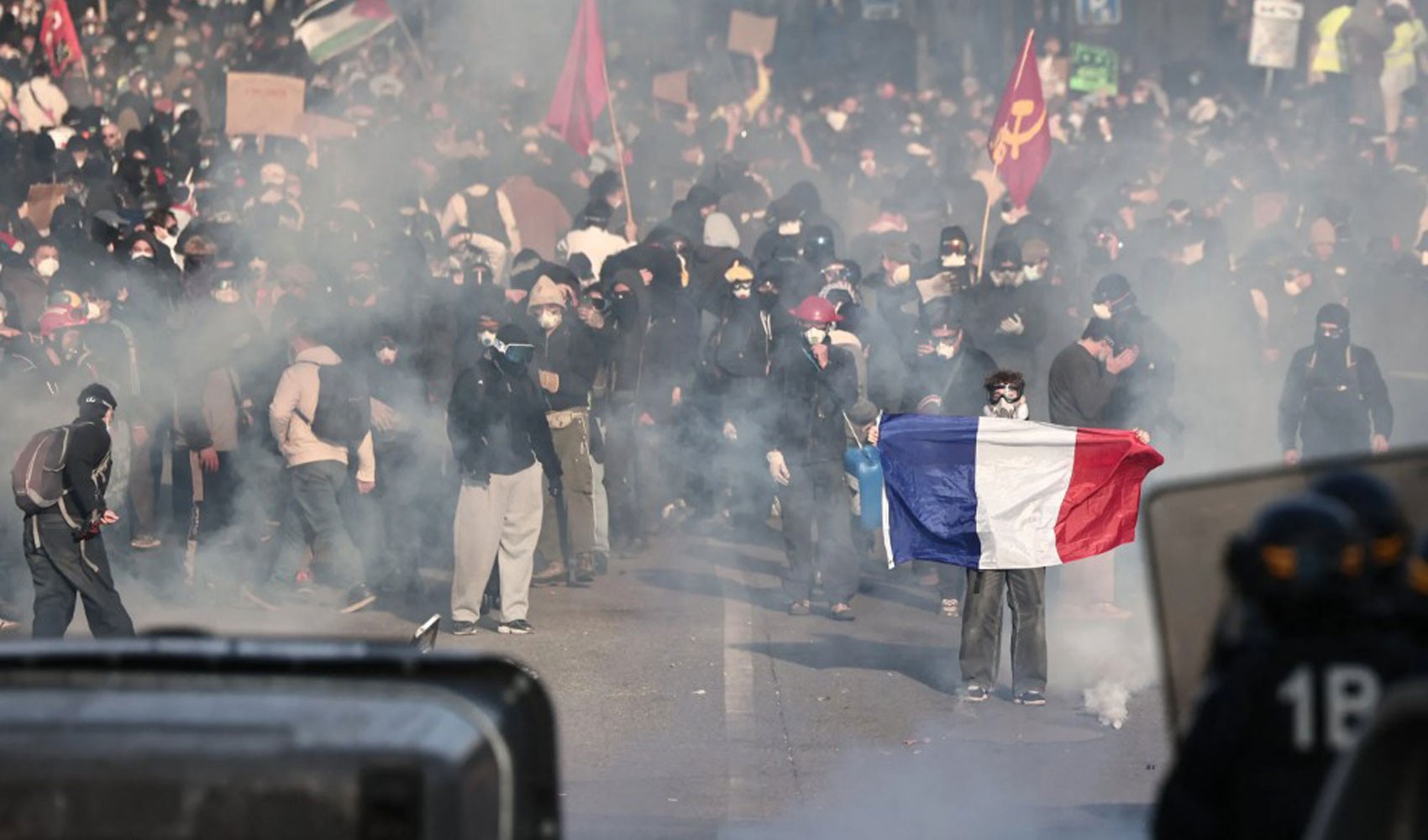
Protests against cost of living and education conditions continue in France

Those who touch it get burned... A 'Fund' shackle for a female shopkeeper too!..
Courthouse employee found dead in his home
The institution that dismissed Ebru Eroğlu’s father has been identified

He lay on the ground to stop the vehicle, then jumped into the driver's seat and fled when the driver got out
Hüseyin Özbek's take: 'The expansionists lost, the Republican alliance won'

Toppled by two articles

Seizure proceedings initiated at Tera Yatırım and Tera Portföy