


The Young Turk Revolution, Turkish Nationalism, and the Turkic World


In recent years, there has been a notable interest, especially among young people, in the 1908 Young Turk Revolution, the Committee of Union and Progress, and Kemalism. It is positive and important that Turkish youth are showing interest in these topics and following accurate, qualified, and scientifically rigorous books, articles, documentaries, and publications in this field. It should not be forgotten that many of our esteemed professors and masters, from Zafer Toprak to Feroz Ahmad, Tarık Zafer Tunaya to Sina Akşin, and Erol Şadi Erdinç to Orhan Koloğlu, have produced high-quality work and significant pieces on these subjects. Of course, there are also important foreign experts who have written on these topics, such as Philip H. Stoddard, Masayuki Yamauchi, Ernest E. Ramsaur, Eric Jan Zürcher, Stanford J. Shaw, and Justin McCarthy... The list could certainly be even longer.
We do not forget that knowing those periods, recognizing those generations, and grasping those segments of our history form the foundation for better understanding the present and predicting the future with greater accuracy.
We know that the Young Turk movement deeply affected the Ottoman Empire (Devlet-i Aliyye) and triggered and accelerated the idea of nationalism in regions where Muslim and Turkish subjects were dense and in the majority. Movements aiming for constitutionalism, political pursuits within this scope, and constitutional theses were discussed and embraced among Ottoman intellectuals, thinkers, and political elites.
Even if not under the administration of the Ottoman State, there was a rich climate of thought in the Caucasus and Central Asia (Turkestan), where the Ottoman Empire was closely followed and the influence of Ottoman intellectuals was felt. Many pioneering figures of the Turkism movement were born and raised in these lands. Indeed, these important thinkers would later make great contributions to the Republic of Turkey, which would be founded in 1923, and would come to the forefront in discussions regarding Turkish nationalism.
TURKISTS COMING TO THE OTTOMAN EMPIRE FROM THE CAUCASUS AND CENTRAL ASIA
There is more. Some of these important thinkers left their homelands due to the oppression they faced in Tsarist Russia and came to the Ottoman Empire, to the capital, Istanbul. Among those who came to Istanbul from the Caucasus and Central Asia during that period, there were not only important thinkers and intellectuals. There were also students. However, these important thinkers did not receive much attention from those governing the Ottoman State, the Palace, or the Sultanate.
There are, of course, several reasons for this indifference: First, the state officials governing the Ottoman Empire were wary of Russia. Second, the Ottoman State was weak and, moreover, did not have a policy directed toward the Turks and Muslims under the administration of Tsarist Russia. Third, the Palace and the Government were concerned that the ideas of the Young Turks and the thoughts of Turkist intellectuals of Caucasian and Central Asian origin would be influential on Ottoman subjects.
Yet, the 1905 Revolution in Russia, the chaos following the revolution, and the defeat of the Russians by the Japanese excited and gave hope to both the Muslims and Turks in Russia and the Young Turks in the Ottoman Empire. However, due to the indifference of Sultan Hamid-i Sani (in Ottoman, the numbers indicating which sultan it is come after the name, not before, so the correct form is Hamid-i Sani, not Abdulhamid II) toward developments in Russia and his efforts to get along well with Russia, Turkist intellectuals in Tsarist Russia kept their distance from the Sultan.
After the Second Constitutional Era, that is, the 1908 Young Turk Revolution, one of our great thinkers, Yusuf Akçura, came and settled in Istanbul. He led the establishment of the Turkish Association (Türk Derneği), the first nationalist organization of the period. Ağaoğlu Ahmet and Hüseyinzade Ali Bey, who were among the other founders of the association, were also among our pioneering intellectuals who came from Tsarist Russia. Let us recall that the Turkish Association would be followed by the Turkish Hearth (Türk Yurdu) and the Turkish Hearths (Türk Ocağı).
It should not be forgotten that the topics covered in the Turkish Hearth magazine, one of the influential publications of the period, were subjects such as homeland, patriotism, nation, nationalism, centralization, and modernization, and that these were among the most discussed topics in Central Asia and the Caucasus as well. Pioneering intellectuals such as Yusuf Akçura, İsmail Gaspıralı, Hüseyinzade Ali Bey, Ahmet Ağaoğlu, Sadri Maksudi Arsal, and Zeki Velidi Togan were influential both in Istanbul and among the Turks in Russia. They both influenced the Young Turks and were influenced by them.
NATIONALISTS IN THE OTTOMAN EMPIRE AND NATIONALISTS IN RUSSIA
Intellectuals who supported the Jadidist (reformist) movement in the Turkestan (Central Asia) region, just like the Young Turks in the Ottoman Empire, placed great importance on education. They carried out intense publishing activities, primarily the newspaper Tercüman. In addition to the Ottoman Empire, they also closely followed the world. The fact that the 1905 Russian Revolution and the 1905 Iranian Constitutional Revolution were followed by the 1908 Young Turk Revolution further increased interest and hope toward Istanbul in the Caucasus and Turkestan. Slogans such as "Long Live Liberty" and "Long Live the Constitution," which were among the slogans of the Young Turk Revolution, were also voiced by the Jadidists in Bukhara.
There was also an interaction between Pan-Turkism, which developed among Turks as a reaction and objection to Pan-Slavism in Russia, and Pan-Turkism, which developed in the Ottoman Empire against disintegration and collapse. There are many common names among the intellectual pioneers of both. It is natural that there were some differences and some similarities between the Turkism movements in the two countries. Moreover, there was not just one single Turkism in the Ottoman Empire. There were different approaches to Turkism. However, one thing should not be forgotten: whatever Paris meant for the Young Turks, Istanbul meant the same for the Turkist thinkers in Central Asia and the Caucasus. Istanbul was both a city from which inspiration was drawn and a port of refuge.
For the Young Turks, Turkestan, Central Asia, and the Turkic world on a broader scale were also important. For example, the poet and thinker Ömer Naci, one of the permanent members of the Committee of Union and Progress Central Committee, was tasked with inciting the Turks in Iran to revolt. Two years before the 1908 Revolution, in March 1906, Dr. Bahattin Şakir wrote a letter from Paris addressed to the Muslim People of the Caucasus. In August 1906, Dr. Bahattin Şakir sent a letter he wrote together with Dr. Nazım to Gaspıralı İsmail Bey.
In short, even if the conditions and the necessary force to implement the Young Turks' thoughts regarding the Caucasus and Turkestan were not present, their interest in those regions was strong. Furthermore, a warm relationship was established between Galip Kemali Bey, the last Moscow Ambassador of the Ottoman State, and the Turks of Russia. Yusuf Akçura was also at the head of the Red Crescent Delegation (Hilal-i Ahmer Heyeti) that the Ottoman State sent to Russia with the task of examining the situation of prisoners of war.
UNIONISM AND TURKISM
The Unionists did not adopt a passive stance like Sultan Hamid-i Sani. They saw Pan-Turanism and Pan-Islamism as important ideological weapons. They also had an important organization at their disposal, such as the Special Organization (Teşkilat-ı Mahsusa). But it should not be forgotten that Pan-Islamism was a policy that the British did not like, and Pan-Turanism was a policy that the Russians did not like and which drew their reaction. Russia was concerned that the Second Constitutional Era would be taken as an example by the Muslim peoples in Russia. England harbored the same concern for the Muslims in its colonies. Germany, on the other hand, found both Pan-Turanism and Pan-Islamism to be in line with its own interests.
The Young Turks welcomed the Turkist thinkers coming from Russia very well, valued their ideas, paved the way for them, and tried to benefit from their thoughts. Yusuf Akçura, Ahmet Ağaoğlu, Mehmet Emin Resulzade, Abdürreşid İbrahimov, Hüseyinzade Ali Bey, Ayaz İshaki, and Halim Sabit were held in high regard. Both immigrant organizations and publications were quite active. These publications were also closely followed in Central Asia and the Caucasus. In addition to those in Central Asia, the Caucasus, and Russia, a great increase in Turcology studies was also seen in Hungary. Ahmet Ağaoğlu, with the task given by the Committee of Union and Progress, tried to send a large number of Ottoman intellectuals as teachers among the Muslim Turks in Russia, especially to the Caucasus. The Turkish Hearth magazine was passed from hand to hand in those regions, and the Tsarist Russian administration opened investigations into those who read the magazine.
The Turkish nationalists who came from Russia during that period advocated for Turkish unity. They did not feel a political, social, or cultural allegiance to the Ottoman State. It should be noted that the majority of these nationalist intellectuals were citizens of Tsarist Russia. First and foremost, they demanded the widest possible freedom to learn their own history freely and without oppression. They also followed the developments, intellectual currents, newspapers, and magazines in Istanbul with great attention and sensitivity.
The interest of intellectuals, especially in Azerbaijan, toward the Young Turks is remarkable. Jadid reformism and the national awakening and nationalist movements in Azerbaijan were also closely followed by the Young Turks. For example, the phrase "Turkify, Islamize, Modernize" (which is also the title of his book), used by our great thinker Ziya Gökalp, one of the intellectual leaders of the Committee of Union and Progress and the founder of sociology in our country, was first used by the great Azerbaijani intellectual Hüseyinzade Ali Bey.
In summary, the 1908 Young Turk Revolution was closely followed in Turkestan and the Caucasus. Of course, the organizational influence of the Young Turks in those regions was very limited. It was not possible for them to find a strong social base. Moreover, Turkish nationalism is the ideology of the nation that formed the founding element and the dominant element in the Ottoman State, and which constituted the majority of the Ottoman subjects, even if it was not highlighted or valued much in the palace. In Central Asia, the Caucasus, and Crimea, there was Russian and Slavic oppression, and the determining power was Tsarist Russia.
Would you like to get notifications about new developments and save news?
- NotificationsNew developments and breaking news
- SaveNews is stored in the app
Most Read

Champions League results for the night are in

First message from Democrats to Trump

Surprise suitor for İsmail Kartal from Iran

What kind of conscience allows for putting a martyr's mother on trial!
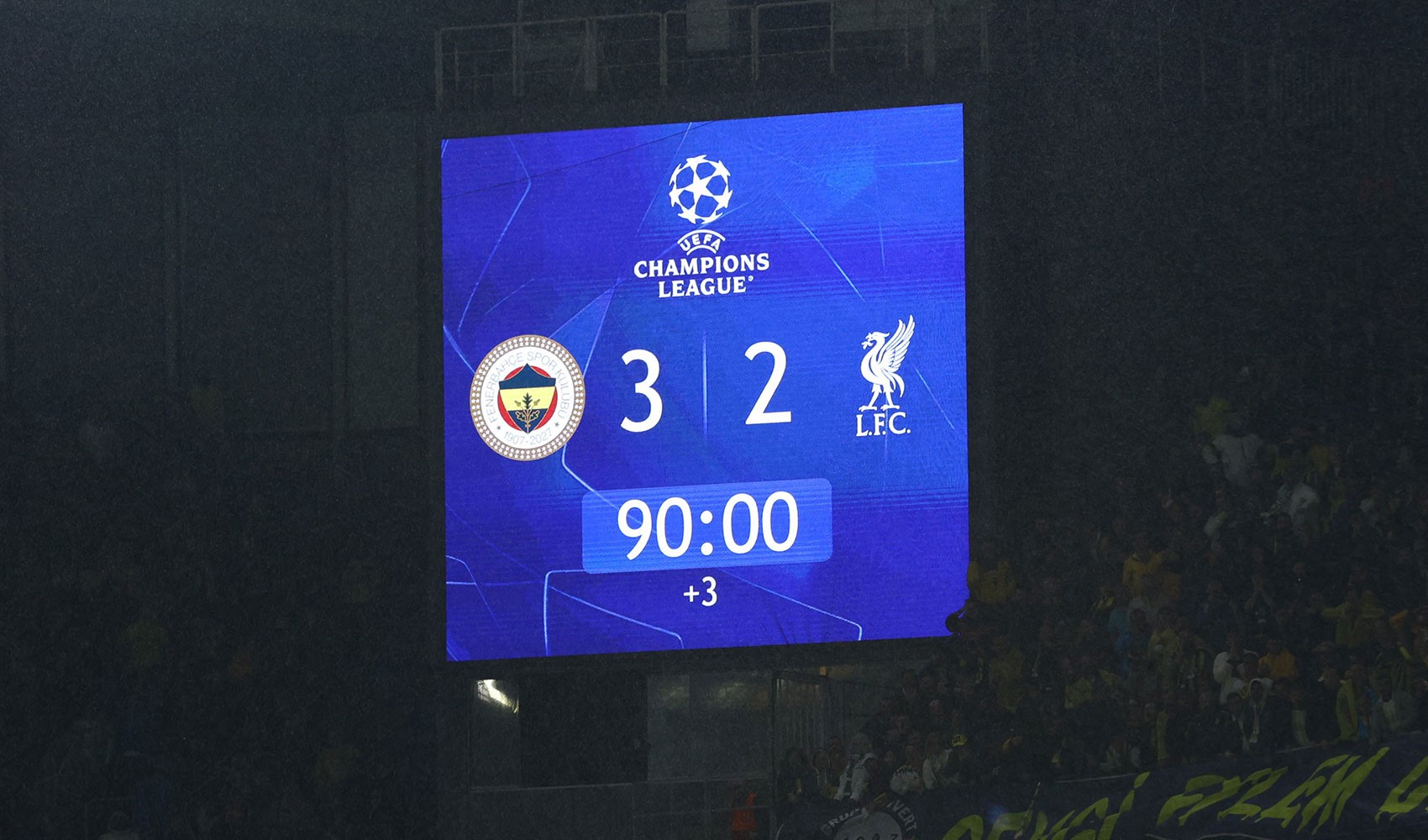
UEFA country coefficient ranking updated after Fenerbahçe's victory over Liverpool
Payment infrastructure for DOA recycling machines transferred to Usame Erdoğan's company

The Young Turk Revolution, Turkish Nationalism, and the Turkic World

Don't underestimate the Mullah

New era for charging stations
Indictment seeking prison time for Ağırel and Saymaz