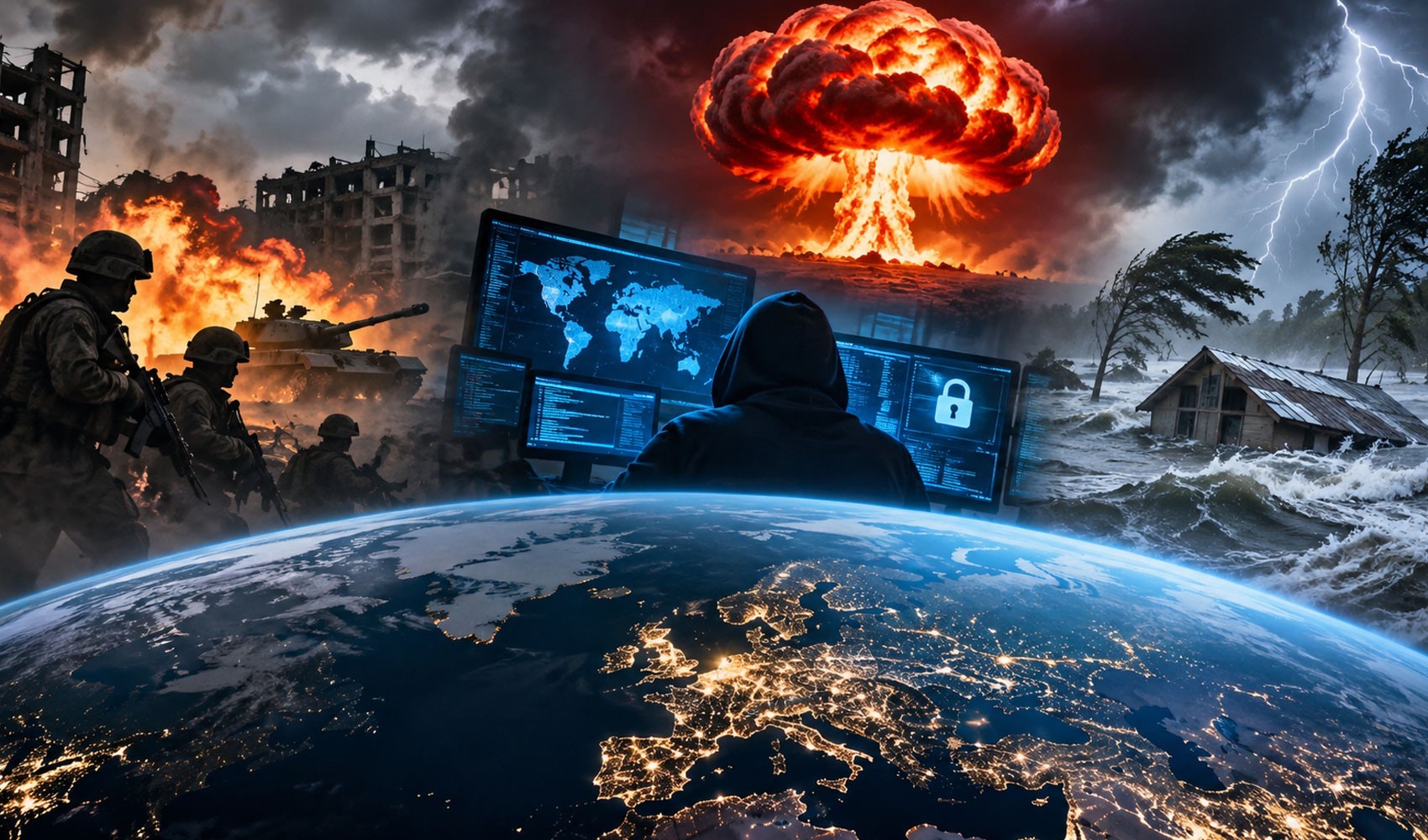
Due to wars, nuclear tension, cyberattacks, and climate-related disasters, many countries have placed civil defense measures on their agendas. 33 nations, including the US and European countries, have called on their citizens to keep emergency supplies in their homes against potential crises.
Increasing geopolitical tensions and successive crises around the world have accelerated countries' preparations for potential emergency situations. Following the COVID-19 pandemic, the Russia-Ukraine war, conflicts in the Middle East, and climate-related disasters have also become key topics on the security agenda.
33 states, including the US and 17 European countries, have shared their civil defense recommendations for citizens with the public. The statements urged people to keep cash, flashlights, candles, batteries, radios, drinking water, and long-lasting food products in their homes.
The countries' calls for preparation have also received extensive coverage in the international press. While Newsweek magazine featured the developments on its cover with the headline "Is a global crisis coming?", the potential crisis scenarios included not only military conflicts but also attacks that could target energy and communication infrastructure.
FOUR MAIN RISKS HAVE LED COUNTRIES TO PREPARE
Four main threats stand out in the civil defense plans of these countries. At the top of the list are cyberattacks on critical infrastructure, the spread of regional wars, disasters caused by climate change, and the possibility of nuclear conflict.
Cyberattacks: Attacks on banking systems, power grids, power plants, and communication infrastructure are among the risks for which countries are preparing. It is assessed that if such attacks disable critical systems, long-term disruptions in electricity and communication services could occur.
Expansion of wars: The Russia-Ukraine war and the spread of conflicts in the Middle East to different regions pose a risk to global supply chains. It is stated that a possible expansion could disrupt international transport and the distribution of essential goods.
Climate-related disasters: Extreme weather events, floods, dam overflows, and drought constitute other risks included in countries' emergency plans. The possibility that drought could cause a decline in agricultural production and negatively affect food supply is also being taken into account.
Nuclear tension: The escalation of political and military tension between countries possessing nuclear weapons stands out as one of the important topics for the introduction of civil defense measures.
FLASHLIGHT SALES IN THE UK INCREASED BY 284 PERCENT
The "Be Ready" campaign launched by the UK government for potential crises has increased the demand for emergency supplies. Citizens were asked to keep enough water, non-perishable food, medicine, and cash to meet their needs for at least 72 hours.
Following the calls for preparation, a 284 percent increase was recorded in flashlight sales, and a 106 percent increase in portable charger (powerbank) sales.
In Germany, the Federal Office of Civil Protection and Disaster Assistance (BBK) advised citizens to stockpile at least 1.5 liters of drinking water per person per day and long-lasting canned goods. The statement noted that one should be prepared for potential cyberattacks and long-term power outages.
The European Commission also called on citizens of member states to prepare emergency kits that would allow them to survive the first 72 hours on their own in situations such as disasters, cyber crises, and power outages.
In Japan, a call for preparation was made due to a potential major earthquake in the Nankai Trough, a possible tremor centered in Tokyo, and the possibility of the eruption of Mount Fuji. While citizens were asked to keep enough supplies to meet their needs for at least three days, the ideal preparation period was announced as one week.
STOCKPILING PERIODS REQUESTED BY COUNTRIES FROM THEIR CITIZENS
The periods recommended by countries to their citizens for emergency preparedness vary. While it is recommended to stockpile for 10 to 14 days of needs in Germany and Austria, a three-day preparation is considered sufficient in some countries.
Recommended preparation periods by country are as follows:
10-14 days: Germany and Austria.
7 days: Switzerland, Sweden, Norway, Estonia, and Taiwan. In Japan, one week of preparation is also stated as the ideal period.
72 hours: UK, France, Netherlands, Denmark, Finland, Poland, Czechia, Latvia, Lithuania, Croatia, Canada, Mexico, Chile, Colombia, Israel, New Zealand, South Africa, and countries across the European Union.
Emergency evacuation bag: USA, Australia, Ireland, Brazil, Argentina, India, Philippines, and Singapore.
News Source: 12punto