


Socio-economic development levels of districts and incentive mechanisms: The case of Adana and Bursa



The District Socio-Economic Development Index (SEGE-2022) report, prepared to determine the socio-economic development rankings of districts in Turkey, has been published by the Ministry of Industry and Technology. In the report, 973 districts were divided into six different development levels based on socio-economic indicators.
Development Criteria
In the SEGE-2022 report, the socio-economic development of districts was evaluated across eight main dimensions: Demography, Employment and Social Security, Education, Health, Finance, Competitiveness, Innovation, and Quality of Life.
A total of 56 variables were used in these dimensions, and the districts were ranked according to their development scores. For example, a total of 6 variables were used regarding the Health dimension: Infant Mortality Rate, Number of Physicians per Capita, Number of Dentists per Capita, Total Number of Health Personnel per Capita, Number of Hospital Beds per Capita, and Number of Pharmacies per Capita.
The SEGE-2022 index values of the districts were obtained using the first principal component values. Based on the natural breaks in the obtained index values, the districts in Turkey were classified into six development levels. As a result of the measurement made with 56 variables, the most developed district was Istanbul-Şişli with a SEGE score of 6.959, while the lowest SEGE score was -1.447, belonging to Şanlıurfa-Harran.
Turkey's Top 10 Most Developed Districts
The first development level, which includes the most developed districts, generally consists of provinces from the Marmara, Aegean, Central Anatolia, and Mediterranean regions. The first-level developed districts are those that ranked in the top 67 in the District SEGE-2022 study.
Table 1: Socio-Economic Development Index and Ranking of the Top 10 Districts
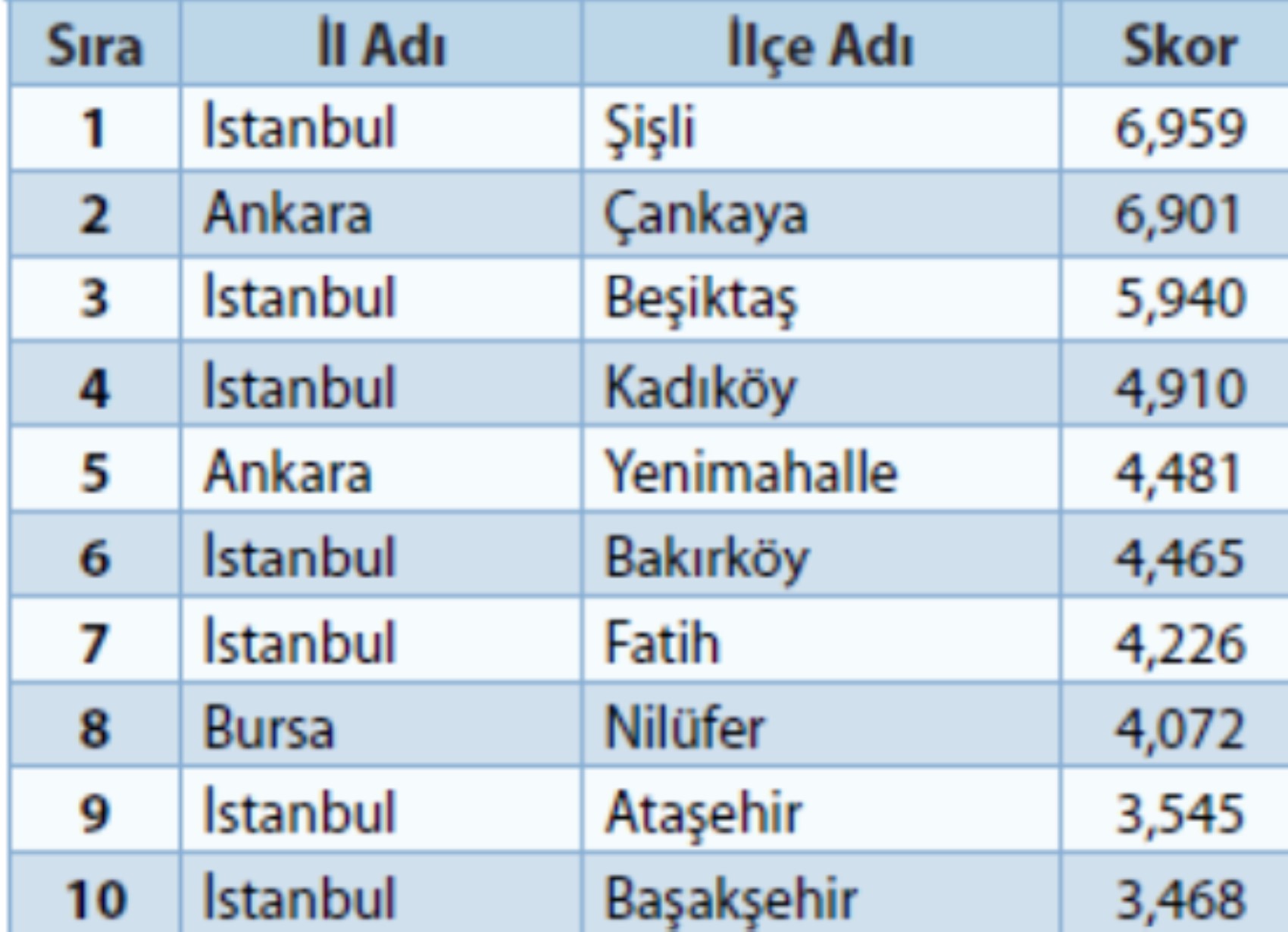
The vast majority of these districts are located in Turkey's most developed provinces. As can be seen in Table 1, the top 10 districts are generally the central districts of metropolitan cities and possess a strong economic infrastructure, high education levels, and advanced health services, such as High Economic Power (being centers of trade, finance, and industry), Qualified Labor Force (high rates of university graduates), Advanced Infrastructure (high-level transportation, health, education, and cultural facilities), and Innovation and Technology (R&D investments and technology-oriented ventures).
Turkey's Districts with the Lowest Development Scores
The sixth development level, which does not contain any districts from the Marmara or Aegean regions, mostly consists of districts from the Eastern Anatolia and Southeastern Anatolia regions. The sixth-level developed districts consist of a total of 121 districts in the District SEGE-2022 study.
Table 2: Socio-Economic Development Index and Ranking of the Bottom 10 Districts
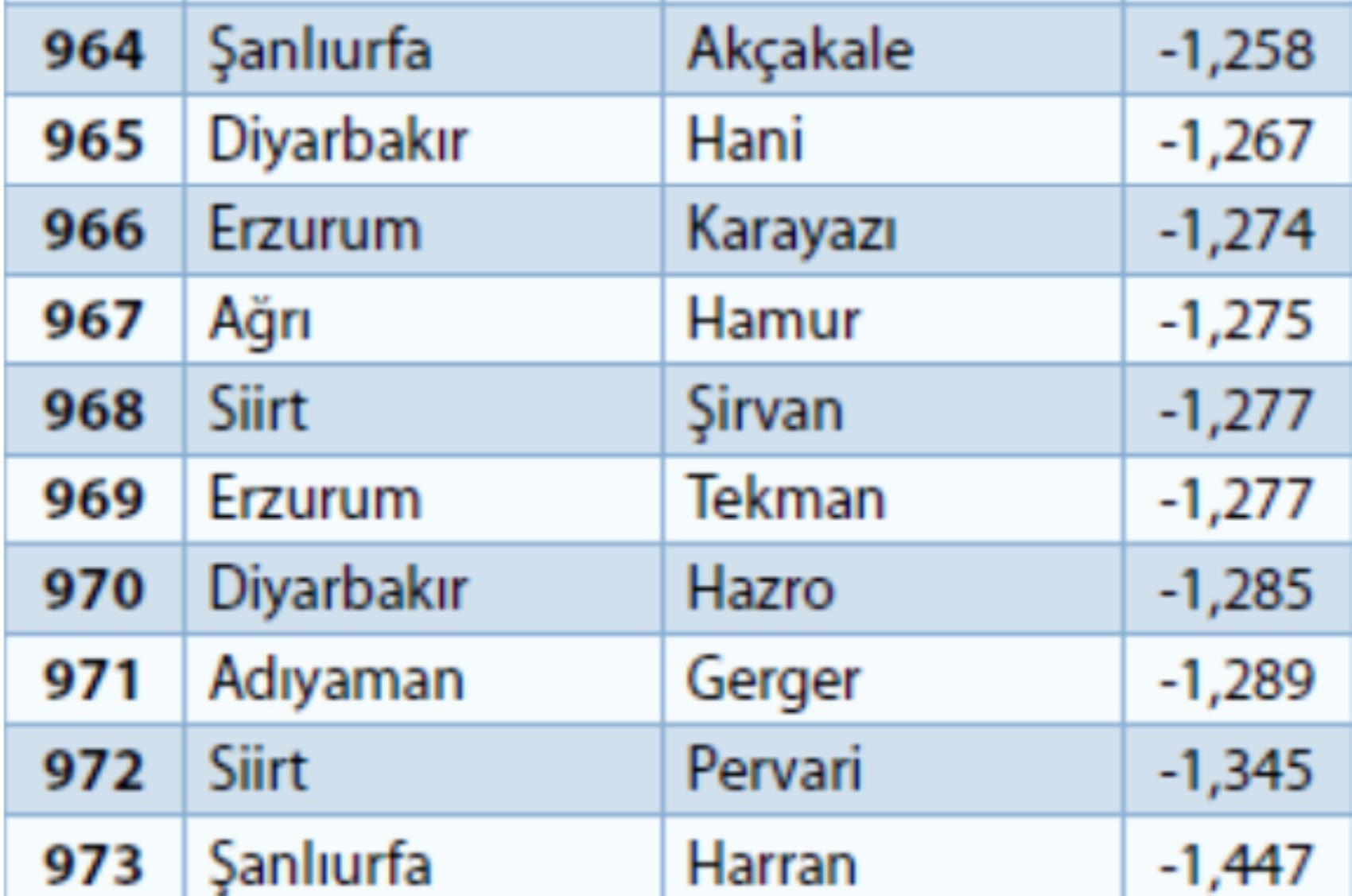
As can be seen in Table 2, the districts at the bottom of the list are generally rural and small districts in the east, and they lag behind in terms of socio-economic development due to factors such as Low Industrial and Trade Volume (limited economic activities), Difficulties in Accessing Education and Health Services (inadequacy of qualified health services and educational opportunities), Migration and Population Decline (migration of the young population to metropolitan cities), and Lack of Employment (economy based on agriculture and livestock, insufficiency of industrial investments).
SEGE 2022 Analysis Specifically for Adana and Bursa
Adana Districts
Although Adana generally has districts at medium and high development levels, significant differences are observed within the city.
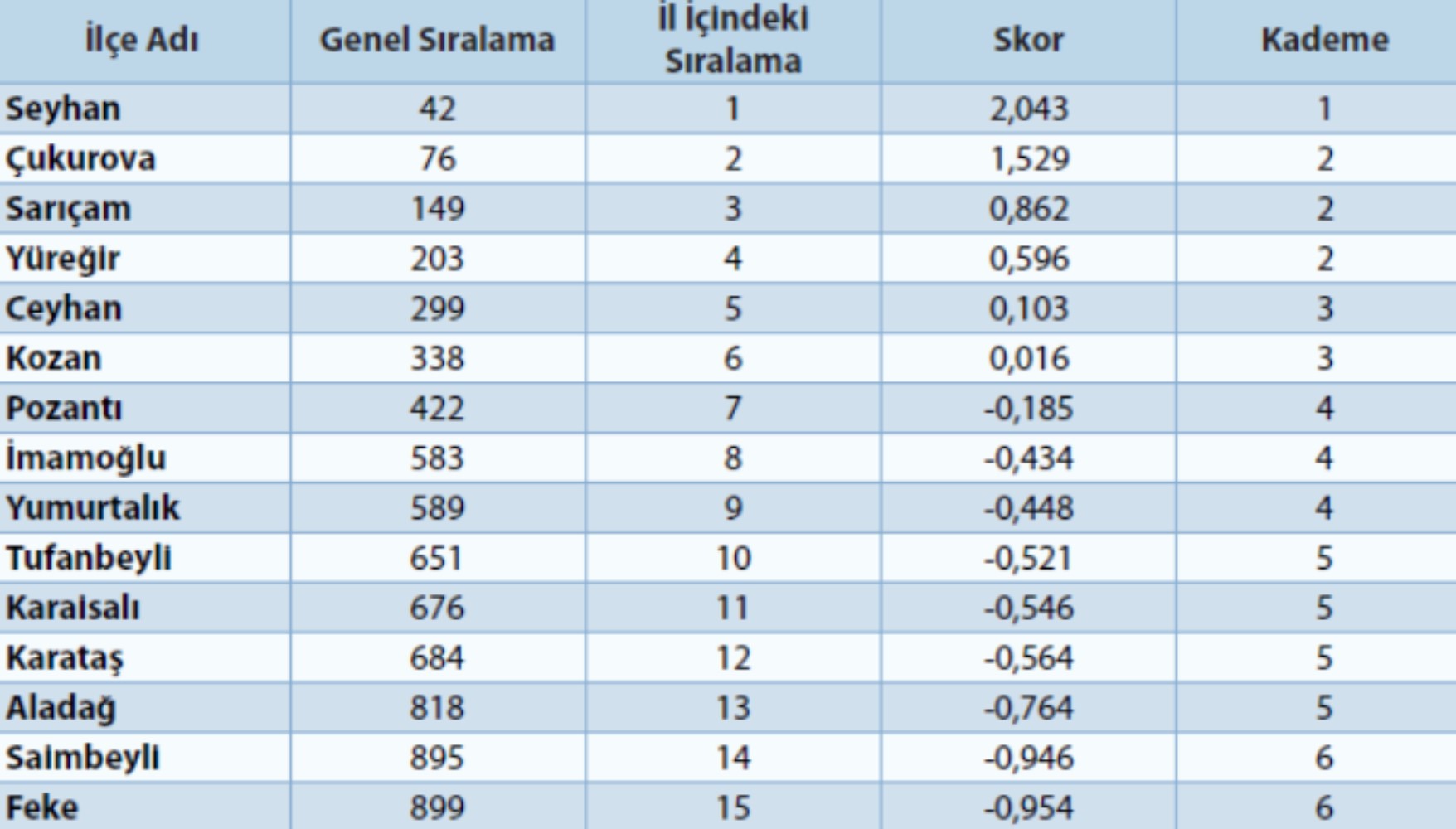
Table 3: Socio-Economic Development Index and Ranking of Adana's 15 Districts
• Adana's Most Developed Districts
Seyhan (1st Level - Most Developed District), Çukurova (2nd Level), Sarıçam (2nd Level), Yüreğir (2nd Level), Ceyhan (3rd Level), Kozan (3rd Level). These districts are Adana's strongest in terms of industry, trade, education, and health infrastructure. Seyhan and Çukurova, in particular, stand out in terms of population density, trade volume, and socio-economic indicators.
• Adana's Less Developed Districts
Pozantı, Yumurtalık, İmamoğlu (4th Level), Karataş, Karaisalı, Tufanbeyli, Aladağ (5th Level), Feke, Saimbeyli (6th Level - Least Developed Districts).
Feke and Saimbeyli are Adana's least developed districts and are disadvantaged in terms of industrial investments, health, and education facilities. These districts have an economy based on agriculture and livestock, and their migration rates are high.
Bursa Districts
Bursa is one of Turkey's most developed cities in terms of industry, trade, and quality of life. However, there are development differences between its districts.
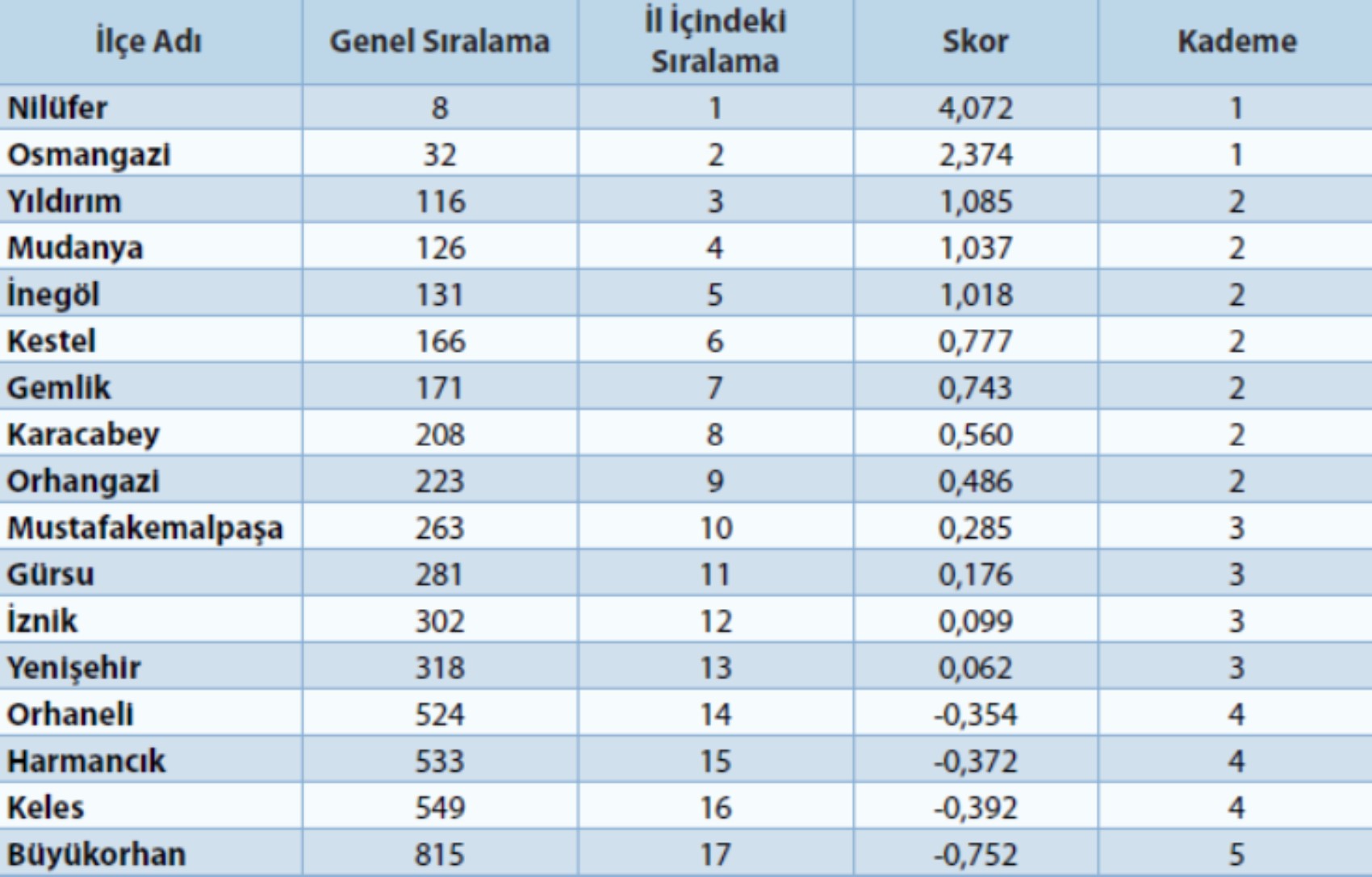
Table 4: Socio-Economic Development Index and Ranking of Bursa's 17 Districts
• Bursa's Most Developed Districts
Osmangazi (1st Level - Most Developed District), Nilüfer (1st Level), Yıldırım (2nd Level), İnegöl (2nd Level), Gemlik (2nd Level), Mudanya (2nd Level). Osmangazi and Nilüfer are Bursa's most developed districts in terms of economy, education, and quality of life. İnegöl stands out as a strong industrial district with its furniture industry and export-based production.
Gemlik and Mudanya maintain their development with their port and tourism potential.
• Bursa's Less Developed Districts
The districts of Orhaneli, Büyükorhan, Harmancık (5th Level), and Keles (6th Level - Least Developed District) have a more rural structure and their development speed is low because they remain distant from industrial investments. Keles is Bursa's least developed district and has the lowest SEGE scores due to limited economic activities.
Regional Incentives and Development Levels of Provinces and Districts
There are 6 Investment Incentive Regions determined to form the basis for the issuance of the Investment Incentive Certificate. The 1st Investment Incentive Region is the region where the most developed provinces are located. The 6th Investment Incentive Region consists of the least developed provinces, and support elements are applied at the highest level. According to the “Decision on State Aids in Investments” dated 15/6/2012 and numbered 2012/3305, which aims to reduce the development gap between provinces and increase the production and export potential of provinces, ADANA is in the 3rd Region and BURSA is in the 1st Region in the list of “Regions in Investment Incentive Practices”.
According to the Socio-Economic Development Ranking of Provinces for 2017 (SEGE-2017), which measures the socio-economic development of provinces with 52 variables in 8 main dimensions; Bursa, which is among the provinces in the first level, ranked 6th, while Adana, which is among the provinces in the third level, ranked 27th.
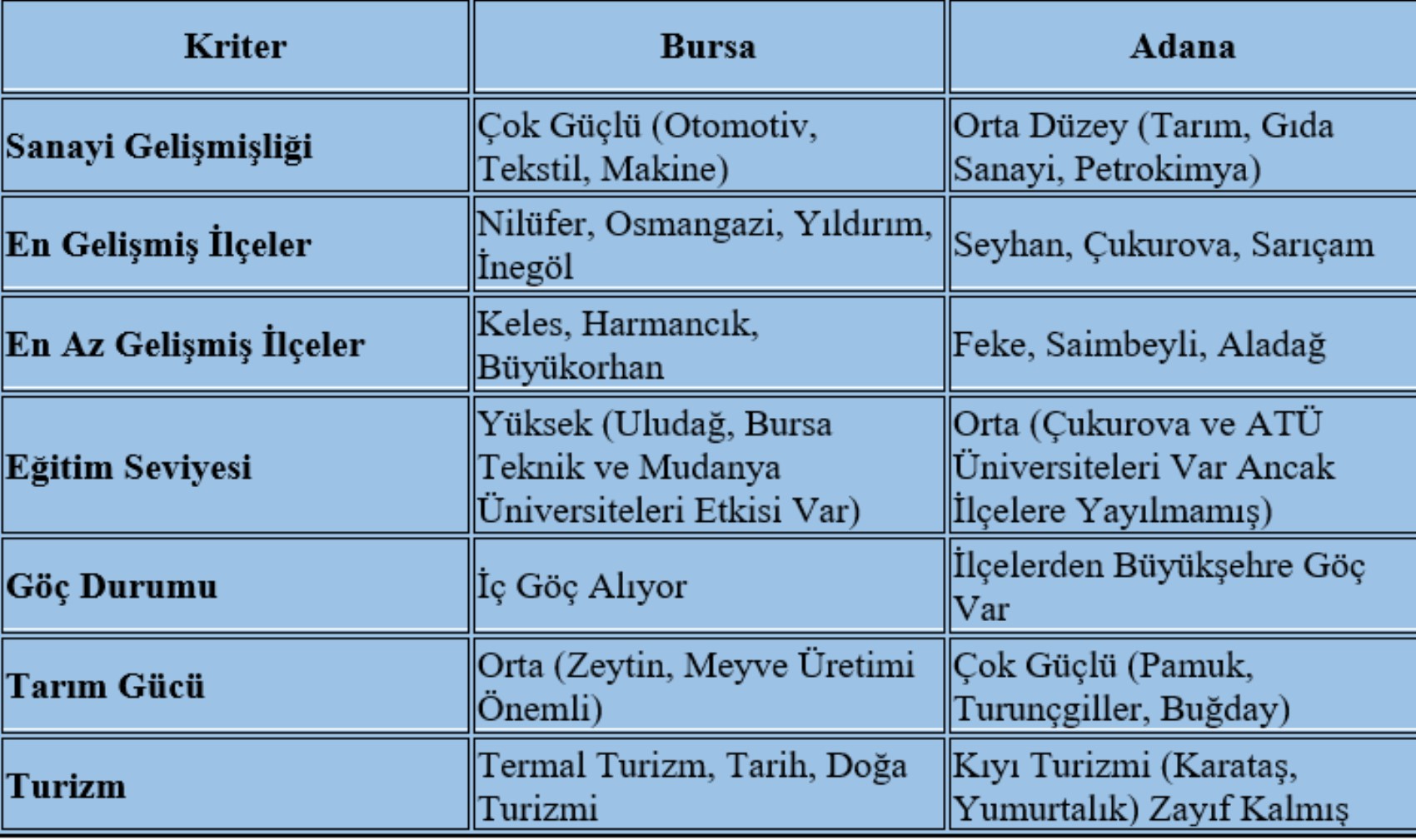
When we compare the provinces of Adana and Bursa in terms of some sectors and development dimensions, the strengths and weaknesses of the cities, as well as threats and opportunities, are summarized in the table below.
Table 5: Comparison of Bursa and Adana
With the “Decision on Amending the Decision on State Aids in Investments” published in the Official Gazette dated May 13, 2022, and numbered 31834, 9 districts from Adana—Yumurtalık, İmamoğlu, Karataş, Karaisalı, Tufanbeyli, Aladağ, Feke, Saimbeyli, and Pozantı—and 3 districts from Bursa—Büyükorhan, Harmancık, and Keles—were included in the list of “Districts That Can Benefit from Sub-Region Support”.
Within the scope of Decision No. 2012/3305, where legal regulations regarding the Investment Incentive Certificate are made, there are 5 ways to benefit from sub-region supports. These are;
1. Investing within the borders of an Organized Industrial Zone (OIZ) or Industrial Zone (IZ).
2. Investing in districts included in the List of Districts That Can Benefit from Sub-Region Support.
3. Investing in sectors in the OECD Medium-High Technology class.
4. Investing in subjects included among Priority Investment Subjects.
5. Investing in the fields of Strategic Investment Incentives or Project-Based Investment Incentives.
Conclusion and Evaluation
The SEGE-2022 report reveals that development differences exist significantly even in economically strong provinces like Adana and Bursa. Policies such as investment incentives, sub-region supports, and organized industrial zone (OIZ) investments offer critical tools to eliminate regional development inequalities.
9 districts of Adana are in low development levels: Pozantı, Yumurtalık, and İmamoğlu are in the 4th level; Karataş, Karaisalı, Tufanbeyli, and Aladağ are in the 5th level; and Feke and Saimbeyli are in the 6th level. However, these 9 districts can benefit from more advantageous incentives than Adana, which is in the 3rd region within the scope of “Investment Incentive Practices”, and the other 6 districts located at higher levels.
Similarly, three districts of Bursa are at lower development levels: Büyükorhan and Harmancık are in the 5th level, and Keles is in the 6th level. These districts can access more favorable incentives compared to the center of Bursa, which is in the 1st region in the “Investment Incentive Practices” list, and the other 14 districts that are at relatively higher levels.
Furthermore, business owners who want to invest in districts at higher development levels can benefit from the incentives of one level lower than their current level if they carry out these investments within an OIZ. Thanks to the district-based classification system in force as of 2025, some districts benefit from sub-region supports, and if the investment is made within the borders of an OIZ or industrial zone (IZ), the opportunity to benefit from the incentives of two sub-regions is provided.
Although Adana and Bursa are among Turkey's strongest economic centers, the socio-economic differences between their districts are noteworthy. SEGE data clearly reveals the necessity of special support mechanisms for underdeveloped districts while increasing the competitiveness of developed districts. Selective development policies, infrastructure investments, and projects aimed at increasing qualified human resources are of great importance in order to eliminate regional development gaps.
With the implementation of these strategies, the socio-economic imbalances between the districts of Adana and Bursa will be reduced, and a more inclusive, sustainable, and balanced development model will be created.
Would you like to get notifications about new developments and save news?
- NotificationsNew developments and breaking news
- SaveNews is stored in the app
Most Read

National Anthem surprise from Japanese Ambassador

Kılıçdaroğlu sends formal notice to YENİ Party

Diesel protest in Italy brings roads to a standstill

Is it time for the Turkish Parliament to revoke its 31-year-old 'Casus Belli' decision?

No to the 'opening' bar masked as change, yes to the Republic's bar

Ezel Akay and his brother's test results came back positive

Why is Paris burning? The crisis of the welfare state and the revolt of social justice

The politics of particles and the financing puzzle: 'Calamitous questions'

A new balance in the Eastern Mediterranean

Fenerbahçe's sponsor in crisis