


Lentils…


Due to all the advertising, and a bit out of curiosity, I stopped by a large supermarket that recently opened in Mavişehir, İzmir. While wandering through the aisles, I called my wife. 'I'm heading home, do you need anything?' I asked. Esen gave me my orders: 'Yes, I do. I'm craving green lentil stew. We haven't made it in a long time. If you pick up a package, I'll make it for dinner.' I realized then that I had been missing lentils too.
Autumn is progressing, and illnesses like the flu have started to appear. I know that lentils are very beneficial for protecting against such illnesses and for our health in general.
Green lentils are one of the richest options among legumes in terms of fiber, protein, vitamins, and minerals. Because of these properties, they protect against diseases. I recommend consuming them frequently, especially in the winter months. With their low calorie count, low glycemic index (they don't cause sudden spikes in blood sugar), delicious taste, and satiating quality, they are indispensable in diet plans. As a complete storehouse of healing, they deserve to be a staple in every kitchen. In an environment where foods like meat are expensive, they are an especially good alternative to meat dishes.
I was thinking about these things when I arrived in front of the shelves containing dry legumes.
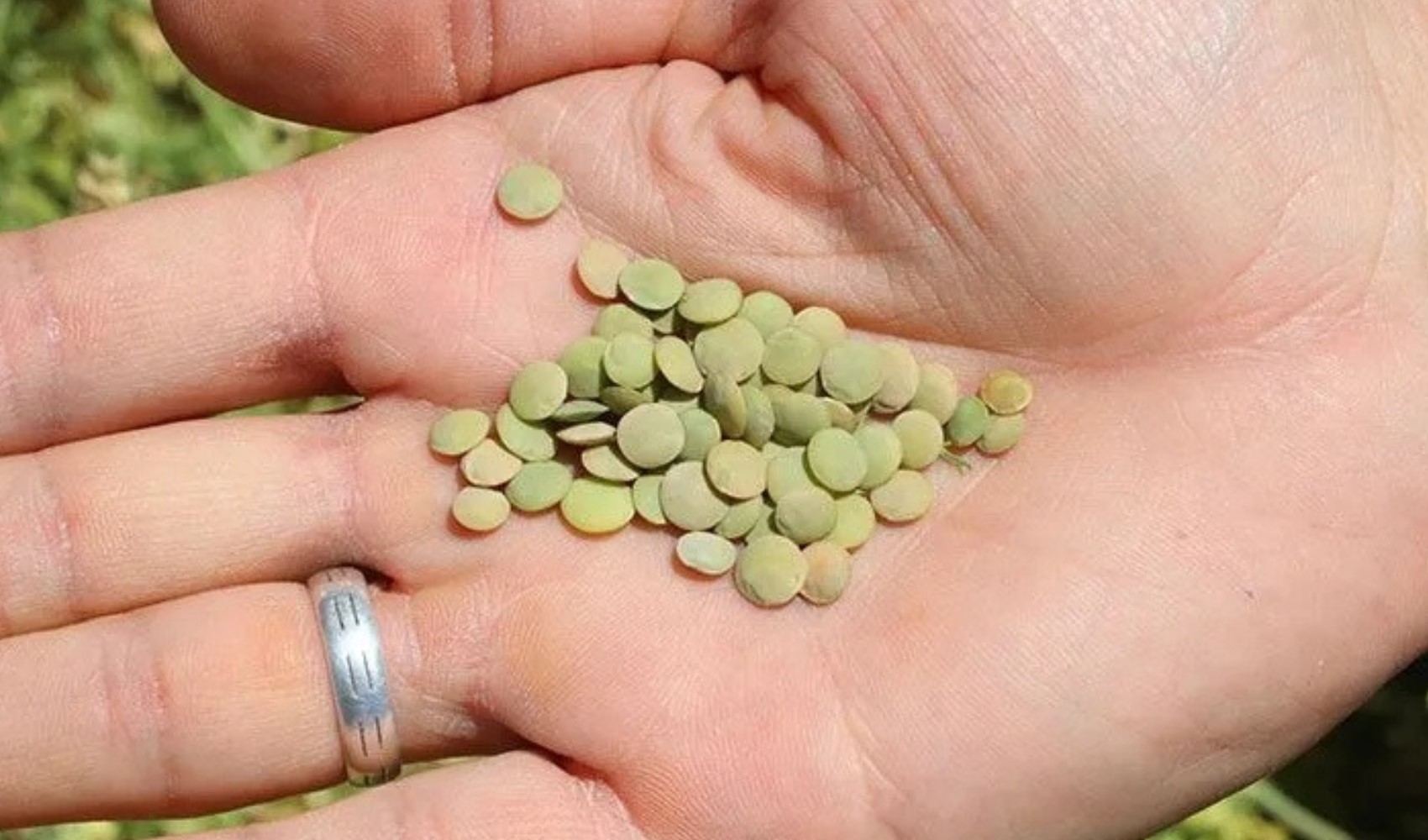
In the legume section, I saw two types of green lentil packages standing side by side. I checked their weights; both were one kilogram. The size and color of the lentil grains inside the packages were almost identical. My eyes caught the prices of the packages. The price of one package was 65.00 TL, while the other package, which had "Domestic Production" written on it, was 140.00 TL.
I wondered, why such a difference? First, I picked up one of the ones that were plentiful on the shelf, turned it over and around. And I felt happy with myself for "finding" the reason for the difference. On the cheaper package, it was written in small letters: "Place of production: Canada." This meant it was imported. Yes, the imported one was 65.00 TL, and the domestic production was 140.00 TL.
I lamented and felt sad about what they have done even to our lentils. Canada is worlds away from Yozgat!
What has happened to these lentils over the last 25 years is more than what happened to the proverbial cooked chicken. I watched and questioned the situation that Turkish agriculture has fallen into with a heavy heart.
Anatolia is the gene center and homeland where many plant and animal species on Earth first emerged, evolved, and spread to the world. Considering this fact, shouldn't we stop and think about the point we have reached with hundreds of agricultural products like lentils?
In the last 25 years, Turkey's lentil production has been falling rapidly due to poor management policies (deliberately) and insufficient incentives. Furthermore, it is facing rising consumption costs and a high dependency on imports.
Turkey, which was more than self-sufficient and a net exporter in the 1980s and early 2000s, is now forced to import more than half of the lentils on its tables. This government is addicted to imports.
In 2025, while domestic production was 279 thousand tons, lentil imports reached 793 thousand tons. In other words, imports have reached 2.8 times the domestic production. While we were at the point of exporting in the 2020s, today, Turkey's import-to-production ratio in lentil consumption has reached 3 times the production.
Along with diesel, pesticides, agricultural equipment, and marketing difficulties, the government's blind eye toward the farmer has brought lentils to this point.
My people! Pay attention here! How difficult has farming become in our country? The law passed by the Grand National Assembly of Turkey (TBMM) in 2006, which is also included in agricultural laws, states that 1% of the total budget (Gross National Product) should be used to support and incentivize agriculture. But unfortunately, the government has not fulfilled the requirements of this law for 25 years.
It is worth elaborating on this issue a bit more. Please read carefully. We are currently watching the days when the 2027 budget is being discussed and the draft budget has been submitted to the TBMM.
According to the draft, the amount that should be given to agriculture and farmers in 2027 is 1% of the budget, meaning 1 trillion 112 billion TL should be allocated to incentivize agriculture. But unfortunately, according to the prepared budget, the amount foreseen to be allocated is 235 billion liras. It is one-fifth of the amount that should be allocated. 877 billion Liras of the incentive is not being given. It is being misappropriated.
As in the example of lentils, the miserable situation the government has dragged Turkish agriculture and its farmers into is pathetic.
The government, whose helplessness we see amidst the turmoil of the "scam of the century," has no choice left but to put the ballot box in front of the nation immediately.
I took the "Domestic Production" package priced at 140 TL to make the lentil stew for dinner and headed toward the checkout.
For health, do not leave protein, for protein do not leave legumes, and for legumes do not leave lentils off your table.
Wishing you a healthy winter...
Would you like to get notifications about new developments and save news?
- NotificationsNew developments and breaking news
- SaveNews is stored in the app
Most Read
TurkStat has announced the inflation figures for October

Tenerife striker Jesus De Miguel has passed away
How will the January raise for pensions be determined?

Critical statement on minimum wage and pensions

Bad news for Özgür Özel from Metropoll survey!

680 million lira repayment from the incarcerated İnan Altınbaş

The 'Updating' of the Republic!.. The 'Reputation' of the Terrorist Leader!..

Geopolitical calculation prevails over rhetoric

Politician defections and the erosion of democracy
Lentils…