



Six years ago, I wrote a note: “I see a Hindenburg potential in Merkel, yet I hope Germany won't drift into dark places after her and that it won't negatively affect the fate of us all...”
Today, as they have done twice before in history with painful consequences, the Germans are preparing to take steps that will fundamentally change the fate of Europe and the world. While saying that the result of this could again be “painful,” I do not want to take the easy way out by hiding behind concepts like “fascism” or the “‘extreme’ right.” Let me state from the outset that this outcome could lead us to a place where humanity’s social rights and gains of the last two centuries are discarded in the shadow of techno-fascism or techno-feudalism.
While analyzing and questioning the Saxony-Anhalt elections and the future of Germany, we must naturally examine the similarities between the rise of the Nazis to power and the networks the AfD has built in recent years. Because we are human, and nothing human is alien to us; our mistakes also bear the brunt of this: Just as the crises experienced in the 1920s led to the greatest destruction history has ever seen in the 1930s and 1940s; if we are going through crises today that are so deep they make the previous century look mild, and if we are perhaps heading toward turning points that will make the horrors of the last century seem desirable, we must look back at the past.
However, a potential AfD government does not mean a repeat of the Nazi era; but this election victory shows that we must accept and mentally filter the economic/status loss and fear, demographic change, discourse of cultural decay, the search for an internal enemy, and of course, the support of global capital that made the rise of the Nazis possible.
It was the liberals, unable to wake up from the dreams they have been caught in since the 1990s, who brought us to this point; I had written an article in Yönelim about how they repeatedly suffered defeats by turning a deaf ear to the voters' demands and “opened space for the ‘extreme’ right” (“‘Extreme’ Right, ‘Extreme’ Left, Penalty, Goal”, September 10, 2026). Here, I want to conduct a historical analysis and evaluate some frequently voiced misconceptions.
The Importance of Saxony-Anhalt
There is a famous cartoon published in the February 1990 issue of the conservative British magazine The Spectator: Representing West Germany, the then-chancellor Helmut Kohl is devouring East Germany. This drawing, which seems like a prophecy, actually reveals a reality that was not liked to be voiced then, nor is it today: Along with the fairy tales of unification and integration, savage capitalism, like Hitler’s armies, greedily seized the East.
The results of this expansion led to disasters, especially due to the global crises of the last eighteen years and the submissive foreign policy of the last five years. The AfD, which broke a historic record with 43.8% of the vote in the state elections, had only been able to garner 20.8% of the votes five years ago. It achieved this success by attracting disgruntled voters to the polls, in an atmosphere where the turnout rate rose from 60.3% to 77.8%.
More than thirty years after reunification, the economic data in the region is enough to explain the election result. While the unemployment rate in the state in August 2026 was 8.2%, the German average was 6.5%. While the average gross annual income of full-time employees in the region in 2025 was 51,937 euros, the national average was 65,441 euros. 70% of voters say they are worried about not being able to pay their bills one day if prices continue like this. The most important issue in the election was social security with 25%, followed by peace in Europe with 17%, and the economy with 15%. Migration, on the other hand, is lower among the general electorate at only 9%. Likewise, in the 2025 Sachsen-Anhalt Monitor, approximately 61% of the public said they felt like “second-class citizens” as East Germans; 48% thought they were not getting their fair share of the country’s prosperity.
Economic and demographic insecurity in East Germany combines with anger toward the existing order; the AfD is trying to meet this discontent with both a cultural and economic program. However, to see where this program could extend in terms of the social state, one needs to look away from Germany to another current experiment: Argentina.
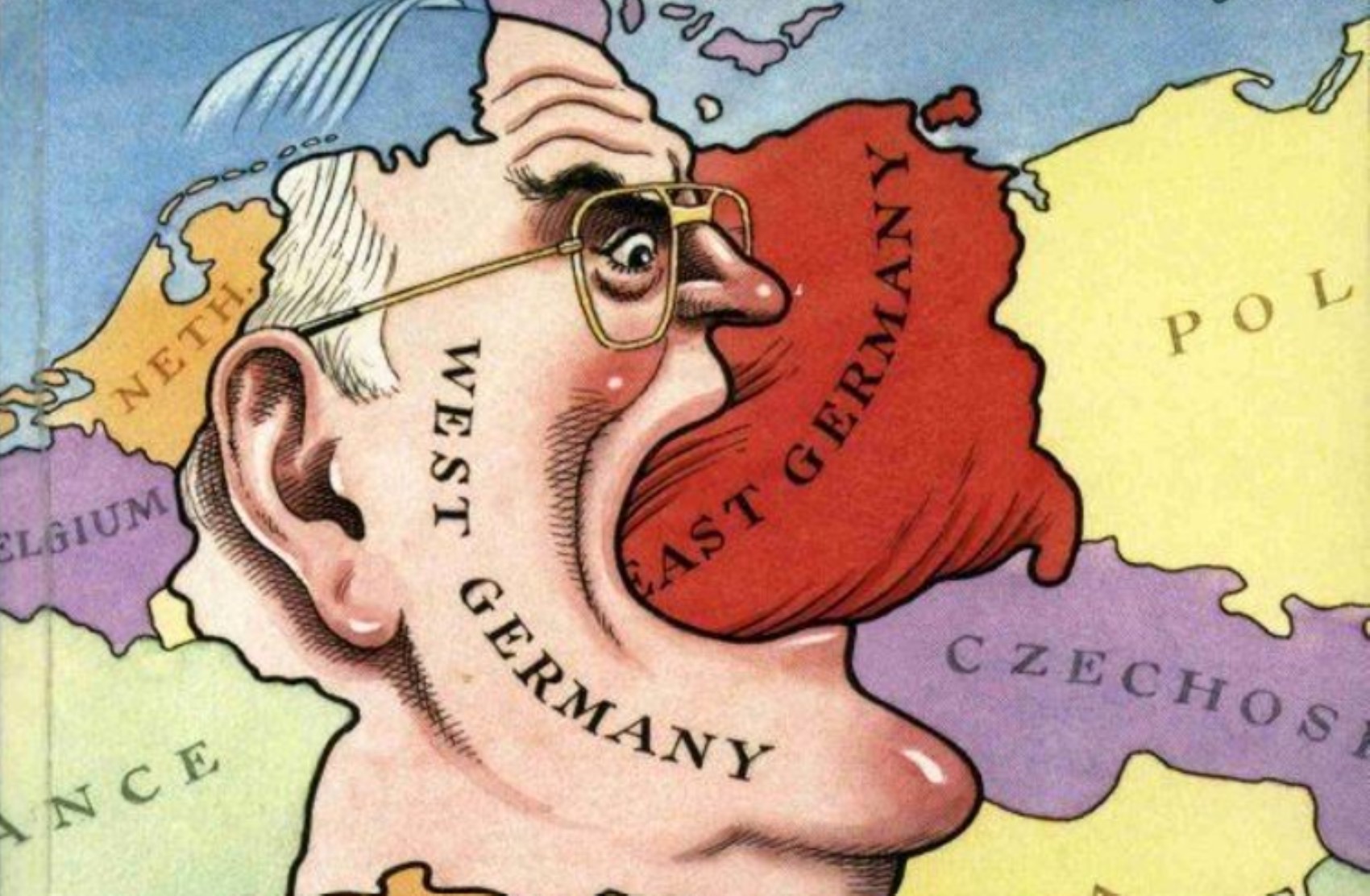
The Spectator cartoon (February 1990)
The end of the social state
How so? Since the experiment conducted through the puppet figure Javier Milei in Argentina has now matured, its outputs have gained the potential to spread to the rest of the world through a giant like Germany.
In addition to the factors that brought Milei to power, the open support provided by Elon Musk and Peter Thiel also played a role. However, in the end, it has led to the economy in Argentina evolving into a state even worse than before and the bill falling on the working masses.
For the AfD, the situation is of course different. The party supported by Musk and Thiel advocates a policy that can be explained by a concept called “welfare chauvinism”: Yes, the social state will be downsized, the tax burden will be reduced, but unlike Argentina, a portion that is kept alive will be redistributed based on nationality/contribution.
Of course, this is what is being said for now. As we saw after Covid, words and promises take on a different form when they turn into action.
However, it is frequently stated that the AfD is the new “Nazi Party.” Without immediately opposing this, if we look at the structure of the Nazis and the policies they advocated, it is possible to draw many parallels.
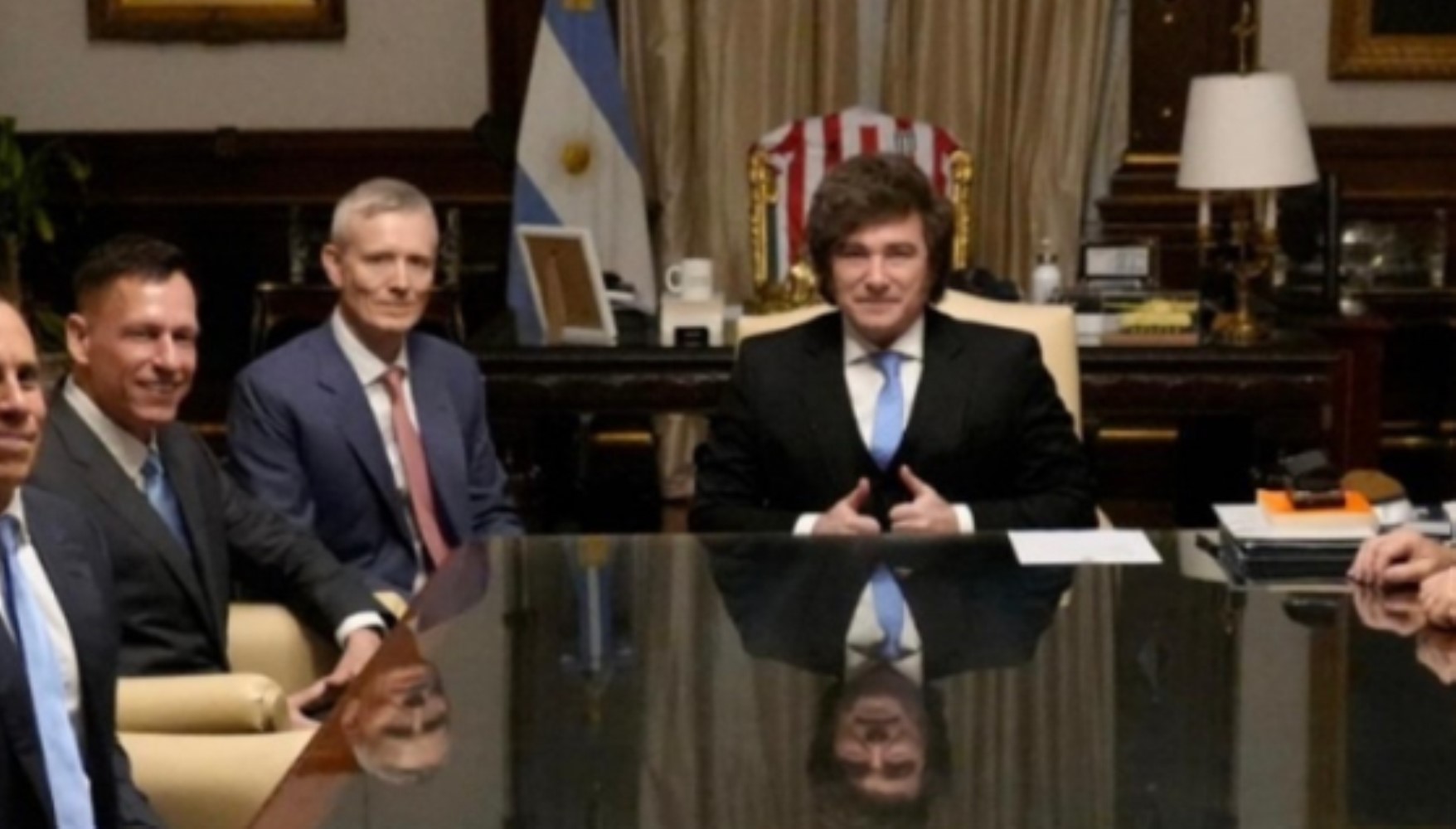
Thiel and Milei (April 2026)
From Thyssen to Musk: Capitalists' flirtation with fascism
When it came to political partnerships, Hitler, a politician with a very high capacity for comprehension, realized after his failed coup attempt (1923) that it would not be possible to reach power without bringing the capitalists to his side.
For this reason, he established a closer relationship with Fritz Thyssen, who had been with him since the 1920s, and used this relationship to make contact with the Ruhr industrialists. Among those who pressured Hindenburg to make Hitler chancellor in 1932 was Thyssen. What ended the duo's working relationship was not the Nazis' anti-Jewish policies, but Thyssen's stance against World War II, which threatened his interests. Musk and Thiel must be luckier than Thyssen; after all, despite their supposed opposition in front of the stage, they offer full support to the Empire's wars from Ukraine to Gaza, from the Red Sea to Hormuz.
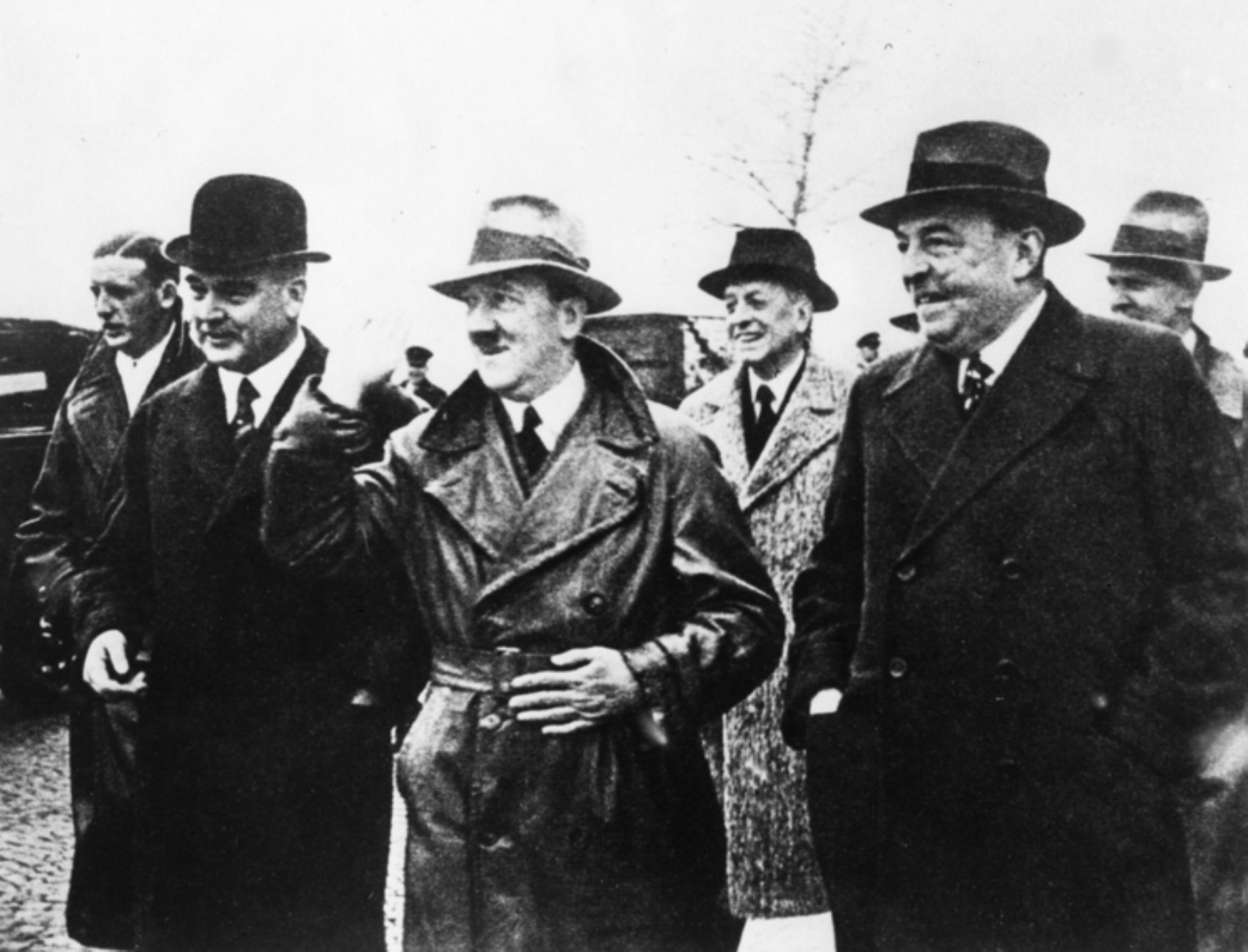
Hitler and Thyssen in the Ruhr (1935)
Thyssen is not an ordinary capitalist whose name would be mentioned coincidentally. Because he had taken over Germany’s iron and steel empire in 1926. Krupp, which his heirs merged with in 1999, had also been one of the most important parts of the German war machine since its founding. Although Alfried Krupp, the son, did not have as much sympathy for the Nazis as Thyssen before they came to power, he became one of the regime’s most important partners in World War II.
Let’s see if those who encouraged the rearmament of the Germans and Japanese after the Ukraine War will “regret” these actions in a few years?
From Weimar to Wokeism
One of the reasons why the AfD creates an attraction among traditional voters, perhaps rightly so, is its stance against the woke culture that has been transforming the West since the 2010s and the “culture wars” imported from the USA. The AfD, which has declared war on concepts such as Frühsexualisierung (early sexualization of children), Genderideologie (gender ideology), the dissolution of the traditional family, and gendered language, openly establishes an opposition of “gender instead of family values.”
After all, the “roaring 2020s” are embracing moral and cultural decay in every field. The AfD is challenging this, like other movements and organizations thrown into the “‘extreme’ right” bag. Leaving aside the fact that it reverses the role of capital in this process and creates a counter-wave through figures like Musk and Thiel—whom we must name again—this situation inevitably reminds us of a hundred years ago.
The Nazis also had “moral erosion” as a target as another social issue. Weimar Berlin, where new experiments were conducted in art, the Institut für Sexualwissenschaft (Institute for Sexual Science) played a role in public debates, and gay and lesbian bars were overflowing, was not very reputable in the eyes of impoverished and dispossessed Germans. Indeed, this picture did not suit Germany, whose national honor was damaged at Versailles, which was hit by a wave of inflation never seen in history, and where former Great War soldiers were despised in every corner! As soon as they came to power, they quickly got rid of this “disease” spread by “Jews and communists.”
Were the Nazis really that conservative? The “extremist” homosexual practices involving the name of Ernst Röhm, Hitler’s short-lived right-hand man who fell victim to internal party purges, also drew in many high-level names throughout the 1930s. What is seen here is that the conservative discourse built on “morality” and “culture” can be ignored as long as it serves the power, as observed in other times and places, or that names who are not actually conservative at all can acquire a role within the system according to their functions. I think the criticisms or accusations made through the leader of the AfD and his partner need to be re-evaluated through this historical reality.
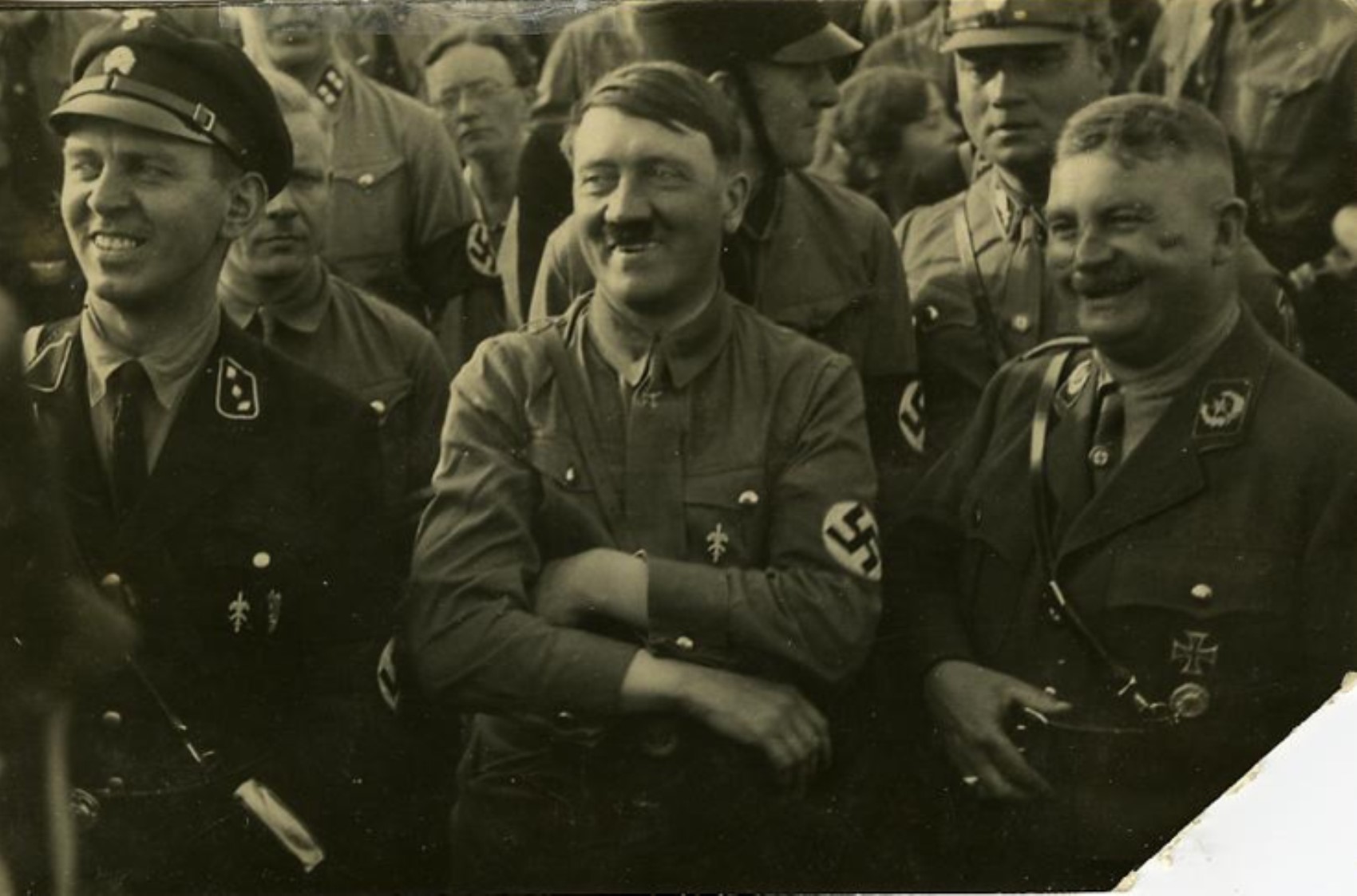
Hitler and SA founding leader Röhm (right)
From Judeo-Bolshevism to Islamophobia
For the Nazis, the greatest threat was the Soviet Union and its collaborators “within” Germany. As early as the end of 1917, a term had come into use to express this threat: Judeo-Bolshevism. Bolshevism in the East was not enough to create a danger on its own; it was also claimed that it was designed to destroy the world by names who were originally Jewish (Trotsky, Zinoviev, Kamenev, Radek, etc.) or claimed to be Jewish (Lenin, Stalin, Dzerzhinsky, Bukharin, etc.).
Today, it is obvious what great police violence and legal penalties even the slightest criticism of Jewish organizations or Israel faces, especially in Germany. Because today, as the AfD also expresses very well, there is another “threat”: That is immigrants, (if we put Turks in a separate category) especially those coming from Muslim countries.
It is possible to relate this to the simultaneous Islamophobia and left-wing hatred that is increasingly intensified in right-wing circles in other Western countries. While those who commit the greatest crime against humanity of our age are rewarded, the victims are punished, blamed, and smeared, as we have seen many times before in history.
As such, it is possible to encounter explanations that sound like a joke: Israel’s Ambassador to Berlin, Ron Prosor, describes the AfD’s election victory as a “warning light” but does not directly condemn them. It will sound like a joke, but he says that in this environment, a political protective wall should actually be built against the “left”!..
What about the eternal enmity?
It is possible to multiply the similarities between the Nazis and the AfD. But there is a very important distinction between the two parties, which is their view of Russia.
Whether it is called Judeo-Bolshevism or (subsequently) Stalinism; Moscow was always the number one threat for Hitler and his party. It should not be forgotten that almost five times more Slavs lost their lives in the new world war he started with the support of greedy capitalists than the victims of the Holocaust.
The AfD, on the other hand, stands in a different place from the Nazi Party, which is said to be its ideological father. It advocates for the normalization of relations with Moscow, the lifting of sanctions against Russia, and the cessation of support for Ukraine. It conceives the enemy in a more abstract way. It claims that the German nation, besieged by foreign powers, is surrounded by waves of migration, cultural decay, economic war, and (implicitly) US-NATO networks.
But who can argue that this is an ultimate goal?
Was it not the Germans who broke the Molotov-Ribbentrop Pact, which liberals love to mention, and who ignored the Munich Agreement they persistently ignore and threw Chamberlain into the fire?
Is it possible to think that Musk and Thiel, whose companies are intertwined with the US-NATO security system, have no interests in these wars (to varying degrees, sometimes separately, sometimes intersecting)?
Therefore, reading the rise of the AfD simply as “Germany is breaking away from NATO and cooperating with Russia” is misleading (Oh, if only this scenario had come true in 1919!).
The German right’s relationship with NATO, as Emin Gürses has repeatedly pointed out, shows a deeper historical continuity. It should not be forgotten that the AfD does not program to leave NATO; it wants to redefine NATO as a defense alliance that is cleared of American interventionism, has a strengthened European leg, and is subject to German national interests.
As such, what will happen tomorrow, which
Most Read
Sales process crisis at Katılımevim's main shareholder

The State is in Debt, the Nation is in Debt…

An essay on artificial intelligence, digital fascism, and utopian communism
2 police chiefs detained in Antalya
Statute of limitations request for fugitive prosecutors draws backlash
The Journey of Odysseus - 2. The road home passed through humanity
There is a BRICS far away!
Maria Suphi: The woman viewed as war booty

September 12: A day of shame in Turkish political history

Expectation of a major hike in diesel prices