



We present the second part of our four-part series, in which we examine Homer's Odyssey, which has recently come to the fore again, with our short narratives and interpretations. You can access the first article via the link “https://12punto.com.tr/yazarlar/sefa-taskin/odysseusun-yolculugu-1-151301”.
_________________________________________________________
The ten-year Trojan War had ended.
On one side were the Achaeans (likely the ancestors of today's Hellenes) who came from the Greek mainland, and on the other were the Trojans and the Anatolian people who supported them.
The city, which had resisted for ten years, was finally brought down and captured by the Achaeans through a ruse designed by Homer's versatile, quick-witted Achaean hero, Odysseus.
The victors burned and destroyed Troy, staining the city with blood.
Afterward, they boarded their ships and set sail to return to their homelands.
This is where Homer's Odyssey, an epic of approximately 12,000 lines, begins.
Words, definitions, people, places, and events begin to pour out one by one from Homer's verses.
Odysseus had twelve ships and about 600 men.
Throughout the epic, Homer refers to these ships as “black-hulled” and “hollow ships”.
It is believed that he calls them “black” because their wooden hulls were coated with pitch or a similar dark substance to protect them from the water.
The reason he calls them “hollow” is due to their appearance as open, long boat-like vessels.
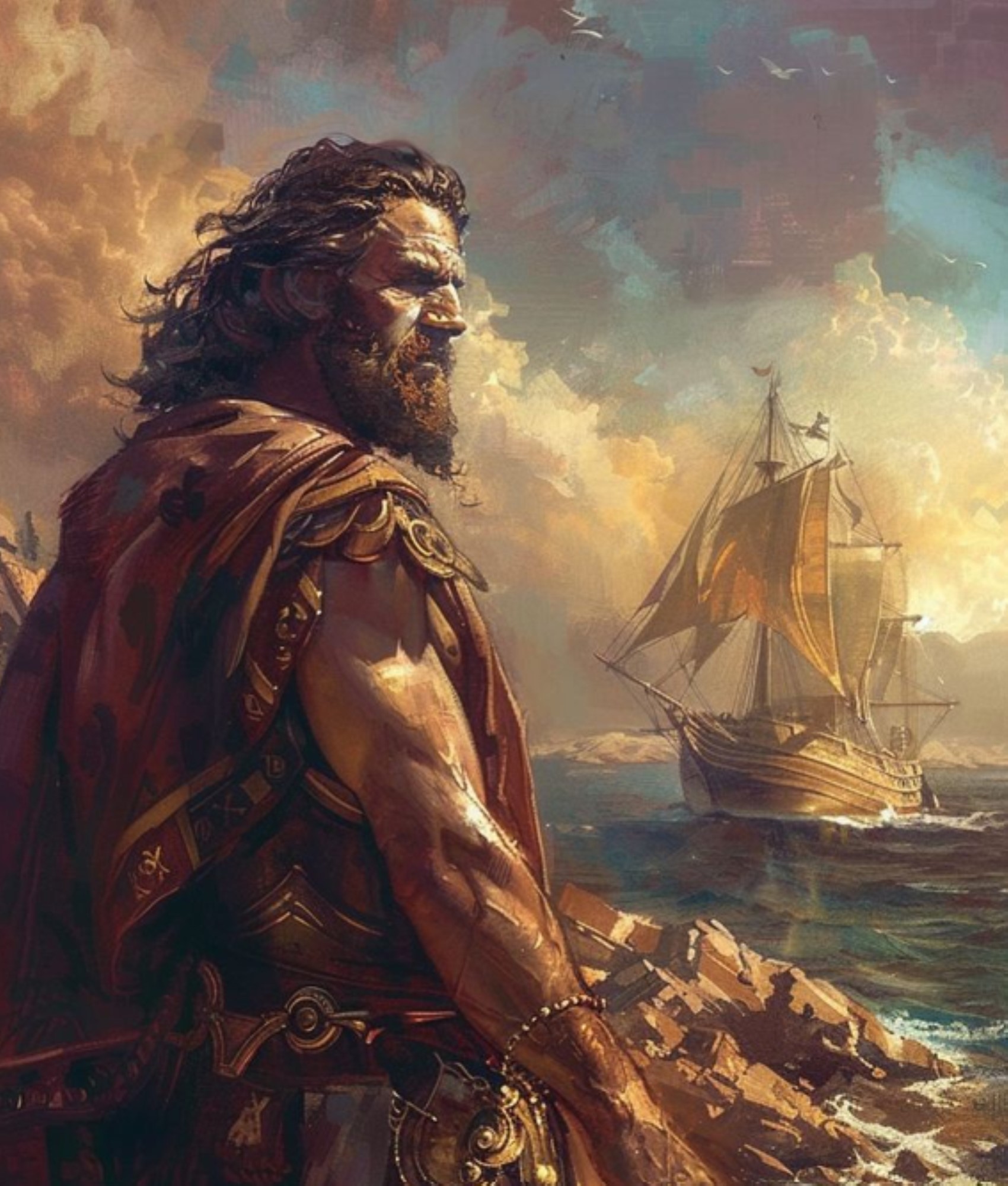
(Odysseus sets sail - Representative image - Artificial Intelligence)
***
Thus, Odysseus set out.
But for him, what mattered now was not the ships, but where those ships would take him.
He wanted to go home.
To Ithaca...
To his wife Penelope, whom he left behind...
To his son Telemachus...
To his elderly father Laertes...
To his land... To his stone...
He was returning home.
Telemachus was just a small child when he left for Troy.
His name seemed to carry his destiny.
In Greek, 'tele' means “far” and 'makhe' means “war”.
Telemachus's name can be understood as “the one related to the war far away”.
His father had indeed gone to a war far away...
And he had spent his childhood waiting for the father that war had taken away.
Odysseus did not know it, but his return from Troy to Ithaca would take even longer than the Trojan War itself.
What wrath!
Because there was not only the sea in front of him.
There was humanity.
Human fears... Desires... Arrogance... Curiosity... Insatiability... The desire to forget...
And the longing to return home.
Perhaps this is why Homer's Odyssey, which has lived for nearly three thousand years, is not just a story of a sea voyage.
It is also a story of unchanging human conditions.
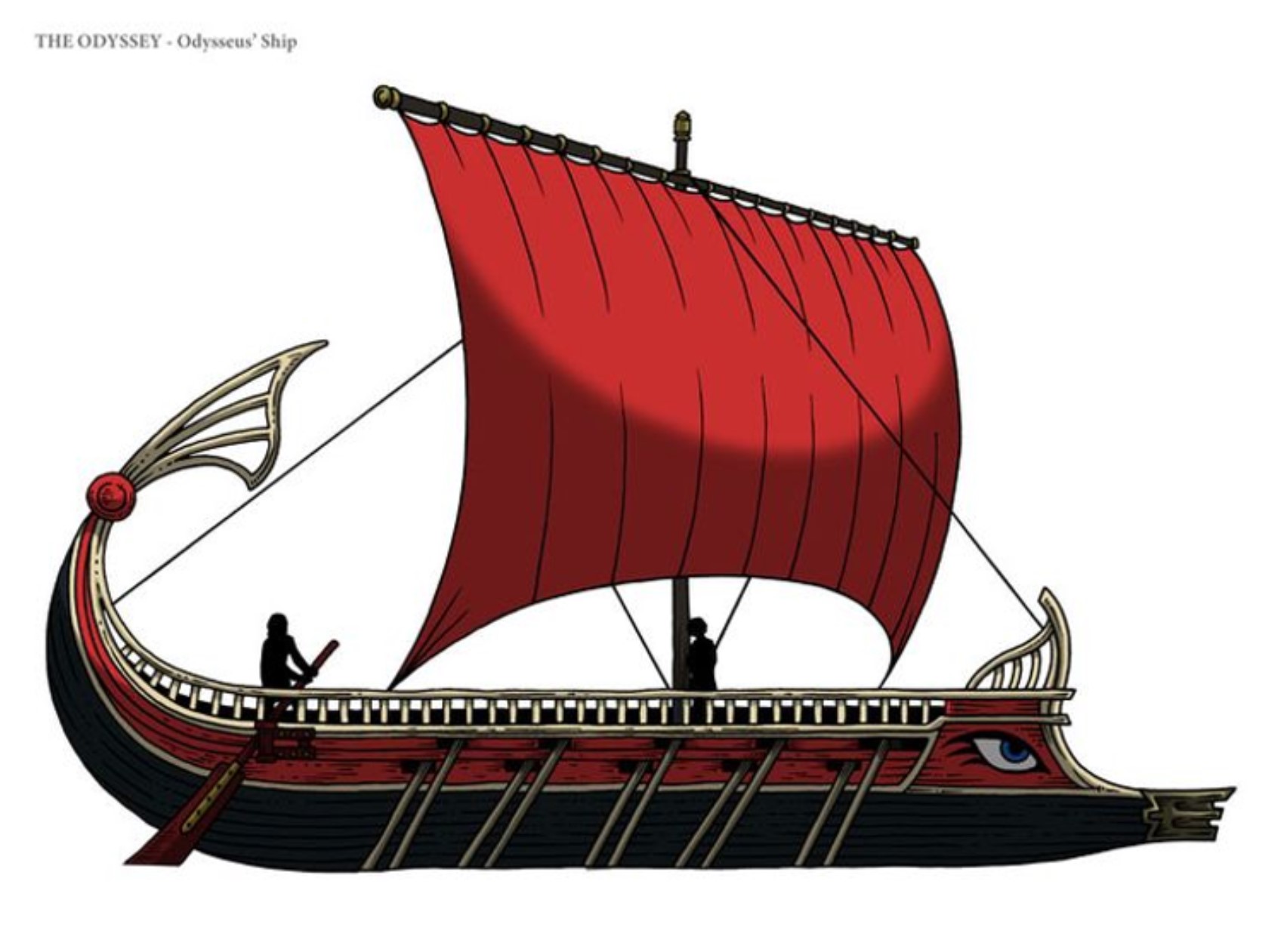
(Odysseus's black-painted ship. Representative image.)
***
The first stop was Ismarus, where a people called the Cicones lived.
This is one of the stops on Odysseus's long journey where we can most confidently determine the geographical location.
It was north of Troy, on the coast of Western Thrace.
It is thought to be near Maroneia, between today's Alexandroupoli and Komotini.
From here on, the locations of the places Odysseus will visit will become increasingly uncertain.
Time stretches, and places are behind the mists!
Odysseus and his men attacked Ismarus.
They captured and looted it.
“That is enough,” said Odysseus, stating that they should leave and go now. “They had a long sea journey ahead of them.”
But his men did not listen.
They were not satisfied with what they had won.
They wanted a little more.
A little more...
Naturally, the Cicones who were forced to leave their city gathered help from their neighbors.
They returned. They attacked the complacent invaders.
The battle was fierce.
This time, the face of war had turned against the Achaeans.
Six men from each of Odysseus's ships were killed.
The first lesson had come right at the beginning of the journey.
Homer was whispering in inaudible words:
Knowing when to stop was just as important as winning.
Perhaps what the Cicones tell us is not only about war.
In human life, too, sometimes stopping at the right time is as important as continuing at the right time.
A merchant wants more even though he has earned enough.
A ruler is not satisfied with the victory he has won; he wants to conquer one more country.
A gambler does not leave the table with the money he has won.
A person in an argument where they are proven right is not satisfied with being right; they go as far as humiliating the other person.
Sometimes, a person begins to lose the moment they win.
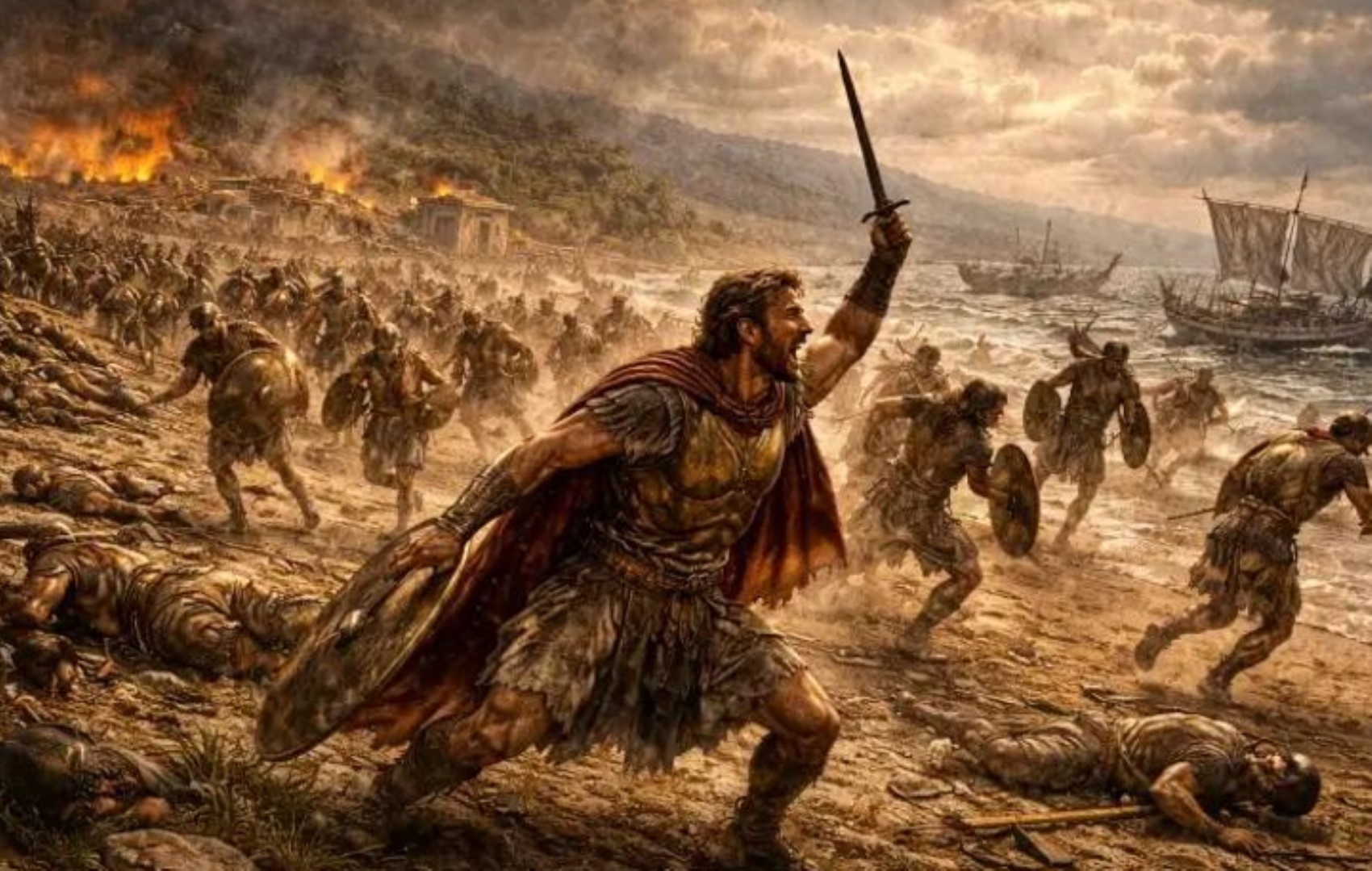
(Attack on the Cicones. Representative Image. Artificial Intelligence)
***
Odysseus and his men quickly left the Thracian coast.
Storms dragged the ships to the south.
This time they arrived in the land of the Lotus Eaters.
Sparkling and quiet lands.
Enemies did not meet them here.
No one stood in their way.
No one wanted to kill them.
They offered lotus.
The plant Homer calls “lotus” is not the water plant we know today as the lotus or water lily. The lotus in the epic is a plant whose fruit is eaten; which plant it is, is not known for certain.
But those who ate that plant were forgetting one thing:
Returning home.
Some of Odysseus's men also ate the lotus.
They forgot their journey, they forgot Ithaca.
They did not want to return to the ships.
Odysseus took them to the ships by force.
The rowers set sail again.
This time the danger had not come with a sword.
It had come with forgetting.
Sometimes a person wants to get rid of their painful past.
But if we forget our past entirely...
Don't we also lose a part of the things that make us who we are?
In Odysseus's journey, his homeland Ithaca was not just an island.
It was his identity.
Does a person forget who they are?
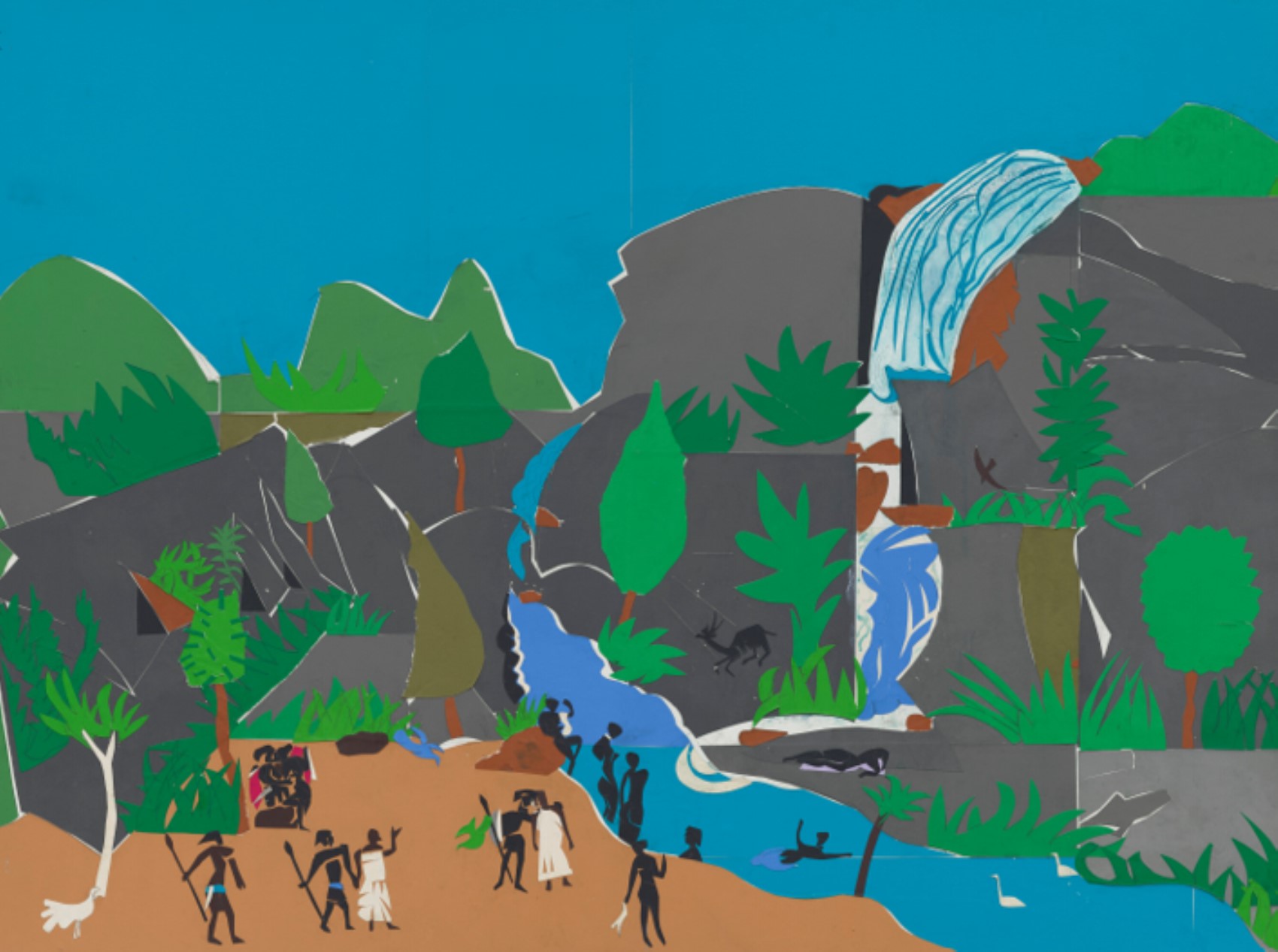
(Odysseus: In the land of the lotus eaters. Modern painting. Romare Bearden, 1977. 91.5 × 122 cm. Collage. Valued at $300,000–$500,000 at Christie's, New York, on May 19, 2026.)
***
Then they came to the land of the Cyclopes.
The Cyclopes were giant, one-eyed beings who lived outside the social order in the world Homer describes.
They had no cities, common laws, assemblies, or kings to rule them.
They did not plow or sow the land, but lived on what nature provided spontaneously.
Each lived in their own cave with their family; they did not interfere in others' business.
One of those who would confront Odysseus was Polyphemus, the son of Poseidon, the god of the seas and brother of the chief god Zeus.
And the one-eyed Polyphemus also ate humans.
Odysseus took twelve men with him and entered a large cave.
His men suggested that they take the cheeses and animals they found inside and leave immediately.
Odysseus did not agree.
Up until now, he was the one who often warned his men.
This time, his men were warning him.
Better safe than sorry!
They had not forgotten the losses they suffered in the land of the Cicones.
But Odysseus did not listen to them.
He was curious.
Who was living in this cave?
What kind of person was he?
He wanted to see him, to know him.
This time, the reason for what would happen to Odysseus was not just fate or the gods.
It was his own curiosity.
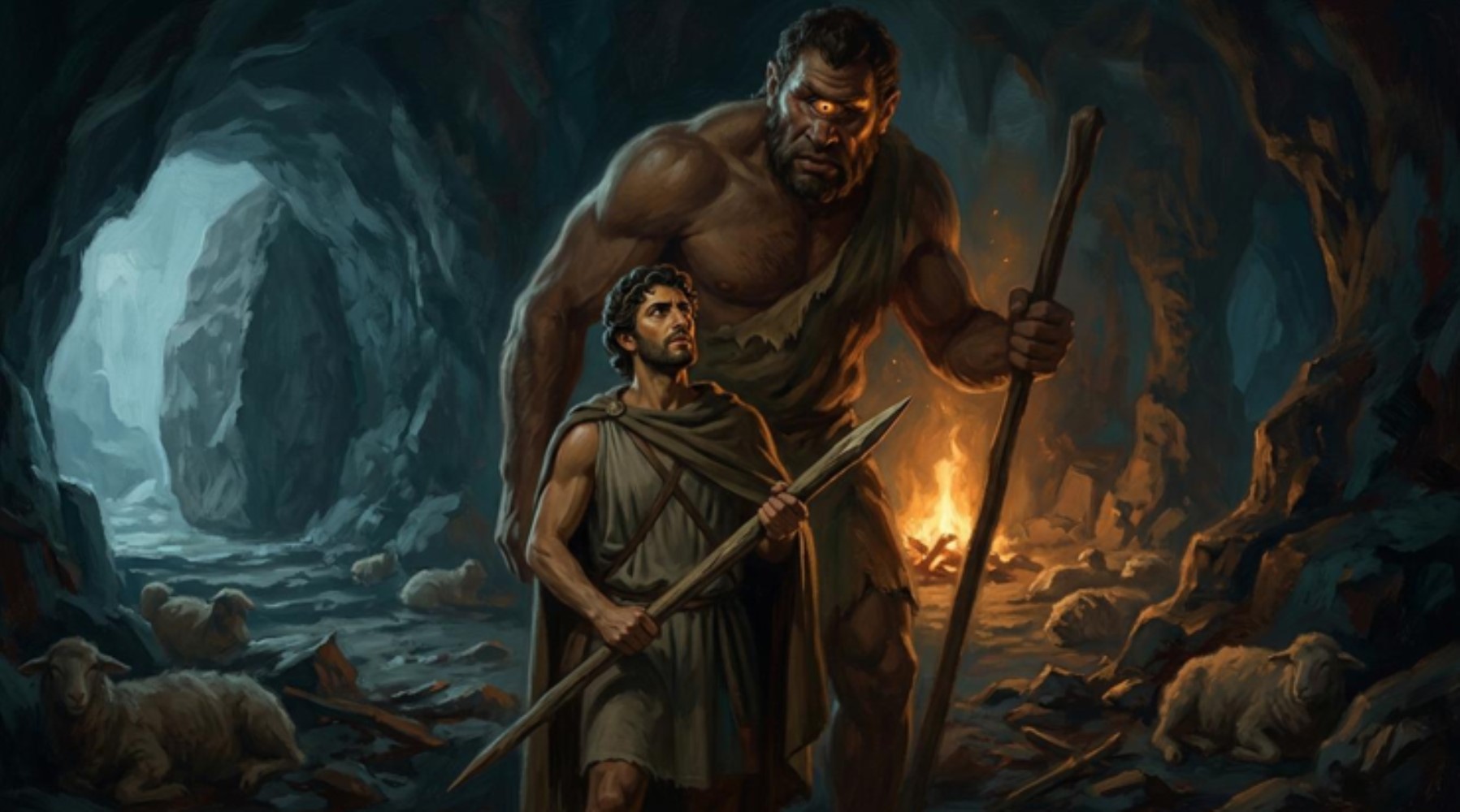
(Odysseus in Polyphemus's cave. Representative image. Artificial Intelligence)
***
When evening came, the owner of the cave arrived.
Polyphemus.
The one-eyed giant.
The son of the great god Poseidon.
When he saw the sailors, he rolled a huge rock to the entrance of the cave so they wouldn't escape.
Odysseus and his men remained inside.
Polyphemus caught two of them.
He killed and ate them.
The next morning he ate two more men, went out to graze his flock, and closed the cave door with the large rock again.
When Polyphemus returned, he ate two more men.
Odysseus thought about a way to escape all day.
As they waited, his men were being killed two by two. Before long, it would be the turn of those remaining.
He could have drawn his sword and killed the giant.
But then who would move the rock at the mouth of the cave?
How would they get out of the trap they were caught in, how would they escape Polyphemus?
He stopped, he suppressed his anger.
Odysseus's weapon was not his sword.
It was his mind.
And he used this unique weapon!
While Polyphemus was outside, Odysseus and his men cut a thick club from an olive tree found in the cave, sharpened its tip, and hardened it by heating it in the fire.
Now they knew what they were going to do.
He had with him the very sharp wine that Maron, the priest of Apollo, had gifted him in Ismarus, in the land of the Cicones.
In the attack in Thrace, at Ismarus, they had slaughtered many people but had not touched Maron and his family...
And Maron had given him this wine, which tasted pleasant but intoxicated the drinker quickly.
Now, the reward for the respect once shown to a stranger would save Odysseus's life in the cave of another stranger.
Odysseus offered a cup of this strong wine to Polyphemus.
The giant was sure that these people could not escape from his hands anyway because of the large rock blocking the cave's mouth; he didn't even think of a danger that could come from them.
He drank the wine without suspicion. He liked the taste so much that he wanted more, then more. Odysseus refilled his cup every time he asked to make him drunk.
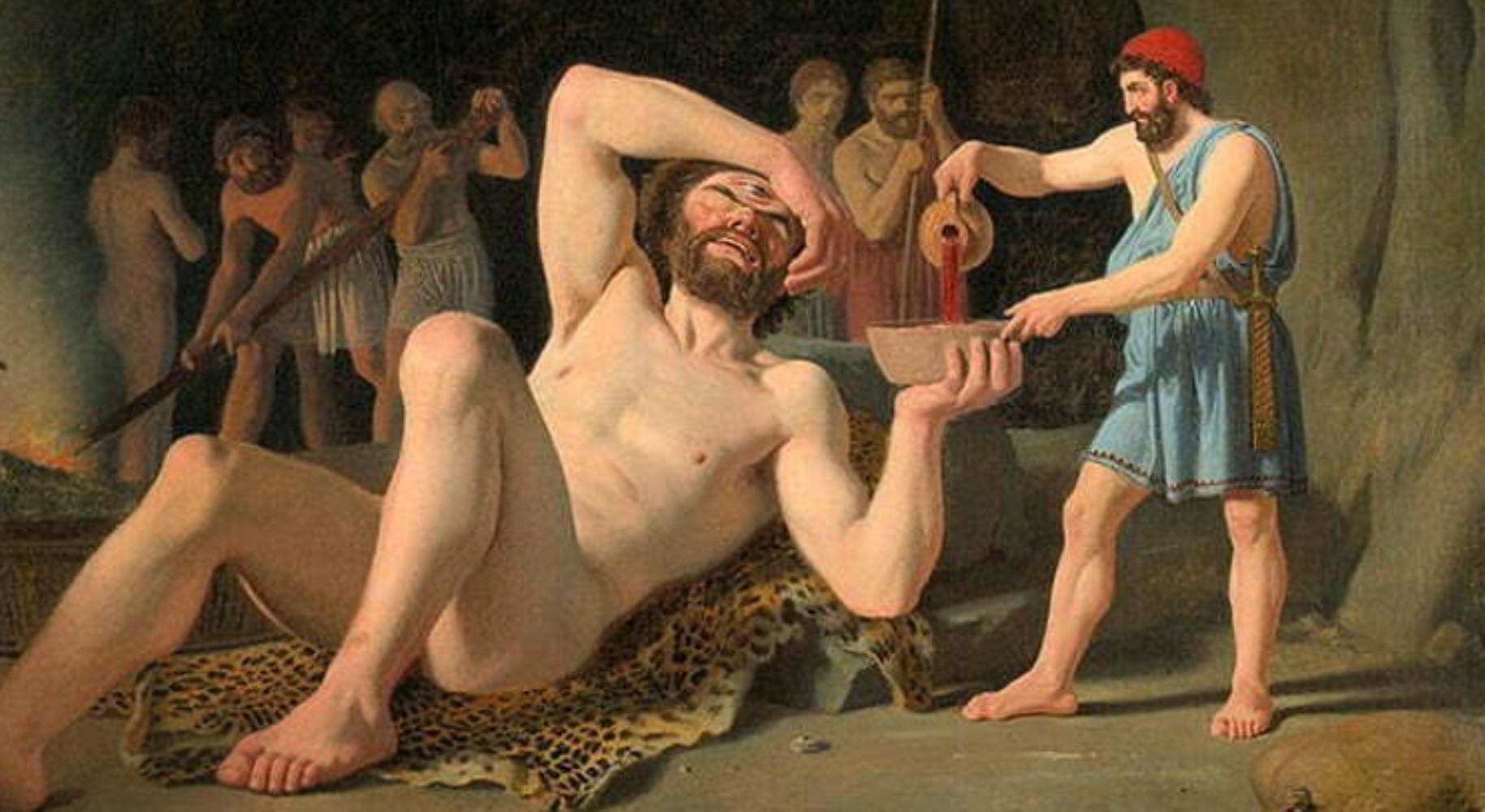
(Polyphemus getting drunk - Alexander Zick (1845–1907). Rijksmuseum. Amsterdam)
Polyphemus became drunk.
Then he asked Odysseus his name.
Odysseus answered:
“Nobody.”
Polyphemus said, then, in delight, “I will eat 'Nobody' last; his other friends before him. That is my gift of hospitality to you.”
This was a terrible irony. In a world where giving gifts to a guest was a tradition, Polyphemus's gift to Odysseus was to eat him last.
While saying these, Homer was playing with words.
The Greek equivalent of “Nobody” as a single word is 'Outis'.
The two words 'me tis' meaning “no one” and 'metis' meaning “cunning, analytical intelligence” were close to each other in pronunciation.
When Polyphemus fell asleep, they put the stake back into the fire; they all plunged its hot tip into the giant's single eye together.
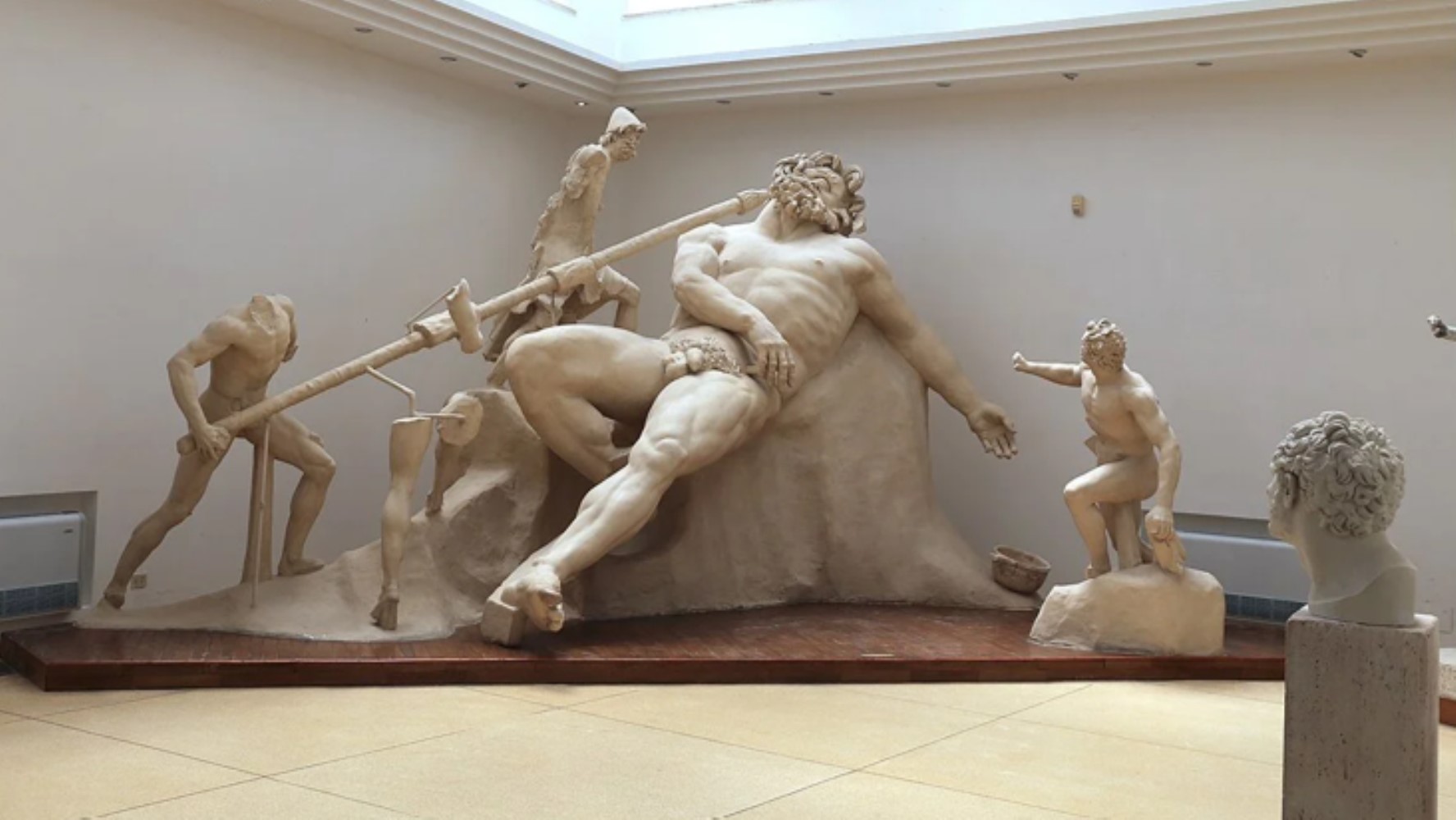
(“The Blinding of Polyphemus” sculpture group, found in the large natural cave of Roman Emperor Tiberius's seaside villa in Sperlonga. Probably 1st century A.D. In the Sperlonga National Archaeological Museum (Museo Archeologico Nazionale di Sperlonga. Italy)
The giant screamed in pain.
Other Cyclopes came outside the cave.
“Who is doing this to you?” they asked.
Polyphemus shouted: “Nobody!”
Because he thought Odysseus's name was “Nobody”.
If it was nobody who caused this shouting, it meant Polyphemus did not need help!
The Cyclopes went away.
The blind Polyphemus could not see Odysseus and his men, but they could not get out of the cave either.
Another brilliant thought came to Odysseus's mind.
When morning came, Polyphemus opened the rock at the cave's door to let his sheep out to pasture and stood at the head of the door. He was checking the backs of the sheep to prevent his captives from escaping.
Odysseus and his men left the cave by clinging to the undersides of the sheep.
They had escaped.
Realizing the situation, Polyphemus had rushed out of the cave and followed them. But he could see nothing. It was too late.
There was only one thing left for those who escaped to do:
Get away.
But Odysseus could not do that.
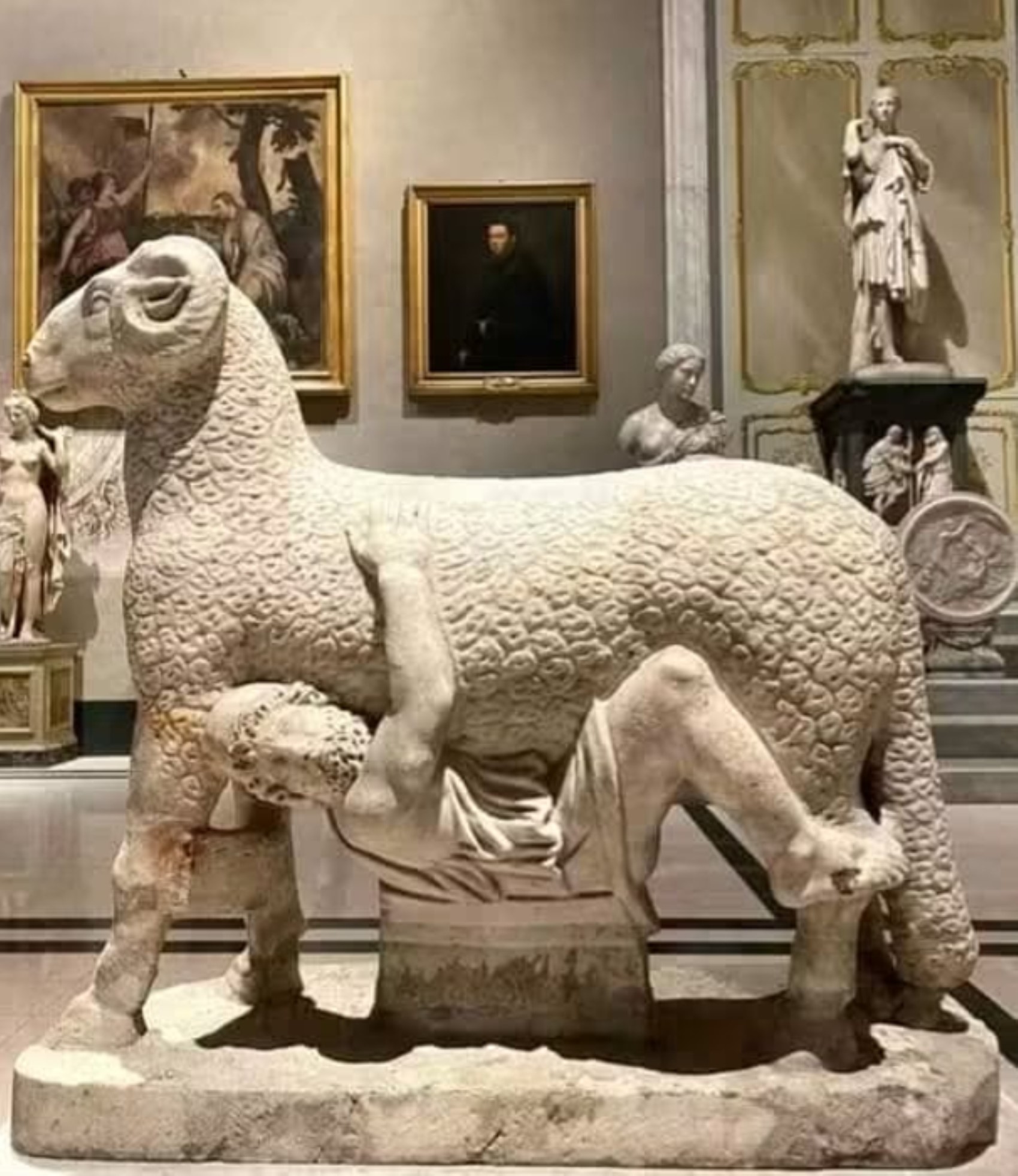
(Sculpture “showing Odysseus escaping from Polyphemus's cave by hiding under a ram”. 1st century A.D., Torlonia Collection, Italy)
***
As his ship moved away from the shore, he turned and shouted his real name to Polyphemus:
“It is not 'Nobody' who blinded you, but Odysseus of Ithaca!”
His men had tried to silence him.
He did not listen.
In the Cicones, his men had not listened to their leader.
Now, his men, who told him not to enter the Giant's cave, were warning him once again, wanting him to be silent.
Odysseus was not listening again.
The blind Polyphemus raised his hands to the sky.
Most of the time, it was humans who prayed to the gods. This time, the one praying was a monster.
He called out to his father, Poseidon, who ruled the seas and the waves.
He wished for Odysseus not to be able to return home...
If he were to return, to return late...
To lose his friends...
And to encounter pain in his home as well.
Odysseus was safe as long as he was “Nobody”.
The moment he shouted his real name, he would now find Poseidon against him.
His arrogance had endangered what his mind had gained.
The results of some mistakes are not seen immediately.
A person can carry them on their back for years.
Odysseus had such years ahead of him.
He had entered Polyphemus's cave because of his curiosity, and he had escaped from there thanks to his mind.
But after escaping, he was proud of his success.
His pride turned into arrogance...
This was one of the important breaking points of Odysseus's journey.
And of the epic!
He had escaped the cave.
But he would pay the price for his arrogance for years to come.
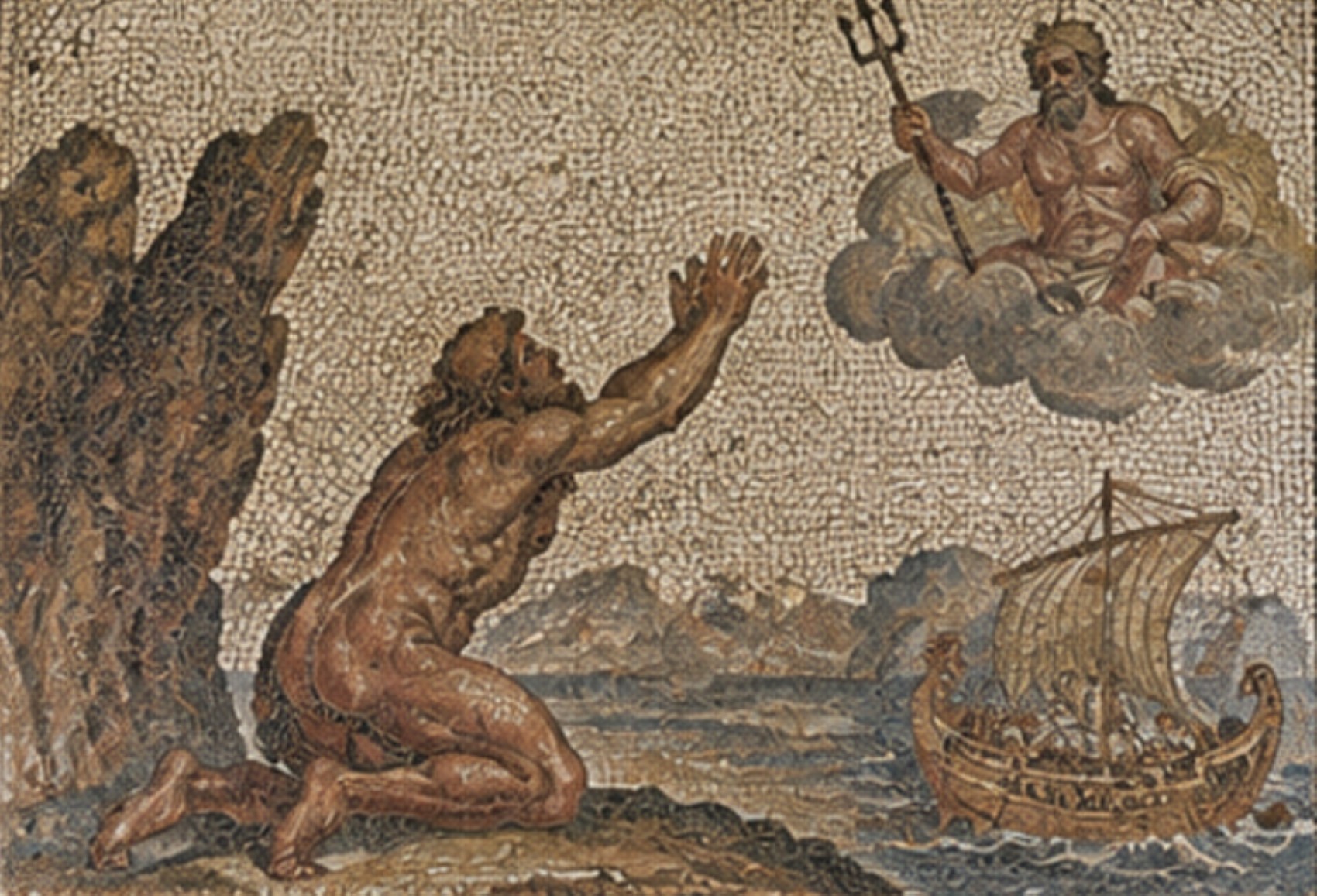
(“Polyphemus's prayer to Poseidon”. Roman Mosaic. 2nd century A.D. Tunisia)
***
After a journey lasting days, they arrived at a lonely island in the middle of the sea.
This was the land of Aeolus, the master of the winds.
The island was surrounded by steep cliffs; Homer says it was encircled by an impassable wall of bronze.
King Aeolus was living in his palace with his family.
Aeolus, who listened to what the travelers had been through, helped Odysseus.
He trapped the contrary winds in a bag.
He released the wind that would take them to Ithaca.
This was Zephyrus, blowing from the west!
This meant the sea had dragged them even to the west of their island, Ithaca!
They traveled for days.
Finally, Ithaca appeared.
Odysseus, who had not left the helm to anyone for days, had finally succumbed to fatigue and fallen asleep.
His men looked at the bag.
They thought there was gold and silver inside:
That Odysseus was hiding these from them.
They opened the bag.
The winds rushed out.
The chaos of nature!
The storm dragged the ships back again.
Their island, Ithaca, which they wanted to reach and had almost reached, disappeared before their eyes.
Even though they had come right to its shore.
There was no enemy here.
There was no monster.
No god had attacked.
But there was suspicion.
Odysseus had not told his men what was inside the bag.
And his men had not trusted their leader.
Sometimes it is not the enemy outside that destroys a community...
It is the mistrust inside.
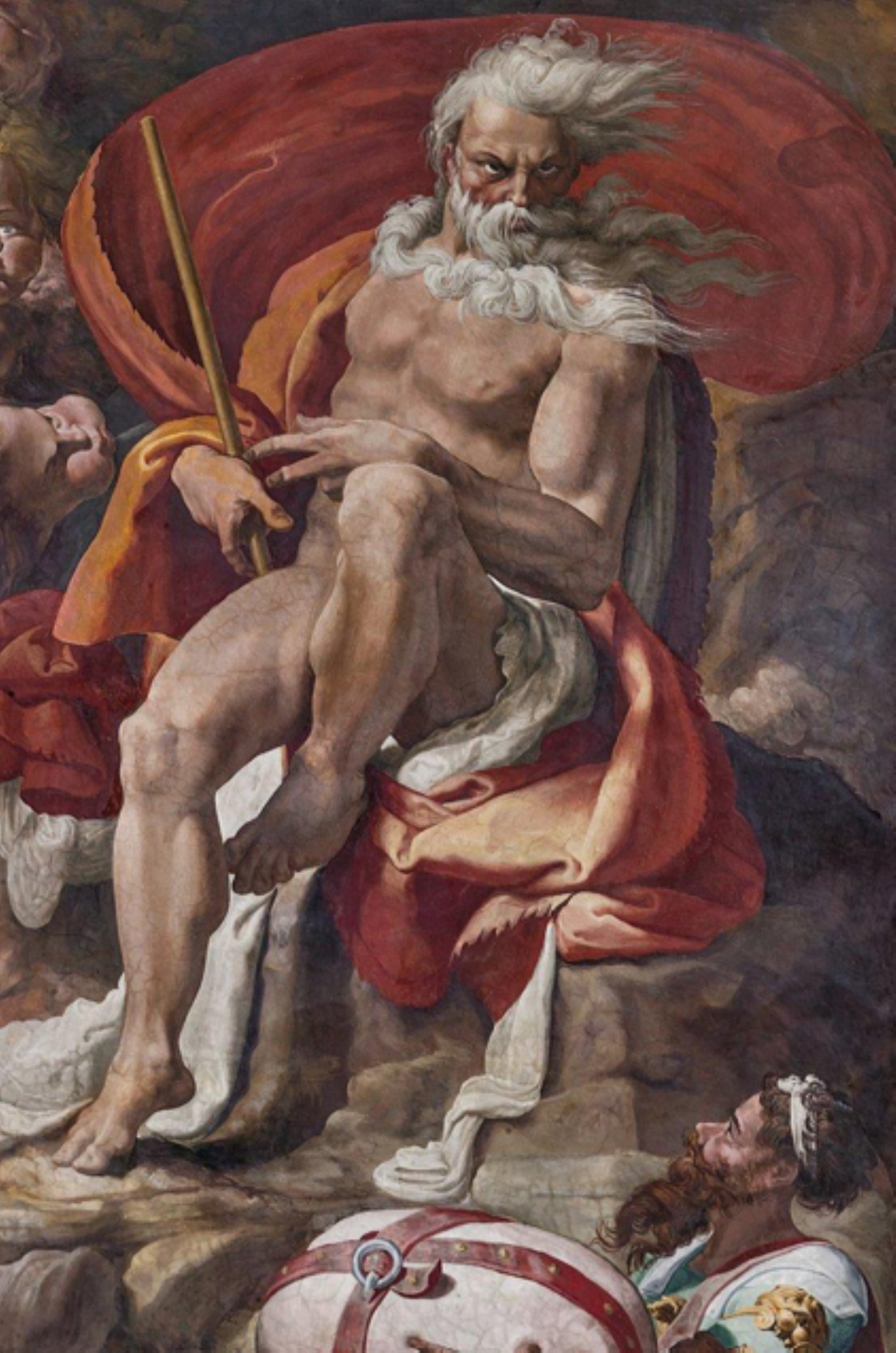
(“Aeolus gives the bag full of winds to Odysseus”. Pellegrino Tibaldi, 1550–1551. Bologna. Palazzo Poggi)
***
Then they arrived in the land of the Laestrygonians.
Here, a new and great disaster awaited them.
Eleven ships entered a narrow harbor.
Odysseus left his own ship outside.
This small precaution would save their lives.
The Laestrygonians were a people with giant bodies, who ate human flesh and were ruthless toward strangers.
They threw stones from the cliffs.
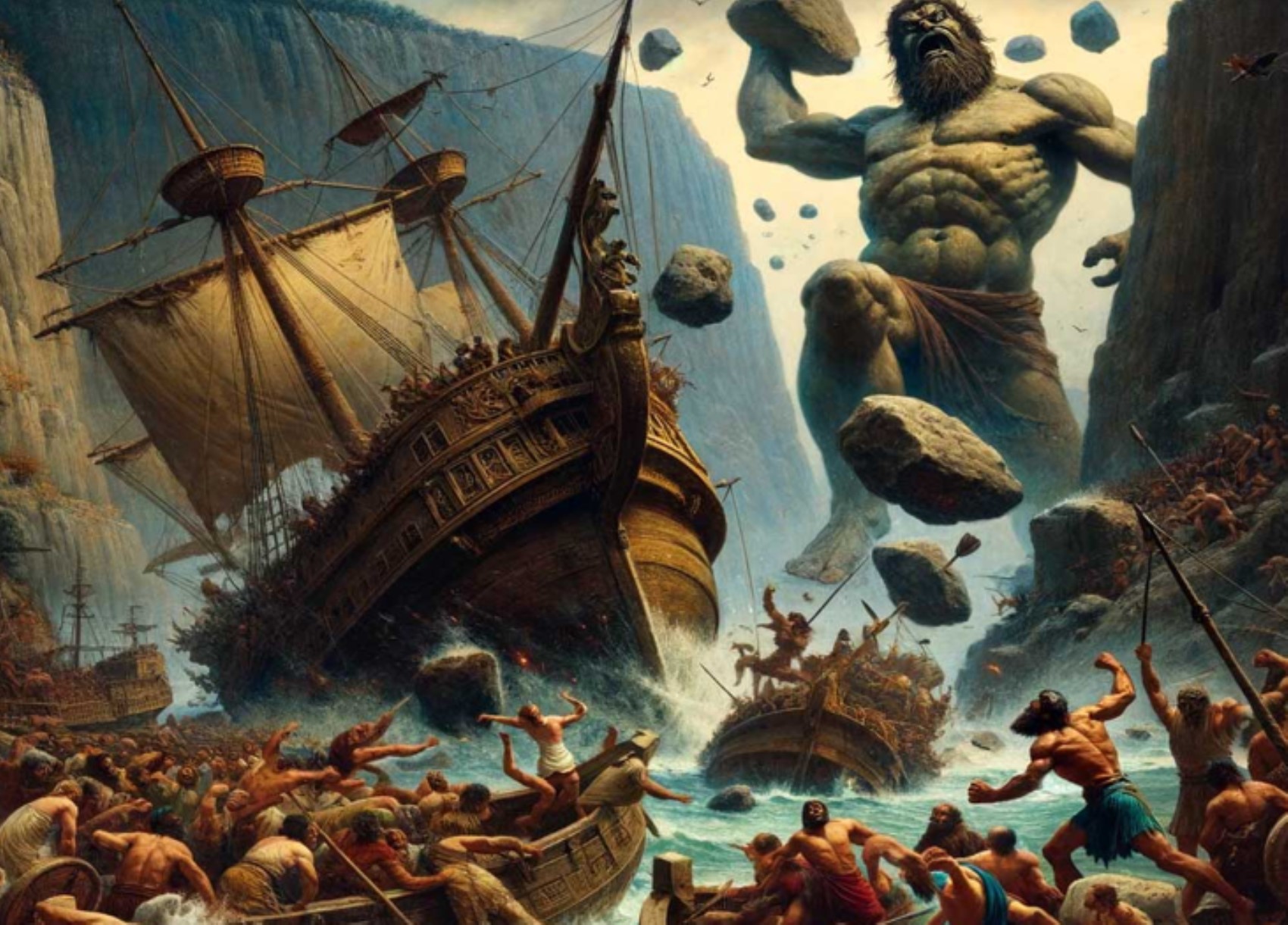
(Laestrygonians destroying Odysseus's ships. Artificial Intelligence image)
They smashed the ships.
They killed the sailors.
Only one of the twelve ships survived.
Odysseus's ship.
The fleet that had left Troy with hundreds of men now consisted of only one ship.
They had seen excess with the Cicones...
Forgetting with the Lotus Eaters...
Mind and arrogance with Polyphemus...
Suspicion with Aeolus...
And the value of precaution with the Laestrygonians.
But the journey was not over.
A single ship was moving on the sea.
The number of men inside had decreased.
And their homeland, Ithaca, was still far away.
What else was waiting for them?
And now there was a woman in front of them.
A sorceress...
A goddess...
Circe.
What would she bring upon the travelers?
Was she an enemy or a friend?
(We will continue in the coming weeks)
Sefa Taşkın
13.09.2026
Dikili/Izmir
Most Read

2 police chiefs detained in Antalya

The State is in Debt, the Nation is in Debt…

The big picture behind September 12

An essay on artificial intelligence, digital fascism, and utopian communism

Sales process crisis at Katılımevim's main shareholder

September 12: A day of shame in Turkish political history

The Journey of Odysseus - 2. The road home passed through humanity

There is a BRICS far away!
Statute of limitations request for fugitive prosecutors draws backlash
Preparations for a new era in Turkish passports