

The question that never loses its relevance: Why was Marx right?
Terry Eagleton is not only one of the leading Marxist thinkers of our time but also a literary critic known for his sharp pen. 'Why Marx Was Right' is a book published by Yordam Kitap. It shows that Karl Marx's ideas are not confined to the 19th century; they still offer a living guide to understanding, and even changing, the world today.



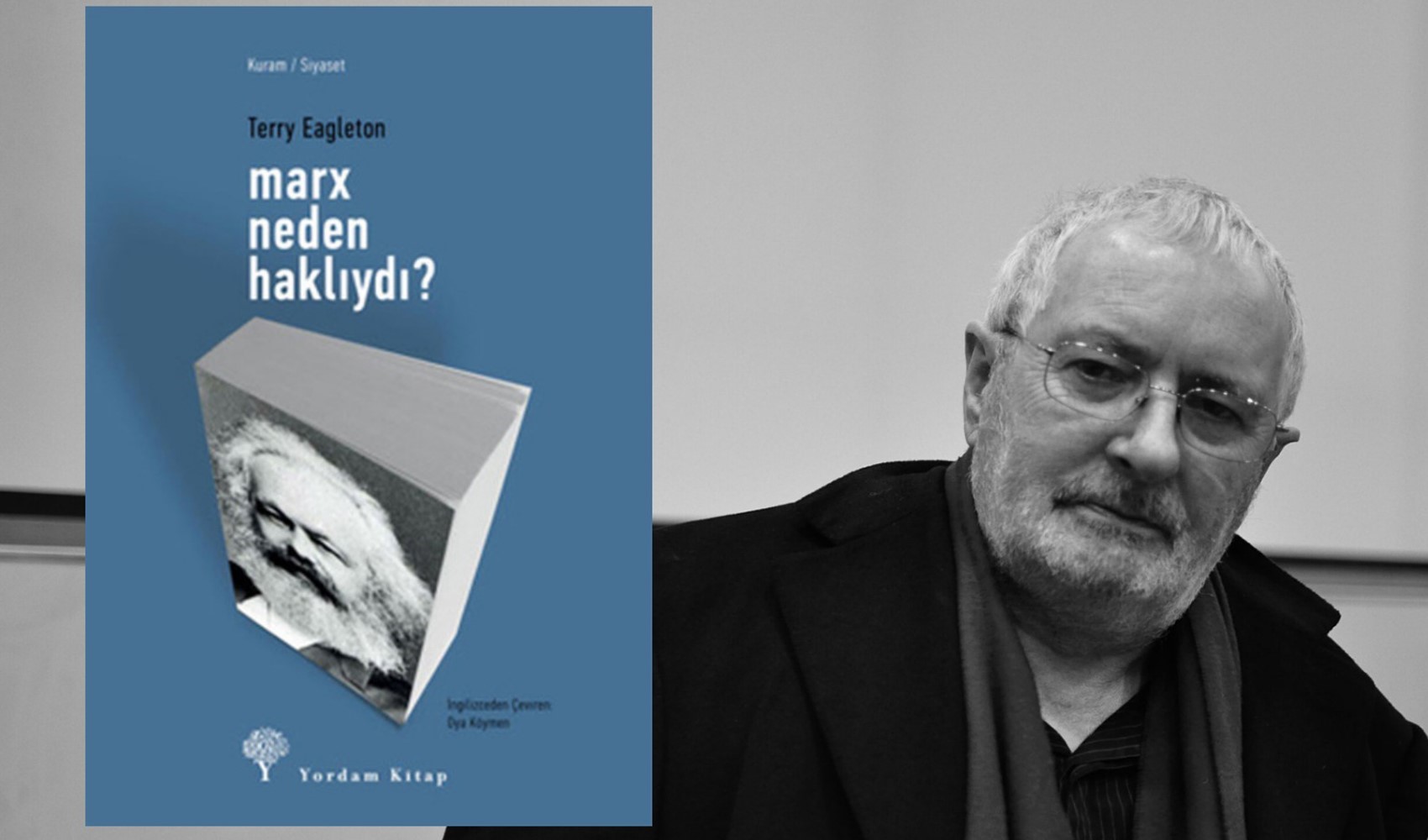
Eagleton’s language is polemical; sometimes harsh, sometimes ironic, but always thought-provoking. The phrase “Marxism is dead” has been repeated for years. Yet, Eagleton’s book provides a patient response to this claim across 10 chapters. He does not link the relevance of Marxism solely to the economic crises of recent years; he points to a more deep-seated issue: the contradictions inherent in the nature of the system. The crises of capitalism are not fleeting; they are the natural result of its very operation. It is precisely here that Eagleton reminds us why Marx is still right.
One of the book’s striking aspects is its direct confrontation with the stereotypical objections leveled against Marxism. Accusations such as “Marxism brings dictatorship,” “It is against human nature,” or “It reduces everything to economics” target a caricature of Marx rather than his actual thought. Eagleton puts these misunderstandings on the table one by one, refuting them with a tone that is at times sarcastic and at times patient. In doing so, he does not defend Marxism like a sacred doctrine; on the contrary, he dusts it off and clarifies it. He takes its method as the foundation, rather than Marxism as it is commonly known. But the author’s arrows are not aimed only at opponents. He also criticizes those who claim to defend Marxism but settle for superficial, clichéd repetitions. Because such defenses can be as harmful as hostility itself. Defending an idea means purging it of false defenses as well. At this point, Eagleton invites the reader to think: Does defending Marx require blind loyalty, or the courage to constantly re-examine? It is precisely here that the book confronts the reader with the meaning of class struggle.
Throughout the book, Eagleton avoids offering ready-made prescriptions. It is neither a dogmatic text nor merely an academic essay…
It is more like a thought-provoking companion open to debate. As you turn the pages, you sometimes re-encounter Marx, and at other times, you are forced to question your own perspective.
When we look at today’s world—income inequality, the climate crisis, wars, unemployment, and the rise of authoritarian regimes—all these show that Marx’s diagnoses regarding capitalism are still valid. What Eagleton reminds us is this: Capitalism is not just an economic order, but a system that permeates all of social life. Therefore, crises are not malfunctions, but the structure itself.
'Why Marx Was Right' speaks not only to Marxists but to everyone who wants to question the world we live in. While re-defending Marx’s ideas, Eagleton also opens them up to being re-thought. Perhaps this is its most groundbreaking aspect. Embracing an ideology also means being willing to strip it of superficial defenses and misunderstandings. In today’s world, where capitalism is shaken, this book invites us to discuss why Marx is still indispensable. It clearly reminds us that class struggle is not an absolutism, but is fundamental to the struggle between the ruling class and the working class throughout history.
The book is not just a response to 10 objections directed at Marxism, but a substantial analysis of a world where even the existence of capitalism is often impossible to grasp. The question, “Why was Marx right?” will always continue to have a place in humanity’s struggle.
Ulaş Karaağaç
News Source: 12punto
Most Read

Galatasaray announces injury updates for Osimhen, Lemina, and Singo

Attention online sellers: Tax monitoring expanded
VAR for the Fenerbahçe-Beşiktaş derby has been announced!

Bridges and highways are being privatized: 15 July and FSM are also on the list

Peugeot September 2026 price list is out

Rules are changing in Schengen

New details emerge in 'panel' operation targeting lawyers

Gökçek era detail in ABB investigation

Criminalization and depoliticization

First statement from Osimhen after injury in Başakşehir match