

MHP's Feti Yıldız issues secret witness warning following debate in IMM case! Emphasizes right to defense
MHP Deputy Chairman Feti Yıldız, who made assessments regarding the secret witness practice that has become a subject of debate again with the IMM case, described the fact that secret witness testimony cannot be taken as the sole basis for a verdict as a "great gain for our law." Yıldız emphasized that if a secret witness is used, the defendant's right to ask oral questions must be protected.



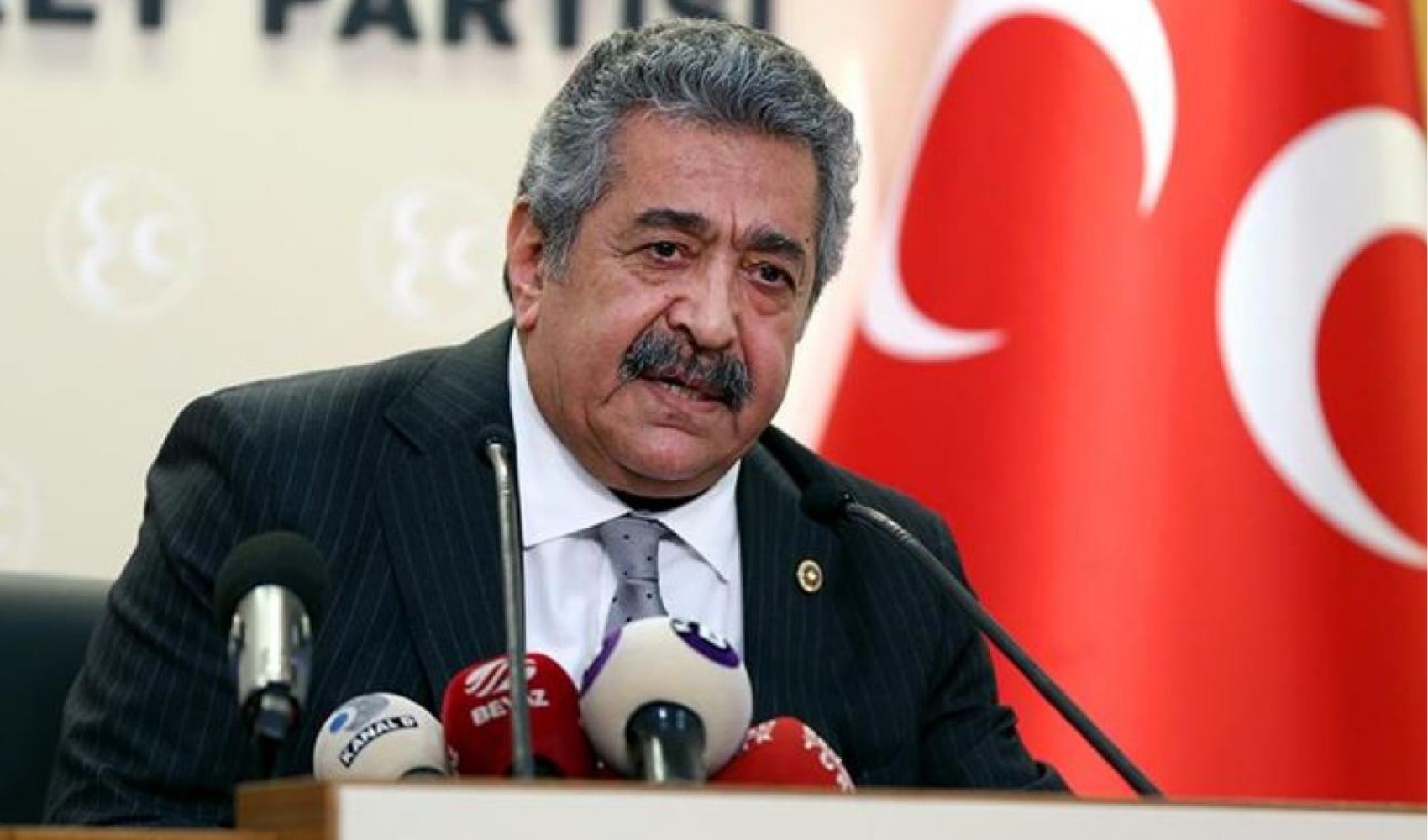
MHP Deputy Chairman Feti Yıldız made assessments regarding secret witness testimonies, which have recently come to the agenda with the IMM case. In a post on his social media account, Yıldız stated that the secret witness practice should not be resorted to unless it is mandatory.
Sharing his views on the evaluation of evidence in criminal proceedings, Yıldız stated that the statements of suspects and defendants carry the quality of both defense and evidence. He described the fact that secret witness testimony cannot be taken as the sole basis for a verdict as a "great gain for our law."
It is observed that the comments made under the posts we make on X (formerly known as Twitter) are generally complaints related to the Penal Code, the Criminal Procedure Code, and the Execution Law.
— Feti Yıldız (@YildizFeti) September 20, 2026
For this reason, I share short information about criminal law and procedure from time to time, as I do today.…
Yıldız emphasized that if the secret witness practice is resorted to, the right to defense must be protected, stating that the defendant must be granted the right to ask oral questions to the secret witness.
Yıldız used the following expressions in his post:
"This path should not be resorted to unless it is mandatory; if it is resorted to, the right to defense must be respected, and the defendant must absolutely be granted the right to ask oral questions to the secret witness."
The full text of Yıldız's statement is as follows:
"It is observed that the comments made under the posts we make on X (formerly known as Twitter) are generally complaints related to the Penal Code, the Criminal Procedure Code, and the Execution Law.
For this reason, I share short information about criminal law and procedure from time to time, as I do today.
Criminal proceedings begin with the suspicion that a crime has been committed.
Principles of conscientious proof have been introduced to eliminate this suspicion, that is, to overcome the suspicion, remove uncertainty, and investigate the material truth.
The judge must reach a decision based on collective evidence, evidence that is lawful and in which the parties actively participate and discuss.
Since it is not possible to prepare evidence in advance or make an evidence agreement in criminal proceedings as it is in civil proceedings, it is mandatory to accept the freedom of evidence.
The criminal judge is not trying to determine a legal transaction, but a slice of life that occurred in the past, a material fact.
Therefore, it is essential that the judge is not bound by the parties when evaluating the evidence in scattered pieces remaining from the event.
Proof in criminal proceedings is obtaining a reliable explanation from a reasonable source.
This necessitates conscientious proof. Conscientious proof is neither a proof with mathematical certainty nor a spiritual discovery.
Conscientious conviction expresses the conviction formed by the judge based on the evidence presented and discussed at the hearing regarding the case, guided by the principles of reasoning, logic, and science, bound by law, and free from doubt.
The judge must first evaluate the evidence one by one, and then form their conscientious conviction by evaluating them as a whole, making use of rules of experience when necessary.
It should be kept in mind that legal presumptions are not legal evidence, and the contrary of factual presumptions can always be proven.
Presumptions should be exceptional and should not be applied in a way that renders the defense ineffective.
Every crime is committed by a human, and human behavior is too complex to be reduced to mathematical certainty.
Instead of assuming that there is a competition between scientific evidence and classical evidence, it is more appropriate for the purpose to conceive of the two in solidarity.
The statements of the suspect and the defendant are both a means of defense and a means of proof, that is, they are in the nature of evidence.
The fact that secret witness testimony cannot be taken as the sole basis for a verdict is a great gain for our law.
This path should not be resorted to unless it is mandatory; if it is resorted to, the right to defense must be respected, and the defendant must absolutely be granted the right to ask oral questions to the secret witness.
The evidentiary power of indications alone is limited.
However, there should be no objection to basing a verdict on indications that point to a causal link and a meaningful result that cannot be explained by coincidence.
This is a result of the freedom of evidence and the absence of a hierarchy among evidence.
Considering the structure of digital data, these should also be evaluated in the category of indications, and an expert examination should intervene between the judge and the data.
This point should not be forgotten.
The public prosecutor does not go to the hearing with the motivation of winning the case.
They do not collect evidence against the defendant in an absolute manner.
They may submit an opinion for acquittal at the end of the case.
They may even apply for legal remedies with a request for acquittal after the case they opened results in a conviction.
Within the principles of proof, the interpretation of doubt in favor of the defendant has a special importance.
This principle is also a result of the presumption of innocence.
In the event that the defendant leaves a question unanswered, the power of other evidence should be relied upon, not silence.
While the defendant's defense is a statement evidence for the court, the statement they gave as a suspect during the investigation phase is in the nature of document evidence.
The biggest handicap of proof is that the evidence is presented by the judge.
The public prosecutor delivers the investigation file to the court along with the indictment.
After this stage, the judge is placed under a moral obligation to test the narrative of the indictment without forming an opinion from the investigation file."
News Source: 12punto
Most Read
Altunç Kumova’s prosecutor testimony revealed

Debt dispute turns into armed brawl in Şanlıurfa
AKP increased its votes, the decline in the New Party drew attention
Kadir İnanır's inheritance revealed
Are you aware of the danger in the economy?

Surprise invitation from Aziz Yıldırım to Ali Koç
Towards a new era in the world
The Journey of Odysseus-3. The sea where man is tested

3.4 magnitude earthquake in Sivrice

Where does China stand in this utopia?